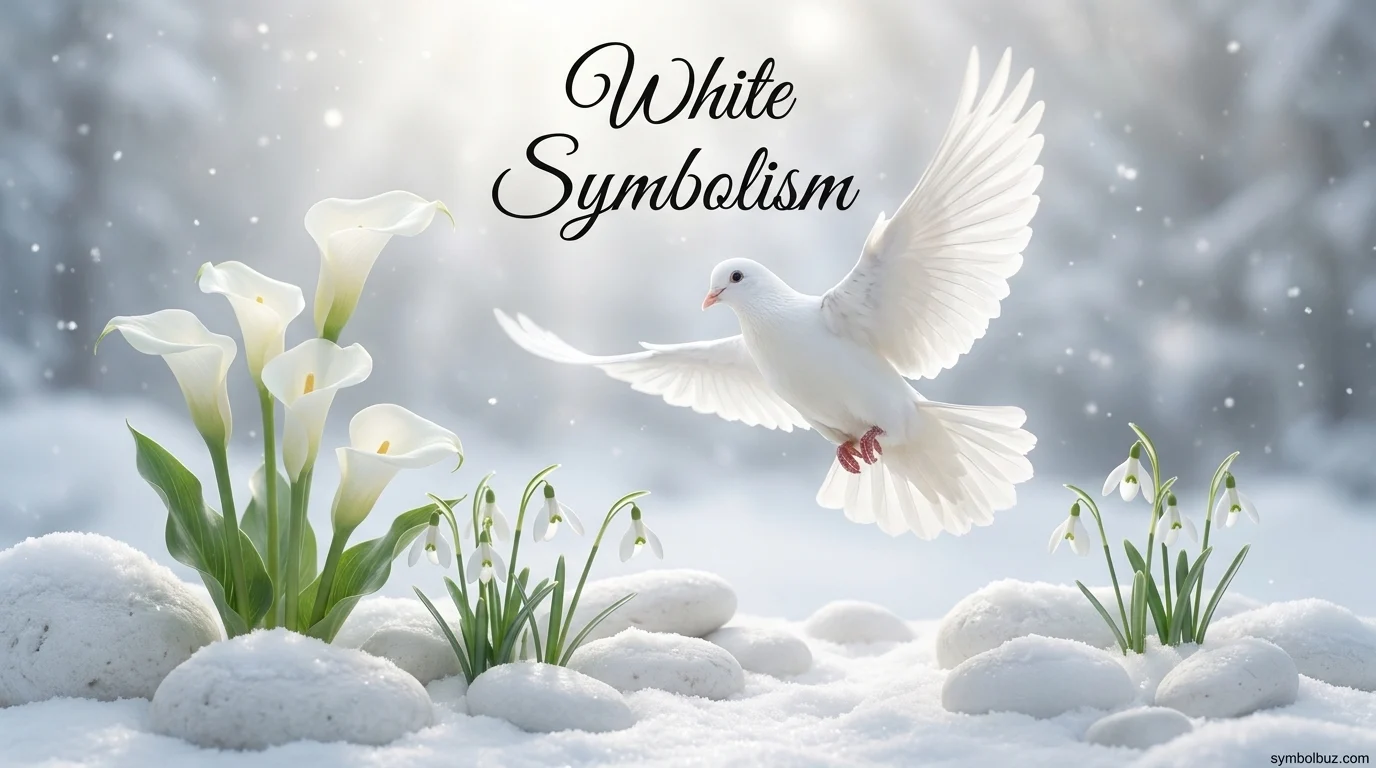
White is one of the most powerful symbolic colors in human culture. It often represents purity, peace, innocence, clarity, and new beginnings. From white clothing and flowers to religious ceremonies, dreams, art, and everyday design, white symbolism can carry different meanings depending on the situation and culture.
At its heart, white is often connected with a clean slate. It can suggest something untouched, peaceful, honest, or spiritually significant. Yet white can also represent emptiness, isolation, mourning, or surrender in certain traditions.
Understanding white symbolism means looking beyond a simple definition and considering the emotional, spiritual, cultural, and personal context surrounding the color.
White Symbolism Meaning (Clear Definition)
White symbolism is commonly associated with purity, innocence, peace, clarity, cleanliness, spirituality, and new beginnings. Because white contains all visible wavelengths of light, it is also frequently connected with wholeness and completeness.
The meaning of white can change according to how it appears. A white dove may suggest peace, while a white wedding dress can symbolize purity and a new chapter in life.
Common meanings associated with white include:
- Purity and innocence
- Peace and harmony
- Cleanliness and simplicity
- Spirituality and divine presence
- Truth and honesty
- Healing and renewal
- Fresh beginnings
- Clarity and openness
- Protection and surrender
White often creates a feeling of space and calm. This is one reason it remains powerful in both symbolic traditions and modern visual culture.
What Does White Symbolism Represent?
White symbolism represents several ideas that are closely connected to emotional and spiritual experiences.
Purity and Innocence
White is strongly connected with purity. Its clean appearance can symbolize something untouched, sincere, or free from corruption.
This association is especially common in ceremonies, clothing, and religious imagery.
Peace and Harmony
White can communicate calmness and reconciliation. The white flag, for example, has become a widely recognized symbol of surrender and a desire to stop conflict.
The color can therefore represent a movement away from struggle toward peace.
New Beginnings
A blank white page is a familiar metaphor for starting again. White can symbolize a fresh opportunity, a new stage of life, or the freedom to create something different.
Truth and Clarity
Because white is visually clear and uncomplicated, it can represent honesty, openness, and understanding.
In symbolic language, seeing white may sometimes suggest the desire to remove confusion and see a situation more clearly.
Healing and Renewal
White is also associated with cleanliness and restoration. In many modern settings, white surroundings are used to create feelings of freshness, order, and calm.
For this reason, white symbolism can carry a sense of emotional renewal.
Spiritual Meaning of White Symbolism
The spiritual meaning of white is often connected with light, divine presence, purification, peace, and higher consciousness.
In spiritual traditions, white clothing, light, feathers, flowers, and other white objects may be interpreted as signs of sacredness or transformation.
White can symbolize the movement from darkness toward light. Metaphorically, this may represent gaining wisdom, finding peace after difficulty, or beginning a new spiritual journey.
Some spiritual interpretations include:
| White SymbolismPossible Spiritual Meaning | |
|---|---|
| White light | Divine guidance and awareness |
| White feathers | Peace, protection, or spiritual reflection |
| White flowers | Purity, devotion, and renewal |
| White clothing | Purification, humility, or sacredness |
| White animals | Innocence, peace, or transformation |
| White clouds | Hope, transcendence, and spiritual elevation |
| White space | Stillness, meditation, and clarity |
These interpretations are symbolic rather than universal rules. Personal beliefs and cultural traditions strongly influence how white is understood.
Biblical / Religious Meaning of White Symbolism
White has an important symbolic presence in Christianity and other religious traditions.
In Christian imagery and biblical interpretation, white is frequently associated with purity, righteousness, holiness, victory, and heavenly glory. White garments can represent spiritual cleanliness or a transformed state.
White is also used in Christian worship and religious art to communicate celebration, sacredness, and purity. Its association with light reinforces its connection with divine goodness.
Other religious and spiritual traditions may also use white clothing or objects during ceremonies involving purification, mourning, prayer, celebration, or spiritual transition.
However, religious symbolism is not identical across every faith. The meaning of white depends on the specific tradition, ceremony, and historical context.
White Symbolism in History and Culture
The cultural meaning of white has changed across time and geography.
In many Western societies, white became strongly associated with weddings, innocence, cleanliness, and formal ceremonies. White wedding dresses became especially influential in shaping modern ideas about bridal symbolism.
In other cultures, white can have very different associations. In several East and South Asian traditions, white has historically been connected with mourning, death, or funerary practices.
This contrast is important because it shows that color symbolism is not universal.
White may represent:
- Celebration in one culture
- Mourning in another
- Purity in one ceremony
- Spiritual transformation in another
- Simplicity in modern design
- Authority or formality in certain professional settings
The surrounding symbols, customs, and circumstances determine its deeper meaning.
White Symbolism in Literature and Art
Artists and writers have long used white to communicate ideas that words alone cannot easily express.
In literature, white may symbolize innocence before a major change, emptiness after loss, or purity that is difficult to maintain. A white landscape can create feelings of peace and beauty, but it can also make a scene feel cold, distant, or mysterious.
In visual art, white can create a sense of light and openness. It can emphasize other colors or make an image appear minimal and uncluttered.
Artists may also use excessive white space to communicate silence, isolation, simplicity, or emotional emptiness.
This makes white particularly interesting: the same color can feel comforting and unsettling depending on the composition.
Dream Meaning of White Symbolism
Dreaming about white can have several possible interpretations. The meaning depends heavily on what appears in the dream and how you felt during it.
Common interpretations include:
- White clothing: A desire for purity, change, or a fresh start.
- White flowers: Peace, remembrance, love, or emotional healing.
- White light: Hope, clarity, guidance, or spiritual awareness.
- White animals: Innocence, gentleness, protection, or transformation.
- A white room: Simplicity, peace, emotional distance, or a blank beginning.
- White snow: Renewal, stillness, isolation, or hidden emotions.
Dream symbolism is personal rather than scientifically fixed. Your emotions and life circumstances are usually more meaningful than any single dream dictionary definition.
Modern Meaning of White Symbolism
Today, white symbolism remains deeply connected with simplicity, cleanliness, peace, and modernity.
In interior design, white spaces can create a sense of openness and calm. In fashion, white can appear elegant, minimalist, formal, or fresh.
Businesses and institutions also frequently use white to communicate cleanliness, professionalism, simplicity, and trust. Hospitals, laboratories, technology products, and modern architecture often use white because it creates a visually clean environment.
At the same time, modern culture has expanded the meaning of white. It can represent minimalism, neutrality, sophistication, emptiness, or even emotional distance.
The meaning often comes from the combination of white with other colors, shapes, materials, and symbols.
Positive Meanings of White
White commonly carries positive associations such as:
- Peace
- Purity
- Innocence
- Hope
- Honesty
- Clarity
- Healing
- Fresh starts
- Spirituality
- Simplicity
These meanings explain why white frequently appears in ceremonies and environments designed to create feelings of calm.
Negative or Complex Meanings of White
White does not always have a positive meaning.
Depending on context, it can represent:
- Emptiness
- Loneliness
- Coldness
- Sterility
- Emotional distance
- Surrender
- Mourning
- Vulnerability
For example, an entirely white environment may feel peaceful to one person but cold or empty to another.
This duality makes white symbolism more complex than simply calling it the color of purity.
White Symbolism in Everyday Life
White appears in many ordinary objects and situations, often carrying symbolic meaning without us consciously noticing it.
A white shirt may communicate cleanliness or formality. White flowers may express sympathy, peace, or affection. A white room can suggest simplicity and openness.
White gifts, decorations, animals, clothing, and objects may also take on special meaning depending on the occasion.
When interpreting white symbolism in everyday life, ask three questions:
- What is white?
- What situation is it connected to?
- What emotion does it create?
These questions can provide a more accurate interpretation than relying on a fixed symbolic definition.
What Does White Symbolize in Love?
In love, white can symbolize purity, sincerity, peace, devotion, and a fresh beginning.
White flowers are often used to express gentle affection, remembrance, sympathy, or sincere feelings. In weddings, white commonly represents the beginning of a committed relationship and the hope for a peaceful future.
However, the meaning can change according to the specific flower, ceremony, and cultural tradition.
What Does White Symbolize Emotionally?
Emotionally, white can represent calmness, openness, peace, innocence, and emotional renewal.
For some people, it creates a feeling of comfort and clarity. For others, too much white may feel distant, empty, or emotionally cold.
Its emotional effect depends on personal experience and context.
What Does White Symbolize Spiritually?
Spiritually, white often symbolizes purity, divine light, peace, spiritual awakening, protection, and transformation.
It can represent leaving behind an old stage of life and entering a period of greater clarity or inner peace.
What Does a White Feather Symbolize?
A white feather is commonly interpreted as a symbol of peace, protection, hope, or spiritual reflection.
In some personal and spiritual traditions, people view finding a white feather as a meaningful reminder of comfort or guidance. The interpretation ultimately depends on the person’s beliefs and circumstances.
Is White Always a Symbol of Purity?
No. Although purity is one of the best-known meanings of white, its symbolism varies between cultures and situations.
White can also represent peace, mourning, emptiness, spirituality, surrender, simplicity, or new beginnings.
Conclusion
White symbolism carries a remarkable range of meanings. It can represent purity, peace, innocence, spirituality, healing, clarity, and fresh beginnings, while in other contexts it may suggest mourning, emptiness, or emotional distance.
The most meaningful interpretation comes from context. Whether white appears in a dream, ceremony, artwork, relationship, religious tradition, or everyday setting, its symbolism invites us to consider ideas of light, change, peace, and renewal.

I explore the meanings and stories behind symbols, helping readers understand their cultural, spiritual, and everyday significance through clear, engaging, and meaningful insights.