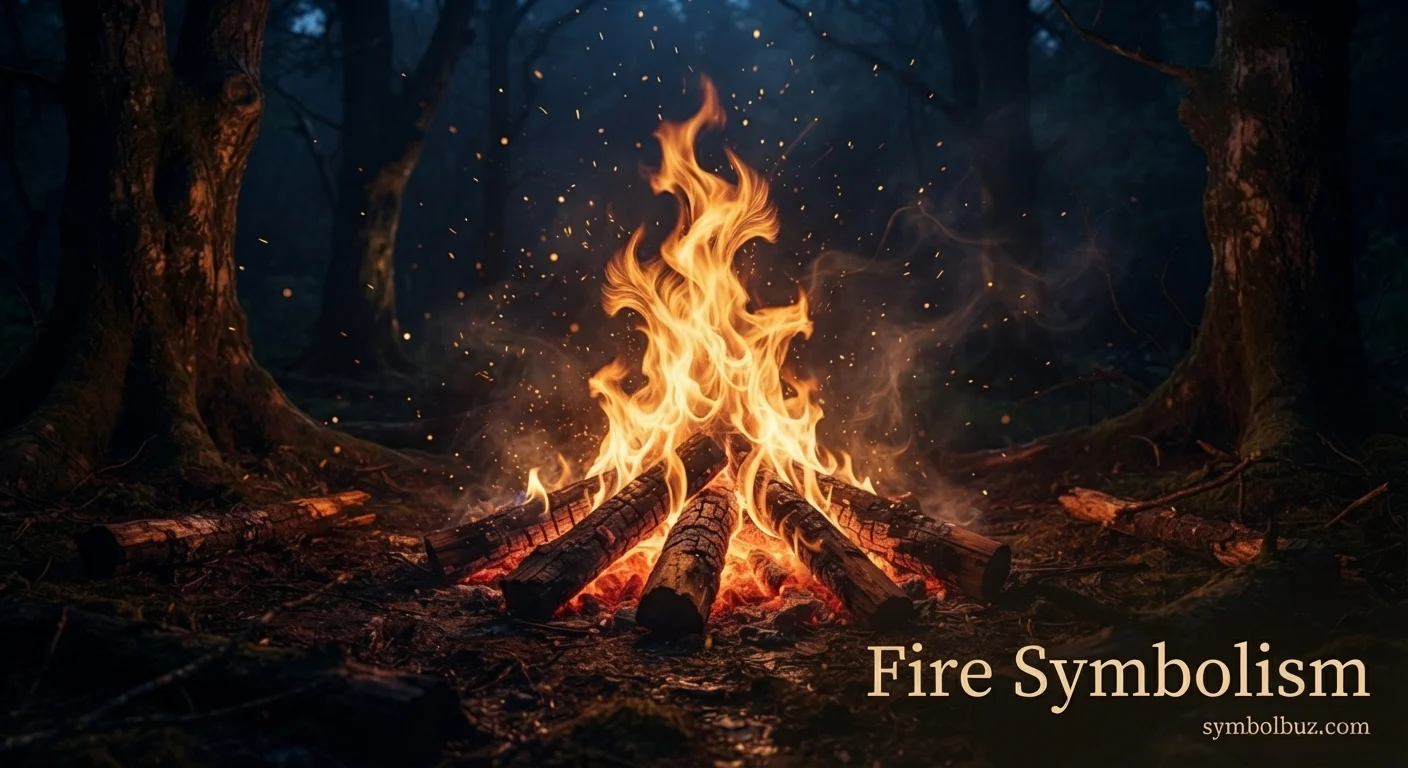
Fire has fascinated humanity for thousands of years. It can warm a home, illuminate darkness, destroy what stands in its path, and transform one thing into another. Because of these powerful qualities, fire symbolism is often connected with transformation, passion, purification, strength, destruction, and renewal.
The meaning of fire depends greatly on its context. A gentle candle flame may symbolize hope and guidance, while a wildfire can represent uncontrolled emotions or destruction. Across religions, cultures, literature, dreams, and modern life, fire continues to carry powerful symbolic meaning.
Fire Symbolism Meaning (Clear Definition)
Fire symbolism represents transformation, passion, energy, purification, destruction, illumination, and renewal. It often reflects powerful forces that can either create positive change or cause harm, depending on how they are controlled.
Fire is unique because it has both constructive and destructive qualities. It can cook food, provide warmth, and help civilizations develop, but it can also burn forests, homes, and possessions.
Common meanings associated with fire include:
| Fire Symbolism | Common Meaning |
|---|---|
| 🔥 Flame | Energy, passion, life force |
| 🕯️ Candle flame | Hope, guidance, remembrance |
| 🔥 Burning fire | Transformation and purification |
| 🌋 Wild or destructive fire | Anger, destruction, uncontrolled emotions |
| ☀️ Bright fire | Illumination and knowledge |
| 🔥 Reignited fire | Renewal and second chances |
| 🔥 Warm hearth | Home, comfort, protection |
At its deepest level, fire often symbolizes change. Something enters the flames in one form and emerges transformed—or disappears completely, making room for something new.
What Does Fire Symbolism Represent?
Fire can represent several powerful ideas at once.
1. Transformation
Fire changes everything it touches. This makes it a natural symbol of personal growth, major life changes, and leaving an old version of yourself behind.
A person going through a difficult transition may view fire as a reminder that change, although uncomfortable, can lead to something stronger.
2. Passion and Desire
Fire is commonly associated with intense emotions. Expressions such as “burning desire” and “fiery passion” reflect this connection.
In symbolism, a strong flame may represent love, ambition, creativity, determination, or desire.
3. Purification
Fire has long been associated with cleansing and purification. Symbolically, burning something away can represent releasing negativity, unhealthy habits, guilt, or emotional burdens.
4. Destruction
Fire does not always represent something positive. An uncontrolled flame can symbolize anger, conflict, loss, destruction, or emotions that have become difficult to manage.
5. Knowledge and Illumination
Fire produces light, making it a symbol of knowledge and awareness. A flame in darkness can represent discovering truth, gaining wisdom, or finding direction during uncertain times.
6. Renewal and Rebirth
Fire can destroy the old while creating conditions for new growth. For this reason, fire symbolism is sometimes connected with rebirth, resilience, and new beginnings.
Spiritual Meaning of Fire Symbolism
Spiritually, fire often represents divine energy, purification, awakening, protection, and transformation.
Many spiritual traditions use fire as an image of a powerful presence that changes or purifies the individual. A flame can also represent an inner light—the part of a person associated with consciousness, hope, faith, or spiritual awareness.
A spiritual interpretation of fire may include:
- Spiritual awakening — becoming more aware of yourself or your purpose.
- Purification — releasing emotional or spiritual burdens.
- Divine presence — experiencing something greater than oneself.
- Inner strength — maintaining your light during difficult periods.
- Transformation — growing through powerful life experiences.
- Protection — fire creating a boundary between safety and danger.
A small flame can be just as meaningful as a large fire. Sometimes spiritual fire symbolism is about maintaining a quiet inner light rather than creating dramatic change.
Biblical / Religious Meaning of Fire Symbolism
Fire has significant symbolic meaning in several religious traditions, including Christianity and Judaism.
In the Bible, fire can represent God’s presence, holiness, judgment, purification, guidance, and divine power. One famous example is the burning bush associated with Moses, where fire appears without consuming the bush.
Fire also appears as a powerful image of divine presence and judgment in various biblical passages. In Christian symbolism, flames are additionally associated with the Holy Spirit, particularly through the imagery of tongues of fire at Pentecost.
Religious interpretations of fire can therefore include both comfort and seriousness. Fire may signify divine guidance and spiritual presence, while in other contexts it represents judgment or purification.
Other religious and cultural traditions also give fire an important role in ceremonies, offerings, prayer, purification, and sacred rituals. Its ability to transform matter makes it a particularly powerful religious symbol.
Fire Symbolism in History and Culture
Fire has been essential to human civilization since prehistoric times. Learning to control fire transformed cooking, warmth, protection, craftsmanship, and social life.
Because of this importance, fire became much more than a practical tool. It developed into a cultural symbol.
Ancient communities often connected fire with the sun, gods, sacrifice, protection, fertility, or renewal. Sacred flames were maintained in some traditions as representations of continuity and divine presence.
Fire has also played an important role in ceremonies. Candles, lamps, bonfires, ceremonial flames, and hearth fires can represent remembrance, celebration, community, or spiritual devotion.
The meaning of fire varies across cultures, but one idea appears repeatedly: fire represents power that must be respected and controlled.
Fire Symbolism in Literature and Art
Writers and artists frequently use fire to communicate emotions or major changes without explaining them directly.
In literature, fire can symbolize:
- Passion and romantic desire
- Rage and revenge
- Destruction and conflict
- Hope during darkness
- Freedom and rebellion
- Transformation and rebirth
- Knowledge and enlightenment
- Emotional intensity
A character surrounded by flames may be experiencing destruction, while a character carrying a small lantern may represent hope.
Artists also use color, brightness, movement, and scale to change the emotional meaning of fire. Golden flames can suggest warmth and spirituality, while violent red or black flames may create feelings of danger and destruction.
Because fire is visually dynamic, it can represent emotions that are difficult to express through words alone.
Dream Meaning of Fire Symbolism
Dreams involving fire can have many possible interpretations. The meaning usually depends on what the fire was doing and how you felt during the dream.
A peaceful or controlled fire may symbolize warmth, creativity, passion, comfort, or positive transformation. A frightening fire may instead represent stress, anger, conflict, fear, or a situation that feels out of control.
Common fire dream interpretations include:
- Seeing a small flame: Hope, inspiration, or a new idea.
- Sitting beside a warm fire: Comfort, security, family, or emotional peace.
- A house on fire: Major emotional or personal change.
- Being surrounded by fire: Feeling overwhelmed by circumstances or emotions.
- Putting out a fire: Regaining control over a difficult situation.
- Starting a fire: Creating change, pursuing passion, or taking action.
- Watching fire from a distance: Recognizing change without being directly involved.
Dream symbolism is personal rather than universal. Your emotions, experiences, and circumstances should be considered alongside the imagery.
Modern Meaning of Fire Symbolism
Today, fire remains a powerful symbol in everyday language, entertainment, design, fashion, tattoos, branding, and social media.
A flame emoji may communicate excitement or enthusiasm. A fire tattoo may represent resilience, passion, transformation, or surviving a difficult chapter. A candle can symbolize remembrance, hope, or a meaningful person.
Fire is also commonly used to represent ambition and excellence. Describing someone as “on fire” suggests that they are performing exceptionally well or experiencing a period of strong energy and success.
In modern psychology-inspired symbolism, fire can also represent emotional intensity. A person’s “inner fire” may describe motivation, creativity, courage, or determination.
Ultimately, modern fire symbolism often centers on one question: What are you willing to transform, protect, or pursue?
Fire Symbolism and Personal Growth
Fire can offer a useful metaphor for personal development.
Sometimes growth requires letting go of things that no longer serve you. Fire represents this process vividly because it consumes and changes what enters its path.
The symbolism can be especially meaningful during periods of:
- Career changes
- Relationship transitions
- Personal reinvention
- Recovery from setbacks
- Creative development
- New beginnings
- Overcoming fear
The lesson is not that destruction is always necessary. Rather, fire reminds us that powerful energy needs direction. A controlled flame can provide warmth and light; an uncontrolled one can cause destruction.
Is Fire Symbolism Positive or Negative?
Fire symbolism can be both positive and negative.
Its positive meanings include passion, courage, warmth, creativity, purification, hope, knowledge, and renewal. Its darker meanings include anger, destruction, conflict, danger, loss, and uncontrolled emotions.
The context determines which interpretation makes the most sense.
FAQs:
What is the main meaning of fire symbolism?
The main meaning of fire symbolism is transformation, passion, energy, and purification. It can also represent destruction, knowledge, renewal, or spiritual power.
What does fire symbolize spiritually?
Spiritually, fire can symbolize divine presence, purification, awakening, inner strength, guidance, and transformation. Its meaning varies according to the spiritual tradition and context.
What does fire symbolize in the Bible?
In biblical symbolism, fire can represent God’s presence, holiness, divine power, judgment, purification, and spiritual transformation. Its meaning depends on the specific passage.
What does fire symbolize in dreams?
Fire in dreams may symbolize passion, emotional intensity, transformation, anger, danger, or renewal. The dreamer’s feelings and the condition of the fire are important when interpreting it.
Is fire a symbol of rebirth?
Yes. Fire can symbolize rebirth because it destroys old forms while making space for transformation and new beginnings. This is why fire imagery is often connected with resilience and renewal.
Conclusion
Fire symbolism is ultimately a symbol of powerful change. It can warm, illuminate, purify, inspire, destroy, and transform. Whether represented as a candle flame, sacred fire, wildfire, or inner spark, fire reminds us that powerful energy can create meaningful change when it is guided with purpose.

I explore the meanings and stories behind symbols, helping readers understand their cultural, spiritual, and everyday significance through clear, engaging, and meaningful insights.