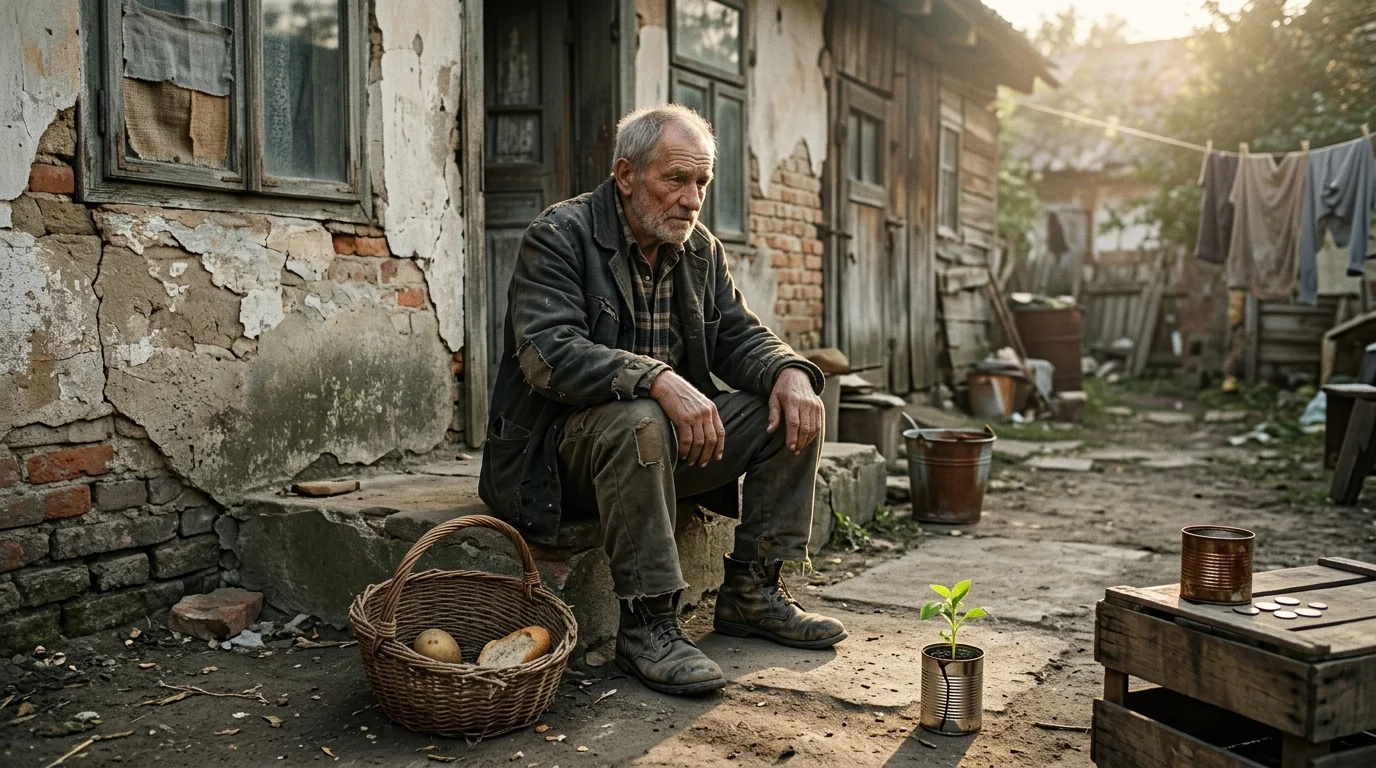
Poverty symbolism explores the deeper meanings associated with financial hardship, scarcity, struggle, and the human experience of living with limited resources. Across different cultures, religions, and forms of art, poverty can represent humility, sacrifice, inequality, resilience, and the search for a better life. Understanding poverty symbolism helps reveal how material hardship can reflect broader themes of human dignity, compassion, social responsibility, and personal strength.
Poverty is more than a lack of money. It can also symbolize emotional emptiness, limited opportunities, social exclusion, or a desire for meaningful change. Its interpretation often depends on cultural beliefs, personal experiences, and historical circumstances.
Poverty Symbolism Meaning (Clear Definition)
Poverty symbolism refers to the use of poverty, deprivation, and financial hardship to represent deeper ideas about human life, society, morality, and personal struggles.
In symbolic interpretations, poverty commonly represents:
- Scarcity: A lack of money, resources, opportunities, or security.
- Humility: Living simply without excessive attachment to material possessions.
- Struggle: Facing difficulties and overcoming challenging circumstances.
- Inequality: Differences in wealth, power, and social opportunities.
- Resilience: Finding strength and hope during difficult times.
- Compassion: Understanding the suffering and needs of others.
- Freedom from materialism: Recognizing that happiness is not entirely dependent on wealth.
Poverty does not have one universal symbolic meaning. For some people, it represents suffering and injustice, while others interpret it through themes of simplicity, humility, and spiritual growth.
Importantly, poverty is a real social and economic condition, not simply a spiritual lesson or personal choice.
What Does Poverty Symbolism Represent?
Poverty symbolism represents several important aspects of the human experience. It can highlight both the difficulties of material hardship and the strength people demonstrate when facing adversity.
Here are seven common symbolic meanings of poverty.
1. Struggle and Hardship
Poverty often symbolizes life’s difficult moments. It reflects situations in which people must work hard to meet basic needs and overcome financial obstacles.
This symbolism reminds us that many individuals face challenges beyond their control.
2. Humility and Simplicity
In some philosophical and religious traditions, poverty represents humility and a simple lifestyle.
It can suggest that a meaningful life does not require expensive possessions, luxury, or social status.
3. Inequality and Injustice
Poverty is a powerful symbol of social inequality. It highlights differences in access to education, healthcare, employment, housing, and other essential resources.
It can also represent unfair systems that prevent people from achieving financial security.
4. Resilience and Inner Strength
People experiencing poverty often demonstrate determination and resourcefulness while navigating difficult circumstances.
Symbolically, poverty can represent the ability to continue moving forward despite uncertainty and hardship.
5. Sacrifice and Selflessness
In certain religious and cultural traditions, poverty represents sacrifice or giving up material comfort for a higher purpose.
This interpretation often appears in stories about spiritual devotion and charitable service.
6. Emotional and Spiritual Emptiness
Poverty can also symbolize a lack of emotional support, love, confidence, or purpose.
In literature and symbolic storytelling, an impoverished character may represent someone searching for fulfillment beyond material possessions.
7. Hope and Transformation
Poverty can represent the beginning of a difficult journey toward a better future.
Stories of people overcoming hardship often use poverty to symbolize perseverance, opportunity, and personal transformation.
| Symbolic element | Common meaning |
|---|---|
| Empty pockets | Financial insecurity and scarcity |
| Empty house | Deprivation or loneliness |
| Torn clothing | Hardship and social inequality |
| Simple living | Humility and contentment |
| Bread and water | Basic needs and survival |
| Helping the poor | Compassion and generosity |
| Rising from poverty | Hope and resilience |
Spiritual Meaning of Poverty Symbolism
The spiritual meaning of poverty often relates to humility, detachment, gratitude, compassion, and the difference between material wealth and inner richness.
Many spiritual traditions encourage people to look beyond possessions when considering the meaning of a fulfilling life.
Detachment from Material Possessions
Poverty can symbolize freedom from excessive attachment to money and material objects.
Some spiritual teachings suggest that constantly chasing wealth can distract people from relationships, personal values, and inner peace.
This does not mean that financial security is unimportant. Rather, it encourages a balanced relationship with material possessions.
Humility and Gratitude
Living simply can encourage people to appreciate everyday blessings.
In spiritual interpretations, poverty sometimes represents humility and an awareness that human worth cannot be measured by possessions.
Compassion for Others
Poverty can serve as a reminder to recognize the struggles of others.
It encourages generosity, kindness, and practical support for people facing financial difficulties.
Inner Wealth
One of the most meaningful spiritual interpretations of poverty is the distinction between material wealth and inner richness.
Love, wisdom, kindness, patience, and gratitude can bring value to life that money alone cannot provide.
Biblical / Religious Meaning of Poverty Symbolism
Poverty has an important place in many religious traditions, including Christianity, Islam, Buddhism, and Hinduism.
Religious interpretations often connect poverty with humility, generosity, justice, spiritual discipline, and responsibility toward vulnerable people.
Poverty in Christianity
In Christianity, poverty is frequently discussed in connection with humility, compassion, and caring for people in need.
Jesus taught the importance of helping the poor and warned against allowing wealth to become more important than spiritual values.
The Beatitudes in Matthew 5:3 describe the blessedness of the poor in spirit. This expression is generally understood as referring to spiritual humility and dependence on God rather than simply lacking money.
Christian teachings also emphasize generosity, charity, and justice for disadvantaged communities.
Poverty in Islam
In Islam, poverty is understood as a social and economic challenge that calls for compassion and collective responsibility.
Zakat, one of the Five Pillars of Islam, requires eligible Muslims to give a portion of their qualifying wealth to designated recipients, including people in need.
Islamic teachings encourage gratitude, generosity, fairness, and support for vulnerable members of society.
Poverty in Buddhism
Buddhist teachings distinguish between material circumstances and attachment to possessions.
The Buddhist concept of non-attachment encourages people to avoid allowing desires and possessions to control their happiness.
Voluntary simplicity can support spiritual discipline, but involuntary poverty and suffering are not automatically signs of spiritual progress.
Poverty in Hinduism
In Hindu traditions, poverty can appear in discussions of simplicity, renunciation, karma, and spiritual responsibility.
Some religious stories portray saints and spiritual seekers who reject material luxury in pursuit of wisdom and liberation.
However, poverty should not automatically be interpreted as proof of someone’s past actions or spiritual worth.
Poverty Symbolism in History and Culture
Throughout history, poverty has represented different ideas depending on social conditions, religious beliefs, and cultural values.
In many societies, poverty has been associated with hardship, social status, charity, and the struggle for survival.
Poverty in Ancient Societies
In ancient civilizations, poverty was often connected to limited access to land, food, education, and political power.
Poor communities frequently depended on farming, manual labor, and support from family or local networks.
Symbolically, poverty represented vulnerability and the unequal distribution of resources.
Poverty in Medieval Culture
During medieval times, religious institutions often emphasized charity and caring for people experiencing poverty.
Monks, religious leaders, and charitable communities sometimes embraced simple living as an expression of spiritual devotion.
This helped establish a cultural connection between poverty, humility, and religious service.
Poverty During the Industrial Revolution
The Industrial Revolution brought major economic changes, but it also exposed difficult working conditions and widespread urban poverty.
Factories, crowded housing, low wages, and dangerous workplaces became powerful symbols of social inequality.
Poverty increasingly appeared in discussions about workers’ rights, economic reform, and social justice.
Poverty in Modern Culture
Today, poverty often symbolizes unequal opportunities, economic insecurity, homelessness, and the challenges faced by disadvantaged communities.
It also appears in discussions about education, healthcare, employment, and the rising cost of living.
Modern interpretations increasingly recognize that poverty involves more than income. It can also include limited access to essential services and opportunities.
Poverty Symbolism in Literature and Art
Poverty has been a powerful theme in literature, painting, photography, theater, and film.
Artists often use images of deprivation to communicate social problems, emotional struggles, and the dignity of ordinary people.
Poverty in Literature
Writers frequently use poverty to explore inequality, injustice, ambition, and human resilience.
For example, Oliver Twist by Charles Dickens portrays the hardships experienced by poor children in nineteenth-century England.
Similarly, Les Misérables by Victor Hugo explores poverty, injustice, compassion, and redemption.
These stories demonstrate how poverty can shape people’s opportunities while revealing their strength and humanity.
Poverty in Painting
Artists have historically portrayed poverty through images of workers, struggling families, crowded neighborhoods, and people experiencing hunger.
Such paintings often encourage viewers to recognize social inequality and the difficult realities of everyday life.
Poverty in Photography
Documentary photography uses real-life images to capture poverty, homelessness, displacement, and economic hardship.
These photographs can create awareness and encourage discussions about human dignity and social responsibility.
Common Artistic Symbols of Poverty
- Empty bowls symbolize hunger and unmet needs.
- Old shoes represent difficult journeys and hardship.
- Broken houses suggest insecurity and deprivation.
- Worn clothing represents limited resources.
- Empty streets can communicate isolation and exclusion.
- Helping hands represent kindness, solidarity, and hope.
Dream Meaning of Poverty Symbolism
Dreaming about poverty can reflect worries, personal insecurities, emotional needs, or concerns about financial stability.
However, dreams do not have scientifically established universal meanings or reliably predict future financial circumstances.
The interpretation depends on the dreamer’s emotions and real-life experiences.
Dreaming About Being Poor
Dreaming that you are poor may reflect concerns about security, independence, or losing something important.
It can also symbolize feeling unprepared for an upcoming challenge.
Dreaming About Losing Money
Losing money in a dream may represent fear of losing control, missing opportunities, or experiencing uncertainty.
Sometimes it reflects everyday financial stress.
Dreaming About Helping Poor People
This dream may symbolize generosity, empathy, and a desire to support others.
It can also reflect your personal values and concern for people experiencing hardship.
Dreaming About Escaping Poverty
Dreaming about escaping poverty may represent ambition, hope, and the desire to improve your circumstances.
It can reflect motivation to pursue greater stability and independence.
Dreaming About Seeing Homeless People
Seeing homeless people in a dream may reflect concerns about vulnerability, loneliness, or social inequality.
Your emotional response during the dream can provide additional context for understanding it.
Modern Meaning of Poverty Symbolism
In today’s world, poverty symbolism has expanded beyond traditional ideas of financial hardship.
It increasingly represents complex economic, emotional, and social challenges.
Economic Insecurity
Poverty symbolizes the uncertainty people experience when they struggle to afford housing, food, healthcare, and other basic necessities.
Rising living costs and unstable employment can make financial security difficult to achieve.
Social Inequality
Modern poverty symbolism highlights differences in opportunities and access to essential resources.
It encourages conversations about fair wages, education, affordable housing, and equal opportunities.
Emotional Poverty
The expression emotional poverty describes a lack of meaningful relationships, emotional support, or connection.
A person may have financial wealth but still experience loneliness or emotional emptiness.
Poverty of Opportunity
Poverty can also represent limited access to education, employment, technology, and resources that help people improve their lives.
This interpretation highlights the importance of creating fair opportunities for everyone.
The Difference Between Poverty and Simplicity
Modern discussions also distinguish between involuntary poverty and voluntary simple living.
Choosing a minimalist lifestyle can reflect personal values, while financial hardship often involves difficult circumstances and limited choices.
Understanding this difference helps create a more respectful and realistic interpretation of poverty.
FAQS:
1. What Does Poverty Symbolize?
Poverty commonly symbolizes scarcity, hardship, inequality, humility, and resilience. Its meaning depends on cultural beliefs, personal experiences, and the context in which it appears.
2. What Is the Spiritual Meaning of Poverty?
Spiritually, poverty can represent humility, simplicity, compassion, and detachment from material possessions. It can also remind people that inner richness involves qualities such as love, gratitude, and kindness.
3. What Does Poverty Represent in the Bible?
In the Bible, poverty is often associated with humility, vulnerability, and the importance of helping those in need. Christian teachings emphasize generosity, justice, and compassion toward disadvantaged people.
4. What Does Dreaming About Being Poor Mean?
Dreaming about being poor may reflect financial worries, insecurity, fear of losing control, or concerns about the future. It does not necessarily predict actual financial hardship.
5. Is Poverty a Symbol of Strength or Weakness?
Poverty itself is neither a measure of strength nor weakness. Symbolically, it can represent difficult circumstances while highlighting the resilience, determination, and dignity of people who experience hardship.
Conclusion
Poverty symbolism reveals the complex relationship between material hardship, human dignity, and the search for a meaningful life. It can represent scarcity, inequality, humility, sacrifice, and resilience across different cultures and spiritual traditions. Most importantly, poverty reminds us that a person’s worth is never determined by their financial situation. Compassion, opportunity, fairness, and human connection remain essential parts of a richer and more meaningful world.

I explore the meanings and stories behind symbols, helping readers understand their cultural, spiritual, and everyday significance through clear, engaging, and meaningful insights.