Few flowers carry as much emotional meaning as the rose. Across centuries and cultures, rose symbolism has been connected with love, beauty, passion, devotion, mystery, remembrance, and even secrecy. The meaning of a rose can change depending on its color, number, cultural setting, and the reason it is given.
Whether you are choosing roses for someone special, interpreting a dream, studying literature, or simply wondering what roses represent, understanding their symbolism can reveal a deeper meaning behind this familiar flower.
Rose Symbolism Meaning (Clear Definition)
Rose symbolism refers to the meanings and emotions traditionally associated with roses, including love, beauty, passion, devotion, purity, remembrance, and secrecy.
The rose is especially powerful because it combines contrasting qualities. Its soft petals suggest beauty and tenderness, while its thorns can represent pain, protection, sacrifice, or the difficulties that accompany love.
The most common rose meanings include:
- Love and romance — especially associated with red roses.
- Beauty and admiration — roses often symbolize appreciation and attraction.
- Purity and innocence — traditionally connected with white roses.
- Friendship and affection — commonly represented by yellow roses.
- Gratitude and appreciation — often expressed through pink roses.
- Mystery and secrecy — the rose has long carried associations with hidden knowledge.
- Remembrance — roses may represent enduring memories and affection for someone who has passed away.
In other words, a rose rarely communicates only one emotion. Its meaning depends on context.
What Does Rose Symbolism Represent?
At its heart, rose symbolism represents the complexity of human emotions.
Love and Romance
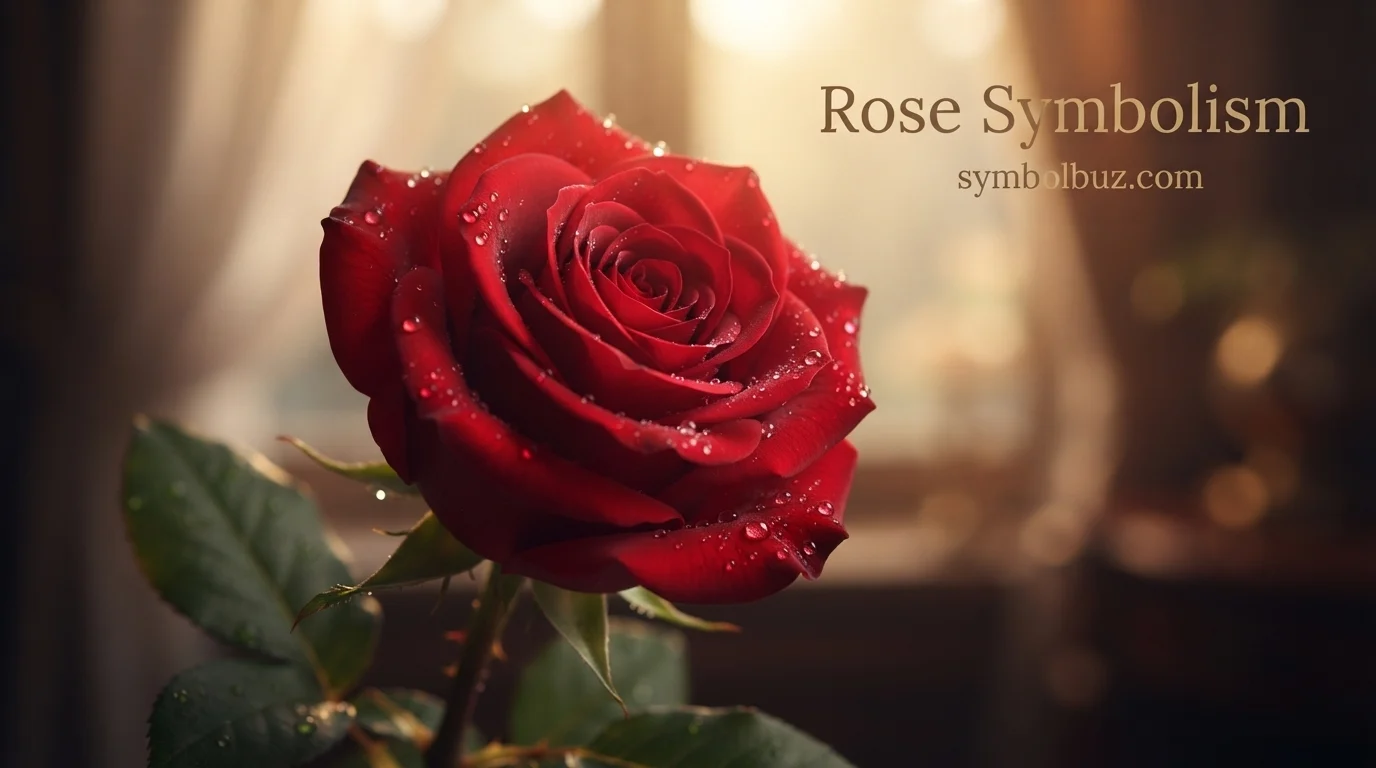
The red rose is perhaps the world’s best-known symbol of romantic love. Its rich color and association with passion make it a traditional expression of desire, devotion, and deep affection.
Beauty and Appreciation
Roses can symbolize admiration for someone’s character, appearance, talent, or presence. Giving roses does not always mean romantic love; they can also communicate sincere appreciation.
Passion and Desire
Because of their intense color and historical association with love, roses can represent strong emotional or physical attraction.
Purity and Innocence
White roses traditionally suggest purity, sincerity, innocence, and peaceful intentions. They are often associated with weddings, new beginnings, and remembrance.
Pain and Sacrifice
The contrast between a rose’s delicate petals and sharp thorns gives the flower another layer of meaning. A rose can symbolize the idea that love and beauty may involve vulnerability, hardship, or sacrifice.
Secrecy and Mystery
The rose has also been associated with secrecy. The Latin phrase sub rosa, meaning “under the rose,” became connected with keeping something confidential.
Rose Colors and Their Symbolic Meanings
| Rose color | Common symbolic meaning |
|---|---|
| Red | Love, passion, romance, devotion |
| White | Purity, innocence, peace, remembrance |
| Pink | Gratitude, admiration, tenderness, appreciation |
| Yellow | Friendship, happiness, warmth, affection |
| Orange | Enthusiasm, desire, energy, fascination |
| Lavender | Enchantment, fascination, uniqueness |
| Dark crimson | Deep affection, mourning, enduring love |
These meanings are traditional rather than universal. Cultural background and personal experience can change how a particular rose is understood.
Spiritual Meaning of Rose Symbolism
Spiritually, the rose is often viewed as a symbol of transformation, love, inner beauty, and the connection between beauty and suffering.
The flower’s growth from a thorny stem into a beautiful bloom can represent personal development. It suggests that meaningful growth may involve difficulties before reaching a period of greater beauty or understanding.
In spiritual traditions and symbolism, roses may also represent:
- Divine love
- Inner transformation
- Compassion
- Spiritual awakening
- Sacred beauty
- Balance between suffering and joy
- The unfolding of the soul
The rose’s circular form and layered petals can also inspire ideas of wholeness, mystery, and gradual revelation.
For many people, the spiritual meaning of a rose is ultimately personal. A rose received during an important life moment may carry a significance that goes far beyond traditional symbolism.
Biblical / Religious Meaning of Rose Symbolism
The rose has a complicated history in religious symbolism because interpretations vary between traditions and translations.
In Christianity, roses became strongly associated with the Virgin Mary. The mystical rose became a title connected with Mary, while the rose itself could symbolize purity, beauty, divine love, and spiritual devotion.
Roses also became important in Christian art and devotional traditions. The red rose could suggest martyrdom or sacrificial love, while white roses could represent purity and holiness.
However, it is important to distinguish later Christian symbolism from direct biblical references. The Bible does not provide a simple universal “rose = love” definition. Some biblical passages traditionally translated using the word “rose” involve plants whose exact botanical identity is debated.
In Islam and other religious and cultural traditions, roses have also appeared in poetry, devotional imagery, and discussions of divine or spiritual love. Their broader religious meaning often centers on beauty, love, purity, and the mystery of creation.
Rose Symbolism in History and Culture
Rose symbolism has developed over thousands of years.
Ancient civilizations valued roses for their beauty, fragrance, gardens, ceremonies, and medicinal or cosmetic uses. Over time, the flower acquired meanings that went beyond its physical characteristics.
In ancient Greek and Roman traditions, roses were associated with love and figures connected with love and beauty. Roses also became linked with celebrations and secrecy.
During the medieval and Renaissance periods, roses became increasingly prominent in European religious and artistic symbolism. Different colors and arrangements could communicate ideas about purity, love, sacrifice, and political identity.
The rose later became an important emblem in European heraldry and political history. The famous Wars of the Roses in England helped give the flower an additional association with competing houses and political power.
Today, roses remain deeply embedded in cultural traditions surrounding weddings, anniversaries, funerals, Valentine’s Day, birthdays, and other important occasions.
Rose Symbolism in Literature and Art
Writers and artists have repeatedly used the rose because it can express several ideas at once.
A rose may symbolize love, but it can also represent beauty that fades, desire that causes suffering, innocence threatened by experience, or something precious that is difficult to possess.
One of the most famous examples appears in William Shakespeare’s Romeo and Juliet, where the rose is used to explore the relationship between a thing and the name given to it.
Roses also appear prominently in poetry. Their fragrance, color, thorns, and short-lived blossoms make them especially useful for exploring themes such as:
- Romantic love
- Mortality
- Beauty and aging
- Desire
- Loss
- Memory
- Innocence
- Spiritual longing
In visual art, roses can function as both decorative elements and symbolic objects. Their placement, color, condition, and surrounding imagery can change the meaning of an entire composition.
A fresh rose may suggest life and beauty, while a wilted rose can suggest mortality, lost love, or the passing of time.
Dream Meaning of Rose Symbolism
Dreams about roses are often interpreted according to the dreamer’s emotions, the rose’s condition, and its color.
There is no scientifically established universal meaning for a particular dream symbol. Dream interpretation is subjective, but traditional interpretations can provide useful reflection.
Common interpretations include:
- Red rose: romantic feelings, passion, attraction, or emotional intensity.
- White rose: peace, innocence, forgiveness, or a new beginning.
- Pink rose: affection, appreciation, gentleness, or emotional warmth.
- Yellow rose: friendship, happiness, optimism, or changing relationships.
- Withered rose: loss, disappointment, fading affection, or the passage of time.
- Thorny rose: emotional challenges, vulnerability, boundaries, or complicated love.
- Receiving a rose: feeling valued, loved, remembered, or admired.
- Giving a rose: expressing affection, appreciation, reconciliation, or emotional openness.
The most useful question when interpreting a rose dream is often: How did you feel when you saw the rose?
Your emotional response may reveal more about the dream than the flower itself.
Modern Meaning of Rose Symbolism
Today, roses remain one of the clearest visual languages of emotion.
Red roses are strongly connected with romantic relationships, while pink and yellow roses are often used to communicate appreciation, friendship, joy, and affection. White roses frequently appear at weddings and memorial services because their symbolism can suit both celebration and remembrance.
Roses have also become popular in tattoos. A rose tattoo can represent love, personal transformation, resilience, remembrance, beauty, or overcoming hardship. Adding thorns, names, dates, or other imagery can make the symbolism highly personal.
Social media and modern gifting culture have made rose colors even more recognizable, but traditional meanings are not strict rules. The most meaningful rose is often the one that reflects the relationship and emotion behind it.
FAQs:
What is the most common meaning of a rose?
The most common meaning of a rose is love and beauty. However, its specific meaning can change according to its color, cultural context, and the occasion.
What does a red rose symbolize?
A red rose traditionally symbolizes romantic love, passion, desire, and deep devotion. It is one of the most recognizable symbols of romantic affection.
What does a white rose symbolize?
A white rose commonly represents purity, innocence, peace, sincerity, and remembrance. It can therefore appear in weddings, religious settings, and memorial ceremonies.
What does a rose symbolize spiritually?
Spiritually, a rose can symbolize divine love, transformation, inner beauty, compassion, and the journey from difficulty toward growth. Its thorns can represent the challenges that accompany meaningful spiritual or emotional development.
What does a rose with thorns symbolize?
A rose with thorns can symbolize the balance between beauty and pain. It may represent love that involves vulnerability, protection, sacrifice, boundaries, or difficult experiences.
Conclusion
Rose symbolism is powerful because the flower can express both beauty and complexity. A rose can represent love, passion, purity, friendship, remembrance, mystery, or personal transformation depending on its color and context.
Perhaps that is why roses have remained meaningful for so long: they remind us that the most beautiful parts of life can exist alongside difficulty. Like the rose itself, love and beauty can be delicate, powerful, and protected by thorns.

I explore the meanings and stories behind symbols, helping readers understand their cultural, spiritual, and everyday significance through clear, engaging, and meaningful insights.