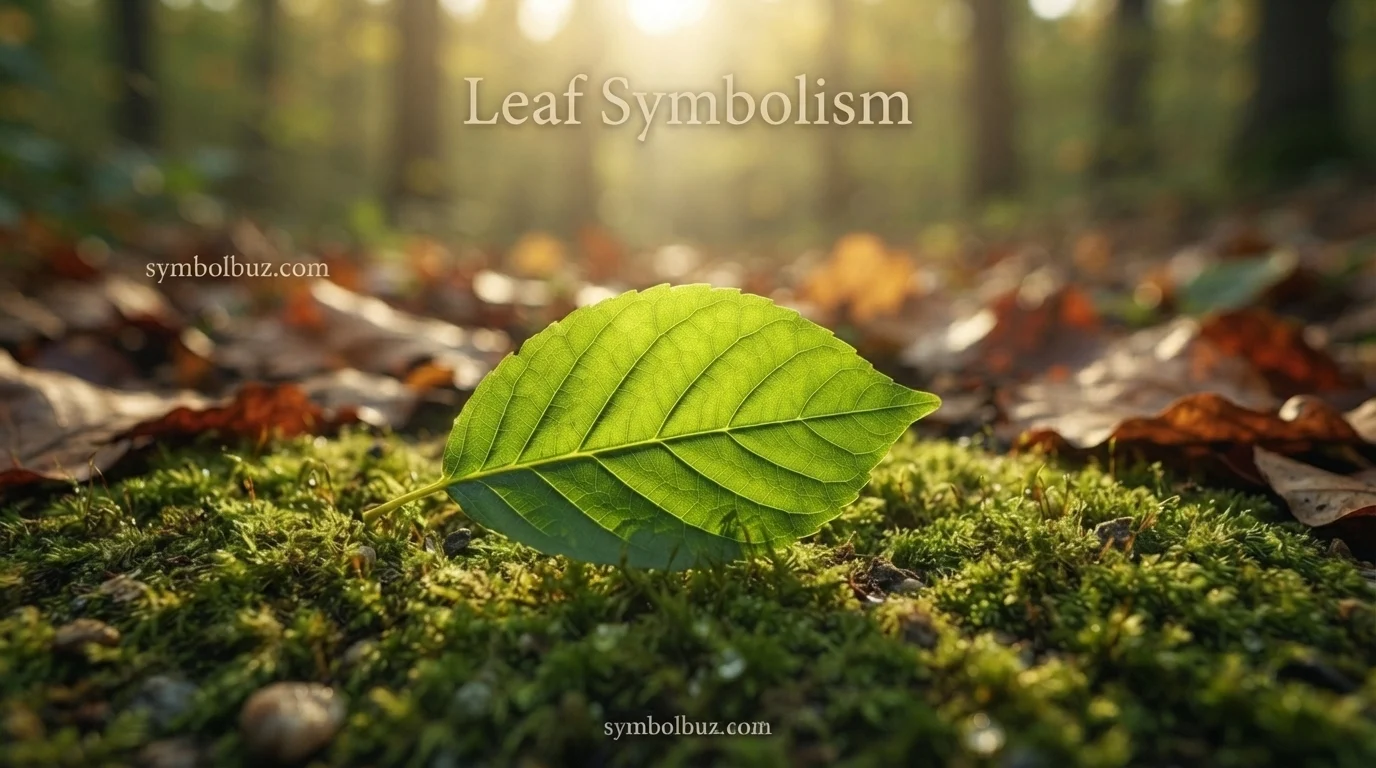
Leaves are among nature’s simplest yet most meaningful symbols. They appear in nearly every culture as signs of growth, renewal, change, life, and the natural cycle of existence. Understanding leaf symbolism can help explain why leaves appear so often in spiritual traditions, artwork, dreams, literature, jewelry, and everyday designs.
A green leaf may suggest hope and vitality, while a fallen or dried leaf can represent endings, transformation, or the passage of time. The meaning often depends on the leaf’s color, condition, setting, and cultural context.
Leaf Symbolism Meaning (Clear Definition)
Leaf symbolism represents growth, renewal, life, transformation, and the natural cycles of change. Because leaves grow, change color, fall, and return with new seasons, they naturally symbolize the temporary yet continuous nature of life.
A leaf can carry both positive and reflective meanings. A fresh green leaf often represents vitality and new beginnings, while a fallen leaf may symbolize letting go or accepting change.
The most common meanings associated with leaves include:
| Leaf Symbol | Common Meaning |
|---|---|
| Green leaf | Life, growth, health, hope |
| New leaf | Fresh beginnings, renewal |
| Fallen leaf | Change, release, mortality |
| Autumn leaf | Transformation, maturity, transition |
| Dried leaf | Endings, aging, remembrance |
| Evergreen leaf | Endurance, resilience, continuity |
| Leafless branch | Loss, rest, or a period of transition |
What Does Leaf Symbolism Represent?
Leaves can represent several interconnected ideas because their natural life cycle mirrors human experiences.
Growth and New Beginnings
A new leaf emerging from a branch is a powerful image of growth. It can represent starting over, developing personally, or entering a new chapter of life.
Renewal and Rebirth
Leaves return after seasonal changes, making them symbols of renewal. They remind us that periods of difficulty or stillness can eventually give way to fresh opportunities.
Change and Transformation
Leaves constantly change. Their colors, shapes, and conditions shift throughout the year, making them natural symbols of transformation and personal growth.
Life and Vitality
Green leaves are strongly associated with living plants and healthy ecosystems. For this reason, they often symbolize energy, vitality, health, and connection with nature.
Letting Go
A falling leaf can represent the wisdom of releasing something that no longer serves you. Its movement from tree to ground can symbolize acceptance rather than defeat.
Mortality and the Passage of Time
Because leaves eventually wither and fall, they can also represent aging, impermanence, and the passing of time.
Spiritual Meaning of Leaf Symbolism
Spiritually, leaf symbolism is often connected with renewal, balance, healing, growth, and connection to nature.
A leaf may encourage someone to recognize that life moves through different seasons. There are periods of expansion, moments of rest, times of change, and opportunities for renewal.
Green Leaves
Green leaves can symbolize spiritual vitality, hope, harmony, and healing. They may serve as reminders to remain connected to life and appreciate the present moment.
Fallen Leaves
Fallen leaves can carry a deeper spiritual message about surrender and acceptance. They may represent releasing old habits, relationships, expectations, or fears.
New Leaves
Fresh leaves often symbolize spiritual rebirth. Seeing new growth can represent a renewed sense of purpose or the beginning of a personal transformation.
Evergreen Leaves
Evergreen foliage remains vibrant through difficult seasons and therefore can symbolize endurance, faith, resilience, and lasting hope.
Biblical / Religious Meaning of Leaf Symbolism
Leaves appear in several important religious and biblical contexts, where they can carry meanings connected with life, restoration, peace, prosperity, and spiritual condition.
One of the best-known examples is the olive leaf, associated with the story of Noah. In Genesis, a dove returns with a freshly plucked olive leaf, signaling that the floodwaters had receded. The image has consequently become strongly associated with peace and hope.
Leaves also appear in biblical descriptions of trees and plants as images of flourishing life. A healthy tree with abundant foliage can suggest prosperity, stability, and spiritual flourishing.
In broader religious traditions, sacred plants and leaves may also represent protection, purification, devotion, or connection with the divine. Their meaning varies considerably depending on the specific tradition and plant involved.
Leaf Symbolism in History and Culture
Leaves have carried symbolic meanings across civilizations for thousands of years.
In ancient cultures, particular leaves and plants were associated with gods, victory, healing, protection, or immortality. The laurel leaf, for example, became a powerful symbol of achievement and honor in the ancient Greek world.
Different plants developed their own meanings:
- Olive leaves: peace, reconciliation, hope
- Laurel leaves: victory, honor, achievement
- Oak leaves: strength, endurance, courage
- Palm leaves: triumph, celebration, and spiritual significance
- Ivy: persistence, attachment, and lasting life
- Maple leaves: seasonal change and cultural identity
- Fern leaves: resilience, growth, and natural beauty
The meaning of a leaf is therefore often inseparable from the plant it comes from and the culture interpreting it.
Leaf Symbolism in Literature and Art
Leaves are powerful artistic symbols because they can communicate complex ideas without words.
Writers frequently use leaves to represent changing circumstances, aging, memories, or the passage of time. A single falling leaf can suggest the end of a relationship, the passing of youth, or acceptance of an unavoidable transition.
Artists also use leaves to contrast life and death. Bright green foliage may represent abundance and energy, while dry or falling leaves can create feelings of nostalgia, loneliness, or impermanence.
In decorative art, leaf patterns often communicate natural beauty, abundance, harmony, and elegance. Botanical imagery can also create a sense of calm by visually connecting people with the natural world.
Dream Meaning of Leaf Symbolism
Dreams involving leaves can have different interpretations depending on their appearance and the emotions experienced in the dream.
A green leaf may symbolize growth, hope, health, or a positive stage of development. A falling leaf can suggest change, emotional release, or the end of a particular phase.
Seeing many healthy leaves may represent abundance and vitality, while dried or damaged leaves could reflect feelings of exhaustion, loss, or something coming to an end.
Dream symbolism is personal rather than universal, so the dreamer’s emotions and life circumstances are important when interpreting the image.
Modern Meaning of Leaf Symbolism
Today, leaves are widely used to express ideas about nature, sustainability, wellness, health, simplicity, and environmental awareness.
A leaf icon frequently appears in modern branding and design because people quickly associate it with natural products, freshness, organic living, and environmental responsibility.
Leaves are also popular in tattoos and jewelry. Someone may choose a leaf design to represent personal growth, a major life transition, resilience, or a connection with nature.
For many people, the leaf has a particularly comforting message: change is natural, and every season has its purpose.
Common Leaf Symbol Meanings
If you want the meaning in a quick form, these are the most common interpretations:
- 🌿 Growth — developing and becoming stronger
- 🍃 Renewal — starting fresh after change
- 🍂 Transformation — moving from one stage of life to another
- 🌱 New beginnings — entering a fresh chapter
- 🍁 Change — accepting natural transitions
- 🌳 Strength — remaining grounded through difficult periods
- 🍃 Peace — especially when associated with olive leaves
- 🍂 Letting go — releasing what has completed its purpose
- 🌿 Life — vitality, health, and connection with nature
- 🍁 Impermanence — recognizing that everything changes
FAQs:
What is the main meaning of leaf symbolism?
Leaf symbolism primarily represents growth, renewal, change, life, and the natural cycles of existence. Its meaning can shift depending on the leaf’s color, condition, and cultural context.
What does a green leaf symbolize spiritually?
A green leaf commonly symbolizes growth, healing, hope, vitality, and renewal. Spiritually, it can represent a fresh stage of personal or inner development.
What does a fallen leaf symbolize?
A fallen leaf often represents change, letting go, endings, aging, and the passage of time. It can also carry a positive message about accepting transformation.
What does a leaf symbolize in a dream?
A leaf in a dream may symbolize growth, change, renewal, or an ending. Green leaves generally suggest vitality, while dry or falling leaves may reflect transition or release.
What leaf symbolizes peace?
The olive leaf is one of the strongest symbols of peace and reconciliation, particularly because of its association with the biblical story of Noah.
Conclusion
Leaf symbolism reminds us that growth and change are natural parts of life. From the first green bud to the final falling leaf, every stage carries its own meaning.
Whether a leaf represents hope, renewal, strength, transformation, or letting go, its message is simple: life is always moving through seasons, and change can be part of becoming something new.

I explore the meanings, history, and cultural significance behind symbols, helping readers understand how symbols connect with ideas, emotions, traditions, and everyday life.