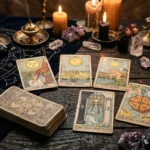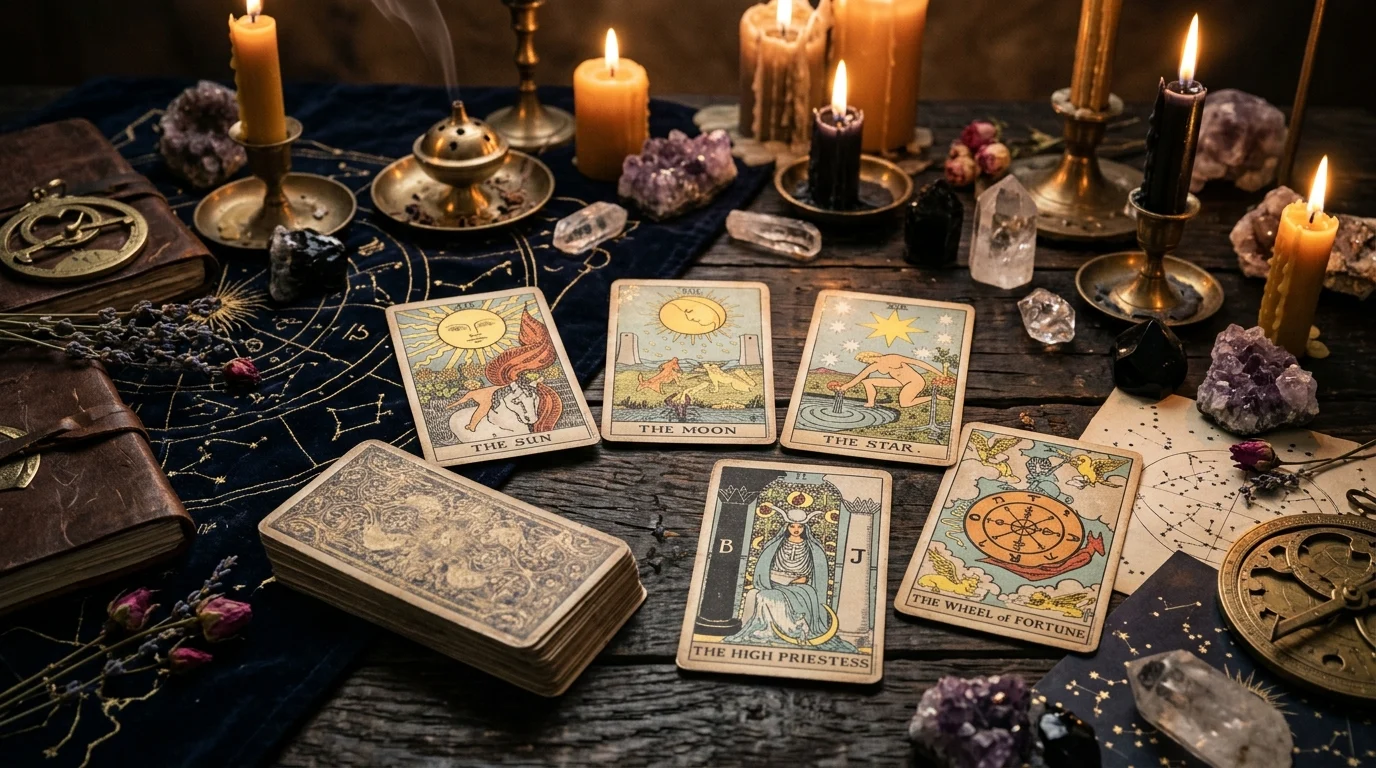
Tarot symbolism reveals the deeper meanings behind the images, colors, numbers, and figures found on tarot cards. Each card tells a story through symbolic details that represent human emotions, life experiences, challenges, and personal growth. From the mysterious High Priestess to the powerful Sun card, tarot symbolism offers a fascinating way to explore life’s questions and possibilities.
For centuries, people have used tarot cards for reflection, spiritual exploration, and personal guidance. Although interpretations differ between traditions, their symbols often connect with universal themes such as love, wisdom, transformation, hope, and new beginnings.
Understanding these symbols can help readers appreciate tarot beyond fortune-telling and discover the meaningful stories hidden within each card.
Tarot Symbolism Meaning (Clear Definition)
Tarot symbolism refers to the visual signs, objects, colors, numbers, characters, and scenes that communicate deeper meanings within tarot cards. These elements help represent different aspects of human life, including emotions, relationships, personal decisions, spiritual development, and transformation.
A tarot deck traditionally contains 78 cards divided into two main groups:
- Major Arcana: Contains 22 cards representing significant life themes, spiritual lessons, and important transitions.
- Minor Arcana: Contains 56 cards representing everyday experiences, relationships, emotions, and practical challenges.
Each card combines several symbolic elements to create its interpretation. For example, a crown may represent authority, a river may suggest emotional movement, and a rising sun often symbolizes hope or renewal.
Tarot symbolism does not have one universal interpretation. Meanings can change depending on the deck, reading tradition, surrounding cards, and personal perspective.
What Does Tarot Symbolism Represent?
Tarot symbolism represents the different experiences and forces that shape human life. Its imagery encourages people to consider their emotions, recognize personal challenges, and explore possible directions.
Some of its most common symbolic themes include:
| Symbolic Element | Common Meaning |
|---|---|
| Sun | Happiness, clarity, success, and renewal |
| Moon | Intuition, mystery, and hidden emotions |
| Star | Hope, inspiration, and spiritual healing |
| Crown | Authority, achievement, and leadership |
| Water | Emotions, intuition, and inner feelings |
| Sword | Truth, decisions, and intellectual conflict |
| Cup | Love, relationships, and emotional connections |
| Wand | Creativity, ambition, and personal energy |
| Pentacle | Material stability, resources, and prosperity |
| Wheel | Change, destiny, and life’s cycles |
These meanings provide a starting point for understanding individual tarot cards.
The Symbolism of Major Arcana Cards
Beginner’s Guide to Tarot: Major Arcana, Minor Arcana, and More | ASCEND
Tc: Rider Waite Tarot Deck – Standard Usg – Altasphere
Tarot Cards Meaning: The Major & Minor Arcana Explained
The Major Arcana represents important themes and turning points in life. Each card carries a distinctive message.
Some well-known examples include:
- The Fool: New beginnings, innocence, adventure, and taking a leap of faith.
- The Magician: Creativity, confidence, personal abilities, and taking action.
- The High Priestess: Intuition, hidden knowledge, mystery, and inner wisdom.
- The Empress: Fertility, nurturing, abundance, and creativity.
- The Emperor: Structure, authority, discipline, and responsibility.
- The Lovers: Love, harmony, relationships, and meaningful choices.
- Death: Transformation, endings, and the beginning of a new chapter.
- The Star: Hope, inspiration, healing, and renewed confidence.
- The Sun: Joy, success, optimism, and clarity.
- The World: Completion, achievement, and personal fulfillment.
Interestingly, the Death card usually symbolizes transformation rather than literal physical death. Its meaning often concerns releasing the past and making room for change.
The Symbolism of Minor Arcana Cards
The Minor Arcana focuses on everyday situations and personal experiences. Its four suits represent different areas of life.
1. Cups – Emotions and Relationships
Cups represent feelings, love, compassion, relationships, and emotional experiences. They often connect with the element of water.
2. Swords – Thoughts and Challenges
Swords symbolize communication, truth, decisions, mental conflict, and intellectual strength. Their traditional element is air.
3. Wands – Creativity and Ambition
Wands represent passion, motivation, action, inspiration, and personal growth. They connect with the element of fire.
4. Pentacles – Material Life and Stability
Pentacles symbolize money, career, health-related routines, practical responsibilities, and physical resources. They traditionally connect with earth.
Together, these four suits provide a symbolic picture of everyday human experiences.
Spiritual Meaning of Tarot Symbolism
Carmen Tarot | O destino está escrito, os caminhos são escolhas.
The spiritual meaning of tarot symbolism often relates to self-discovery, intuition, personal transformation, and the search for deeper understanding.
Many spiritual traditions view tarot imagery as a reflection of the inner journey. Each card can encourage individuals to examine their beliefs, recognize emotional patterns, and think about their relationship with the world.
Several spiritual themes appear throughout tarot decks.
Self-Discovery and Inner Wisdom
Cards such as the Hermit and High Priestess represent reflection, patience, and inner knowledge. They encourage people to spend time understanding their thoughts and feelings.
Transformation and Spiritual Growth
The Death, Tower, and Judgement cards often symbolize major personal changes. Their imagery reminds readers that growth sometimes requires releasing old habits and reconsidering familiar beliefs.
Balance and Harmony
Temperance represents moderation, patience, and the importance of bringing different aspects of life into balance.
Hope and Renewal
The Star symbolizes inspiration, emotional renewal, and faith in better possibilities. It reminds people that difficult experiences do not eliminate the opportunity for a fresh beginning.
Tarot can support personal reflection, but its spiritual interpretations should not be treated as scientifically proven messages or guaranteed predictions.
Biblical / Religious Meaning of Tarot Symbolism
Tarot symbolism has an interesting relationship with religious traditions, particularly Christianity. However, tarot cards do not originate from the Bible, and their traditional meanings should not be confused with biblical teachings.
Some tarot images contain visual elements that also appear in religious art and symbolism.
For example:
- The Star: Can remind viewers of hope, divine light, and spiritual guidance.
- The Sun: May evoke themes of light, life, and renewal.
- The Hierophant: Represents religious institutions, traditional teachings, and spiritual authority within tarot.
- Judgement: Contains imagery that resembles resurrection and final judgement in Christian artistic traditions.
- The Devil: Represents temptation, attachment, and destructive patterns in tarot interpretation.
Different religious communities have different views about tarot. Some Christians reject its use because of concerns about divination, while others approach its imagery as a subject of historical or artistic interest.
It is important to understand that similarities between tarot images and religious symbols do not establish a shared religious origin.
Tarot Symbolism in History and Culture
El tarot de Visconti-Sforza | Tarot decks, Tarot, Visconti
Tarocchi. Le origini, le carte, la fortuna – – eventi
Celebrating the Tarot de Marseille Type I | Tarot Heritage
10
Tarot cards have a long history connected with European playing-card traditions, artistic development, and changing cultural beliefs.
The earliest surviving tarot decks appeared in 15th-century Italy. Wealthy families commissioned beautifully decorated cards, which often included religious, political, and allegorical imagery.
Initially, tarot cards served as playing cards rather than tools for spiritual readings.
The Development of Tarot Symbolism
During the 18th century, European occult writers began assigning mystical and symbolic meanings to tarot cards. This period helped establish connections between tarot, astrology, numerology, and esoteric traditions.
In the late 19th and early 20th centuries, occult movements further developed these interpretations.
One particularly influential deck was the Rider–Waite–Smith tarot, first published in 1909. Its illustrated Minor Arcana cards made symbolic storytelling easier to understand.
Cultural Interpretations Across Different Traditions
Tarot symbolism has developed through different cultural influences.
- European traditions: Often emphasize historical allegories, religious imagery, and classical symbolism.
- Occult traditions: Connect tarot with astrology, numerology, and mystical philosophies.
- Modern spiritual communities: Frequently use tarot for self-reflection and personal exploration.
- Contemporary popular culture: Presents tarot as a source of artistic inspiration, storytelling, and entertainment.
These changing interpretations demonstrate how symbols can develop new meanings as societies and beliefs evolve.
Tarot Symbolism in Literature and Art
The Moon Tarot Card Meaning: Illusion, Fear & Intuition
Tarot symbolism has influenced literature, painting, illustration, fashion, and contemporary visual storytelling.
Artists often appreciate tarot because its imagery combines recognizable objects with mysterious and imaginative scenes. A single card can communicate several ideas without requiring lengthy explanations.
Symbolism in Visual Art
Tarot cards use several artistic elements to communicate meaning.
Colors: Red often represents passion and energy, while blue may suggest wisdom, calmness, or spirituality.
Animals: Lions can symbolize courage and strength, while birds frequently represent freedom, messages, or higher perspectives.
Natural Elements: Mountains may suggest challenges, water can represent emotions, and flowers often symbolize beauty or renewal.
Clothing and Objects: Crowns, robes, staffs, and other objects can communicate authority, knowledge, responsibility, and personal power.
Tarot in Literature and Storytelling
Writers sometimes use tarot cards as symbolic devices to introduce mystery, foreshadow events, or explore character development.
For example, a character receiving The Fool card might represent the beginning of an unfamiliar journey. The Tower could symbolize the sudden collapse of an established belief or relationship.
These references allow authors to communicate complex ideas through familiar visual symbols.
Dream Meaning of Tarot Symbolism
Dreaming about tarot cards may reflect curiosity, uncertainty, personal questions, or a desire to understand an unfamiliar situation.
The meaning depends on the dream’s details and the emotions experienced during sleep. There is no scientifically established universal interpretation of tarot dreams.
Common dream scenarios include:
- Seeing tarot cards: May reflect a search for answers or greater self-understanding.
- Reading tarot cards: Can represent decision-making, curiosity, or a desire for guidance.
- Drawing The Fool: May symbolize openness to new experiences or an unfamiliar opportunity.
- Seeing The Death card: Could reflect concerns about change, endings, or personal transformation.
- Seeing The Star: May represent hope, encouragement, and positive expectations.
- Receiving a mysterious tarot reading: Might reflect uncertainty about the future or a wish for reassurance.
Dreams are highly personal. Your emotions, memories, and current experiences may provide more useful context than a fixed symbolic interpretation.
Modern Meaning of Tarot Symbolism
Tarot for Self-Reflection: Your Guide to Inner Wisdom – Mama Nature
Today, tarot symbolism appears in many areas of everyday culture. People explore tarot through spiritual practices, creative hobbies, entertainment, psychology-inspired reflection, and artistic expression.
Modern readers often focus less on predicting specific events and more on understanding their thoughts, feelings, and possible choices.
Tarot as a Tool for Self-Reflection
Many people use tarot cards to explore personal questions. For example, drawing the Hermit might encourage someone to consider whether they need time alone to reflect before making an important decision.
Tarot and Personal Development
Tarot imagery can provide useful prompts for thinking about confidence, relationships, responsibilities, and emotional growth.
A card such as Strength may encourage patience and courage, while Temperance can inspire a more balanced approach to daily life.
Tarot in Digital Culture
Social media, online communities, digital decks, and mobile applications have made tarot more accessible.
People share card interpretations, discuss different decks, and explore the artistic meanings behind individual symbols.
However, tarot should not replace professional medical, financial, or psychological advice. Its greatest practical value often comes from thoughtful reflection rather than treating a reading as a certain prediction.
FAQS:
1. What is the main meaning of tarot symbolism?
Tarot symbolism represents human experiences, emotions, choices, challenges, and personal transformation through illustrated cards. Its images encourage reflection and offer different ways to interpret life’s situations.
2. What do the four tarot suits symbolize?
The four suits represent different areas of life: Cups symbolize emotions, Swords represent thoughts, Wands express creativity and action, and Pentacles relate to material matters and stability.
3. What is the spiritual meaning of tarot cards?
Spiritually, tarot cards are often associated with intuition, self-discovery, personal growth, and transformation. Their interpretations depend on individual beliefs and reading traditions.
4. Does the Death tarot card mean actual death?
No. In traditional tarot interpretation, the Death card usually represents endings, transformation, and new beginnings rather than literal physical death.
5. Can tarot cards predict the future?
Some spiritual traditions use tarot for divination, but there is no reliable scientific evidence that tarot cards can predict future events. Many people instead use them as tools for reflection and exploring possible choices.
Conclusion
Tarot symbolism offers a fascinating way to explore human emotions, personal experiences, spiritual ideas, and life’s many transitions. From the hopeful Star to the transformative Death card, each image carries layers of meaning shaped by history, culture, and individual interpretation.
Whether you approach tarot as a spiritual tradition, an artistic subject, or a tool for self-reflection, its symbols invite you to look beyond appearances and discover new perspectives. Ultimately, tarot can encourage curiosity, awareness, and a deeper understanding of life’s journey.

I explore the meanings and stories behind symbols, helping readers understand their cultural, spiritual, and everyday significance through clear, engaging, and meaningful insights.