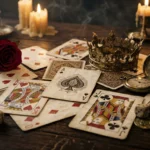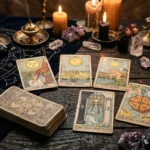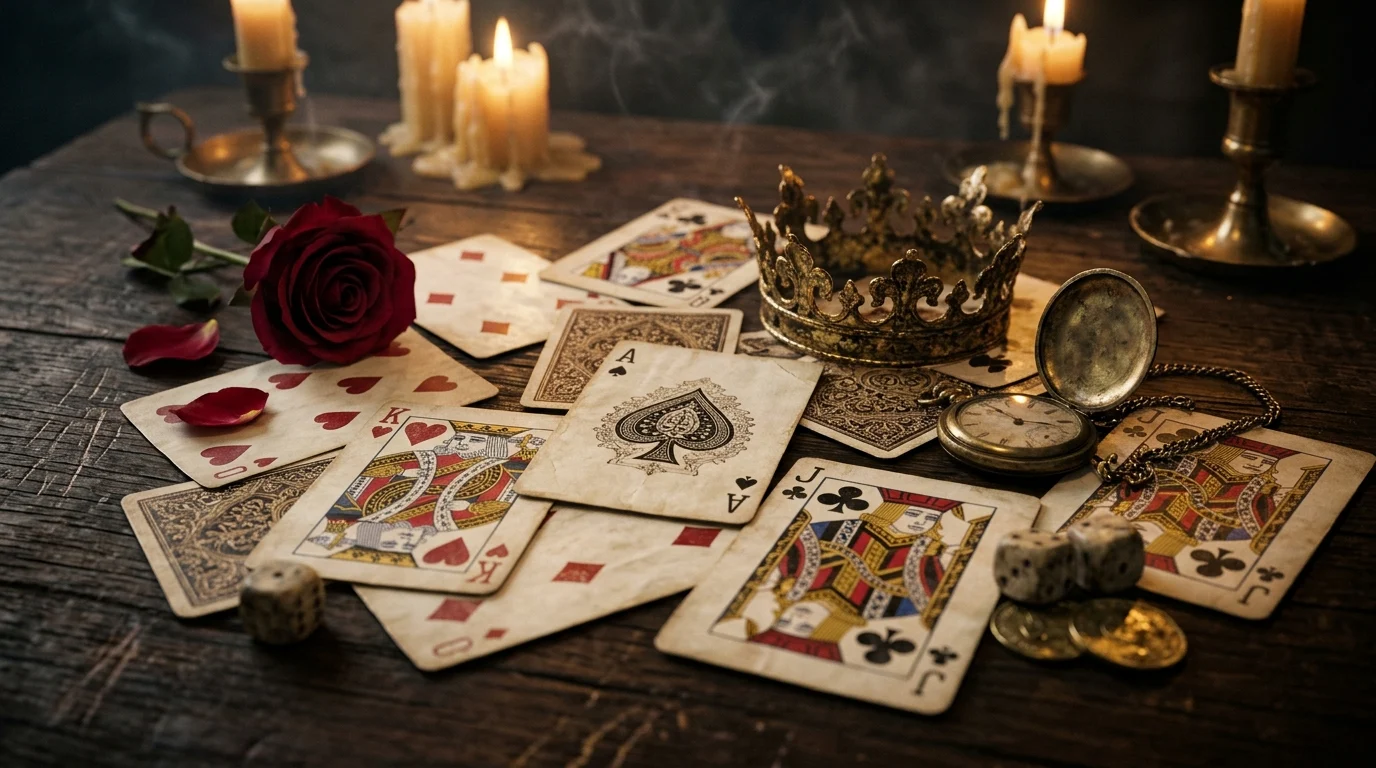
Card symbolism explores the deeper meanings behind cards, their designs, numbers, colors, suits, and images. From traditional playing cards to tarot decks, cards have represented luck, knowledge, mystery, strategy, destiny, and personal choices. Throughout history, people have used cards for entertainment, storytelling, spiritual reflection, and symbolic interpretation.
The meaning of a card often depends on its imagery, cultural background, and the situation in which someone encounters it. A heart may represent love, while a spade can suggest challenges, wisdom, or transformation. Understanding card symbolism helps reveal how ordinary objects can carry deeper messages about human experiences.
Card Symbolism Meaning (Clear Definition)
Card symbolism refers to the meanings and messages associated with cards, including their suits, numbers, colors, illustrations, and traditional associations.
Cards can symbolize different aspects of life, such as relationships, opportunities, challenges, emotions, knowledge, and personal decisions. Their interpretations vary depending on the type of card and the cultural tradition behind it.
For example:
- Heart: Love, affection, compassion, and emotional connections.
- Diamond: Wealth, success, material values, and opportunities.
- Club: Growth, creativity, action, and ambition.
- Spade: Challenges, wisdom, transformation, and difficult decisions.
In tarot, individual cards also carry specific symbolic meanings. The Sun often represents happiness and clarity, while the Tower traditionally symbolizes sudden change and disruption.
Therefore, card symbolism connects visual designs with ideas, emotions, and experiences that people recognize in everyday life.
What Does Card Symbolism Represent?
Card symbolism represents several important themes associated with human life. Although meanings differ between card traditions, certain symbolic ideas appear repeatedly.
1. Luck and Fortune
Cards frequently represent luck, chance, and unexpected opportunities. In traditional playing-card games, winning or losing often depends on the cards a person receives.
For this reason, cards can symbolize uncertainty and the unpredictable nature of life.
2. Love and Relationships
The heart suit traditionally represents affection, romance, friendship, and emotional connections.
It reminds people of the importance of relationships and the feelings that shape personal experiences.
3. Wealth and Success
Diamonds are commonly associated with money, financial security, prosperity, and material achievements.
Their traditional symbolism reflects people’s hopes for stability and success.
4. Challenges and Transformation
Spades can symbolize difficulties, important decisions, intellectual strength, and personal transformation.
Their darker appearance sometimes connects them with mystery and life’s more complicated experiences.
5. Knowledge and Strategy
Playing cards require observation, memory, planning, and decision-making.
Consequently, cards can represent intelligence, patience, strategic thinking, and the ability to respond to changing circumstances.
Symbolic Meanings of Different Cards
| Card Symbol | Common Symbolic Meaning |
|---|---|
| Ace | New beginnings and potential |
| King | Authority, leadership, and responsibility |
| Queen | Wisdom, confidence, and influence |
| Jack | Youth, energy, and opportunity |
| Joker | Freedom, unpredictability, and humor |
| Heart | Love and emotions |
| Diamond | Wealth and prosperity |
| Club | Growth and ambition |
| Spade | Challenges and wisdom |
These interpretations are traditional associations rather than universal rules.
Spiritual Meaning of Card Symbolism
The spiritual meaning of card symbolism often connects with intuition, self-discovery, personal growth, and life’s uncertainties.
In different spiritual traditions, people use cards as tools for reflection and exploring personal questions. Tarot cards, for example, contain images that encourage individuals to think about their emotions, relationships, challenges, and future possibilities.
Some common spiritual interpretations include:
Intuition and Inner Wisdom: Cards can encourage people to listen to their inner thoughts and consider perspectives they may have overlooked.
Personal Transformation: Certain cards symbolize endings, changes, and new beginnings. They can represent the possibility of learning from difficult experiences.
Balance and Harmony: Different card suits can represent different areas of human experience, including emotions, material needs, creativity, and intellectual development.
Life’s Uncertainty: Cards remind people that not everything happens according to a fixed plan. Flexibility and thoughtful decisions remain important.
Self-Discovery: Interpreting symbolic images can help individuals explore their values, feelings, and personal goals.
However, spiritual interpretations depend on personal beliefs. There is no scientific evidence that cards can reliably predict future events or reveal hidden spiritual truths.
Biblical / Religious Meaning of Card Symbolism
Cards do not have one universally accepted biblical meaning. The Bible does not provide a specific symbolic interpretation of modern playing cards or tarot decks.
However, several religious themes can help explain how people understand chance, decisions, wisdom, and personal responsibility.
Cards and the Concept of Chance
Some people associate playing cards with gambling and uncertainty. Biblical teachings frequently encourage responsible behavior and warn against allowing the desire for money to control personal decisions.
Cards and Wisdom
The Bible emphasizes wisdom, patience, and thoughtful decision-making. These values can connect symbolically with the strategic thinking involved in card games.
Cards and Divination
Some religious traditions discourage practices intended to predict the future or obtain hidden knowledge through divination.
For this reason, interpretations of tarot and fortune-telling cards differ among Christian communities and other religious groups.
It is important to distinguish traditional card symbolism from actual biblical teachings.
Card Symbolism in History and Culture
print; playing-card | British Museum
The World in Play: Luxury Cards 1430–1540 – The Metropolitan Museum of Art
1709 – Tarot de Pierre Madenié
10
Cards have a long and interesting history that reflects changing traditions, artistic styles, and social activities.
Playing cards are generally believed to have originated in China before spreading through different parts of Asia and reaching Europe during the later medieval period.
Over time, different cultures developed their own card designs, games, and symbolic associations.
The History of Playing Cards
Traditional playing cards eventually developed into familiar suits, including hearts, diamonds, clubs, and spades.
These symbols became widely recognized through European card traditions. Their designs also influenced modern games, artwork, and popular culture.
The Development of Tarot Cards
Tarot cards appeared in Europe during the 15th century, initially as playing cards used in special card games.
Later, particularly from the 18th century onward, some communities began using tarot decks for divination and spiritual interpretation.
Today, tarot symbolism includes detailed illustrations, archetypal figures, numbers, and traditional imagery.
Cultural Interpretations of Cards
Different societies understand cards in different ways.
- In Western culture, playing cards commonly represent entertainment, games, and chance.
- In spiritual communities, tarot cards can represent intuition and personal reflection.
- In popular culture, cards often symbolize mystery, risk, intelligence, and unexpected events.
- In literature, a deck of cards can represent fate, power, and the unpredictability of human life.
These cultural differences show how one object can develop many meanings over time.
Card Symbolism in Literature and Art
Destiny Cards at Seven Reflections
Salvador Dalí’s Playing Cards – For Sale on Artsy
The Lovers Meaning: Yes or No, Love, Soulmates & Reversed
11
Cards have inspired artists, writers, filmmakers, and storytellers for generations.
Their recognizable designs make them useful symbols for expressing complex ideas without lengthy explanations.
Cards as Symbols of Fate
In literature, drawing a particular card can represent an unexpected event or an important turning point.
A character receiving an unusual card might symbolize a new opportunity, a warning, or an uncertain future.
Cards as Symbols of Power
Kings and queens often represent leadership, authority, social status, and influence.
Artists frequently use these figures to explore themes of ambition, control, and human relationships.
The Joker as a Symbol of Freedom
The joker is an especially interesting figure because it often operates outside traditional rules.
In art and storytelling, the joker can represent rebellion, humor, unpredictability, and the ability to challenge established expectations.
Cards in Visual Art
Artists use card imagery to create compositions involving symmetry, contrast, color, and recognizable characters.
Hearts, spades, diamonds, and clubs can communicate emotions and ideas through simple visual elements.
Dream Meaning of Card Symbolism
Dreaming about cards can have different possible interpretations depending on the dream’s details and the emotions experienced during sleep.
From a symbolic perspective, cards in dreams may relate to choices, uncertainty, relationships, competition, or opportunities.
Here are some common interpretations:
| Card Dream | Possible Interpretation |
|---|---|
| Playing cards | Choices, competition, or uncertainty |
| Winning a card game | Confidence or hopes for success |
| Losing a card game | Fear of failure or disappointment |
| Finding a card | An unexpected opportunity |
| Seeing a joker | Unpredictability or freedom |
| Receiving an ace | A fresh start or new potential |
| Seeing tarot cards | Self-reflection or unanswered questions |
Dreaming About Playing Cards
This dream may reflect situations where you must make decisions or take calculated risks.
Dreaming About Tarot Cards
Tarot cards in dreams may symbolize curiosity, intuition, or a desire to understand an uncertain situation.
Dreaming About Losing Cards
Losing cards might represent concerns about missed opportunities, uncertainty, or a lack of control.
Remember that dreams do not have scientifically established universal meanings. Personal experiences and emotions provide important context when interpreting them.
Modern Meaning of Card Symbolism
National Playing Cards | theory11
In modern society, card symbolism extends beyond traditional games and spiritual practices.
Cards appear in fashion, graphic design, entertainment, tattoos, digital games, and popular media.
Their recognizable imagery makes them powerful visual symbols.
Cards in Fashion and Tattoos
Playing-card tattoos often express personal beliefs, individuality, and attitudes toward life’s uncertainties.
For example:
- An ace can represent confidence and ambition.
- A queen can symbolize independence and strength.
- A king can represent leadership and authority.
- A joker can express humor and unconventional thinking.
- A heart can represent love and emotional loyalty.
Cards in Digital Culture
Digital games frequently use card-based systems to represent abilities, characters, achievements, and strategic choices.
These designs continue the traditional connection between cards, competition, planning, and chance.
Cards as Symbols of Life’s Choices
One of the most meaningful modern interpretations of cards is their connection with decision-making.
People sometimes use the expression of being dealt a particular hand to describe circumstances they cannot control.
This idea reminds us that although we cannot always choose our starting conditions, we can decide how to respond to them.
FAQS:
1. What Does Card Symbolism Mean?
Card symbolism refers to the meanings associated with playing cards, tarot cards, their suits, numbers, and illustrations. These symbols can represent love, luck, wealth, wisdom, and personal transformation.
2. What Do the Four Playing Card Suits Symbolize?
Hearts commonly represent love, diamonds represent wealth, clubs represent growth, and spades represent challenges or wisdom. These are traditional interpretations rather than fixed meanings.
3. What Does an Ace Symbolize?
An ace often symbolizes new beginnings, opportunity, potential, and personal achievement. Its meaning can change depending on the game or symbolic tradition.
4. What Does a Joker Symbolize Spiritually?
The joker can represent freedom, unpredictability, humor, and breaking away from traditional expectations. Some interpretations also connect it with transformation and unexpected life changes.
5. Are Tarot Cards and Playing Cards Symbolically Connected?
Yes. Tarot and traditional playing cards share historical connections, including recognizable suit structures and card imagery. However, tarot decks have additional symbolic systems and interpretations.
Conclusion
Card symbolism reveals how simple images, numbers, and suits can communicate deeper ideas about life, relationships, fortune, and personal growth. From traditional playing cards to spiritual tarot decks, these symbols reflect human curiosity about uncertainty and the future.
Whether cards represent love, wisdom, ambition, or unexpected change, their meanings depend on cultural traditions and personal interpretation. Ultimately, card symbolism reminds us that life involves both chance and choice, and our decisions help shape the journey ahead.

I explore the meanings and stories behind symbols, helping readers understand their cultural, spiritual, and everyday significance through clear, engaging, and meaningful insights.