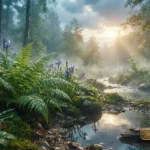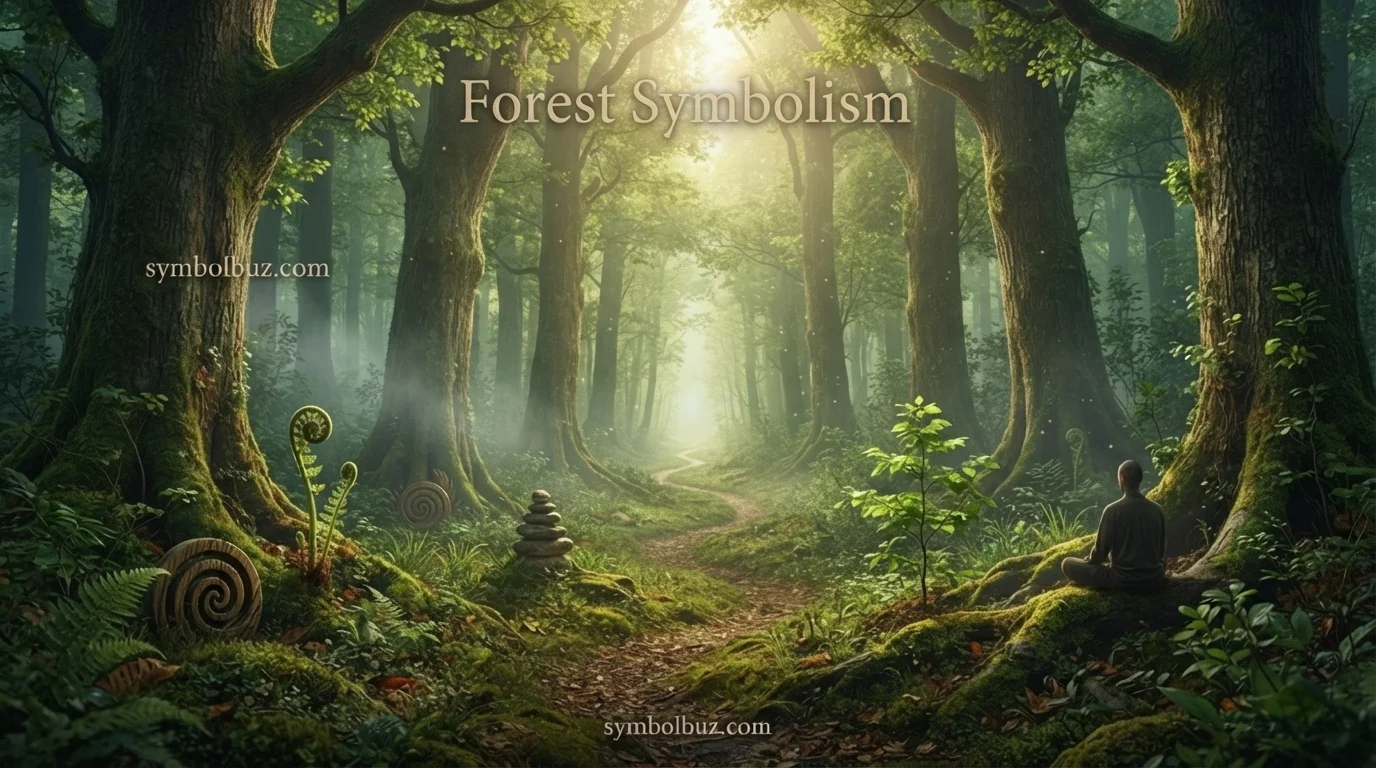
Forests have long represented mystery, growth, protection, and the unknown. Forest symbolism explores the deeper meanings people associate with trees, woodland paths, darkness, nature, and the hidden world within a forest. Across cultures, forests can symbolize both comfort and uncertainty—places where people become lost, discover something important, or experience personal transformation.
Whether you encounter a forest in a dream, story, painting, spiritual experience, or everyday life, its meaning often depends on the setting and your emotional response to it.
Forest Symbolism Meaning (Clear Definition)
Forest symbolism refers to the symbolic meanings connected with forests, trees, wilderness, and woodland environments. A forest commonly represents growth, mystery, transformation, protection, nature, the unconscious mind, and the journey into the unknown.
Unlike a single tree, which often represents stability and individual growth, a forest can symbolize a larger and more complex world. Its many paths, hidden spaces, changing light, and dense vegetation create a powerful image of life’s uncertainty.
Common meanings of forest symbolism include:
| Symbolic Meaning | What It Represents |
|---|---|
| Growth | Personal development and new beginnings |
| Mystery | Hidden knowledge and unanswered questions |
| Transformation | Change and important life transitions |
| Protection | Shelter, safety, and natural strength |
| The Unknown | Uncertainty and unexplored possibilities |
| Connection | Relationship with nature and the world |
| Inner Self | Thoughts, emotions, and the subconscious |
| Freedom | Escape from restrictions and routine |
The meaning can change depending on whether the forest appears bright, dark, peaceful, dangerous, ancient, or full of life.
What Does Forest Symbolism Represent?
Forest symbolism can represent many aspects of human experience. Some of its strongest associations are connected to nature symbolism, personal growth, mystery, and transformation.
1. Growth and Renewal
A forest is constantly changing. New plants grow, old trees fall, and seasons transform the landscape.
For this reason, forests often symbolize personal growth and renewal. They remind us that change is a natural part of life.
2. Mystery and the Unknown
A forest can hide what lies beyond the next tree or around the next bend. This makes it a natural symbol of mystery.
A forest may represent questions that have not yet been answered or experiences that have not yet been explored.
3. Transformation
Entering a forest can symbolize entering a different stage of life. A person may enter uncertain, face challenges along the way, and eventually emerge changed.
This makes the forest a powerful symbol of transformation.
4. Protection and Shelter
Dense forests have historically provided shelter, food, and resources. Symbolically, they can represent safety, protection, and a place to retreat from the outside world.
5. The Unconscious Mind
Because much of a forest is hidden beneath branches, shadows, roots, and vegetation, it is sometimes associated with the hidden parts of the human mind.
In this sense, a forest can symbolize emotions, memories, fears, desires, and thoughts that are not immediately visible.
6. Freedom and Independence
A wilderness far from cities can represent freedom from social expectations and everyday routines.
Forest symbolism can therefore suggest a desire to reconnect with yourself and live more naturally.
Spiritual Meaning of Forest Symbolism
Spiritually, forests are often associated with connection, renewal, wisdom, solitude, and inner discovery.
Many people experience forests as peaceful places where everyday distractions become quieter. The sound of leaves, flowing water, birds, and wind can encourage reflection.
A forest may spiritually symbolize:
- Inner peace — finding calm away from noise and pressure.
- Spiritual growth — developing greater understanding and awareness.
- Connection with nature — recognizing humanity’s relationship with the natural world.
- Wisdom — learning through observation, patience, and experience.
- Solitude — taking time to understand yourself.
- Transformation — leaving behind an old version of yourself.
- Mystery — accepting that not everything in life has an immediate explanation.
An ancient forest can carry an especially strong sense of wisdom because its age suggests endurance, memory, and the passage of time.
Biblical / Religious Meaning of Forest Symbolism
Forests and wooded landscapes appear in biblical and religious traditions, although their meanings vary according to the specific passage and context.
In the Bible, trees, forests, mountains, gardens, and wilderness frequently appear as important natural settings. Trees can symbolize life, prosperity, righteousness, knowledge, and God’s creation.
A forest may therefore evoke broader religious ideas such as creation, divine power, wilderness, spiritual testing, and the relationship between humanity and nature.
The biblical wilderness is particularly important as a symbolic setting. It can represent hardship and isolation, but it can also become a place of spiritual preparation, reflection, and transformation.
In other religious and spiritual traditions, sacred groves and forests have often been treated as special places connected with deities, ancestors, spirits, rituals, or sacred knowledge.
Because religious symbolism differs considerably between traditions, the meaning of a particular forest image should always be understood within its cultural and textual context.
Forest Symbolism in History and Culture
Forests have played a major role in human history. They provided wood, food, medicine, shelter, and protection, while also creating a boundary between familiar settlements and the unknown wilderness.
This practical importance helped forests develop powerful symbolic meanings.
European Folklore
In European folklore, forests frequently appear as mysterious places where travelers encounter unusual creatures, magical beings, dangers, or unexpected helpers.
Fairy tales often use the forest as a place where characters leave the safety of home and face challenges that lead to maturity.
Celtic Traditions
Trees and woodland landscapes held important cultural significance in Celtic traditions. Certain trees were associated with strength, protection, knowledge, and spiritual importance.
Sacred groves and natural spaces could serve as places for ritual and connection with the natural world.
Japanese Culture
Forests have an important place in Japanese culture and spirituality. Sacred natural spaces can be associated with purity, reverence, harmony, and the presence of spiritual forces.
The idea of living in harmony with nature has also influenced Japanese art, literature, gardens, and spiritual practices.
Indigenous Traditions
Many Indigenous cultures have developed deep relationships with forests and other natural environments. Forests may be understood not simply as resources but as living environments with cultural, spiritual, ancestral, and communal significance.
It is important not to treat Indigenous traditions as one single belief system because different nations and communities have distinct teachings and relationships with their environments.
Forest Symbolism in Literature and Art
Forests are among the most powerful settings in literature and visual art because they can communicate complicated emotions without directly explaining them.
A forest may represent a character’s internal journey.
A character who enters a dark forest might be facing fear, uncertainty, or a major challenge. A character who discovers a peaceful clearing may have reached understanding, safety, or emotional relief.
In fairy tales and fantasy stories, forests often function as thresholds between ordinary life and extraordinary experiences.
Artists also use forests to explore:
- Mystery
- Loneliness
- Beauty
- Fear
- Freedom
- Spirituality
- Human connection with nature
- The passage of time
A bright green forest can create feelings of hope and renewal, while a dark forest can suggest danger, confusion, or hidden truths.
Dream Meaning of Forest Symbolism
Dreaming about a forest can have different interpretations depending on what happens in the dream and how you feel.
There is no single universal dream meaning, but common interpretations include:
Dreaming of a Green Forest
A lush, green forest may symbolize growth, healing, abundance, and new possibilities.
Dreaming of a Dark Forest
A dark forest may reflect uncertainty, fear, confusion, or something you are struggling to understand.
Getting Lost in a Forest
Being lost in a forest can symbolize feeling uncertain about a decision, relationship, career direction, or personal situation.
Walking Through a Forest
Walking peacefully through a forest may suggest self-discovery, reflection, or moving through an important period of personal change.
Finding Your Way Out
Finding an exit can represent clarity, resolution, confidence, or overcoming a difficult period.
A Beautiful Forest
A beautiful and peaceful forest may symbolize emotional balance, appreciation of nature, hope, and inner calm.
The most useful clue is often your emotional experience in the dream. Feeling peaceful suggests a very different interpretation from feeling frightened or trapped.
Modern Meaning of Forest Symbolism
Today, forest symbolism is closely connected with environmental awareness, mental restoration, sustainability, freedom, and the need to reconnect with nature.
Modern life often involves screens, traffic, buildings, and constant information. Forests can symbolize an alternative: quiet, simplicity, natural rhythms, and physical presence.
Forests are also powerful symbols in environmental movements because they represent biodiversity, climate, conservation, and the importance of protecting natural ecosystems.
At a personal level, choosing to spend time in nature can symbolize a desire to slow down and create space for reflection.
The forest therefore has both a collective and personal meaning: it can represent the natural world we need to protect and the inner world we sometimes need to rediscover.
Common Forest Symbolism Meanings at a Glance
If you want the meaning in simple terms, forest symbolism commonly represents:
- Growth: becoming stronger and wiser over time.
- Mystery: discovering what is hidden.
- Transformation: moving from one stage of life to another.
- Protection: finding shelter and security.
- Freedom: escaping limitations and reconnecting with nature.
- Wisdom: learning from time, experience, and observation.
- Self-discovery: exploring your thoughts and emotions.
- The unknown: facing uncertainty with courage.
- Renewal: beginning again after a difficult period.
- Connection: remembering our relationship with the natural world.
FAQs:
What is the main meaning of forest symbolism?
The main meaning of forest symbolism is often connected with growth, mystery, transformation, nature, and the unknown. Its exact meaning depends on the context and emotional feeling associated with the forest.
What does a forest symbolize spiritually?
Spiritually, a forest can symbolize inner growth, wisdom, solitude, renewal, and a deeper connection with nature. It may also represent a journey toward self-understanding.
What does a forest represent in dreams?
A forest in a dream can represent uncertainty, personal growth, hidden emotions, or self-discovery. A peaceful forest often suggests calm or renewal, while a dark or threatening forest may reflect fear or confusion.
What does a dark forest symbolize?
A dark forest commonly symbolizes the unknown, uncertainty, fear, hidden challenges, or unexplored parts of the self. However, its meaning depends strongly on the dream, story, or personal experience.
Why are forests important in symbolism?
Forests are powerful symbols because they combine beauty, danger, mystery, life, darkness, and transformation in one environment. They naturally reflect many of the uncertainties and discoveries found in human life.
Conclusion
Forest symbolism reminds us that the unknown is not always something to fear. A forest can represent confusion and uncertainty, but it can also represent growth, wisdom, protection, freedom, and transformation.
Sometimes the forest symbolizes the part of life where the path is unclear. Yet every path can lead to discovery, and every season brings new growth. In that sense, the forest becomes a meaningful reminder that getting lost can sometimes be the beginning of finding yourself.

I explore symbols, special characters, emojis, and their meanings, sharing simple, useful insights to help readers discover, understand, and creatively use symbols in everyday digital communication.