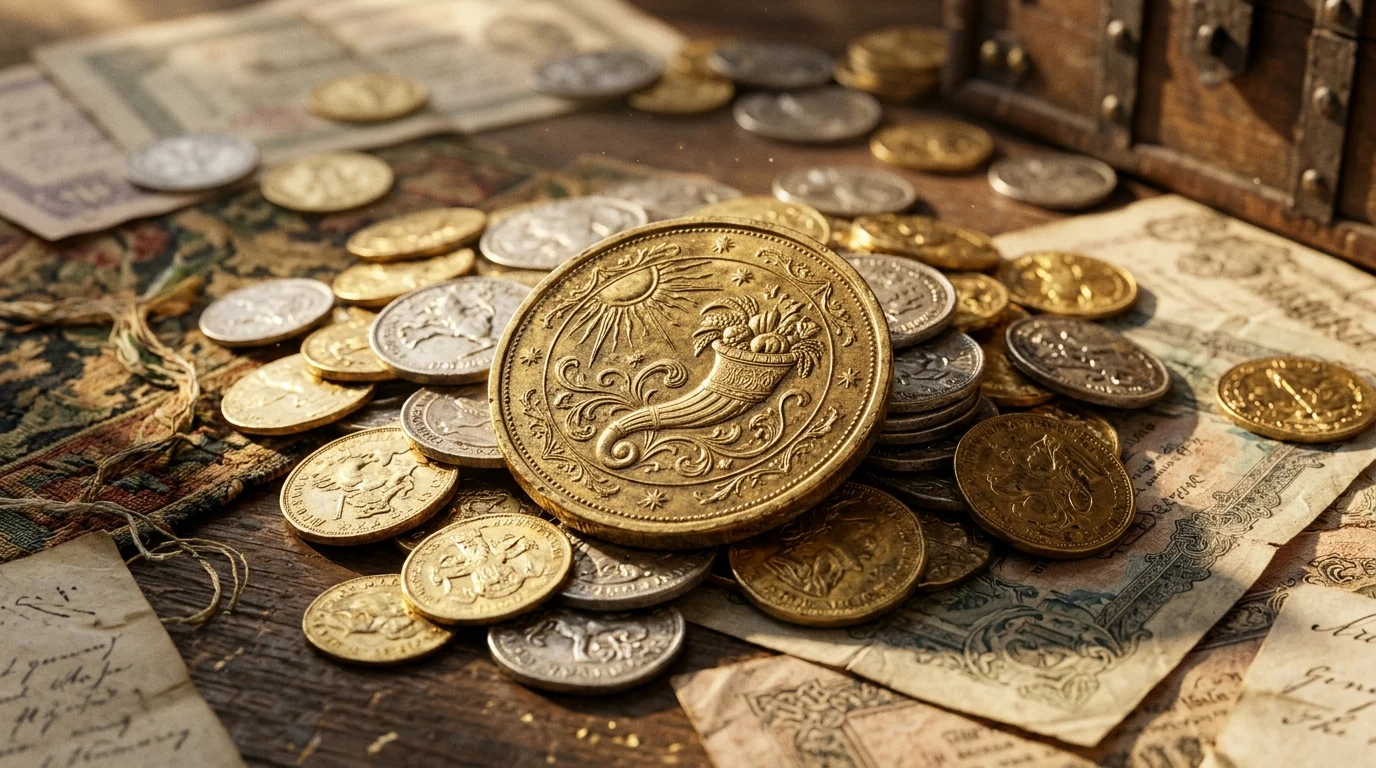
Coin symbolism represents wealth, prosperity, good fortune, opportunity, and the value people place on life. Throughout history, coins have carried meanings beyond their monetary purpose. They have symbolized success, generosity, power, independence, and the rewards of hard work.
A coin may seem like a small everyday object, but its symbolic meaning can be surprisingly deep. Finding a coin on the ground, receiving one as a gift, or keeping an old coin can inspire thoughts about luck, abundance, and new beginnings.
Different cultures and spiritual traditions interpret coins in different ways. While some associate them with financial blessings, others connect them with personal worth, balance, generosity, and the cycles of life.
Coin Symbolism Meaning (Clear Definition)
Coin symbolism refers to the deeper meanings associated with coins beyond their financial value. Coins commonly represent wealth, prosperity, good luck, success, opportunity, and the exchange of energy between people.
Coins can also symbolize:
- Wealth and abundance: Financial stability, material success, and prosperity.
- Good fortune: Unexpected opportunities and positive possibilities.
- Personal value: Self-worth, dignity, and individual importance.
- Exchange and connection: Giving, receiving, generosity, and relationships.
- Power and authority: Leadership, influence, and social status.
- Time and history: Memories, traditions, and the passage of generations.
- New beginnings: Fresh opportunities and the possibility of positive change.
The meaning of a coin often depends on its condition, origin, cultural background, and the situation in which someone encounters it.
What Does Coin Symbolism Represent?
Coins carry several important symbolic meanings that appear in everyday life, traditional beliefs, and cultural practices.
1. Wealth and Prosperity
One of the most common meanings of coins is financial abundance. Because people use coins to exchange goods and services, they naturally became symbols of wealth and economic security.
A coin can represent the hope of achieving financial independence, building a successful future, or enjoying the rewards of hard work.
2. Luck and Good Fortune
Many people consider finding a coin a sign of good luck. This belief appears in different traditions and popular customs.
A coin discovered unexpectedly may feel like a small reminder to remain hopeful and welcome positive opportunities.
3. Personal Worth and Value
Coins also represent personal value. Their monetary worth reminds us that value can take different forms.
A person’s kindness, honesty, knowledge, and character often matter more than material possessions.
4. Generosity and Giving
Giving someone a coin can symbolize kindness, support, and goodwill. In many traditions, charitable giving also reflects compassion and responsibility toward others.
5. Power and Achievement
Throughout history, rulers placed their images and symbols on coins to communicate authority and political influence.
As a result, coins can represent leadership, achievement, recognition, and social standing.
Spiritual Meaning of Coin Symbolism
The spiritual meaning of coins often connects with abundance, gratitude, balance, and the belief that small blessings can carry meaningful lessons.
In different spiritual communities, coins may represent the following ideas.
Abundance and Positive Energy
Coins often symbolize the desire to welcome abundance into life. This meaning extends beyond money and can include happiness, meaningful relationships, personal growth, and opportunities.
Some spiritual traditions associate coins with attracting prosperity, although these interpretations reflect personal beliefs rather than scientifically established effects.
Gratitude for Small Blessings
Finding a coin may encourage someone to appreciate unexpected moments of happiness.
Its small size can serve as a reminder that meaningful blessings do not always arrive in dramatic or impressive forms.
Balance Between Material and Spiritual Life
Coins represent material wealth, but their symbolic meaning can also encourage people to consider what truly matters.
They remind us to balance financial goals with emotional well-being, kindness, wisdom, and spiritual development.
Transformation and New Opportunities
A coin can symbolize a turning point or a fresh opportunity. Just as money changes hands, life also moves through different experiences and stages.
In this interpretation, coins encourage people to remain open to change and recognize possibilities around them.
Biblical / Religious Meaning of Coin Symbolism
Coins have several important meanings in biblical and religious traditions. They appear in stories involving generosity, responsibility, taxation, wealth, and spiritual priorities.
The Widow’s Offering
In the Gospel of Mark 12:41–44 and Luke 21:1–4, Jesus observes a poor widow placing two small coins into the temple treasury.
Although her offering has little monetary value, Jesus praises her generosity because she gives from her poverty.
This story connects coins with:
- Sincere generosity.
- Faith and devotion.
- Sacrifice and compassion.
- The importance of intention over material value.
The Parable of the Lost Coin
In Luke 15:8–10, Jesus tells the story of a woman who searches carefully for a lost silver coin.
After finding it, she celebrates with her neighbors.
The story illustrates the joy of recovering something valuable and forms part of a larger teaching about repentance and the joy associated with a person returning to God.
The Image on the Coin
In Matthew 22:15–22, Jesus discusses a coin bearing Caesar’s image when answering a question about paying taxes.
This passage is commonly associated with civic responsibility and the distinction between worldly obligations and spiritual responsibilities.
Religious Symbolism of Coins
In broader religious customs, coins may also represent:
- Charity and helping those in need.
- Gratitude and thanksgiving.
- Responsibility in managing resources.
- Humility and generosity.
- The difference between material wealth and spiritual richness.
These meanings show that religious coin symbolism often focuses on how people use wealth rather than how much they possess.
Coin Symbolism in History and Culture
Coins have played an important role in human civilization for thousands of years. They have served as money, historical records, political messages, and cultural symbols.
lot 245 – MDC Monnaies de collection
Ancient Civilizations
Ancient Greek and Roman coins often displayed rulers, gods, animals, and important cultural symbols.
These designs communicated political authority, religious beliefs, military achievements, and national identity.
Coins also helped societies develop trade and economic relationships.
Chinese Cultural Traditions
Traditional Chinese coins, particularly round coins with square holes, have strong associations with prosperity and good fortune.
In some customs, people use coin-shaped decorations or arrangements as symbols of financial success, protection, and abundance.
European Traditions
In various European customs, finding a coin has long been associated with good luck.
The popular expression “find a penny, pick it up” reflects the belief that discovering a small coin can bring a moment of good fortune.
Coins as Historical Memories
Old and antique coins preserve information about earlier civilizations.
Their inscriptions, images, and materials reveal details about rulers, trade networks, technology, and cultural values.
For collectors, an old coin can symbolize heritage, memory, and a connection with the past.
Coin Symbolism in Literature and Art
Coins frequently appear in literature, paintings, sculptures, and storytelling because they communicate ideas about wealth, temptation, power, and human choices.
Coins as Symbols of Greed
Writers sometimes use coins to represent excessive desire for money and possessions.
A character who values wealth above everything else may demonstrate how greed can damage relationships and personal happiness.
Coins as Symbols of Generosity
In other stories, a small coin represents compassion and kindness.
An ordinary act of giving can reveal a character’s true personality more effectively than a large display of wealth.
Coins as Symbols of Time and Memory
Ancient coins often appear in historical artwork and stories to represent forgotten civilizations and lost memories.
They can connect characters with their ancestors, traditions, and cultural identities.
Coins in Visual Art
Artists use coins to communicate several ideas:
- Gold coins can represent luxury and success.
- Silver coins may suggest purity, tradition, or value.
- Broken or damaged coins can symbolize loss or hardship.
- Ancient coins can represent history and forgotten memories.
- Scattered coins may suggest wealth, temptation, or financial uncertainty.
Dream Meaning of Coin Symbolism
Dreaming about coins can have different interpretations depending on the dream’s details and your personal experiences.
Coins in dreams are commonly associated with opportunities, financial concerns, self-worth, and personal growth.
Here are some common interpretations:
Finding Coins in a Dream
Finding coins may symbolize unexpected opportunities, hope, or a growing awareness of your personal abilities.
Some traditional dream interpretations associate this experience with good luck or financial improvement.
Receiving Coins in a Dream
Receiving coins may represent appreciation, support, recognition, or a desire for greater security.
It can also reflect the importance of relationships and the value of accepting help.
Losing Coins in a Dream
Losing coins may reflect worries about financial stability, missed opportunities, or concerns about personal value.
The dream may encourage you to examine areas of life where you feel uncertain.
Collecting Many Coins
Collecting coins may symbolize patience, ambition, and the gradual accumulation of achievements.
It can also reflect a desire to build a more secure future.
Gold Coins in a Dream
Gold coins are often associated with success, confidence, achievement, and valuable opportunities.
Silver Coins in a Dream
Silver coins may symbolize emotional balance, reflection, intuition, and personal growth in some traditional interpretations.
Dream meanings are subjective and do not reliably predict future events.
Modern Meaning of Coin Symbolism
In modern life, coins continue to represent more than money. Their symbolic meanings have expanded alongside changes in technology, culture, and personal values.
Financial Independence
Coins remind people of saving, budgeting, and making responsible financial decisions.
Even small amounts can contribute to long-term financial goals when managed consistently.
Digital Currency and Changing Value
As digital payments and cryptocurrencies become more common, the idea of money continues to evolve.
Coins can now symbolize the transition between traditional economic systems and modern financial technology.
Collecting and Personal Identity
Coin collecting connects people with history, craftsmanship, and cultural heritage.
A rare or inherited coin may carry emotional importance that goes far beyond its market price.
Small Actions and Big Results
A single coin may have little financial value, but it can represent the power of small contributions.
This interpretation reminds us that consistent effort, thoughtful decisions, and simple acts of kindness can create meaningful results over time.
FAQS:
1. What Does a Coin Symbolize Spiritually?
Spiritually, a coin commonly symbolizes abundance, gratitude, prosperity, balance, and new opportunities. Some traditions also associate coins with positive energy and blessings.
2. Is Finding a Coin a Sign of Good Luck?
Many cultural traditions consider finding a coin a symbol of good luck and unexpected blessings. However, this is a traditional belief rather than a proven prediction of future events.
3. What Does a Gold Coin Symbolize?
A gold coin commonly represents wealth, success, achievement, confidence, and prosperity. In some traditions, it also symbolizes abundance and good fortune.
4. What Does a Coin Symbolize in the Bible?
In the Bible, coins appear in stories about generosity, responsibility, faith, and spiritual priorities. The widow’s offering and the parable of the lost coin are two important examples.
5. What Does It Mean to Dream About Coins?
Dreaming about coins may reflect financial concerns, personal worth, opportunities, or a desire for security. The interpretation depends on the dream’s circumstances and the dreamer’s personal experiences.
Conclusion
Coin symbolism carries meaningful messages about wealth, prosperity, luck, generosity, and personal value. From ancient civilizations to modern society, coins have represented both material resources and deeper human values.
Whether you find a coin, inherit an antique piece, or give one to someone else, its symbolism can remind you to appreciate small blessings, use resources wisely, and recognize what truly gives life value.
Ultimately, a coin’s greatest meaning may not come from its monetary worth but from the memories, beliefs, and possibilities it represents.

I am Jasmine Marie, an administrator at SymbolBuz. I love exploring symbols and sharing their meanings to help readers understand their deeper stories, messages, and significance.