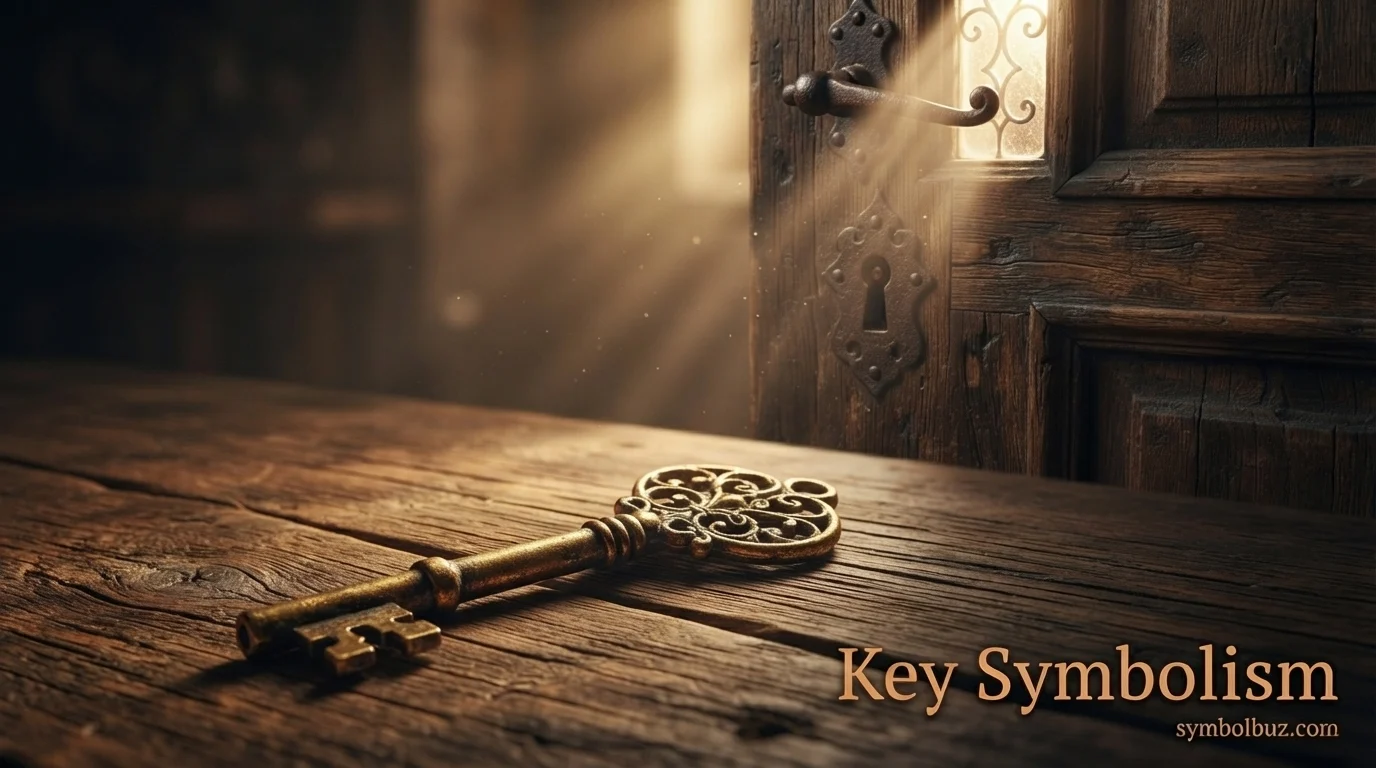
A key may look like a simple everyday object, but its symbolism can be surprisingly deep. Key symbolism is often connected with access, freedom, opportunity, mystery, trust, and personal transformation. Because a key can lock something away or open something hidden, it naturally represents the boundary between what is known and unknown.
Across history, keys have appeared in religious traditions, literature, artwork, ceremonies, jewelry, and personal keepsakes. Their meaning can change depending on the situation, but the central idea remains powerful: a key gives access to something valuable or previously unavailable.
Key Symbolism Meaning (Clear Definition)
Key symbolism refers to the symbolic meaning of keys as representations of access, freedom, knowledge, opportunity, authority, secrets, and new beginnings.
A key can represent both physical and emotional doors. It may symbolize entering a new stage of life, discovering an important truth, gaining someone’s trust, or finally finding a solution to a difficult problem.
The meaning often depends on what the key is opening, who possesses it, and whether the door is locked or already open.
Common Key Symbolism Meanings
| Symbolic Meaning | What It Represents |
|---|---|
| Access | Entry into new opportunities or experiences |
| Freedom | Escape from limitations or restrictions |
| Knowledge | Discovering hidden truth or understanding |
| Opportunity | A chance to begin something meaningful |
| Trust | Being given access to something valuable |
| Mystery | Secrets, hidden information, or the unknown |
| Authority | Power to control or grant access |
| Transformation | Moving from one stage of life to another |
| Protection | Keeping important things safe |
| New Beginnings | Opening the door to a fresh chapter |
What Does Key Symbolism Represent?
Keys can carry several meanings at once. Their symbolism is especially powerful because they are designed to solve a simple problem: how to gain access.
1. Access and Opportunity
A key can symbolize an opportunity that was previously unavailable. Finding or receiving a key may represent discovering a new path, career, relationship, or possibility.
In everyday language, people often describe an important solution as a “key.” This reinforces the idea that keys symbolize answers and breakthroughs.
2. Freedom and Independence
A key can represent freedom because it allows a person to open a locked door and move beyond a restriction.
For someone beginning an independent life, a house key can become a meaningful symbol of self-reliance, responsibility, and personal freedom.
3. Knowledge and Understanding
Keys can symbolize knowledge because understanding something often feels like unlocking a hidden door.
A key may therefore represent wisdom, learning, insight, or the discovery of information that changes how you see the world.
4. Secrets and Mystery
A locked room suggests something hidden, and the key represents the possibility of discovering it.
For this reason, key symbolism frequently appears in stories involving mysteries, secret identities, hidden memories, forbidden knowledge, and unexplored parts of life.
5. Trust and Responsibility
Giving someone a key can be an important act of trust. A house key, office key, or safe key gives another person access to something valuable.
Symbolically, this can represent intimacy, responsibility, loyalty, and confidence in another person.
6. Authority and Power
A person who controls the key often controls access.
Historically and symbolically, this can make keys associated with leadership, authority, guardianship, and responsibility.
Spiritual Meaning of Key Symbolism
The spiritual meaning of a key often centers on opening doors, receiving guidance, discovering inner truth, and moving toward personal transformation.
A key can symbolize the opening of spiritual awareness. It may represent a new understanding that helps someone move beyond fear, confusion, or emotional limitations.
In a spiritual context, the locked door may represent an unresolved problem, while the key represents the insight or courage needed to move forward.
Spiritual Key Symbolism
- A key: Access to wisdom or a new spiritual path
- A golden key: Valuable insight, blessings, or spiritual opportunity
- An old key: Ancient wisdom, memories, or lessons from the past
- A broken key: Frustration, blocked progress, or a difficult transition
- Finding a key: Discovering an answer or opportunity
- Giving away a key: Trust, generosity, or sharing access
- A locked door and key: A challenge that may have a solution
From a personal-growth perspective, key symbolism can encourage you to consider what “door” you are ready to open in your own life.
Biblical / Religious Meaning of Key Symbolism
Keys have significant symbolic associations in Christian and broader religious traditions, particularly with authority, access, stewardship, and spiritual responsibility.
In the New Testament, keys are associated with the Kingdom of Heaven in Matthew 16:19. The imagery connects keys with spiritual authority and the responsibility to open or close access.
In Revelation 1:18, Christ is described as holding the keys of death and Hades, giving the key image a powerful association with authority over life, death, and the spiritual realm.
Keys also appear in Christian artistic traditions through images of Saint Peter holding keys, commonly representing his traditional role as keeper of the keys to heaven.
Religious interpretations should be understood within their specific theological traditions rather than treated as one universal meaning.
Key Symbolism in History and Culture
Keys have been important objects throughout human history because controlling access has always been connected with security and authority.
In ancient societies, keys could be associated with homes, storage areas, temples, and important possessions. Possessing a key could indicate responsibility or social status.
In medieval Europe, keys became powerful symbols of authority and guardianship. Artistic representations of rulers, saints, and civic figures sometimes included keys to communicate responsibility or control.
The symbolism also developed through ceremonies and traditions. Giving someone a key to a home can represent belonging, trust, or a new stage of life.
Keys in Different Cultural Contexts
Christianity: Keys may symbolize spiritual authority and access to heaven.
European heraldry: Keys can represent guardianship, authority, security, and responsibility.
Marriage and relationships: A key may symbolize trust, intimacy, or being welcomed into someone’s private world.
Moving into a new home: A key often represents independence, stability, and a fresh beginning.
Jewelry: Key necklaces and charms commonly symbolize opportunity, personal empowerment, mystery, or unlocking one’s potential.
Key Symbolism in Literature and Art
Keys are powerful literary symbols because they create an immediate question: What does the key open?
Writers often use keys to represent secrets, forbidden knowledge, hidden rooms, lost memories, or opportunities waiting to be discovered.
A character finding a mysterious key can mark the beginning of an adventure. A locked door may represent fear or limitation, while the key creates the possibility of change.
In visual art, keys can communicate mystery and authority without requiring words. A single antique key may suggest history, memory, secrecy, or something valuable that has been forgotten.
The symbolism becomes even stronger when an artist places a key beside a door, lock, heart, book, or treasure chest.
Dream Meaning of Key Symbolism
Dreams about keys are often interpreted through the emotions and circumstances surrounding the dream rather than through one fixed definition.
A key in a dream may symbolize opportunity, access, personal power, hidden knowledge, or a solution to a problem.
Common Key Dreams and Their Possible Meanings
Finding a key: You may be recognizing a new opportunity or discovering an answer.
Losing a key: This may reflect anxiety about losing control, security, direction, or an important opportunity.
Using a key to open a door: It can symbolize progress, discovery, or entering a new phase of life.
A broken key: This may represent frustration, obstacles, or feeling unable to solve a current problem.
Receiving a key: It can symbolize trust, responsibility, acceptance, or being given a new opportunity.
A key that does not fit: This may reflect a situation where your current approach does not seem to work.
Dream interpretation is personal, so your emotions, experiences, and the specific details of the dream matter greatly.
Modern Meaning of Key Symbolism
Today, key symbolism remains relevant even though modern technology has changed how people access homes, cars, offices, and information.
A physical key can still represent independence and belonging. Receiving the keys to a first home, for example, can mark a major personal achievement.
Keys are also common in modern jewelry and tattoos. People may choose key designs to represent freedom, personal growth, unlocking potential, overcoming hardship, or discovering one’s identity.
Digital culture has introduced a related meaning: passwords, access codes, encryption keys, and security credentials all determine who can access protected information.
This gives the ancient symbol a modern interpretation. The key still represents access—but today, what we unlock may be physical, emotional, social, or digital.
Key Symbolism in Love and Relationships
In relationships, a key can carry a particularly intimate meaning.
Giving someone a key to your home can symbolize trust and commitment. It may communicate that the person has become part of your private world.
A key can also represent emotional access. Someone may have “the key to your heart,” suggesting that they have earned a special place in your emotional life.
As a gift, a key can therefore symbolize:
- Trust
- Commitment
- Intimacy
- Loyalty
- Belonging
- Emotional connection
- A shared future
Key Symbolism in Tattoos and Jewelry
Key tattoos are popular because they allow people to attach a deeply personal meaning to a simple image.
A key tattoo might represent overcoming a difficult period, opening a new chapter, protecting personal memories, or discovering inner strength.
Key jewelry can have similar meanings. A small key necklace or charm may symbolize freedom, opportunity, love, mystery, or personal transformation.
Combining a key with another symbol can make its meaning more specific. For example, a key and heart may suggest love and emotional trust, while a key and butterfly can represent transformation and freedom.
FAQs:
What is the main meaning of key symbolism?
The main meaning of key symbolism is access. Keys commonly represent opportunity, freedom, knowledge, trust, authority, and the ability to unlock something hidden.
What does a key symbolize spiritually?
Spiritually, a key can symbolize awakening, wisdom, guidance, transformation, and access to deeper understanding. It may represent finding a path forward after a period of uncertainty.
What does finding a key symbolize?
Finding a key can symbolize discovering an opportunity, solution, insight, or new direction. Its meaning depends on the circumstances and emotions surrounding the experience.
What does a key symbolize in love?
In love, a key often represents trust, intimacy, commitment, and emotional access. Giving someone a key can symbolize welcoming them into an important part of your life.
What does a key mean in a dream?
A key in a dream may represent opportunity, control, hidden knowledge, or a solution. The meaning can change depending on whether the key opens a door, is lost, broken, or given to you.
Conclusion
Key symbolism is ultimately about access and possibility. A key can represent the freedom to move forward, the courage to discover something hidden, or the trust required to enter another person’s world.
Whether found in a dream, worn as jewelry, displayed in art, or held in your hand, a key can remind us that many doors in life remain closed only until we find the right way to open them.

I explore the meanings, history, and cultural significance behind symbols, helping readers understand how symbols connect with ideas, emotions, traditions, and everyday life.