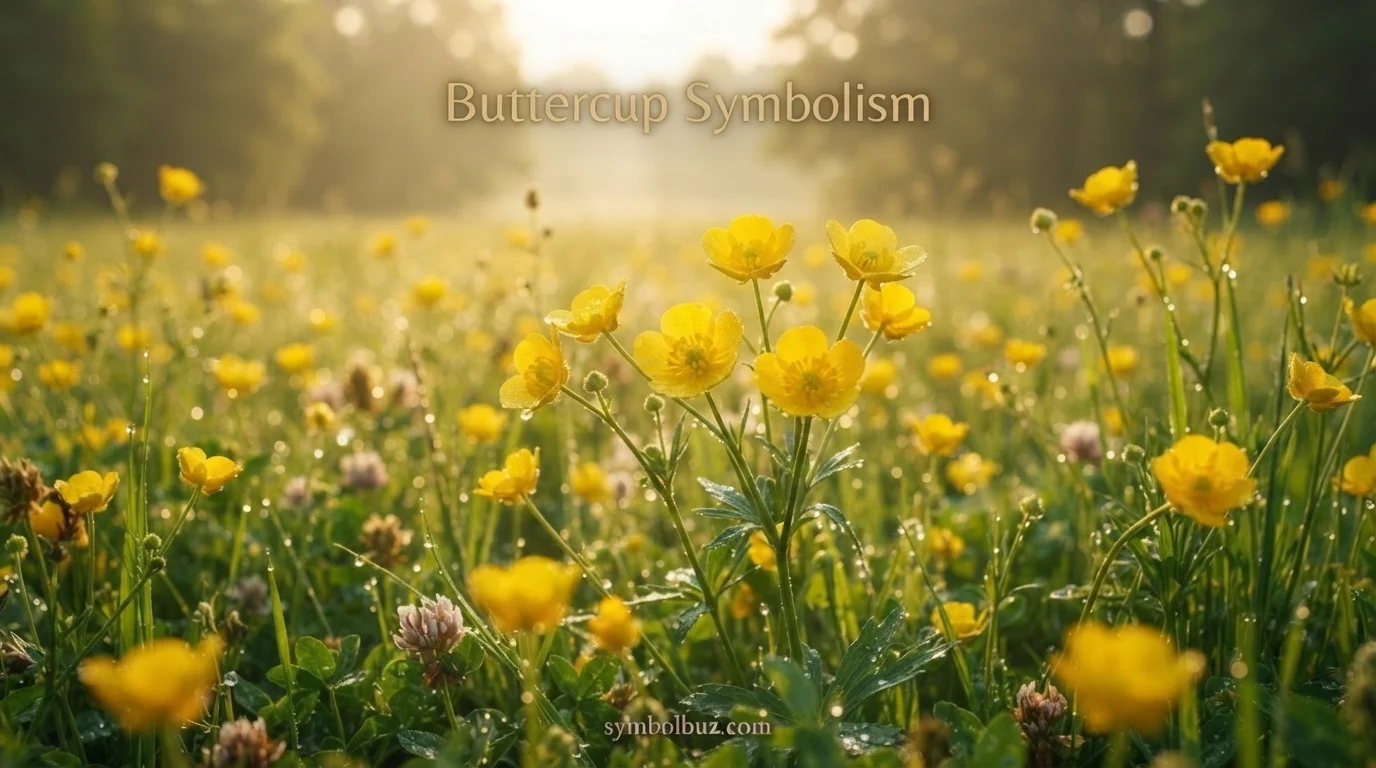
The bright yellow buttercup may look like a simple wildflower, but its cheerful color has inspired rich symbolic meanings for generations. Buttercup symbolism is commonly associated with happiness, youthful joy, positivity, humility, and the simple pleasures of life. Because buttercups often grow naturally in meadows and grassy places, they can also represent freedom, natural beauty, and an uncomplicated connection with nature.
Whether you encountered a buttercup in a dream, received one as a gift, or simply feel drawn to this sunny flower, its symbolism offers a gentle reminder to appreciate small moments of happiness.
Buttercup Symbolism Meaning (Clear Definition)
Buttercup symbolism represents happiness, cheerfulness, youthful innocence, humility, and natural joy. Its vivid yellow petals are strongly connected with sunshine, optimism, and positive energy.
The flower’s delicate appearance also gives it a softer symbolic side. Buttercups can suggest simplicity, sincerity, and the beauty found in ordinary experiences.
In traditional flower symbolism, buttercups are sometimes associated with childhood and playfulness, making them a fitting symbol for carefree emotions and memories.
Key Buttercup Symbolism Meanings
| Symbolic Meaning | What It Represents |
|---|---|
| Happiness | Joy and emotional brightness |
| Youthfulness | Innocence, playfulness, and childhood |
| Positivity | Optimism and hopeful energy |
| Humility | Modesty and simplicity |
| Natural Beauty | Uncomplicated beauty found in nature |
| Cheerfulness | A lighthearted and uplifting spirit |
| New Beginnings | Fresh energy and positive possibilities |
What Does Buttercup Symbolism Represent?
Buttercup symbolism can represent several positive qualities, especially those connected with happiness and simplicity.
1. Happiness and Cheerfulness
The buttercup’s golden-yellow color naturally evokes sunshine. For this reason, it is often interpreted as a symbol of happiness, warmth, and cheerful energy.
2. Youth and Innocence
Buttercups are strongly connected with childhood memories, particularly outdoor play and wildflower-filled meadows. Their symbolism can therefore reflect innocence, curiosity, and youthful enthusiasm.
3. Humility and Simplicity
Although buttercups are visually striking, they are modest wildflowers rather than grand ornamental blooms. This contrast gives them a symbolic connection to humility and appreciating beauty without seeking attention.
4. Optimism
A buttercup standing out among green grass can symbolize hope and positivity. It may represent finding something bright even during an otherwise ordinary or difficult period.
5. Connection With Nature
Because buttercups commonly grow naturally in grassy landscapes, they can symbolize freedom, natural living, and a return to life’s simpler pleasures.
Spiritual Meaning of Buttercup Symbolism
Spiritually, buttercup symbolism can represent joy, gratitude, inner light, simplicity, and emotional renewal.
The flower’s golden appearance can be viewed as a reminder to recognize the light already present in your life. Rather than symbolizing dramatic transformation, the buttercup often carries a quieter message: happiness can be found in small and genuine experiences.
Spiritually, seeing a buttercup may encourage you to:
- Appreciate simple blessings.
- Stay hopeful during uncertain times.
- Reconnect with nature.
- Protect your sense of wonder.
- Let go of unnecessary seriousness.
- Notice moments of everyday joy.
- Approach life with greater gratitude.
The buttercup’s message is gentle but meaningful: you do not always need something extraordinary to experience happiness.
Biblical / Religious Meaning of Buttercup Symbolism
The buttercup does not have a specific symbolic meaning in the Bible, and it is not a major biblical flower mentioned by name. Therefore, claims that buttercups have a fixed biblical meaning should be treated carefully.
However, their general symbolism can be considered alongside broader biblical themes such as joy, gratitude, humility, creation, and appreciation for God’s natural world.
For example, biblical teachings frequently encourage people to recognize beauty in creation and remain grateful for life’s blessings. In that broader spiritual sense, a buttercup can serve as a personal reminder of joy and appreciation.
Its symbolism is therefore better understood as a modern or personal spiritual interpretation rather than an established biblical symbol.
Buttercup Symbolism in History and Culture
Buttercups have long been familiar wildflowers across parts of Europe, North America, and other regions where their species naturally grow. Their bright appearance made them especially noticeable in meadows, fields, gardens, and countryside landscapes.
One well-known childhood tradition involves holding a buttercup beneath someone’s chin. If a yellow reflection appears on the skin, the person is playfully said to love butter or enjoy it.
This simple tradition highlights an important aspect of buttercup cultural symbolism: playfulness and childhood nostalgia.
The flower has also been associated with country landscapes and the uncomplicated beauty of wild nature. Unlike flowers that are strongly connected with formal ceremonies or luxury, buttercups often evoke open fields, summer days, and carefree experiences.
Buttercup Symbolism in Literature and Art
In literature and art, buttercups can function as visual symbols of youth, innocence, countryside life, sunshine, and fleeting happiness.
A field filled with yellow buttercups may create an atmosphere of freedom and peacefulness. Writers can use the flower to evoke childhood memories or a simpler period of life.
Artists may also use buttercups for their strong contrast against green grass. Their yellow color immediately draws attention and can create a warm, optimistic mood.
Because wildflowers are often connected with impermanence, buttercups can also suggest the temporary nature of beautiful moments. A meadow in bloom may represent a season of happiness that should be appreciated while it lasts.
Dream Meaning of Buttercup Symbolism
Dreaming of a buttercup is often interpreted symbolically as a positive image connected with happiness, hope, childhood, optimism, or emotional renewal.
The meaning can change depending on what happens in the dream.
- Seeing a bright buttercup: May symbolize happiness or positive energy.
- Picking a buttercup: Can suggest appreciating a joyful opportunity or meaningful moment.
- A field of buttercups: May represent freedom, peace, or childhood memories.
- Giving someone a buttercup: Could symbolize affection, friendship, or sharing happiness.
- A wilted buttercup: May reflect fading joy, nostalgia, or the end of a particular life phase.
- Planting buttercups: Can symbolize nurturing happiness or creating positive change.
Dream symbolism is personal rather than scientifically fixed, so your emotions and experiences within the dream matter as much as the flower itself.
Modern Meaning of Buttercup Symbolism
Today, buttercup symbolism remains closely connected with positivity, natural beauty, childhood, happiness, and simplicity.
People may choose buttercup imagery for artwork, tattoos, stationery, garden designs, gifts, or personal decorations because of its sunny appearance and cheerful associations.
In a modern world that often feels busy and demanding, the buttercup can represent a refreshing philosophy: find beauty in what is simple, ordinary, and close to you.
Buttercup as a Personal Symbol
A buttercup may be meaningful to someone who wants to represent:
- A cheerful personality
- Childhood memories
- A hopeful outlook
- Love of nature
- Simplicity and humility
- Emotional renewal
- Appreciation for everyday happiness
Its symbolism is especially suitable for people who value quiet joy rather than dramatic displays.
FAQs:
What does a buttercup symbolize?
A buttercup commonly symbolizes happiness, cheerfulness, youthfulness, innocence, humility, and natural beauty. Its bright yellow color also gives it associations with optimism and sunshine.
What does a yellow buttercup symbolize spiritually?
Spiritually, a yellow buttercup can represent inner light, gratitude, joy, hope, and appreciation for simple blessings. These meanings are personal interpretations rather than fixed religious doctrines.
What does it mean when you see a buttercup?
Seeing a buttercup can be interpreted as a reminder to notice small moments of happiness and reconnect with nature. For some people, it may also evoke childhood memories or feelings of nostalgia.
What does a buttercup mean in a dream?
A buttercup in a dream can symbolize happiness, optimism, innocence, or a desire for simpler times. The surrounding dream and your emotional response can influence its personal meaning.
Is buttercup a symbol of love?
Buttercups are not as strongly associated with romantic love as roses or certain other flowers. However, they can symbolize cheerful affection, friendship, innocent fondness, and shared happiness.
Conclusion
Buttercup symbolism celebrates the bright, simple, and joyful side of life. From childhood memories and meadow landscapes to spiritual ideas of gratitude and hope, this cheerful yellow flower reminds us that meaningful happiness does not always need to be complicated.
Sometimes, like a buttercup blooming quietly in a field, the most beautiful things are the simplest ones.

I explore the meanings and stories behind symbols, helping readers understand their cultural, spiritual, and everyday significance through clear, engaging, and meaningful insights.