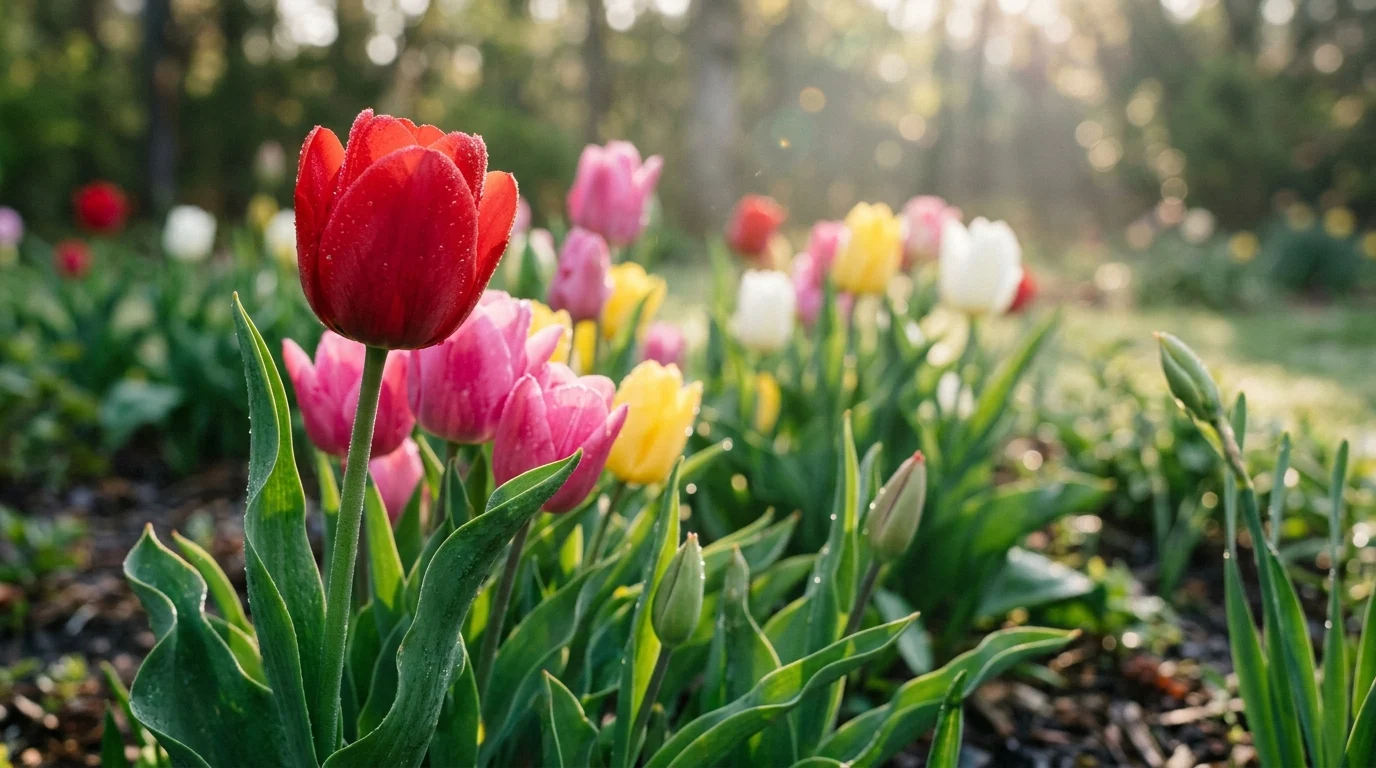
Tulips are more than beautiful spring flowers. They symbolize love, renewal, hope, happiness, and the courage to begin again. Their elegant petals and vibrant colors have made them meaningful gifts for centuries, expressing emotions that words sometimes cannot capture.
Understanding tulip symbolism can help you choose the perfect bouquet, interpret a meaningful dream, or appreciate the deeper message behind these timeless flowers. From passionate red tulips to cheerful yellow blooms and peaceful white varieties, each color carries its own associations.
Whether you are curious about the spiritual meaning of tulips, their cultural history, or what they represent in relationships, these flowers offer a beautiful reminder that life is always capable of blossoming again.
Tulip Symbolism Meaning (Clear Definition)
Tulip symbolism refers to the meanings and emotions associated with tulips, including love, renewal, forgiveness, prosperity, and emotional growth. Although interpretations vary across cultures and traditions, tulips are widely associated with spring, fresh beginnings, and the beauty of affection.
Their connection to spring makes them especially meaningful. After winter, tulips emerge from the ground and open toward the sunlight, creating a natural symbol of hope and transformation.
In everyday life, tulips can communicate feelings such as:
- Love and affection: Expressing romantic feelings or appreciation for someone special.
- New beginnings: Celebrating a fresh start, a new relationship, or an important life change.
- Hope and renewal: Representing optimism after a difficult period.
- Forgiveness: Offering a gentle way to express reconciliation and understanding.
- Happiness: Sharing joy, gratitude, and positive energy.
- Prosperity: Symbolizing abundance and good fortune in some cultural interpretations.
The meaning of a tulip also depends on its color, the occasion, and the relationship between the giver and recipient.
What Does Tulip Symbolism Represent?
Tulips represent several important human emotions and experiences. Their meaning can shift depending on the color of the flower and the message someone wants to communicate.
Tulip Color Meanings
One of the most interesting aspects of tulip symbolism is how dramatically its meaning changes with color.
| Tulip color | Symbolic meaning | Best suited for |
| Red | Deep love, romance, and passion | Romantic partners and anniversaries |
| Pink | Affection, admiration, and tenderness | Friends, family, and new relationships |
| Yellow | Cheerfulness, friendship, and optimism | Celebrations and thoughtful surprises |
| White | Purity, peace, forgiveness, and remembrance | Apologies, weddings, and moments of reflection |
| Purple | Royalty, elegance, admiration, and dignity | Special celebrations and sophisticated gifts |
| Orange | Enthusiasm, energy, and fascination | Encouragement and joyful occasions |
| Cream | Warmth, appreciation, and understated affection | Gratitude and meaningful gestures |
| Multicolored | Creativity, individuality, and joyful expression | Birthdays and vibrant celebrations |
These meanings are common symbolic associations rather than universal rules. Personal experiences and cultural traditions can influence how someone interprets a particular color.
Red Tulip Symbolism: Love and Passion
Red tulips are strongly associated with romantic love. Their rich color communicates affection, devotion, and the desire to express heartfelt emotions.
Unlike flowers that symbolize dramatic or overwhelming passion, red tulips can also suggest a sincere, uncomplicated kind of love. They are a thoughtful choice for anniversaries, Valentine’s Day, or a meaningful romantic gesture.
Pink Tulip Symbolism: Affection and Happiness
Pink tulips represent gentleness, admiration, kindness, and happiness. Their soft appearance makes them suitable for expressing appreciation without necessarily suggesting romantic commitment.
They are often given to friends, mothers, partners, and family members as a reminder that they are valued and loved.
Yellow Tulip Symbolism: Joy and Friendship
Yellow tulips are associated with sunshine, cheerfulness, hope, and friendship. They can brighten someone’s day or celebrate a happy milestone.
Although yellow flowers have sometimes been linked with jealousy or unrequited love in older floral traditions, modern yellow tulip bouquets more commonly communicate warmth and positivity.
White Tulip Symbolism: Peace and Forgiveness
White tulips symbolize purity, peace, sincerity, and new beginnings. They can also express forgiveness or a desire to move forward after a disagreement.
Their simple elegance makes them appropriate for weddings, memorial arrangements, and occasions that call for a quiet, thoughtful message.
Purple Tulip Symbolism: Royalty and Elegance
Purple tulips are associated with dignity, luxury, admiration, and spiritual depth. Historically, purple dyes were expensive in many societies, helping establish the color’s connection with status and prestige.
Today, purple tulips can express respect, appreciation, and admiration for someone whose character or achievements you value.
Orange Tulip Symbolism: Energy and Enthusiasm
Orange tulips represent excitement, encouragement, warmth, and enthusiasm. They are an excellent choice for celebrating achievements, motivating a friend, or welcoming an exciting new chapter.
Their bold color can also symbolize fascination and the spark of attraction.
Spiritual Meaning of Tulip Symbolism
Spiritually, tulips are often interpreted as symbols of renewal, inner growth, gratitude, and the beauty of living in the present.
Their seasonal cycle offers a powerful image of transformation. A bulb remains hidden beneath the soil before producing a flower, reminding us that growth can happen quietly before becoming visible.
1. Renewal and Personal Transformation
Tulips can represent the beginning of a new phase in life. They may serve as a reminder that difficult experiences do not have to define your future.
Just as tulips return in spring, people can recover, learn, and discover new possibilities after periods of uncertainty.
2. Love Without Fear
The spiritual symbolism of tulips can also relate to opening your heart. Their unfolding petals may evoke emotional honesty, vulnerability, and the willingness to form meaningful connections.
This interpretation encourages people to express affection while maintaining healthy boundaries and self-respect.
3. Abundance and Gratitude
A garden filled with tulips can symbolize abundance, beauty, and appreciation for life’s simple pleasures.
In personal reflection, tulips may remind you to recognize what is already flourishing in your life rather than focusing exclusively on what is missing.
4. Patience and Trust in Growth
Tulips do not bloom immediately after being planted. They need suitable conditions and time to develop.
This natural process can symbolize patience, perseverance, and trust in gradual progress. It is a useful reminder when working toward personal goals or navigating a period of change.
5. Balance Between Beauty and Impermanence
Tulips bloom for a limited time, making them a reminder to appreciate meaningful moments while they last.
Their beauty encourages mindfulness: enjoy relationships, celebrate small achievements, and recognize the value of experiences that cannot remain unchanged forever.
These spiritual interpretations are personal and cultural associations, not fixed supernatural meanings. You can use them as prompts for reflection without assuming that a flower predicts your future.
Biblical and Religious Meaning of Tulip Symbolism
Tulips are not explicitly identified as a symbol with a defined meaning in the Bible. However, people sometimes connect their appearance and seasonal growth with broader biblical themes.
Renewal and New Life
The emergence of tulips in spring can remind Christians of renewal, hope, and the promise of new life. These ideas resonate with the broader biblical emphasis on spiritual transformation and God’s capacity to bring life from seemingly barren circumstances.
Beauty and God’s Creation
Tulips can also serve as reminders of the beauty and diversity of the natural world. Their intricate forms and vivid colors invite appreciation for creation, although the specific symbolism of tulips is not established as biblical doctrine.
Love, Grace, and Forgiveness
A bouquet of tulips may be used to express Christian values such as love, kindness, reconciliation, and compassion. These associations come from the intentions of the giver and the broader religious themes involved, rather than from a specific biblical teaching about tulips.
In other religious and spiritual traditions, flowers can carry different meanings. It is best to distinguish established teachings from modern personal interpretations.
Tulip Symbolism in History and Culture
Tulips have a rich cultural history, particularly in Central Asia, the Ottoman Empire, and the Netherlands. Their symbolism has evolved as the flowers traveled between regions and became part of different artistic and social traditions.
The Origins of Tulips
Tulips originated in regions of Central Asia and became important ornamental flowers in Persian and Ottoman cultures before gaining widespread popularity in Europe.
The flower’s elegant shape and seasonal appearance contributed to its association with beauty, love, and refinement. Persian poetry and garden traditions also helped establish flowers as expressions of emotional and aesthetic ideals.
Tulips in Ottoman Culture
Tulips became especially prominent in Ottoman gardens and decorative arts. During the early eighteenth century, the period associated with Sultan Ahmed III is commonly known as the Tulip Era, reflecting the flower’s cultural prominence among the Ottoman elite.
Tulip motifs appeared in ceramics, textiles, manuscripts, and architectural decoration. In this setting, tulips could communicate elegance, refinement, and appreciation for beauty.
The Turkish word for tulip is lale. Its cultural associations remain important in Turkish art and design.
The Dutch Tulip Era
The Netherlands became closely associated with tulips after the flowers were introduced to Western Europe in the sixteenth century.
During the seventeenth century, rare tulip bulbs became highly sought-after commodities. The period known as Tulip Mania, particularly around 1636–1637, is remembered for extraordinary speculation in the tulip market.
This episode added another layer to tulip symbolism: beauty, desirability, wealth, and the risks of excessive speculation. It also illustrates how a flower can acquire meanings beyond its natural appearance.
Today, the Netherlands remains internationally famous for its tulip fields, spring gardens, and flower industry.
Tulips Across Modern Cultures
Tulips now appear in celebrations, public gardens, weddings, and seasonal festivals around the world.
Their associations differ by setting. In some contexts, they symbolize romantic love; in others, they represent spring, national identity, hospitality, or the enjoyment of nature.
Their broad appeal comes partly from their versatility. Tulips can communicate an intimate personal message or contribute to a much larger cultural celebration.
Tulip Symbolism in Literature and Art
Tulips have inspired poets, painters, designers, and photographers for centuries. Their striking colors and simple, recognizable shape make them effective symbols in both traditional and contemporary art.
Tulips as Symbols of Love
In poetry and romantic writing, tulips can represent attraction, devotion, and the beauty of human relationships.
Their colors often help establish the mood of a scene. Red flowers may suggest passion, while pale pink or white tulips can create a feeling of tenderness, innocence, or emotional calm.
Tulips as Symbols of Renewal
Because tulips bloom in spring, artists frequently use them to suggest a fresh beginning. A vase of tulips may signal a change in atmosphere, the arrival of warmer weather, or the return of hope after a period of sadness.
In visual storytelling, the appearance of flowers can subtly communicate emotional growth without requiring direct explanation.
Tulips in Still-Life Painting
Tulips became prominent subjects in Dutch still-life paintings, particularly during the seventeenth century. Artists portrayed elaborate floral arrangements to demonstrate technical skill and explore themes of wealth, beauty, and the passage of time.
Some floral still lifes also belonged to the broader vanitas tradition, which reflected on mortality and the temporary nature of worldly pleasures.
Not every tulip painting carries a hidden message, but the flower’s association with luxury and seasonal beauty can enrich its interpretation.
Tulips in Contemporary Design
Modern artists and designers use tulips to convey simplicity, optimism, elegance, and natural beauty.
Their clean silhouette works well in illustrations, textiles, greeting cards, home decoration, and photography. Depending on the composition, tulips can appear playful, romantic, minimalist, or deeply reflective.
Dream Meaning of Tulip Symbolism
Dreaming about tulips can be interpreted as a reflection of emotions, relationships, hopes, or changes in your life. Dream symbolism is subjective, however, and there is no scientific evidence that a particular flower in a dream predicts a specific event.
The most useful interpretation often depends on what happened in the dream and how you felt.
Dreaming of Red Tulips
Red tulips may reflect romantic feelings, a desire for closeness, or thoughts about an important relationship.
Consider whether you have been wanting to express your feelings or reconnect with someone.
Dreaming of Yellow Tulips
Yellow tulips may bring to mind friendship, happiness, optimism, or the desire for a lighter emotional atmosphere.
Such a dream could prompt you to consider which activities or relationships bring genuine joy into your life.
Dreaming of White Tulips
White tulips may suggest peace, forgiveness, emotional clarity, or the wish to begin again.
If you have been experiencing tension or uncertainty, the dream might provide an opportunity to reflect on what would help you feel more at ease.
Dreaming of a Tulip Garden
A flourishing tulip garden may symbolize personal growth, possibility, or satisfaction with your current direction.
A garden that appears neglected could prompt reflection on whether an important relationship, goal, or personal need requires more attention. This is a possible personal interpretation, not a universal dream rule.
Dreaming of Wilting Tulips
Wilting tulips may reflect concerns about change, disappointment, fading enthusiasm, or the passage of time.
Rather than treating the dream as a warning, consider whether something in your waking life needs care, acceptance, or a fresh approach.
Modern Meaning of Tulip Symbolism
In modern life, tulips are valued for their beauty and their ability to communicate feelings without an elaborate explanation.
Their meanings are flexible, making them appropriate for many relationships and occasions. A bouquet can be romantic, friendly, celebratory, or comforting depending on its color and context.
Tulips as Gifts
Choosing tulips for someone is a simple way to make a gesture feel personal.
- For a romantic partner: Red tulips can express love, while pink varieties offer a softer message of affection.
- For a friend: Yellow tulips can communicate cheerfulness, appreciation, and support.
- For a family member: Pink, yellow, or mixed tulips can celebrate love and connection.
- For an apology: White tulips may help express a sincere wish for peace, especially when accompanied by an honest conversation.
- For a graduation or new job: Orange, yellow, or mixed tulips can celebrate achievement and encourage future growth.
- For a memorial: White tulips can offer a gentle expression of remembrance and peace, depending on personal and cultural preferences.
The thought behind the gift matters more than following a strict set of floral rules.
Tulips in Weddings and Anniversaries
Tulips are popular in wedding bouquets because they combine elegance with associations of love and new beginnings.
Red and pink varieties can complement romantic themes, while white tulips suit understated arrangements. Purple or mixed-color tulips can create a distinctive look for couples who prefer something less traditional.
For anniversaries, tulips can symbolize the continued growth of a relationship and the decision to keep choosing one another over time.
Tulips and Personal Growth
Beyond gifting, tulips can serve as personal symbols of resilience and change.
Someone beginning a new career, recovering from a difficult experience, or entering a new stage of life might find meaning in planting tulip bulbs or keeping fresh flowers at home.
The symbolism is simple: progress does not always happen visibly, but consistent care can eventually produce something beautiful.
Choosing Tulips for the Right Message
When selecting tulips, consider three things:
- Your intention: Decide whether you want to express love, gratitude, encouragement, or sympathy.
- The recipient: Think about their favorite colors, personal experiences, and cultural traditions.
- The occasion: A romantic anniversary may call for red tulips, while a cheerful birthday bouquet might feature yellow, orange, or mixed colors.
You do not need to follow every traditional interpretation. A flower becomes especially meaningful when it reflects a genuine feeling or a shared memory.
Frequently Asked Questions About Tulip Symbolism
1. What is the main meaning of tulip symbolism?
Tulip symbolism is most commonly associated with love, renewal, hope, and happiness. The specific meaning often depends on the flower’s color, cultural context, and the occasion.
2. What color tulip symbolizes true love?
Red tulips are widely associated with deep romantic love and devotion. They are a popular choice for expressing sincere affection to a romantic partner.
3. What do tulips symbolize spiritually?
Spiritually, tulips can represent personal growth, renewal, patience, gratitude, and the beauty of new beginnings. These meanings are reflective interpretations rather than universal religious beliefs.
4. Are tulips a symbol of good luck?
Tulips are sometimes associated with prosperity, abundance, and positive beginnings. However, their connection to good luck varies across cultures and is not a universal belief.
5. What does it mean when someone gives you tulips?
Receiving tulips can communicate affection, admiration, friendship, gratitude, or a desire for reconciliation. The flower’s color, the occasion, and your relationship with the giver can help clarify the intended message.
Conclusion: The Lasting Beauty of Tulip Symbolism
Tulip symbolism reminds us that even a simple flower can express powerful emotions. From red tulips representing love to white tulips suggesting peace and yellow tulips celebrating happiness, each color offers a different way to communicate what matters.
Their history, spiritual associations, and place in modern celebrations reveal a shared appreciation for beauty, growth, and meaningful connections.
Ultimately, the most important meaning of a tulip is the one that resonates with you. Whether you give a bouquet to someone you love or grow tulips as a reminder of personal renewal, these flowers invite you to welcome new beginnings and appreciate the beauty already present in your life.

I explore symbols, special characters, emojis, and their meanings, sharing simple, useful insights to help readers discover, understand, and creatively use symbols in everyday digital communication.