Lavender is more than a beautiful purple flower with a soothing fragrance. For centuries, it has symbolized peace, purity, devotion, healing, and quiet strength. Its delicate blossoms and calming scent make it a meaningful symbol in gardens, spiritual practices, literature, art, and everyday life.
Understanding lavender symbolism can help you discover what this gentle flower represents emotionally, spiritually, and culturally. Whether you are drawn to lavender for its beauty, its fragrance, or its deeper meaning, the flower offers a timeless reminder to slow down, find balance, and appreciate life’s quieter moments.
From spiritual renewal to romantic devotion, lavender carries a variety of interpretations that can make it especially meaningful when given as a gift, used in meditation, or planted in a peaceful space.
Lavender Symbolism Meaning (Clear Definition)
Lavender symbolism refers to the ideas and emotions associated with the lavender flower, especially peace, calmness, purity, healing, devotion, and serenity. Its soft purple color and distinctive fragrance have helped establish its association with relaxation, emotional balance, and spiritual reflection.
Although meanings vary across cultures and personal experiences, lavender is commonly connected with creating harmony between the mind, body, and spirit.
The most widely recognized symbolic meanings of lavender include:
- Peace and tranquility: Represents a calm mind and a peaceful environment.
- Healing and restoration: Symbolizes recovery, renewal, and emotional comfort.
- Purity and innocence: Reflects sincerity, gentleness, and a clean heart.
- Love and devotion: Represents tenderness, loyalty, and thoughtful affection.
- Grace and elegance: Its delicate appearance evokes refinement and quiet beauty.
- Spiritual awareness: Suggests reflection, inner balance, and personal growth.
- Protection and cleansing: In some spiritual traditions, lavender is associated with clearing unwanted energy and creating a harmonious atmosphere.
Lavender does not have one universal meaning. Its symbolism depends on the cultural tradition, the situation in which it appears, and the personal associations someone brings to it.
What Does Lavender Symbolism Represent?
Lavender represents several interconnected qualities, with peace, healing, love, and spiritual renewal among its most familiar associations.
1. Peace and Inner Calm
One of lavender’s strongest associations is tranquility. Its fragrance is widely used in relaxation products, bath preparations, and aromatherapy.
Symbolically, lavender reminds us that peace does not always require dramatic changes. Sometimes, it begins with a quiet moment, a deep breath, or the decision to step away from unnecessary stress.
A lavender plant in a garden or a small bouquet beside your bed can serve as a visual reminder to make room for rest.
2. Healing and Emotional Renewal
Lavender is often associated with healing because of its long history in traditional herbal practices and its modern use in relaxation routines.
Its symbolic meaning extends beyond physical well-being. Lavender can represent the process of recovering from disappointment, rebuilding confidence, and finding hope after a difficult experience.
Giving lavender to someone going through a challenging time can express a gentle message: healing takes time, and you deserve patience and care.
3. Love, Loyalty, and Devotion
Lavender can symbolize a quiet, lasting kind of love. Unlike flowers traditionally associated with intense passion, it often conveys tenderness, sincerity, and thoughtful affection.
It can be a meaningful gift for a partner, friend, or family member when you want to communicate appreciation without overwhelming words.
In this sense, lavender represents love that feels reassuring, respectful, and steady.
4. Purity and Innocence
Lavender’s soft color and delicate appearance have contributed to its association with purity, innocence, and sincerity.
These qualities do not necessarily imply perfection. Instead, they can represent honest intentions, a willingness to begin again, and the beauty of approaching life with an open heart.
Lavender can therefore symbolize a fresh start after a period of uncertainty or change.
5. Grace, Elegance, and Refinement
Lavender’s understated beauty has made it a familiar choice in gardens, floral arrangements, fragrances, and decorative designs.
Its symbolism often reflects elegance without extravagance. It suggests that beauty can be subtle, natural, and deeply memorable.
This interpretation makes lavender especially appealing to people who appreciate simplicity and understated sophistication.
6. Protection and Spiritual Cleansing
In some folk traditions and contemporary spiritual practices, lavender is used symbolically to promote protection, purification, and a peaceful atmosphere.
People may place dried lavender in their homes, incorporate it into personal rituals, or use its scent while setting intentions.
These practices reflect cultural and personal beliefs rather than scientifically established effects of spiritual cleansing.
Lavender Symbolism at a Glance
| Symbolic meaning | What it represents |
| Peace | Calmness, harmony, and relaxation |
| Healing | Recovery, renewal, and emotional comfort |
| Love | Affection, loyalty, and devotion |
| Purity | Sincerity, innocence, and fresh beginnings |
| Spirituality | Reflection, awareness, and inner balance |
| Protection | A sense of safety and a peaceful environment |
| Elegance | Grace, refinement, and understated beauty |
| Hope | Renewal, resilience, and moving forward |
Spiritual Meaning of Lavender Symbolism
The spiritual meaning of lavender is often connected with peace, inner wisdom, emotional balance, and the desire to create a more mindful life.
For people who find meaning in nature, lavender can serve as a reminder to reconnect with themselves and pay attention to what truly matters.
Lavender as a Symbol of Inner Peace
Spiritually, lavender can represent the ability to remain centered when life feels uncertain.
Its gentle appearance encourages reflection rather than urgency. Seeing lavender may remind you to release unnecessary tension, create space for stillness, and approach difficult situations with greater patience.
The flower does not promise that life’s challenges will disappear. Instead, its symbolism encourages a peaceful response to those challenges.
Lavender and Spiritual Awakening
Lavender is sometimes associated with spiritual awakening, intuition, and personal transformation.
Its purple hues are often linked symbolically with wisdom, imagination, and higher awareness. In some contemporary spiritual systems, purple is also associated with the crown chakra, which represents spiritual connection and consciousness.
These associations vary by tradition and are not universal religious teachings.
For someone beginning a period of self-discovery, lavender may represent a willingness to question old habits, explore personal values, and develop a deeper understanding of life.
Lavender and Positive Energy
In contemporary spiritual practices, lavender is sometimes used to symbolize positive energy, emotional clarity, and a peaceful home.
A person might light a lavender-scented candle, arrange fresh flowers, or sit quietly near a lavender plant as part of a calming ritual.
The symbolic purpose is to create an atmosphere that supports reflection and intentional living. Any spiritual interpretation of energy or cleansing should be understood as a matter of personal belief.
Lavender as a Symbol of Hope and Renewal
Lavender can also represent the possibility of beginning again.
Its seasonal growth and flowering offer a natural reminder that change is part of life. Periods of difficulty do not necessarily define the future, and personal growth often happens gradually.
If lavender feels meaningful to you during a major life transition, you might use it as a reminder to move forward gently, without expecting yourself to have everything figured out at once.
Biblical / Religious Meaning of Lavender Symbolism
Lavender has a more limited and uncertain place in biblical symbolism than flowers such as the lily, rose, or almond blossom.
The Bible does not explicitly establish lavender as a symbol of peace, healing, or purity. Therefore, it is important to distinguish modern spiritual interpretations from meanings directly supported by Scripture.
Does Lavender Appear in the Bible?
Lavender is not clearly identified by its modern botanical name in standard biblical translations. Some discussions of biblical plants explore possible historical identifications of aromatic herbs, but identifying a specific ancient plant with modern lavender can be difficult.
Although aromatic plants were valued in the ancient world, this does not establish a direct biblical symbolism for lavender itself.
Lavender and Christian Symbolism
Some Christians may associate lavender with peace, purity, prayer, and the beauty of God’s creation.
These interpretations are personal or devotional associations rather than universally recognized Christian doctrines. Lavender may also be used in floral arrangements or peaceful spaces as a reminder of reflection, gratitude, and spiritual rest.
For Christians who appreciate the flower, its gentle appearance can inspire contemplation of patience, kindness, and the importance of nurturing peace in daily life.
Lavender in Other Religious and Spiritual Traditions
Lavender’s cultural and spiritual associations extend beyond Christianity. In some folk traditions and contemporary spiritual practices, it is used symbolically for cleansing, protection, and tranquility.
Its fragrance may also be incorporated into personal routines intended to support meditation or contemplation.
However, lavender does not carry a single religious meaning shared by all faiths. Its significance depends on the specific tradition and the beliefs of the individual.
Lavender Symbolism in History and Culture
Lavender has a long history of practical use, especially in fragrance, bathing, and traditional herbal preparations. These historical uses helped shape its modern associations with cleanliness, comfort, and relaxation.
Lavender in Ancient Rome
The name lavender is commonly connected with the Latin word lavare, meaning “to wash.”
The Romans used aromatic plants, including lavender or closely related fragrant herbs, in bathing and perfuming practices. Lavender became associated with freshness and cleanliness partly because of its place in these traditions.
Its fragrance also helped establish a lasting connection between the plant and pleasant domestic environments.
Lavender in Medieval Europe
During the Middle Ages, lavender was valued in European household practices for its scent and traditional herbal uses.
Dried lavender was sometimes placed among linens and clothing to add fragrance. Aromatic herbs also played a role in household customs intended to make living spaces feel fresher.
These uses reinforced lavender’s association with cleanliness, comfort, and domestic care.
Historical herbal use should not be confused with proof that lavender could prevent or cure specific diseases.
Lavender in Victorian Flower Symbolism
During the Victorian era, flowers were frequently used to communicate sentiments that people might not express openly.
Although flower meanings varied among dictionaries and social traditions, lavender became associated in some floral interpretations with devotion, refinement, and delicate affection.
Its soft purple color and understated appearance made it suitable for expressing tenderness rather than dramatic passion.
Today, lavender remains a popular choice for bouquets intended to convey thoughtfulness, appreciation, and gentle love.
Lavender Across Modern Cultures
In contemporary culture, lavender appears in gardens, cosmetics, fragrances, home décor, wellness products, and celebrations.
Its meaning is often shaped by its scent and appearance. A lavender field may evoke freedom and natural beauty, while dried lavender in a bedroom may represent rest and comfort.
The flower’s popularity reflects a broader appreciation for simplicity, mindful living, and creating peaceful spaces.
Lavender Symbolism in Literature and Art
Lavender symbolism in literature and art often develops through color, fragrance, atmosphere, and emotional association.
Writers and artists may use lavender to suggest a feeling without explaining it directly.
Lavender as a Literary Symbol
In literature, lavender can help establish a mood of tenderness, nostalgia, calmness, or quiet longing.
A character surrounded by lavender might be connected with childhood memories, a cherished relationship, or a peaceful place from the past.
The flower can also represent emotional recovery, especially when a story explores grief, change, or the search for belonging.
Its symbolism depends on the work itself. Lavender may communicate comfort in one story and loneliness or fading memories in another.
Lavender in Paintings and Visual Art
In visual art, lavender’s muted purple shades can create a gentle, contemplative atmosphere.
Artists may use lavender-colored flowers or landscapes to evoke:
- Serenity and emotional stillness.
- Romantic beauty and tenderness.
- Dreamlike settings and imagination.
- Nostalgia and memories of the countryside.
- The transition between daylight and evening.
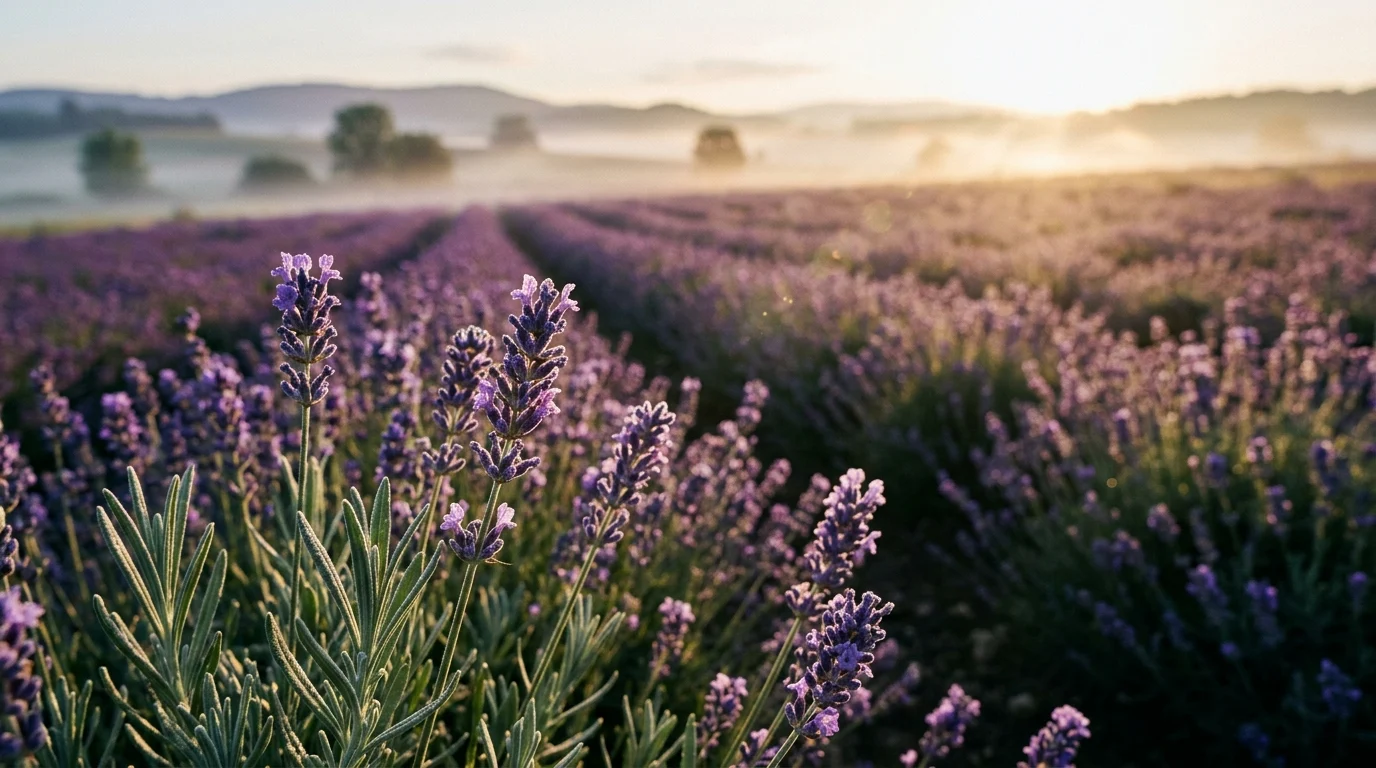
Lavender fields can also become symbols of abundance, natural beauty, and the relationship between people and the land.
Why Lavender Is Popular in Photography and Design
Lavender is widely used in wedding photography, stationery, interior design, and visual branding because it combines softness with visual distinction.
Its pastel shades often feel delicate and welcoming, while deeper purple tones can appear more luxurious or mysterious.
In these contexts, lavender can communicate a mood of calm sophistication without relying on elaborate decoration.
Dream Meaning of Lavender Symbolism
Dreams involving lavender can be interpreted as reflections of personal emotions, memories, and experiences.
There is no scientifically established universal meaning for dreaming about lavender. However, the flower’s familiar associations with peace, affection, and renewal can provide useful starting points for personal reflection.
Dreaming of Lavender Flowers
Seeing lavender flowers in a dream may remind you of a desire for greater peace, emotional comfort, or balance.
Consider whether your current life includes stress, unresolved feelings, or a need for more time to yourself.
The dream may be meaningful because of the emotions you experienced, rather than because the flower has one fixed interpretation.
Dreaming of a Lavender Field
A field of lavender may evoke freedom, beauty, abundance, or a longing for a slower pace of life.
If the dream feels peaceful, it may reflect your appreciation for stability or your desire to escape daily pressures. If it feels lonely, the same landscape might bring attention to distance, nostalgia, or an unmet emotional need.
Dreaming of Receiving Lavender
Receiving lavender in a dream may suggest affection, reconciliation, gratitude, or a wish to feel understood.
Think about the person who gave you the flowers and the emotions you experienced during the dream.
Those personal details may offer more insight than a general dream dictionary interpretation.
Dreaming of Dried or Withered Lavender
Dried lavender can symbolize memories, preservation, or the desire to hold on to something meaningful.
Withered lavender might prompt reflection on exhaustion, changing relationships, or an area of life that needs attention.
Neither image predicts the future. Instead, consider whether it connects with feelings or experiences you are currently processing.
Modern Meaning of Lavender Symbolism
In modern life, lavender has become a familiar symbol of wellness, mindful living, gentle affection, and personal expression.
Its symbolism is especially relevant in a culture where people often seek ways to make their homes more restful and their daily routines more intentional.
Lavender in Self-Care and Wellness
Lavender appears in products such as scented candles, bath preparations, soaps, and essential oils.
Its association with relaxation makes it a natural symbol for self-care and emotional restoration.
Some research suggests that lavender aromatherapy may help certain people feel more relaxed, although evidence varies by use and outcome. It should not be treated as a substitute for professional medical care.
Symbolically, lavender encourages a balanced approach to well-being: making time for rest, respecting personal limits, and recognizing that caring for yourself is worthwhile.
Lavender as a Symbol of Love and Relationships
Lavender can communicate affection without the intensity traditionally associated with red roses.
It is often suitable for expressing:
- Appreciation for a partner or close friend.
- Loyalty and enduring affection.
- Gratitude for someone’s support.
- Encouragement during a difficult period.
- A wish for peace and reconciliation.
Because flower meanings are not universal, a short personal message can help explain why you chose lavender for someone special.
Lavender in Weddings and Special Occasions
Lavender is a popular choice for weddings, anniversaries, and other meaningful celebrations.
Its gentle color can complement romantic themes, while its fragrance can add a memorable sensory element to an event.
For some couples, lavender represents devotion, harmony, and the hope of building a peaceful life together. Others choose it simply because they love its appearance or have a personal connection to the plant.
Both choices can make the flower meaningful.
Lavender in Home Décor and Personal Spaces
Lavender-colored accessories, dried flower arrangements, and living plants are often used to create a soothing atmosphere.
A small lavender arrangement on a desk may serve as a reminder to pause between tasks. A bouquet in a shared living space may symbolize hospitality and warmth.
The meaning is not limited to decoration. Objects and plants can become personal symbols when they are associated with particular memories, intentions, or experiences.
What Does the Color Lavender Symbolize?
Lavender is a light purple shade, and its color symbolism overlaps with that of purple while also carrying its own softer associations.
- Light purple: Gentleness, imagination, and sensitivity.
- Lavender: Calmness, grace, tenderness, and spiritual reflection.
- Deep purple: Royalty, ambition, mystery, and dignity.
- Lavender mixed with white: Simplicity, purity, and a fresh beginning.
- Lavender mixed with pink: Romantic affection, compassion, and warmth.
Color meanings vary across cultures and contexts. Still, lavender’s softer appearance often makes it feel more peaceful and approachable than darker shades of purple.
How to Use Lavender Symbolism in Everyday Life
Understanding lavender’s meaning can make the flower more personal and useful in everyday situations.
Here are a few practical ways to incorporate its symbolism into your life.
1. Give Lavender as a Thoughtful Gift
Choose lavender when you want to express appreciation, tenderness, encouragement, or a wish for peace.
A fresh bouquet, dried lavender bundle, or lavender-themed gift can communicate care without needing an elaborate explanation.
2. Create a Peaceful Personal Space
Place lavender flowers or a lavender-colored object in an area where you relax, read, or reflect.
The object can become a visual reminder to slow down and make time for yourself.
3. Use Lavender as a Symbol of New Beginnings
If you are starting a new job, moving home, or entering a new stage of life, lavender can represent the intention to approach change with patience and confidence.
You might plant lavender in a garden or keep a small dried arrangement as a reminder of your progress.
4. Include Lavender in Meaningful Celebrations
Lavender can add a symbolic element to weddings, anniversaries, birthdays, and remembrance ceremonies.
Choose it when its associations with love, peace, gratitude, or memory reflect the message you want the occasion to convey.
5. Reflect on Your Personal Connection
Ask yourself what lavender makes you feel. Does it remind you of a loved one, a favorite place, a peaceful afternoon, or a difficult period you overcame?
Your personal associations can be just as meaningful as traditional flower symbolism.
Frequently Asked Questions About Lavender Symbolism
What Is the Main Symbolic Meaning of Lavender?
Lavender most commonly symbolizes peace, tranquility, healing, purity, and devotion. Its exact meaning depends on cultural traditions and personal associations.
What Does Lavender Symbolize Spiritually?
Spiritually, lavender is often associated with inner peace, spiritual reflection, intuition, and renewal. These meanings are especially common in contemporary spiritual practices and are not universal religious beliefs.
Does Lavender Symbolize Love?
Yes, lavender can symbolize gentle love, loyalty, tenderness, and devotion. It is a thoughtful choice when you want to express sincere affection without the intensity traditionally associated with red roses.
What Does Lavender Mean as a Gift?
Lavender given as a gift can communicate appreciation, comfort, encouragement, or affection. It may be particularly meaningful when someone needs reassurance or when you want to celebrate a caring relationship.
Is Lavender a Symbol of Good Luck?
In some folk traditions and contemporary spiritual practices, lavender is associated with protection, harmony, and positive energy. However, there is no universal tradition that defines lavender as a guaranteed symbol of good luck.
Conclusion: The Lasting Meaning of Lavender
Lavender symbolizes the quiet strengths that make life meaningful: peace, love, healing, devotion, and renewal. Its gentle color and soothing fragrance have given it a lasting place in cultural traditions, personal rituals, art, and everyday life.
Whether you grow it in a garden, give it to someone you love, or simply admire its beauty, lavender offers a simple reminder that calmness and kindness have their own kind of strength. Its deepest meaning may be the invitation to create more space for peace, appreciate meaningful connections, and move through life with a gentler heart.

I explore symbols, special characters, emojis, and their meanings, sharing simple, useful insights to help readers discover, understand, and creatively use symbols in everyday digital communication.