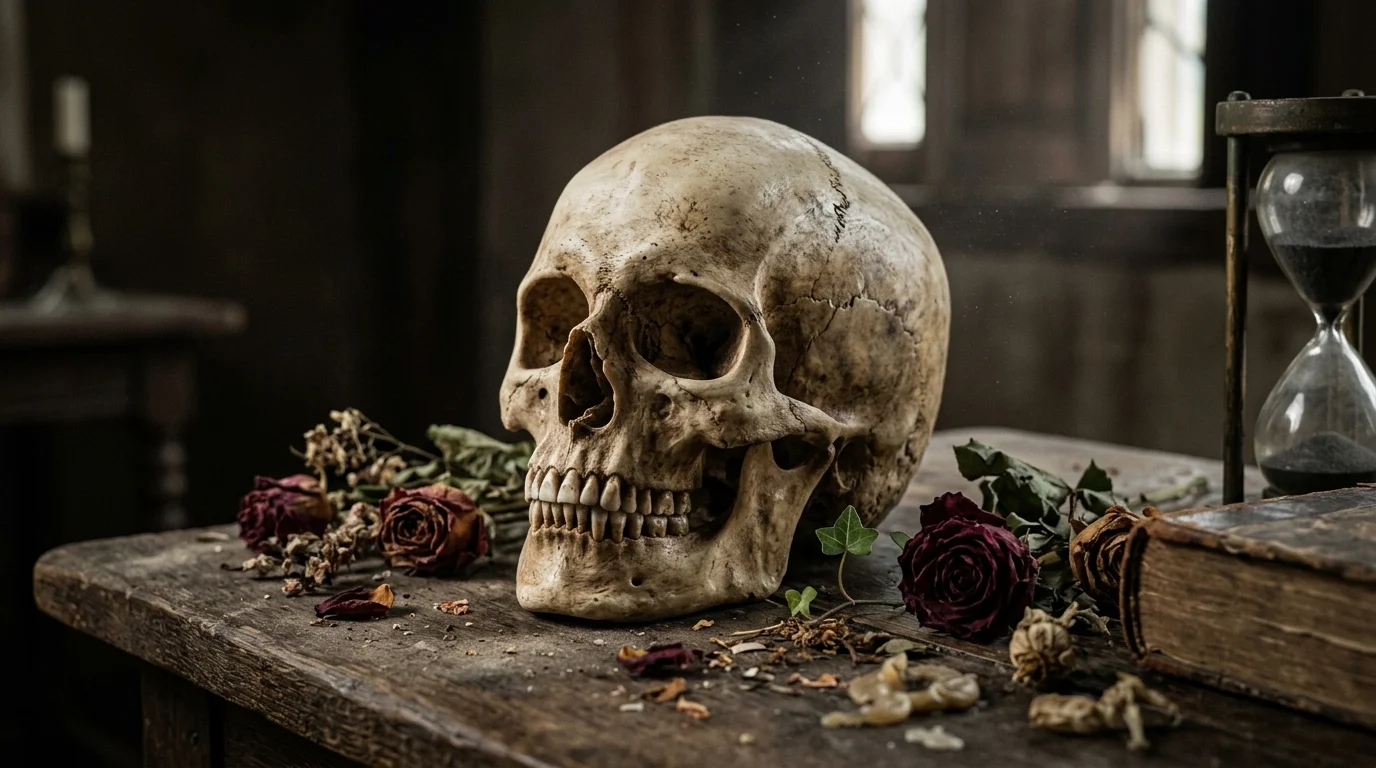
Skull symbolism has fascinated people for centuries, appearing in ancient rituals, religious traditions, works of art, literature, and modern fashion. Although a skull is often associated with death, its meaning extends far beyond mortality. It can represent transformation, wisdom, protection, courage, and the beauty of living in the present moment.
Understanding skull symbolism requires looking at its cultural background, spiritual interpretations, and personal significance. Depending on the context, a skull can serve as a reminder of life’s temporary nature, a symbol of rebellion, or an invitation to embrace change.
Whether you have encountered a skull in a dream, noticed it in artwork, or wondered about its spiritual meaning, exploring its different interpretations reveals a surprisingly rich and meaningful symbol.
Skull Symbolism Meaning (Clear Definition)
Skull symbolism refers to the use of a human or animal skull to communicate ideas about mortality, life, transformation, danger, wisdom, and the relationship between the physical and spiritual worlds.
The skull is one of humanity’s most recognizable symbols because it represents something universal: every living person has a body that will eventually change or perish.
However, the skull does not always carry a negative message. In many traditions, it represents the cycle of life and death, the acceptance of impermanence, and the strength required to face life’s uncertainties.
The core meaning of skull symbolism is the awareness of mortality and the deeper understanding that life is precious, temporary, and constantly changing.
Its interpretation depends on several factors, including cultural traditions, religious beliefs, artistic context, and personal experiences.
For example, a skull displayed during a celebration honoring deceased relatives may represent remembrance and love. The same image on a pirate flag may communicate danger, defiance, or a warning.
Common Skull Symbolism Meanings
| Symbolic meaning | What it represents |
| Death and mortality | Awareness that life is finite |
| Transformation | The ending of one phase and the beginning of another |
| Wisdom | Understanding gained through experience and reflection |
| Protection | Warding off danger or expressing spiritual strength in certain traditions |
| Rebellion | Independence, resistance, and rejection of conventional expectations |
| Remembrance | Honoring loved ones who have passed away |
| Courage | Facing fear, uncertainty, and difficult truths |
| Equality | The idea that death eventually comes to everyone |
These meanings are not universal rules. A skull’s significance can change depending on where it appears and how people interpret it.
What Does Skull Symbolism Represent?
Skull symbolism represents several interconnected ideas, from the inevitability of death to the possibility of personal renewal. Understanding these meanings helps explain why skull imagery continues to appear in different societies and forms of expression.
1. Death and Human Mortality
The most familiar meaning of a skull is death. Because it remains recognizable long after the body has disappeared, the skull serves as a powerful reminder that human life is temporary.
Rather than simply encouraging fear, this symbolism can inspire people to reflect on their priorities. It raises meaningful questions: Are we spending our time wisely? Are we appreciating the people we love? Are we living according to our values?
In this sense, the skull can encourage a more intentional approach to everyday life.
2. Transformation and Rebirth
Skulls can also symbolize transformation because they are associated with the transition between life and death.
In personal interpretations, this idea extends to the end of relationships, changes in identity, the abandonment of old habits, or the beginning of a new chapter.
A skull tattoo, for instance, might represent surviving a difficult period and emerging with a stronger understanding of oneself.
The symbolism is not necessarily about literal rebirth. It can describe the emotional growth that follows significant change.
3. Wisdom and Awareness
The skull is sometimes associated with wisdom because it encourages reflection on life’s deeper questions.
In historical art, skulls frequently appeared alongside books, candles, and other objects that invited viewers to consider the passage of time and the limits of human achievement.
This association suggests that wisdom involves more than collecting knowledge. It also requires understanding what matters, recognizing personal limitations, and accepting that time cannot be recovered.
4. Equality and Humility
A skull strips away many visible signs of social identity. Wealth, clothing, professional status, and physical beauty are no longer apparent.
For this reason, skull imagery has sometimes represented the equality of human beings in death.
The message is simple: achievements and possessions may distinguish people during life, but they do not eliminate the fundamental limits of human existence.
This interpretation encourages humility and compassion rather than judgment based on appearances.
5. Danger and Warning
Skull symbols are widely used to communicate danger, particularly on labels for poisonous substances and other hazardous materials.
Their effectiveness comes from their recognizable shape and strong association with death. In such contexts, the skull is not primarily a spiritual symbol; it is a practical visual warning.
The same association appears in popular culture, where skulls can suggest risk, hostility, or an encounter with something potentially harmful.
6. Rebellion and Individuality
In fashion, music, and popular culture, skull imagery often represents independence and resistance to social expectations.
It appears in biker culture, punk aesthetics, rock merchandise, and alternative fashion. In these settings, a skull may communicate toughness, freedom, or a refusal to conform.
This meaning illustrates an important principle of symbolism: the image itself remains recognizable, but its cultural interpretation can change.
Spiritual Meaning of Skull Symbolism
The spiritual meaning of skull symbolism often centers on mortality, awakening, protection, and transformation. For some people, the skull serves as a reminder to look beyond material concerns and consider the deeper meaning of existence.
Spiritual interpretations vary significantly across cultures and individual belief systems. There is no single spiritual meaning that applies to everyone.
Skull Symbolism and Spiritual Awakening
In some spiritual traditions, contemplating death encourages people to become more aware of the present moment.
This practice can help shift attention away from unnecessary worries, social comparisons, and the pursuit of possessions that provide only temporary satisfaction.
A skull may therefore symbolize a moment of awakening: the realization that time is limited and that meaningful experiences deserve attention.
It does not necessarily predict death or signal an approaching event.
Skull Symbolism and Transformation
A skull may represent the process of releasing an old identity to make room for personal growth.
Someone recovering from a major disappointment might associate the image with resilience. Another person may view it as a reminder that painful experiences can change their perspective without defining their entire future.
In this interpretation, transformation means learning from the past while remaining open to new possibilities.
Skull Symbolism as Protection
Certain cultural and spiritual traditions associate skull imagery with protective power, ancestral remembrance, or the confrontation of harmful forces.
These associations depend on specific traditions rather than on a universal property of skulls.
For example, skulls may appear in ritual objects, sacred artwork, or protective imagery. Their meanings must be understood within the beliefs and practices of the communities that use them.
Skull Symbolism and the Acceptance of Impermanence
Impermanence is the idea that life, experiences, emotions, and circumstances are constantly changing.
The skull can represent this principle by reminding people that nothing remains exactly as it is forever.
Although this realization may initially feel uncomfortable, it can also encourage gratitude. Relationships become more meaningful when we recognize their value, and everyday experiences become more precious when we stop assuming that time is unlimited.
The spiritual lesson is not to fear the future but to engage more fully with the present.
Biblical / Religious Meaning of Skull Symbolism
Skull symbolism has different meanings across religious traditions. In Christianity, the skull is sometimes associated with mortality, repentance, the crucifixion of Jesus, and reflection on the temporary nature of earthly life.
However, the skull is not a universal symbol of evil in religious contexts. Its meaning depends on the specific text, tradition, and artistic setting.
Skull Symbolism in Christianity
One important Christian association is Golgotha, the place where Jesus was crucified. Golgotha is traditionally translated as the Place of the Skull.
The Gospel accounts identify Golgotha as the site of the crucifixion, and the location has become central to Christian reflection on sacrifice, redemption, suffering, and salvation.
In some Christian artistic traditions, a skull appears at the foot of the cross. It is sometimes interpreted as a reference to Adam, humanity’s mortality, and the Christian belief that Christ’s sacrifice offers redemption from sin and death.
This interpretation is particularly familiar in religious paintings and devotional imagery, although the details and symbolism vary.
The Skull as a Reminder of Mortality
Christian art and devotional practices have sometimes used skulls to remind believers that earthly life is temporary.
This idea is closely related to memento mori, a Latin expression meaning “remember that you must die.”
The purpose is not necessarily to create fear. Instead, it encourages humility, moral reflection, compassion, and attention to spiritual priorities.
Skull Symbolism in Buddhism
In certain Buddhist traditions, skulls and skeletal imagery appear in ritual art and meditation practices associated with impermanence.
Such imagery can encourage practitioners to contemplate the changing nature of the body and reduce attachment to physical appearance.
In some Tibetan Buddhist contexts, skull cups and other skull-related ritual objects carry specific religious meanings. These objects belong to particular ceremonial traditions and should not be reduced to a generalized symbol of death or evil.
Skull Symbolism in Hindu Traditions
Skull imagery also appears in some Hindu religious traditions, particularly in representations of fierce deities such as Kali and Bhairava.
In these contexts, skulls or garlands of skulls may communicate themes involving the destruction of ignorance, the overcoming of ego, the reality of mortality, and the transformative power of the divine.
The interpretation depends on the deity, the artwork, and the theological tradition.
An important distinction: religious skull symbolism cannot be understood accurately by treating all traditions as interchangeable. The same image may communicate repentance, liberation, divine power, or contemplation of impermanence in different settings.
Skull Symbolism in History and Culture
Skull symbolism has developed over thousands of years. Its meaning has shifted as societies have used skulls in funerary practices, religious ceremonies, public warnings, military imagery, and artistic expression.
Ancient Civilizations
In ancient societies, human remains could carry religious, social, or ceremonial significance.
Archaeological evidence from different regions shows that some communities incorporated human skulls into funerary practices, ritual spaces, or forms of ancestral remembrance. These practices were not identical, and their meanings must be interpreted in their particular archaeological contexts.
The skull could represent a connection with the dead, a relationship with ancestors, or a society’s understanding of life and death.
It is important not to assume that every ancient skull object had the same spiritual purpose.
Skull Symbolism in Ancient Mesoamerica
In parts of ancient Mesoamerica, skull imagery was associated with death, warfare, ritual, and beliefs about the relationship between life and the afterlife.
The Mexica, commonly known as the Aztecs, used skull imagery in religious and public contexts. Carved skulls and monumental displays reflected aspects of their complex religious worldview.
Modern interpretations should distinguish these historical practices from contemporary celebrations that have developed their own meanings over time.
Día de los Muertos and the Sugar Skull
One of the most recognizable examples of skull symbolism is the sugar skull associated with Día de los Muertos, or Day of the Dead, celebrated primarily in Mexico and in communities influenced by Mexican traditions.
Unlike the skull’s association with danger in some popular imagery, the decorated sugar skull can represent remembrance, affection, and the continuing bonds between the living and the dead.
Bright colors, flowers, patterns, and names may be used in decorations honoring deceased loved ones.
The celebration combines Indigenous cultural influences with Catholic traditions and has evolved over time. Its practices vary among families and regions.
The sugar skull therefore demonstrates how a symbol associated with death can also express joy, love, family, and cultural identity.
Skull Symbolism in Medieval Europe
In medieval Europe, death imagery appeared in religious art, funerary monuments, and moral teachings.
The memento mori tradition encouraged people to remember their mortality and reflect on how they lived.
Skulls often appeared alongside hourglasses, extinguished candles, or decaying fruit. Together, these objects communicated the passing of time and the temporary nature of worldly success.
Rather than treating death as an isolated subject, these images invited viewers to consider how mortality should influence their choices during life.
Pirate Flags and Skull Imagery
The skull and crossbones became strongly associated with piracy, particularly through the use of flags intended to intimidate potential targets.
The image communicated danger, aggression, and the threat of death. It became one of the most recognizable examples of skull symbolism in popular history.
Today, pirate skulls frequently appear in entertainment, costumes, games, and decorative objects, often with a more playful meaning than their historical associations suggest.
Skulls in Military and Subcultural Traditions
Skull imagery has appeared in various military insignia, motorcycle communities, and alternative subcultures.
Depending on the group and historical period, it may communicate toughness, fearlessness, solidarity, intimidation, or remembrance.
These meanings are not universal. A skull emblem can carry very different implications depending on who uses it and the historical circumstances surrounding it.
Skull Symbolism in Literature and Art
Artists and writers have long used skulls to explore themes that are difficult to express through ordinary imagery.
Because the skull is both visually striking and closely connected to human identity, it can suggest death, knowledge, beauty, fear, vanity, and the passage of time.
Vanitas Art and the Meaning of Skulls
In European still-life painting, skulls frequently appeared in works known as vanitas paintings.
These artworks often included objects such as books, musical instruments, flowers, jewelry, and candles. Each object contributed to a meditation on the temporary nature of earthly pleasures and achievements.
A beautiful flower might represent the shortness of life, while an hourglass suggests time passing. The skull brings these ideas together by reminding the viewer that wealth, fame, and physical beauty cannot overcome mortality.
The overall message is often a call to reflect on what deserves lasting importance.
Shakespeare’s Hamlet
One of the most famous literary examples of skull symbolism appears in William Shakespeare’s Hamlet.
In the graveyard scene, Hamlet holds the skull of Yorick, a former court jester whom he remembers from childhood.
The skull forces Hamlet to confront the physical reality of death. The person he remembers as lively and familiar has become a symbol of life’s impermanence.
The scene also explores memory, identity, and the limits of social distinctions. Even people who once entertained kings eventually become part of the same natural process.
Skulls in Gothic Literature
Gothic literature often uses skulls to create an atmosphere of mystery, danger, and psychological tension.
They may appear in graveyards, abandoned buildings, secret chambers, or scenes involving forbidden knowledge.
However, skulls can also reveal a character’s fear of mortality or obsession with the past. Their meaning depends on how the image interacts with the story’s themes.
Skulls in Contemporary Art
Modern artists frequently use skulls to challenge traditional ideas about beauty, identity, consumer culture, and mortality.
Some works present skulls as disturbing reminders of death. Others use bright colors, unusual materials, or playful designs to contrast death with the energy of everyday life.
In contemporary visual culture, skulls may also comment on environmental destruction, political violence, or society’s fascination with youth and appearance.
The skull remains relevant because it allows artists to communicate complex ideas through a single recognizable form.
Dream Meaning of Skull Symbolism
Dreaming about a skull can feel unsettling, but it does not automatically predict death, danger, or misfortune.
Dream interpretation is subjective. A skull in a dream may reflect personal fears, recent experiences, emotional changes, memories, or thoughts about mortality.
The most useful interpretation depends on the dream’s context and the emotions you experienced.
Seeing a Skull in a Dream
A skull may represent awareness of change, unresolved concerns, or a desire to understand something hidden beneath the surface.
If the dream feels calm, it might reflect acceptance or contemplation. If it feels frightening, it could relate to anxiety or uncertainty.
Neither interpretation is guaranteed; personal associations matter more than fixed symbolic rules.
Dreaming of a White Skull
A white skull may suggest clarity, remembrance, or a desire to face a difficult truth.
In some personal interpretations, its color may evoke peace or spiritual reflection. However, white does not have one universal meaning across all cultures and dream traditions.
Consider what the color represents to you and how it made you feel in the dream.
Dreaming of a Skull and Crossbones
A skull and crossbones may reflect awareness of risk, boundaries, or something you perceive as threatening.
If you have recently encountered warning signs, stressful situations, or disturbing media, the dream may draw on those experiences.
It should not be treated as reliable evidence that a harmful event will occur.
Dreaming of a Broken Skull
A broken skull might symbolize vulnerability, a disruption in your sense of identity, or the end of an old way of thinking.
Alternatively, it may simply reflect stress or images encountered during waking life.
Ask yourself whether you are currently experiencing a major change, questioning a belief, or trying to move beyond a difficult period.
Dreaming of Many Skulls
Seeing multiple skulls may reflect feeling overwhelmed by problems, thinking about collective loss, or confronting several changes at once.
The setting and emotional tone are important. A peaceful arrangement may evoke remembrance, while a frightening scene may reflect distress.
Instead of assuming the dream has a supernatural meaning, use it as an opportunity to reflect on your current concerns.
Modern Meaning of Skull Symbolism
Today, skull symbolism appears in fashion, tattoos, jewelry, graphic design, entertainment, and digital culture.
Its popularity reflects the symbol’s versatility. A skull can communicate a serious philosophical message, a personal milestone, a sense of humor, or a particular aesthetic.
Skull Tattoos and Personal Identity
Skull tattoos are among the most recognizable forms of symbolic body art.
For one person, a skull tattoo may commemorate a loved one. For another, it may represent resilience after hardship, acceptance of mortality, or the determination to live independently.
Common variations include:
- Skull and roses: The contrast between beauty and mortality, love and loss, or life and death.
- Sugar skull: Cultural identity, remembrance, and celebration of deceased loved ones, particularly in Mexican-inspired contexts.
- Skull and clock: The passage of time and awareness of life’s limits.
- Flaming skull: Intensity, rebellion, transformation, or fierce determination.
- Animal skull: Depending on the animal and context, nature, survival, strength, or respect for wildlife.
- Minimalist skull: A simple reminder of mortality, individuality, or personal philosophy.
These are common interpretations rather than fixed definitions. The meaning of a tattoo ultimately depends on the individual and the cultural context in which its imagery is used.
Skull Jewelry and Fashion
Skull jewelry can express confidence, individuality, toughness, or appreciation for alternative fashion.
Rings, pendants, bracelets, and earrings may feature realistic skulls, stylized designs, or decorative elements such as gemstones and flowers.
Some people wear skull jewelry as a reminder to appreciate life. Others simply enjoy its visual style.
Neither interpretation is more authentic than the other. Symbols can carry personal meaning without requiring a formal spiritual belief.
Skulls in Music and Popular Culture
Skull imagery is common in rock music, heavy metal, punk, horror films, video games, and comic books.
It can establish a dark atmosphere, suggest danger, challenge social conventions, or create a memorable visual identity.
In humorous contexts, skulls may even represent exaggerated surprise, embarrassment, or laughter. Online expressions such as “I’m dead” or skull emojis can communicate that something is extremely funny rather than frightening.
This evolution demonstrates how cultural symbols can acquire entirely new meanings as people use them in everyday communication.
What Does Wearing a Skull Symbolize?
Wearing a skull does not necessarily indicate a fascination with death or a negative outlook on life.
Depending on the wearer, it may express:
- Individuality and personal style.
- Courage in the face of uncertainty.
- Acceptance of life’s temporary nature.
- A memory of someone important.
- Interest in gothic, rock, or alternative culture.
- Appreciation for a particular artistic or cultural tradition.
The best way to understand someone’s skull jewelry or clothing is to consider the context rather than make assumptions based on appearance alone.
How to Interpret Skull Symbolism in Your Own Life
If a skull image has caught your attention, its meaning may become clearer when you consider where you encountered it and what it made you feel.
Use these questions as a practical starting point.
- Consider the setting. Was the skull part of a religious artwork, a tattoo, a warning sign, a dream, or a cultural celebration?
- Notice your emotional response. Did it make you feel afraid, curious, peaceful, empowered, or reflective?
- Explore the cultural context. Does the image belong to a particular religious, historical, or artistic tradition?
- Connect it to your circumstances. Are you experiencing change, grieving a loss, reconsidering your priorities, or celebrating personal growth?
- Avoid assuming a fixed meaning. A skull does not automatically predict death, bad luck, or spiritual transformation.
For example, someone starting a new chapter after a difficult relationship might view a skull as a reminder to release the past. Someone honoring a deceased relative might associate the same image with memory and continuing love.
Both interpretations can be meaningful without being universal truths.
Ultimately, the most thoughtful interpretation combines cultural understanding with personal reflection.
FAQs:
What is the main meaning of skull symbolism?
The main meaning of skull symbolism is mortality, or the awareness that life is temporary. It can also represent transformation, wisdom, courage, remembrance, and the acceptance of change.
Is skull symbolism good or bad?
Skull symbolism is neither inherently good nor bad. Its meaning depends on cultural context, personal beliefs, and how the image is used.
What does a skull symbolize spiritually?
Spiritually, a skull may represent impermanence, self-awareness, transformation, and reflection on life’s deeper meaning. Some traditions also associate skull imagery with protection or specific religious practices.
What does a skull symbolize in the Bible?
In Christian tradition, skull imagery may evoke Golgotha, the crucifixion of Jesus, human mortality, and redemption. Its interpretation varies according to the religious text, artwork, and tradition in which it appears.
What does a skull tattoo mean?
A skull tattoo can symbolize mortality, resilience, remembrance, individuality, or transformation. Its specific meaning depends on the design, cultural background, and personal intentions of the person wearing it.
Conclusion
Skull symbolism reminds us that death is part of life, but its meaning does not end with mortality. Across history, religion, art, dreams, and modern culture, the skull has represented wisdom, remembrance, transformation, courage, and the acceptance of change.
Its deeper message often lies in the relationship between endings and beginnings. By acknowledging that life is temporary, we can become more attentive to the people we love, the choices we make, and the experiences that give our lives meaning.
Ultimately, skull symbolism invites us to face life’s uncertainties with honesty, appreciate the present, and remember that understanding our mortality can deepen our appreciation for being alive.

I explore symbols, special characters, emojis, and their meanings, sharing simple, useful insights to help readers discover, understand, and creatively use symbols in everyday digital communication.