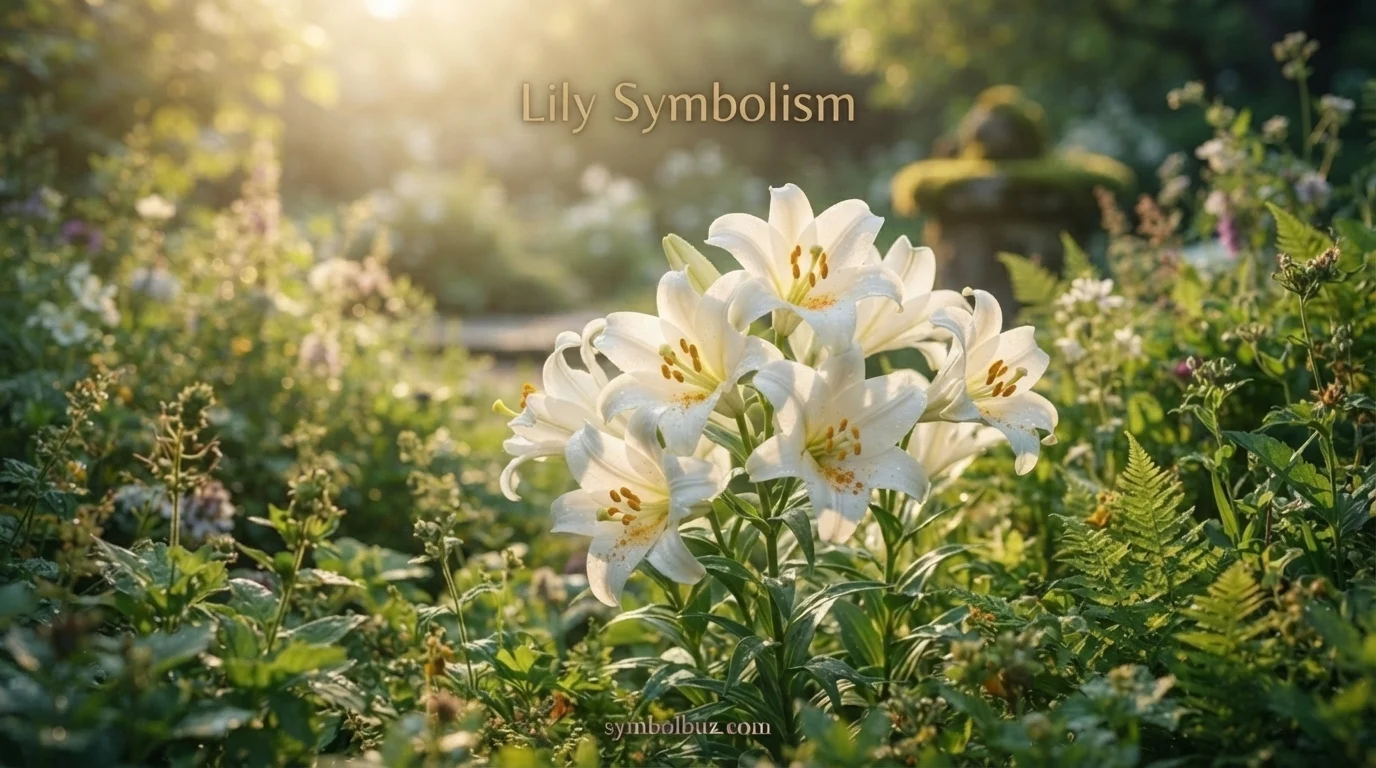
Lily symbolism has long been associated with purity, renewal, innocence, love, beauty, and spiritual transformation. Across different cultures and traditions, lilies have carried meanings that can change depending on their color, setting, and context.
From wedding bouquets and religious artwork to dreams and memorial ceremonies, the lily often represents something beautiful emerging from life’s most meaningful moments. Its delicate appearance and ability to return year after year make it a powerful symbol of hope, growth, and new beginnings.
Lily Symbolism Meaning (Clear Definition)
The simplest definition of lily symbolism is the use of the lily flower to represent purity, innocence, renewal, beauty, devotion, and spiritual growth.
Lilies can communicate different messages depending on how they are used. A white lily may suggest purity and peace, while a pink lily can express affection, admiration, or compassion.
Common Lily Symbolic Meanings
| Lily Symbol | Common Meaning |
|---|---|
| White lily | Purity, innocence, peace |
| Pink lily | Love, admiration, compassion |
| Orange lily | Passion, confidence, energy |
| Yellow lily | Happiness, friendship, positivity |
| Red lily | Love, desire, courage |
| Lily in a garden | Growth, renewal, natural beauty |
| Lily in a memorial | Peace, remembrance, spiritual hope |
At its heart, the lily symbolizes the ability to remain beautiful and hopeful through change.
What Does Lily Symbolism Represent?
Lily symbolism can represent several powerful ideas:
- Purity and innocence – Especially through white lilies.
- Renewal and rebirth – The flower’s growth cycle connects it with fresh beginnings.
- Love and devotion – Lilies can express affection, admiration, and commitment.
- Peace and serenity – Their graceful appearance often evokes calmness.
- Spiritual awakening – Lilies are frequently connected with higher ideals and inner transformation.
- Beauty and grace – Their elegant shape makes them a natural symbol of refinement.
- Hope after loss – In memorial settings, lilies can represent peace and the continuation of life.
The meaning can become more personal when the lily appears in a particular relationship, ceremony, dream, or life transition.
Spiritual Meaning of Lily Symbolism
Spiritually, lilies are often viewed as flowers of purification, transformation, and renewal.
Their upward-growing stems and open blossoms can symbolize a person’s movement toward greater awareness or spiritual understanding. The contrast between a closed bud and a fully opened flower also provides a natural image of personal growth.
A lily may spiritually represent:
Purification: Letting go of negativity and beginning again.
Renewal: Moving into a new chapter with hope.
Inner peace: Finding calm despite external difficulties.
Spiritual growth: Becoming more aware of one’s values, purpose, and inner life.
Transformation: Changing through experience while retaining one’s essential nature.
For some people, seeing a lily repeatedly feels like a reminder to approach life with greater patience, grace, and openness.
Biblical / Religious Meaning of Lily Symbolism
Lilies have an important place in Christian symbolism, particularly because flowers are used to communicate ideas about purity, beauty, faith, and divine care.
The Bible refers to lilies in passages that encourage people not to become consumed by worry. In Matthew 6:28–29, Jesus points to the lilies of the field when teaching about God’s provision and the beauty of creation.
White lilies also became strongly associated with purity and the Virgin Mary in Christian art and tradition. The Madonna Lily, in particular, has historically been connected with Mary’s purity.
However, it is important to distinguish biblical references from later religious traditions. Not every symbolic meaning commonly associated with lilies is explicitly stated in Scripture.
In broader religious contexts, the lily can therefore suggest:
- Faith and trust
- Purity of heart
- Divine beauty
- Resurrection and new life
- Peace and spiritual hope
Lily Symbolism in History and Culture
Lilies have been admired and cultivated for centuries, and their meanings developed differently across civilizations.
In ancient cultures, lilies were associated with beauty, fertility, and life. The flower became particularly important in ancient Greek and Roman traditions, where it was connected with goddesses and ideas of femininity and purity.
In European Christian art, white lilies became prominent symbols of purity and sacred devotion. Their elegant form made them especially suitable for paintings depicting religious figures.
In modern Western culture, lilies appear in weddings, funerals, gardens, celebrations, and ceremonial arrangements. Their meaning changes with the occasion: at a wedding, they may suggest purity and devotion, while at a memorial they can represent peace and remembrance.
This flexibility is one reason lily symbolism remains relevant today.
Lily Symbolism in Literature and Art
Lilies have inspired writers, poets, painters, and photographers because their appearance naturally lends itself to themes of beauty, fragility, life, and mortality.
In literature, a lily can symbolize innocence, delicate beauty, purity, or something precious that may not last forever. Writers may use the flower to contrast beauty with suffering or youth with the passage of time.
In religious paintings, white lilies often appear beside holy figures as visual symbols of purity and devotion.
Artists also use lilies for their shape and color. Their open petals can suggest vulnerability and openness, while their strong stems can represent resilience beneath apparent delicacy.
Because of these associations, a lily can carry both positive and bittersweet meanings depending on the surrounding imagery.
Dream Meaning of Lily Symbolism
Dreaming about lilies is often interpreted as a symbol of peace, emotional renewal, purity, or a fresh beginning. The specific meaning depends heavily on what happens in the dream and how you feel while experiencing it.
Here are some common interpretations:
- Seeing a white lily: Peace, innocence, healing, or emotional clarity.
- Receiving a lily: Affection, appreciation, reconciliation, or a meaningful message.
- Giving someone a lily: Love, respect, forgiveness, or admiration.
- A blooming lily: Personal growth or a promising new chapter.
- A dying lily: Change, loss, emotional exhaustion, or the end of a phase.
- A garden full of lilies: Abundance, harmony, and emotional fulfillment.
- Picking a lily: Recognizing or appreciating something valuable in your life.
Dream symbolism is personal rather than predictive. Your memories, emotions, and circumstances are often more important than any universal interpretation.
Modern Meaning of Lily Symbolism
Today, lily symbolism remains strongly connected to beauty, love, peace, remembrance, and new beginnings.
Lilies are common in weddings because their appearance can complement themes of commitment and purity. They are also widely used in memorial arrangements because their peaceful appearance can express sympathy and hope.
Beyond ceremonies, lilies can have personal meanings. Someone might choose a lily tattoo to represent overcoming a difficult period, while another person may associate the flower with a loved one, childhood memory, or important life transition.
The modern meaning is therefore less about one fixed definition and more about the emotional story attached to the flower.
Lily Color Symbolism
Color can significantly influence the meaning of a lily.
White lilies: Purity, peace, innocence, sympathy, and spiritual devotion.
Pink lilies: Love, affection, admiration, femininity, and compassion.
Orange lilies: Confidence, enthusiasm, passion, energy, and determination.
Yellow lilies: Happiness, friendship, warmth, and positive energy.
Red lilies: Passion, romantic love, courage, and strong emotions.
When choosing lilies for a gift or ceremony, considering both the color and occasion can make the message more meaningful.
Why Are Lilies Associated With Purity?
White lilies are associated with purity largely because of their clean appearance, delicate petals, and long-standing religious and cultural traditions.
Christian art especially strengthened the connection between white lilies and spiritual purity. Over time, this symbolism became part of broader Western flower language.
What Does a White Lily Symbolize?
A white lily commonly symbolizes purity, innocence, peace, spiritual devotion, and renewal.
Its meaning can shift depending on the situation, but white lilies are especially common in weddings, religious ceremonies, and memorial settings.
What Does a Lily Symbolize Spiritually?
Spiritually, a lily can symbolize purification, inner peace, spiritual growth, transformation, and renewal.
It may serve as a reminder that difficult experiences can become part of a person’s journey toward greater wisdom and clarity.
What Does a Lily Mean in a Dream?
A lily in a dream can represent peace, healing, love, renewal, or emotional growth.
The interpretation depends on details such as the lily’s color, condition, location, and your feelings during the dream.
Are Lilies a Symbol of New Beginnings?
Yes. Lilies can symbolize new beginnings because blooming represents growth, renewal, and the opening of a new stage in life.
This makes them meaningful for occasions such as weddings, new chapters, recovery, and personal transformation.
Conclusion
Lily symbolism brings together some of the most enduring meanings associated with flowers: purity, love, peace, renewal, beauty, and spiritual growth. From ancient traditions and religious art to modern weddings, memorials, dreams, and personal expression, the lily continues to carry a message of grace and hope.
If you encounter a lily in nature, a dream, artwork, or an important life event, its symbolism can be a gentle reminder that beauty and renewal often emerge through change.

I explore the meanings and stories behind symbols, helping readers understand their cultural, spiritual, and everyday significance through clear, engaging, and meaningful insights.