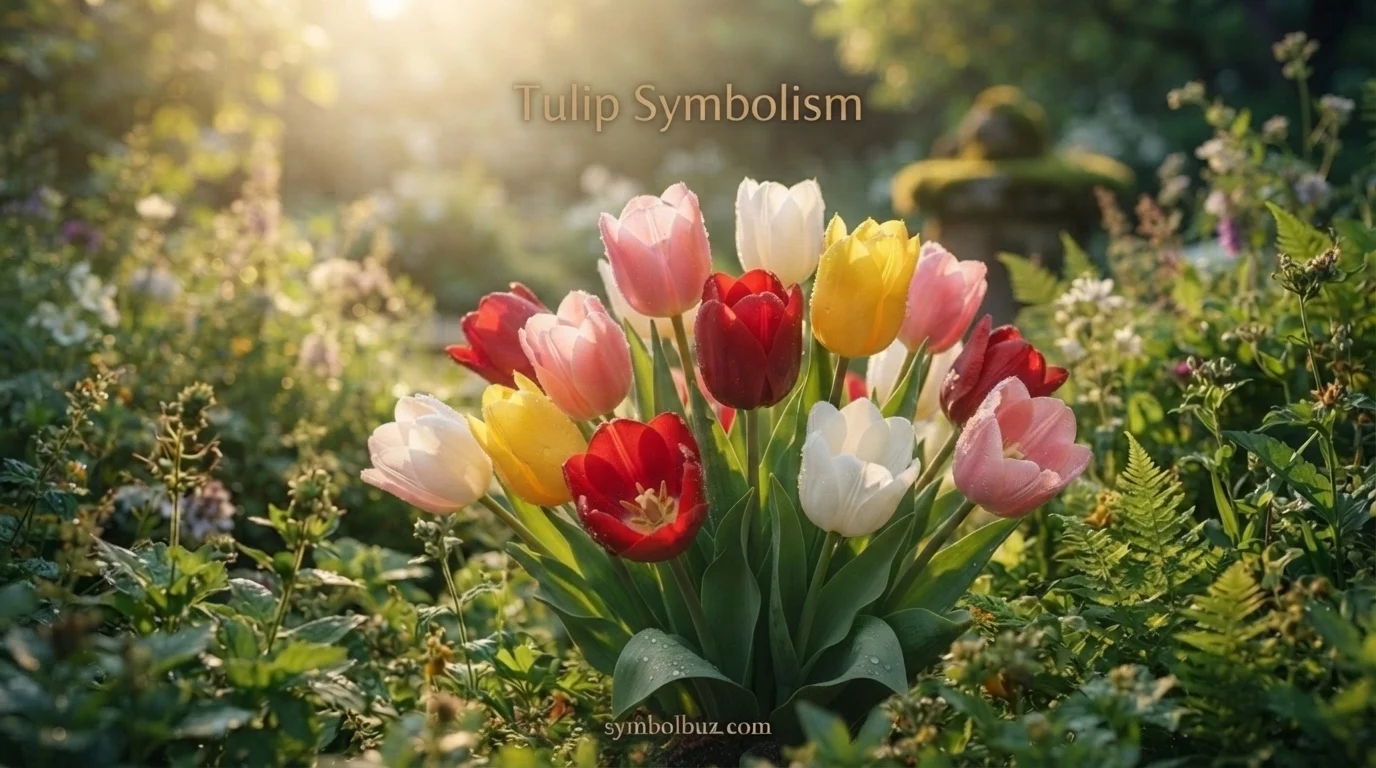
Tulips are admired for their elegant shape, vibrant colors, and association with spring. But beyond their beauty, tulip symbolism carries deep meanings connected to love, renewal, hope, prosperity, and emotional expression. Different tulip colors can communicate different feelings, while their seasonal return often represents fresh beginnings and the beauty of change.
Whether you are giving tulips as a gift, interpreting a dream, choosing flowers for a special occasion, or simply wondering what tulips symbolize, their meaning can be surprisingly rich.
Tulip Symbolism Meaning (Clear Definition)
Tulip symbolism represents love, renewal, elegance, hope, and sincere affection. The exact meaning can change according to the tulip’s color, cultural setting, and personal context.
Tulips bloom after winter, which makes them a natural symbol of rebirth and new beginnings. Their simple yet graceful appearance also gives them associations with beauty, refinement, and heartfelt emotions.
Common Tulip Symbolic Meanings
| Tulip Symbolism | Meaning |
|---|---|
| Love | Deep affection and romantic feelings |
| Renewal | Fresh starts and personal growth |
| Spring | New life and positive change |
| Elegance | Grace, beauty, and refinement |
| Hope | Optimism for the future |
| Prosperity | Success, abundance, and good fortune |
| Sincerity | Honest and genuine emotions |
| Perfect Love | Devotion and strong romantic attachment |
The tulip’s symbolism is therefore not limited to romance. It can also represent the courage to begin again and appreciate life’s changing seasons.
What Does Tulip Symbolism Represent?
Tulips can represent several emotions and life experiences. Their meanings often depend on the situation in which they appear.
1. Love and Affection
Tulips are strongly associated with love. Their balanced shape and vivid colors can express romantic affection without feeling overly complicated.
Red tulips are especially connected with passionate or sincere love.
2. New Beginnings
Because tulips emerge in spring after a dormant winter, they naturally symbolize renewal and fresh starts.
They can be meaningful when someone begins a new relationship, career, chapter of life, or personal journey.
3. Hope and Optimism
A field of blooming tulips can symbolize hope after a difficult period. Their appearance signals that a quiet season can eventually give way to growth and beauty.
4. Elegance and Grace
Tulips have a clean, distinctive form that has long been associated with sophistication. They can represent graceful beauty that does not need excessive decoration.
5. Prosperity and Abundance
Because tulips became associated with wealth and luxury during periods of their cultural history, they can also symbolize prosperity, success, and abundance.
6. Sincere Emotion
Tulips often communicate straightforward feelings. Their symbolism can suggest honesty, genuine affection, appreciation, and emotional clarity.
Spiritual Meaning of Tulip Symbolism
Spiritually, tulips can represent rebirth, inner growth, hope, and the acceptance of life’s natural cycles.
Their yearly emergence from the soil offers a simple reminder that periods of stillness do not necessarily mean that growth has stopped. Sometimes transformation happens quietly before it becomes visible.
Tulips may therefore symbolize:
- Spiritual renewal
- Personal transformation
- Hope after hardship
- Awakening and growth
- Trust in life’s timing
- Emotional healing
- Gratitude for beauty
- A fresh spiritual beginning
The tulip’s connection with spring can also encourage people to release what belongs to the past and make room for something new.
Biblical / Religious Meaning of Tulip Symbolism
Tulips are not specifically mentioned in the Bible, so there is no established biblical symbolism for the flower itself.
However, some people interpret the tulip through broader biblical themes involving flowers, creation, beauty, renewal, and the temporary nature of earthly life. Biblical passages that discuss flowers can inspire symbolic associations with God’s creation and the changing seasons of life.
For example, flowers can remind believers of:
- The beauty of creation
- Renewal and new life
- Humility
- The temporary nature of earthly existence
- Trust and faith
- God’s care for creation
It is important to distinguish these broader religious interpretations from an official biblical meaning specifically assigned to tulips.
Tulip Symbolism in History and Culture
Tulips have a fascinating cultural history, particularly in the Ottoman Empire and later in Europe.
Tulips were cultivated extensively in the Ottoman world and became associated with beauty, refinement, and status. The flower later gained enormous popularity in the Netherlands, where tulip cultivation became an important part of cultural and economic history.
During the famous Tulip Mania of the 17th century, certain tulip bulbs became extraordinarily valuable. Although modern historians debate some details surrounding the popular story of Tulip Mania, the episode remains an important example of the flower’s historical association with wealth, rarity, and desire.
Today, the Netherlands is internationally recognized for its spectacular tulip fields and spring displays. Tulips have become an enduring symbol of Dutch horticultural culture.
Across different cultures, tulips may suggest:
- Beauty and refinement
- Wealth and status
- Romantic love
- Spring and renewal
- Celebration
- National and cultural identity
Tulip Symbolism in Literature and Art
Tulips have frequently appeared in poetry, paintings, photography, gardens, and decorative art.
Artists are often drawn to tulips because their strong colors and distinctive forms make them visually expressive. A red tulip can create an impression of passion, while white tulips can evoke purity, peace, or simplicity.
In literature, flowers commonly serve as metaphors for human emotions and the passage of time. Tulips can therefore represent beauty, desire, emotional awakening, mortality, or transformation depending on the writer’s intention.
Their short blooming season also makes them a powerful reminder that beauty can be temporary—and that temporary experiences can still be deeply meaningful.
Dream Meaning of Tulip Symbolism
Dreaming about tulips can symbolize love, emotional renewal, hope, beauty, or a new stage of life. The meaning depends heavily on the dream’s color, condition, setting, and emotional atmosphere.
Common Tulip Dream Interpretations
- Red tulips: Romantic love, passion, or strong emotional attachment
- White tulips: Peace, forgiveness, purity, or emotional clarity
- Yellow tulips: Happiness, friendship, optimism, or positive energy
- Pink tulips: Tender affection, admiration, and caring relationships
- Purple tulips: Elegance, individuality, or spiritual reflection
- A blooming tulip: Growth, opportunity, or a new beginning
- A dying tulip: Fear of loss, change, or the ending of a phase
- A field of tulips: Abundance, happiness, community, or emotional freedom
Dream symbolism is personal rather than scientifically fixed. Your feelings during the dream often provide the most useful clue to its meaning.
Modern Meaning of Tulip Symbolism
Today, tulips are commonly used to express love, appreciation, friendship, congratulations, sympathy, and encouragement.
Their modern symbolism is especially connected with fresh starts and positive emotions. Someone may give tulips to celebrate graduation, welcome spring, congratulate a friend, express romantic interest, or brighten someone’s difficult day.
Tulips are also popular in weddings and celebrations because they combine elegance with a sense of renewal.
Tulip Colors and Their Meanings
Color can significantly change the message of a tulip.
Red tulips commonly symbolize passionate or sincere love.
Pink tulips often represent affection, caring, admiration, and gentle romantic feelings.
Yellow tulips are associated with happiness, friendship, cheerfulness, and optimism.
White tulips can symbolize purity, peace, forgiveness, and sincerity.
Purple tulips are often connected with elegance, royalty, individuality, and admiration.
Orange tulips can express enthusiasm, energy, excitement, and fascination.
Black or very dark tulips are frequently used symbolically to represent mystery, uniqueness, strength, or dramatic beauty, although naturally occurring truly black tulips are extremely rare.
Why Are Tulips Associated With New Beginnings?
Tulips are strongly connected with new beginnings because they emerge and bloom during spring after the colder months.
This natural cycle makes them a powerful metaphor for starting over. A tulip can remind us that growth may take place beneath the surface long before it becomes visible.
What Does a Red Tulip Symbolize?
A red tulip traditionally symbolizes love, passion, devotion, and sincere romantic affection.
It is often chosen when someone wants to express strong feelings in a simple and elegant way.
What Does a White Tulip Symbolize?
A white tulip can represent purity, peace, forgiveness, sincerity, and emotional clarity.
Because of its clean appearance, it can be appropriate for occasions associated with remembrance, reconciliation, or new beginnings.
What Does a Yellow Tulip Symbolize?
Yellow tulips commonly represent happiness, friendship, warmth, optimism, and cheerful energy.
They can be especially meaningful as a gift for a friend or someone who needs encouragement.
Are Tulips a Symbol of Love?
Yes. Tulips are widely associated with love and affection, particularly red tulips.
However, tulip symbolism extends beyond romance to include friendship, renewal, appreciation, hope, beauty, and personal growth.
Conclusion
Tulip symbolism is ultimately a celebration of love, renewal, beauty, and hope. From their springtime return to their many color meanings, tulips remind us that life continually offers opportunities to grow and begin again.
If seen in a garden, given as a gift, or appearing in a dream, the tulip can carry a simple but powerful message: beautiful new chapters can grow from seasons of change.

I explore the meanings and stories behind symbols, helping readers understand their cultural, spiritual, and everyday significance through clear, engaging, and meaningful insights.