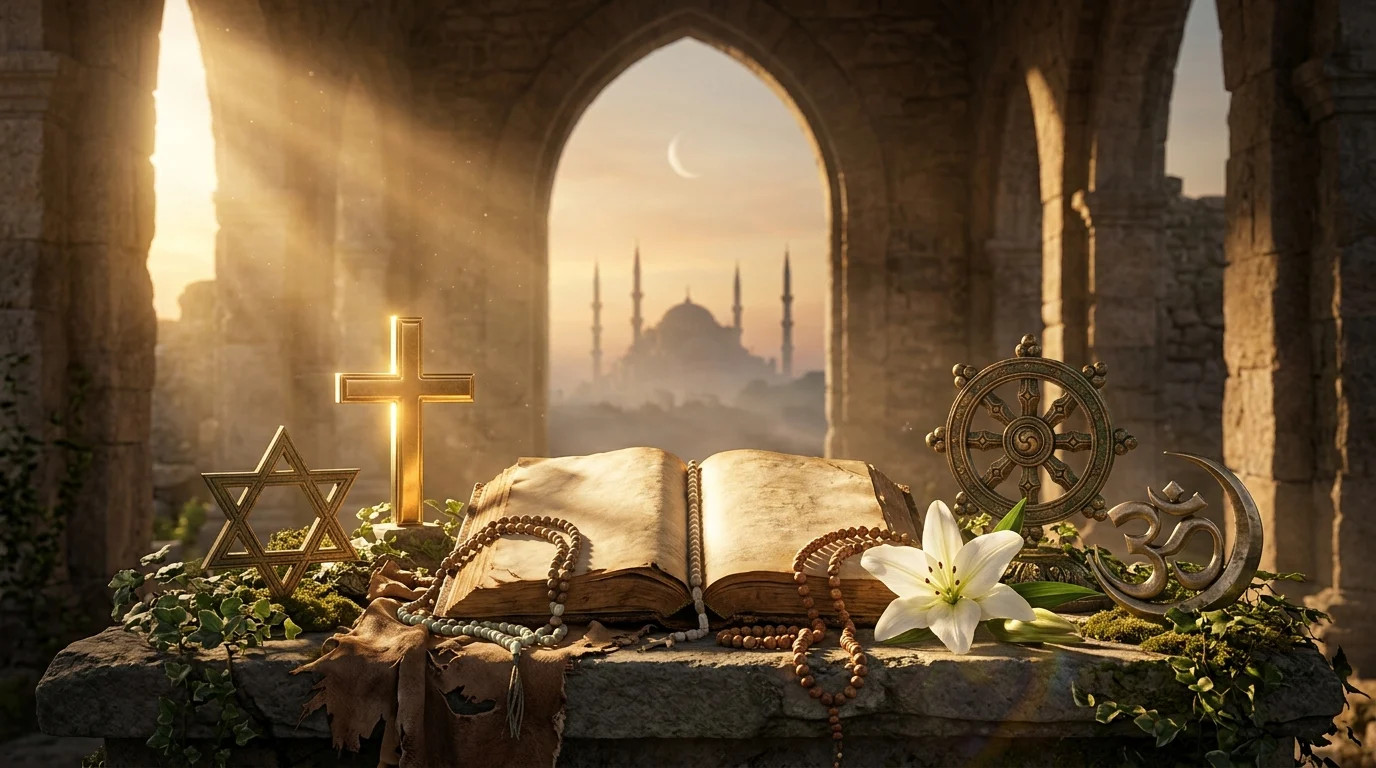
Holy symbolism represents the sacred meanings, spiritual values, and divine connections that people associate with objects, places, images, and traditions. Across different cultures and religions, holy symbols help people express faith, recognize divine presence, and understand ideas that ordinary language cannot always describe.
From sacred objects and religious artwork to holy places and traditional ceremonies, these symbols carry deep emotional and spiritual significance. They often represent purity, protection, devotion, wisdom, and the relationship between humanity and the divine.
Understanding holy symbolism offers a meaningful way to explore religious traditions, cultural beliefs, and the spiritual ideas that have influenced human life for centuries.
Holy Symbolism Meaning (Clear Definition)
Holy symbolism refers to the use of objects, images, signs, colors, and places to represent sacred or divine ideas. These symbols communicate spiritual truths, religious beliefs, and values that people consider deeply meaningful.
A holy symbol can represent God’s presence, spiritual protection, purity, faith, or the connection between the physical and spiritual worlds.
For example, a cross represents the central beliefs of Christianity, while the crescent and star are widely associated with Islamic identity and traditions. Similarly, the lotus flower holds sacred significance in several Eastern religious traditions.
Holy symbolism can appear in many forms, including:
- Sacred objects: Religious books, prayer beads, and ceremonial items.
- Holy places: Temples, churches, mosques, and shrines.
- Religious signs: Crosses, crescents, stars, and other sacred emblems.
- Spiritual colors: White for purity and gold for divine glory in many traditions.
- Sacred animals: Creatures that represent particular religious or spiritual qualities.
- Rituals: Actions and ceremonies that express devotion and faith.
Although different religions interpret symbols differently, their purpose often involves expressing beliefs that connect people with something greater than themselves.
What Does Holy Symbolism Represent?
Holy symbolism represents several important spiritual and religious ideas. Its meaning depends on the tradition, historical background, and beliefs associated with each symbol.
Here are some common meanings:
| Symbolic Meaning | What It Represents |
|---|---|
| Purity | Spiritual cleanliness and innocence |
| Faith | Trust in divine guidance |
| Protection | Safety from spiritual or physical harm |
| Divinity | Connection with God or a higher power |
| Wisdom | Spiritual understanding and enlightenment |
| Sacrifice | Love, devotion, and selflessness |
| Renewal | Rebirth, transformation, and new beginnings |
| Peace | Harmony, compassion, and spiritual balance |
These meanings help explain why sacred objects and religious images remain important in communities around the world.
For example, a candle can symbolize hope and divine light. Likewise, water may represent purification, renewal, and spiritual cleansing in different religious traditions.
Holy symbolism also provides a shared language for communities. People who follow the same traditions can recognize important beliefs through familiar signs and objects.
Spiritual Meaning of Holy Symbolism
The spiritual meaning of holy symbolism centers on the relationship between human beings and the sacred. It encourages people to reflect on faith, personal values, inner peace, and the mysteries of existence.
For many believers, sacred symbols provide a reminder of divine guidance during difficult moments. A prayer bead may encourage concentration, while a sacred image may inspire devotion and gratitude.
Several spiritual themes appear throughout holy symbolism.
1. Divine Connection
Sacred symbols often remind believers of their relationship with God, a higher power, or the ultimate reality. They can create a sense of closeness to something beyond everyday life.
2. Inner Purification
Water, light, and white clothing frequently symbolize cleansing and spiritual renewal. These images encourage people to move away from negative behavior and seek a more meaningful life.
3. Faith and Devotion
Religious symbols help people express their commitment to spiritual beliefs. They can also strengthen feelings of belonging and dedication.
4. Protection and Guidance
Some sacred objects are traditionally believed to offer protection or remind people to seek divine guidance. These meanings reflect religious and cultural beliefs rather than scientifically established protective effects.
5. Enlightenment and Wisdom
Light is a powerful spiritual symbol because it often represents knowledge, truth, and freedom from ignorance.
Ultimately, holy symbolism encourages reflection and reminds people that spiritual growth can involve compassion, humility, patience, and love.
Biblical / Religious Meaning of Holy Symbolism
Holy symbolism plays an important role in many religious traditions, including Christianity, Islam, Judaism, Hinduism, and Buddhism. Each tradition uses particular signs, objects, stories, and ceremonies to communicate sacred ideas.
Holy Symbolism in Christianity
Christianity uses many symbols to communicate its central teachings.
- Cross: Represents the crucifixion of Jesus Christ, sacrifice, and redemption.
- Dove: Often represents the Holy Spirit, peace, and divine presence.
- Fish: An early Christian symbol associated with faith in Jesus.
- Lamb: Represents Jesus Christ and themes of innocence and sacrifice.
- Light: Symbolizes divine truth, hope, and spiritual guidance.
These symbols appear in churches, religious paintings, worship practices, and Christian literature.
Holy Symbolism in Islam
Islamic traditions include meaningful patterns, calligraphy, and architectural designs.
- Crescent and star: Widely associated with Islamic identity, although they are not universal religious symbols or prescribed symbols of Islamic belief.
- Arabic calligraphy: Often displays verses from the Quran and expresses reverence for the sacred text.
- Geometric patterns: Reflect artistic traditions and can create a sense of order and harmony.
- The Kaaba: Represents the central direction of Muslim prayer and holds profound significance in Islamic worship.
Holy Symbolism in Judaism
Jewish traditions contain several recognizable religious symbols.
- Star of David: A widely recognized symbol of Jewish identity.
- Menorah: An ancient symbol associated with Jewish worship and tradition.
- Torah scroll: Represents sacred teachings and religious guidance.
- Mezuzah: A sacred object placed on doorposts containing passages from the Torah.
Holy Symbolism in Hinduism and Buddhism
Eastern religious traditions also use powerful sacred imagery.
- Om: Represents a sacred sound and spiritual reality in Hindu traditions.
- Lotus: Symbolizes purity, spiritual development, and enlightenment.
- Dharma Wheel: Represents Buddhist teachings and the path toward liberation.
- Bodhi Tree: Represents the enlightenment of the Buddha.
These examples show how different religions use symbolism to express their understanding of spiritual truth, devotion, and the sacred.
Holy Symbolism in History and Culture
Holy symbolism has influenced human civilization for thousands of years. Ancient communities used sacred images, monuments, natural objects, and ceremonial items to express their understanding of the spiritual world.
In ancient Egypt, the ankh represented life and became an important religious symbol. Egyptian temples also featured images of gods, animals, and celestial objects that communicated religious beliefs.
Ancient Greek and Roman societies used statues, sacred buildings, and ceremonial objects to honor their gods. These images played an important role in public ceremonies and everyday religious practices.
Across South Asia, sacred symbols developed through Hindu, Buddhist, Jain, and other spiritual traditions. The lotus, Om, and Dharma Wheel became important representations of spiritual teachings and religious identity.
Indigenous cultures around the world also developed sacred symbols connected with nature, ancestors, animals, and community traditions.
Over time, holy symbolism influenced architecture, clothing, jewelry, paintings, festivals, and traditional ceremonies.
Although the appearance of sacred symbols has changed throughout history, their cultural importance continues to shape how communities express their beliefs and preserve their heritage.
Holy Symbolism in Literature and Art
Artists and writers have used holy symbolism to explore spiritual questions, moral values, and the human search for meaning.
In religious paintings, light frequently represents divine presence or spiritual truth. Gold backgrounds can suggest heavenly glory, while white clothing often communicates innocence or purity.
Architecture also provides powerful examples of sacred symbolism. Church stained-glass windows frequently illustrate biblical stories, while mosque architecture often features geometric patterns and beautiful calligraphy.
In literature, holy symbols can communicate deeper meanings without directly explaining them.
For example:
- A candle may represent hope during difficult circumstances.
- A garden may symbolize paradise or spiritual peace.
- A mountain may represent a journey toward enlightenment.
- A river may represent purification or the passage of life.
- A sacred book may symbolize wisdom, truth, and divine guidance.
Writers sometimes use religious symbolism to explore the struggle between good and evil, the meaning of sacrifice, or the possibility of personal transformation.
These artistic expressions allow readers and viewers to discover spiritual ideas through imagination, emotion, and interpretation.
Dream Meaning of Holy Symbolism
Dreams involving holy symbols can reflect personal beliefs, emotional needs, spiritual questions, or experiences connected with religion.
Their meanings depend on the dreamer’s background, feelings, and circumstances. There is no universally established interpretation for every sacred image.
Here are some possible interpretations:
| Dream Symbol | Possible Interpretation |
|---|---|
| Seeing a cross | Faith, sacrifice, or personal reflection |
| Seeing a bright light | Hope, clarity, or guidance |
| Visiting a holy place | Desire for peace or spiritual connection |
| Holding a sacred book | Search for wisdom or direction |
| Seeing a white dove | Peace, forgiveness, or harmony |
| Drinking clean water | Renewal or emotional cleansing |
| Lighting a candle | Hope, remembrance, or devotion |
Seeing Holy Symbols in a Dream
Seeing a sacred symbol may reflect something important in your personal beliefs. It could encourage you to think about your values, relationships, or spiritual direction.
Visiting a Sacred Place in a Dream
Dreaming about a mosque, church, temple, or other holy place may represent a desire for comfort, belonging, or inner peace.
Holding a Holy Object in a Dream
Holding a sacred object may reflect responsibility, devotion, or the desire to understand an important life decision.
Rather than treating these interpretations as predictions, consider how the dream connects with your personal experiences and emotions.
Modern Meaning of Holy Symbolism
In modern society, holy symbolism continues to influence religion, art, fashion, architecture, education, and personal expression.
Many people wear religious jewelry, display sacred artwork, or keep meaningful objects in their homes. These items can represent family traditions, personal faith, cultural identity, or memories of important experiences.
Social media has also made religious and spiritual imagery more visible. People share pictures of sacred places, religious celebrations, inspirational messages, and traditional symbols to express their beliefs.
At the same time, modern discussions emphasize the importance of understanding sacred symbols within their original cultural and religious contexts.
A symbol that holds deep religious meaning for one community may have a different interpretation elsewhere. Therefore, respecting its background helps prevent misunderstandings and cultural misuse.
Today, holy symbolism remains meaningful because it connects ancient traditions with contemporary life. It reminds people of the importance of faith, compassion, gratitude, and spiritual reflection.
FAQS:
1. What Is the Main Meaning of Holy Symbolism?
Holy symbolism represents sacred beliefs, divine connections, spiritual values, and religious teachings through objects, images, colors, and signs.
2. What Are the Most Common Holy Symbols?
Common holy symbols include the cross, crescent, Star of David, lotus, Om, Dharma Wheel, dove, and menorah. Each carries different meanings within its religious and cultural tradition.
3. What Does Holy Symbolism Mean Spiritually?
Spiritually, holy symbolism can represent faith, purity, protection, wisdom, enlightenment, and a connection with the divine.
4. Why Are Holy Symbols Important in Religion?
Holy symbols help believers express their faith, preserve religious traditions, communicate spiritual teachings, and create a sense of community.
5. What Does Seeing Holy Symbols in Dreams Mean?
Seeing holy symbols in dreams may reflect personal faith, spiritual curiosity, emotional needs, or a desire for guidance. Interpretations depend on individual experiences and beliefs.
Conclusion
Holy symbolism provides a meaningful way to understand the sacred ideas that shape religions, cultures, and human experiences. From the cross and lotus to sacred light and religious architecture, these symbols communicate faith, purity, wisdom, and spiritual connection. Their meanings may differ across traditions, but they continue to inspire reflection, devotion, and respect for the beliefs that bring people together.

I explore symbols, special characters, emojis, and their meanings, sharing simple, useful insights to help readers discover, understand, and creatively use symbols in everyday digital communication.