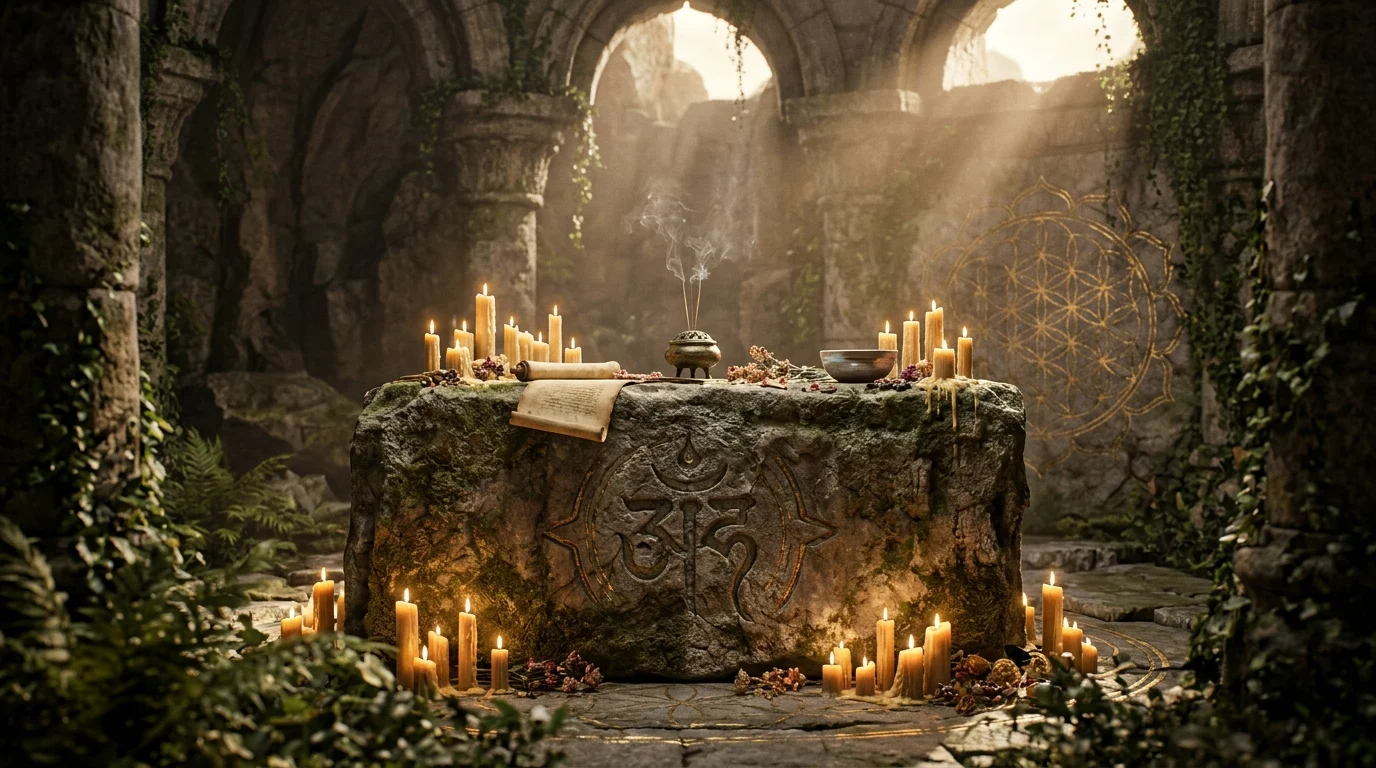
Sacred symbolism connects the physical world with deeper spiritual ideas, religious beliefs, and universal human experiences. Throughout history, people have used sacred symbols to express faith, represent divine energy, and communicate truths that words cannot always explain. From ancient temples and religious artwork to modern spiritual practices, these symbols continue to inspire meaning and reflection.
Understanding sacred symbolism helps us explore how different cultures represent holiness, divine protection, spiritual awakening, and the connection between humanity and something greater. Whether found in religious traditions, ancient objects, or everyday spiritual practices, sacred symbols carry powerful messages about life, faith, and the mysteries of existence.
Sacred Symbolism Meaning (Clear Definition)
Sacred symbolism refers to the use of meaningful signs, objects, shapes, images, and patterns to represent spiritual truths, religious beliefs, divine forces, or things considered holy.
A sacred symbol often communicates an idea that goes beyond its physical appearance. For example, a lotus flower may represent purity and spiritual growth, while a cross can represent faith, sacrifice, and salvation in Christianity.
Sacred symbols help people understand and express ideas about the divine, life, death, creation, and the human spirit.
Common examples include:
- The Cross: Faith, sacrifice, and redemption.
- The Lotus Flower: Purity, enlightenment, and spiritual growth.
- The Om Symbol: Universal consciousness and spiritual connection.
- The Crescent Moon: Faith, renewal, and religious identity in various traditions.
- The Mandala: Wholeness, balance, and the universe.
- The Tree of Life: Creation, interconnectedness, and eternal growth.
These symbols can have different meanings depending on the religion, culture, and historical period in which people use them.
What Does Sacred Symbolism Represent?
Sacred symbolism represents humanity’s search for meaning, spiritual understanding, and connection with the divine. It gives visible form to invisible ideas such as faith, hope, wisdom, purity, and eternal life.
Although individual interpretations differ, several themes appear across many spiritual traditions.
1. Divine Connection
Many sacred symbols represent a relationship between humanity and a higher power. They remind believers of divine presence, spiritual guidance, and the importance of faith.
2. Protection and Blessings
Certain symbols represent safety, blessings, and protection against negative influences. People may display them in homes, temples, or places of worship as expressions of devotion.
3. Purity and Enlightenment
Flowers, light, and geometric patterns often symbolize spiritual purity and the journey toward greater awareness.
4. Balance and Harmony
Sacred patterns frequently represent the relationship between different forces, such as light and darkness, body and spirit, or earth and heaven.
5. Life, Death, and Rebirth
Some symbols communicate the continuous cycle of existence. They remind people that endings can create opportunities for transformation and new beginnings.
6. Unity and Wholeness
Symbols such as circles and mandalas can represent completeness, universal connection, and the idea that everything belongs to a greater whole.
Spiritual Meaning of Sacred Symbolism
The spiritual meaning of sacred symbolism centers on awakening, inner peace, divine connection, and personal transformation.
In many spiritual traditions, symbols serve as reminders of deeper truths. They encourage people to look beyond material concerns and reflect on their purpose, values, and relationship with the universe.
Spiritual awakening is one of the most common themes associated with sacred symbols. Images of light, rising suns, open flowers, and ascending shapes can represent the movement from confusion toward understanding.
Other important spiritual interpretations include:
- Inner Peace: Symbols of circles, water, and peaceful natural forms can represent emotional balance.
- Spiritual Protection: Protective signs may express trust, safety, and divine care.
- Higher Consciousness: Sacred geometry and spiritual patterns can represent universal order.
- Personal Transformation: Butterflies, lotus flowers, and phoenix imagery can symbolize growth and renewal.
- Divine Guidance: Stars, light, and celestial images can represent hope and spiritual direction.
Sacred symbols can also become part of meditation and prayer. Focusing on a meaningful image may help individuals develop concentration, reflect on their beliefs, and create a sense of spiritual connection.
However, spiritual meanings are not universal rules. The interpretation of a symbol depends on personal experience and the tradition in which it appears.
Biblical / Religious Meaning of Sacred Symbolism
Sacred symbolism plays an important role in many religious traditions, including Christianity, Islam, Hinduism, Buddhism, and Judaism.
Religious communities use symbols to express beliefs, remember important teachings, and communicate spiritual ideas across generations.
Sacred Symbolism in Christianity
Christianity uses several well-known sacred symbols to represent faith and religious teachings.
- The Cross: Represents the crucifixion of Jesus Christ, sacrifice, redemption, and salvation.
- The Dove: Represents the Holy Spirit, peace, and divine presence.
- The Lamb: Represents innocence and the sacrifice of Jesus.
- The Fish: Known as an early Christian symbol of faith and identity.
- Light: Often represents divine truth, hope, and spiritual guidance.
These symbols appear in churches, religious paintings, ceremonies, and Christian literature.
Sacred Symbolism in Islam
Islamic visual traditions include beautiful forms of sacred symbolism, especially through calligraphy, geometric patterns, and architectural decoration.
- The Crescent and Star: Widely associated with Islamic identity, although they are not universal religious symbols or central Islamic doctrines.
- Geometric Patterns: Often express mathematical harmony, order, and artistic beauty.
- Arabic Calligraphy: Displays sacred words, especially verses from the Quran, with reverence and artistic care.
- Light: Appears as an important spiritual image in Islamic scripture and artistic traditions.
Islamic sacred art often emphasizes the beauty of creation through patterns, symmetry, and calligraphy.
Sacred Symbolism in Hinduism
Hindu traditions contain a rich variety of sacred symbols connected with divine powers, creation, and spiritual understanding.
- Om (Aum): Represents sacred sound and ultimate reality.
- The Lotus: Represents purity, spiritual development, and divine beauty.
- Trishula: The three-pronged trident associated with Lord Shiva.
- Swastika: An ancient symbol of auspiciousness, prosperity, and well-being in Hindu traditions.
- Sacred Cow: Represents nourishment, generosity, and respect for life.
Sacred Symbolism in Buddhism
Buddhist traditions use symbols to communicate the Buddha’s teachings and the path toward enlightenment.
- Dharma Wheel: Represents the Buddha’s teachings and the Noble Eightfold Path.
- Lotus Flower: Represents purity and the possibility of enlightenment.
- Bodhi Tree: Represents the Buddha’s enlightenment.
- Endless Knot: Represents interconnectedness and the relationship between wisdom and compassion.
Sacred Symbolism in Judaism
Judaism also has important symbols that express religious identity, history, and spiritual beliefs.
- Star of David: A widely recognized symbol of Jewish identity.
- Menorah: Represents the historic Temple tradition and Jewish religious heritage.
- Torah Scroll: Represents sacred teachings, religious law, and spiritual guidance.
Each religious tradition gives its symbols meaning through its own teachings, practices, and history.
Sacred Symbolism in History and Culture
Sacred symbolism has existed in human societies for thousands of years. Ancient civilizations used symbols in temples, burial places, monuments, pottery, clothing, and religious ceremonies.
For early communities, symbols provided ways to express beliefs about nature, creation, the afterlife, and supernatural powers.
Ancient Egyptian Sacred Symbols
Ancient Egyptian Scarab with Hieroglyphs | New Kingdom, Steatite
7
Ancient Egyptian culture developed many recognizable sacred symbols.
- Ankh: Represented life and vitality.
- Eye of Horus: Associated with protection, healing, and restoration.
- Scarab: Connected with renewal, transformation, and the sun’s daily cycle.
These symbols appeared in jewelry, tomb decorations, religious objects, and royal artwork.
Ancient Greek and Roman Symbols
Meet Five Legendary Ancient Olympians
Who Is Hermes? 8 Facts About the Greek God & Divine Messenger | TheCollector
7
Greek and Roman cultures also used symbolic imagery to communicate religious and cultural ideas.
The laurel wreath represented victory and honor, while the olive branch became associated with peace. Mythological objects and images often connected human experiences with the powers of the gods.
Sacred Symbols in Indigenous Cultures
Many Indigenous communities use symbols connected with ancestors, land, animals, natural elements, and spiritual relationships.
These meanings are often specific to individual communities and traditions. For example, certain animals may represent protection, wisdom, or ancestral relationships within particular cultural contexts.
It is important to understand these symbols respectfully rather than assuming that one interpretation applies to every Indigenous culture.
Sacred Geometry Across Civilizations
Mayan architectural detail, Mexico
9
Sacred geometry refers to the use of geometric shapes and patterns in religious, spiritual, and architectural traditions.
Circles, triangles, spirals, and symmetrical designs have appeared in different civilizations.
These patterns can represent harmony, balance, creation, and the structure of the universe. They also demonstrate how mathematics and artistic expression have influenced sacred architecture.
Sacred Symbolism in Literature and Art
Sacred symbolism has influenced literature, painting, sculpture, architecture, poetry, and storytelling throughout history.
Artists and writers often use religious and spiritual images to communicate complex ideas about human existence.
Light and Darkness
Light commonly represents truth, knowledge, hope, and divine presence. Darkness may represent uncertainty, fear, ignorance, or hidden aspects of human experience.
However, darkness can also symbolize rest, mystery, and the unknown rather than something negative.
The Lotus Flower
The lotus appears in religious artwork and literature as an image of purity and transformation. Its ability to grow from muddy water makes it a powerful metaphor for finding beauty and wisdom through difficult experiences.
The Circle
Circles frequently represent eternity, completeness, and unity. Their endless shape makes them useful in artistic expressions of spiritual wholeness.
The Tree of Life
The Tree of Life appears in different cultural and literary traditions. It can represent family connections, wisdom, creation, spiritual growth, and the relationship between different worlds.
The Phoenix
The phoenix represents renewal, resilience, and rebirth. In literature and visual art, it often communicates the idea that something meaningful can emerge after destruction or hardship.
Through these images, sacred symbolism allows artists to explore spiritual questions without relying entirely on direct explanations.
Dream Meaning of Sacred Symbolism
Dreams involving sacred symbols can reflect personal beliefs, emotional experiences, spiritual questions, or memories.
Their meanings depend on the dreamer’s background and the details of the dream. There is no scientifically established universal interpretation for seeing sacred symbols while sleeping.
Some common symbolic interpretations include:
| Sacred symbol in a dream | Possible interpretation |
|---|---|
| Cross | Faith, sacrifice, or responsibility |
| Lotus flower | Personal growth and purity |
| Bright light | Hope, clarity, or understanding |
| Temple | Inner peace or spiritual reflection |
| Mandala | Balance and wholeness |
| Tree of Life | Family, connection, and growth |
| Dove | Peace, forgiveness, or harmony |
Seeing a Sacred Symbol
Seeing a sacred symbol in a dream may reflect a desire for guidance, comfort, or a stronger connection with personal values.
Holding a Sacred Object
Holding a meaningful religious object may represent responsibility, devotion, or the importance of something you deeply value.
Entering a Sacred Place
Dreaming about entering a temple, church, mosque, or another place of worship may reflect a need for reflection, emotional comfort, or a search for direction.
Seeing a Broken Sacred Symbol
A damaged symbol may represent uncertainty, changing beliefs, or conflict involving personal values. However, it does not automatically predict a negative event.
Modern Meaning of Sacred Symbolism
In modern society, sacred symbolism continues to influence religion, art, architecture, fashion, meditation, and personal expression.
Although people encounter symbols in different ways today, their ability to communicate meaningful ideas remains important.
Sacred Symbols in Everyday Life
People display meaningful symbols in their homes, wear them as jewelry, or include them in personal artwork.
A cross necklace, lotus pendant, or meaningful geometric design can express faith, cultural identity, or an important personal belief.
Sacred Symbolism in Meditation
Some individuals use mandalas, spiritual patterns, and meaningful images during meditation.
These symbols can provide a visual focus, encourage mindfulness, and help people reflect on personal intentions.
Sacred Symbols in Architecture
Religious buildings continue to use symbolic shapes, decorative patterns, calligraphy, and carefully designed spaces.
Domes, arches, stained glass, and geometric arrangements can communicate spiritual ideas while creating an atmosphere of reflection and reverence.
Sacred Symbolism in Personal Growth
Modern spiritual communities sometimes use sacred imagery to represent transformation, gratitude, healing, and self-discovery.
For example, a lotus may remind someone to remain hopeful during difficult times, while a tree may represent strong family connections and personal development.
Nevertheless, sacred symbols deserve cultural awareness. Some images belong to specific religious traditions and carry meanings that should not be separated from their original context.
FAQS:
What Is the Main Purpose of Sacred Symbolism?
The main purpose of sacred symbolism is to communicate spiritual truths, religious beliefs, and meaningful ideas through recognizable images, objects, and patterns.
What Are the Most Common Sacred Symbols?
Common sacred symbols include the cross, lotus flower, Om, mandala, Ankh, Tree of Life, and Dharma Wheel. Each has distinct meanings within its cultural or religious tradition.
What Does Sacred Symbolism Mean Spiritually?
Spiritually, sacred symbolism can represent divine connection, inner peace, protection, enlightenment, transformation, and the search for higher understanding.
Why Are Sacred Symbols Important in Different Religions?
Sacred symbols help religious communities express their beliefs, preserve traditions, teach spiritual values, and create a shared sense of identity.
Can Sacred Symbols Have Different Meanings?
Yes. The same symbol may have different meanings across cultures, religions, and historical periods. Its interpretation depends on the context in which people use it.
Conclusion
Sacred symbolism reveals how humanity uses meaningful images and patterns to express faith, spirituality, wisdom, and the mysteries of existence. From ancient civilizations to modern religious practices, sacred symbols continue to connect people with their beliefs, cultural heritage, and personal values. Understanding their deeper meanings encourages respect for different traditions and reminds us that even a simple image can carry a powerful message.
SEO Details
SEO Title: Sacred Symbolism: Meaning, Spiritual Significance and History
Meta Description: Explore sacred symbolism, its spiritual meanings, religious traditions, ancient history, powerful symbols, cultural significance, and influence on modern life and art.
URL Slug: sacred-symbolism
Sacred symbolism connects the physical world with deeper spiritual ideas, religious beliefs, and universal human experiences. Throughout history, people have used sacred symbols to express faith, represent divine energy, and communicate truths that words cannot always explain. From ancient temples and religious artwork to modern spiritual practices, these symbols continue to inspire meaning and reflection.
Understanding sacred symbolism helps us explore how different cultures represent holiness, divine protection, spiritual awakening, and the connection between humanity and something greater. Whether found in religious traditions, ancient objects, or everyday spiritual practices, sacred symbols carry powerful messages about life, faith, and the mysteries of existence.
Sacred Symbolism Meaning (Clear Definition)
Sacred symbolism refers to the use of meaningful signs, objects, shapes, images, and patterns to represent spiritual truths, religious beliefs, divine forces, or things considered holy.
A sacred symbol often communicates an idea that goes beyond its physical appearance. For example, a lotus flower may represent purity and spiritual growth, while a cross can represent faith, sacrifice, and salvation in Christianity.
Sacred symbols help people understand and express ideas about the divine, life, death, creation, and the human spirit.
Common examples include:
- The Cross: Faith, sacrifice, and redemption.
- The Lotus Flower: Purity, enlightenment, and spiritual growth.
- The Om Symbol: Universal consciousness and spiritual connection.
- The Crescent Moon: Faith, renewal, and religious identity in various traditions.
- The Mandala: Wholeness, balance, and the universe.
- The Tree of Life: Creation, interconnectedness, and eternal growth.
These symbols can have different meanings depending on the religion, culture, and historical period in which people use them.
What Does Sacred Symbolism Represent?
Sacred symbolism represents humanity’s search for meaning, spiritual understanding, and connection with the divine. It gives visible form to invisible ideas such as faith, hope, wisdom, purity, and eternal life.
Although individual interpretations differ, several themes appear across many spiritual traditions.
1. Divine Connection
Many sacred symbols represent a relationship between humanity and a higher power. They remind believers of divine presence, spiritual guidance, and the importance of faith.
2. Protection and Blessings
Certain symbols represent safety, blessings, and protection against negative influences. People may display them in homes, temples, or places of worship as expressions of devotion.
3. Purity and Enlightenment
Flowers, light, and geometric patterns often symbolize spiritual purity and the journey toward greater awareness.
4. Balance and Harmony
Sacred patterns frequently represent the relationship between different forces, such as light and darkness, body and spirit, or earth and heaven.
5. Life, Death, and Rebirth
Some symbols communicate the continuous cycle of existence. They remind people that endings can create opportunities for transformation and new beginnings.
6. Unity and Wholeness
Symbols such as circles and mandalas can represent completeness, universal connection, and the idea that everything belongs to a greater whole.
Spiritual Meaning of Sacred Symbolism
The spiritual meaning of sacred symbolism centers on awakening, inner peace, divine connection, and personal transformation.
In many spiritual traditions, symbols serve as reminders of deeper truths. They encourage people to look beyond material concerns and reflect on their purpose, values, and relationship with the universe.
Spiritual awakening is one of the most common themes associated with sacred symbols. Images of light, rising suns, open flowers, and ascending shapes can represent the movement from confusion toward understanding.
Other important spiritual interpretations include:
- Inner Peace: Symbols of circles, water, and peaceful natural forms can represent emotional balance.
- Spiritual Protection: Protective signs may express trust, safety, and divine care.
- Higher Consciousness: Sacred geometry and spiritual patterns can represent universal order.
- Personal Transformation: Butterflies, lotus flowers, and phoenix imagery can symbolize growth and renewal.
- Divine Guidance: Stars, light, and celestial images can represent hope and spiritual direction.
Sacred symbols can also become part of meditation and prayer. Focusing on a meaningful image may help individuals develop concentration, reflect on their beliefs, and create a sense of spiritual connection.
However, spiritual meanings are not universal rules. The interpretation of a symbol depends on personal experience and the tradition in which it appears.
Biblical / Religious Meaning of Sacred Symbolism
Sacred symbolism plays an important role in many religious traditions, including Christianity, Islam, Hinduism, Buddhism, and Judaism.
Religious communities use symbols to express beliefs, remember important teachings, and communicate spiritual ideas across generations.
Sacred Symbolism in Christianity
Christianity uses several well-known sacred symbols to represent faith and religious teachings.
- The Cross: Represents the crucifixion of Jesus Christ, sacrifice, redemption, and salvation.
- The Dove: Represents the Holy Spirit, peace, and divine presence.
- The Lamb: Represents innocence and the sacrifice of Jesus.
- The Fish: Known as an early Christian symbol of faith and identity.
- Light: Often represents divine truth, hope, and spiritual guidance.
These symbols appear in churches, religious paintings, ceremonies, and Christian literature.
Sacred Symbolism in Islam
Islamic visual traditions include beautiful forms of sacred symbolism, especially through calligraphy, geometric patterns, and architectural decoration.
- The Crescent and Star: Widely associated with Islamic identity, although they are not universal religious symbols or central Islamic doctrines.
- Geometric Patterns: Often express mathematical harmony, order, and artistic beauty.
- Arabic Calligraphy: Displays sacred words, especially verses from the Quran, with reverence and artistic care.
- Light: Appears as an important spiritual image in Islamic scripture and artistic traditions.
Islamic sacred art often emphasizes the beauty of creation through patterns, symmetry, and calligraphy.
Sacred Symbolism in Hinduism
Hindu traditions contain a rich variety of sacred symbols connected with divine powers, creation, and spiritual understanding.
- Om (Aum): Represents sacred sound and ultimate reality.
- The Lotus: Represents purity, spiritual development, and divine beauty.
- Trishula: The three-pronged trident associated with Lord Shiva.
- Swastika: An ancient symbol of auspiciousness, prosperity, and well-being in Hindu traditions.
- Sacred Cow: Represents nourishment, generosity, and respect for life.
Sacred Symbolism in Buddhism
Buddhist traditions use symbols to communicate the Buddha’s teachings and the path toward enlightenment.
- Dharma Wheel: Represents the Buddha’s teachings and the Noble Eightfold Path.
- Lotus Flower: Represents purity and the possibility of enlightenment.
- Bodhi Tree: Represents the Buddha’s enlightenment.
- Endless Knot: Represents interconnectedness and the relationship between wisdom and compassion.
Sacred Symbolism in Judaism
Judaism also has important symbols that express religious identity, history, and spiritual beliefs.
- Star of David: A widely recognized symbol of Jewish identity.
- Menorah: Represents the historic Temple tradition and Jewish religious heritage.
- Torah Scroll: Represents sacred teachings, religious law, and spiritual guidance.
Each religious tradition gives its symbols meaning through its own teachings, practices, and history.
Sacred Symbolism in History and Culture
Sacred symbolism has existed in human societies for thousands of years. Ancient civilizations used symbols in temples, burial places, monuments, pottery, clothing, and religious ceremonies.
For early communities, symbols provided ways to express beliefs about nature, creation, the afterlife, and supernatural powers.
Ancient Egyptian Sacred Symbols
Ancient Egyptian Scarab with Hieroglyphs | New Kingdom, Steatite
7
Ancient Egyptian culture developed many recognizable sacred symbols.
- Ankh: Represented life and vitality.
- Eye of Horus: Associated with protection, healing, and restoration.
- Scarab: Connected with renewal, transformation, and the sun’s daily cycle.
These symbols appeared in jewelry, tomb decorations, religious objects, and royal artwork.
Ancient Greek and Roman Symbols
Meet Five Legendary Ancient Olympians
Who Is Hermes? 8 Facts About the Greek God & Divine Messenger | TheCollector
7
Greek and Roman cultures also used symbolic imagery to communicate religious and cultural ideas.
The laurel wreath represented victory and honor, while the olive branch became associated with peace. Mythological objects and images often connected human experiences with the powers of the gods.
Sacred Symbols in Indigenous Cultures
Many Indigenous communities use symbols connected with ancestors, land, animals, natural elements, and spiritual relationships.
These meanings are often specific to individual communities and traditions. For example, certain animals may represent protection, wisdom, or ancestral relationships within particular cultural contexts.
It is important to understand these symbols respectfully rather than assuming that one interpretation applies to every Indigenous culture.
Sacred Geometry Across Civilizations
Mayan architectural detail, Mexico
9
Sacred geometry refers to the use of geometric shapes and patterns in religious, spiritual, and architectural traditions.
Circles, triangles, spirals, and symmetrical designs have appeared in different civilizations.
These patterns can represent harmony, balance, creation, and the structure of the universe. They also demonstrate how mathematics and artistic expression have influenced sacred architecture.
Sacred Symbolism in Literature and Art
Sacred symbolism has influenced literature, painting, sculpture, architecture, poetry, and storytelling throughout history.
Artists and writers often use religious and spiritual images to communicate complex ideas about human existence.
Light and Darkness
Light commonly represents truth, knowledge, hope, and divine presence. Darkness may represent uncertainty, fear, ignorance, or hidden aspects of human experience.
However, darkness can also symbolize rest, mystery, and the unknown rather than something negative.
The Lotus Flower
The lotus appears in religious artwork and literature as an image of purity and transformation. Its ability to grow from muddy water makes it a powerful metaphor for finding beauty and wisdom through difficult experiences.
The Circle
Circles frequently represent eternity, completeness, and unity. Their endless shape makes them useful in artistic expressions of spiritual wholeness.
The Tree of Life
The Tree of Life appears in different cultural and literary traditions. It can represent family connections, wisdom, creation, spiritual growth, and the relationship between different worlds.
The Phoenix
The phoenix represents renewal, resilience, and rebirth. In literature and visual art, it often communicates the idea that something meaningful can emerge after destruction or hardship.
Through these images, sacred symbolism allows artists to explore spiritual questions without relying entirely on direct explanations.
Dream Meaning of Sacred Symbolism
Dreams involving sacred symbols can reflect personal beliefs, emotional experiences, spiritual questions, or memories.
Their meanings depend on the dreamer’s background and the details of the dream. There is no scientifically established universal interpretation for seeing sacred symbols while sleeping.
Some common symbolic interpretations include:
| Sacred symbol in a dream | Possible interpretation |
|---|---|
| Cross | Faith, sacrifice, or responsibility |
| Lotus flower | Personal growth and purity |
| Bright light | Hope, clarity, or understanding |
| Temple | Inner peace or spiritual reflection |
| Mandala | Balance and wholeness |
| Tree of Life | Family, connection, and growth |
| Dove | Peace, forgiveness, or harmony |
Seeing a Sacred Symbol
Seeing a sacred symbol in a dream may reflect a desire for guidance, comfort, or a stronger connection with personal values.
Holding a Sacred Object
Holding a meaningful religious object may represent responsibility, devotion, or the importance of something you deeply value.
Entering a Sacred Place
Dreaming about entering a temple, church, mosque, or another place of worship may reflect a need for reflection, emotional comfort, or a search for direction.
Seeing a Broken Sacred Symbol
A damaged symbol may represent uncertainty, changing beliefs, or conflict involving personal values. However, it does not automatically predict a negative event.
Modern Meaning of Sacred Symbolism
In modern society, sacred symbolism continues to influence religion, art, architecture, fashion, meditation, and personal expression.
Although people encounter symbols in different ways today, their ability to communicate meaningful ideas remains important.
Sacred Symbols in Everyday Life
People display meaningful symbols in their homes, wear them as jewelry, or include them in personal artwork.
A cross necklace, lotus pendant, or meaningful geometric design can express faith, cultural identity, or an important personal belief.
Sacred Symbolism in Meditation
Some individuals use mandalas, spiritual patterns, and meaningful images during meditation.
These symbols can provide a visual focus, encourage mindfulness, and help people reflect on personal intentions.
Sacred Symbols in Architecture
Religious buildings continue to use symbolic shapes, decorative patterns, calligraphy, and carefully designed spaces.
Domes, arches, stained glass, and geometric arrangements can communicate spiritual ideas while creating an atmosphere of reflection and reverence.
Sacred Symbolism in Personal Growth
Modern spiritual communities sometimes use sacred imagery to represent transformation, gratitude, healing, and self-discovery.
For example, a lotus may remind someone to remain hopeful during difficult times, while a tree may represent strong family connections and personal development.
Nevertheless, sacred symbols deserve cultural awareness. Some images belong to specific religious traditions and carry meanings that should not be separated from their original context.
FAQS:
What Is the Main Purpose of Sacred Symbolism?
The main purpose of sacred symbolism is to communicate spiritual truths, religious beliefs, and meaningful ideas through recognizable images, objects, and patterns.
What Are the Most Common Sacred Symbols?
Common sacred symbols include the cross, lotus flower, Om, mandala, Ankh, Tree of Life, and Dharma Wheel. Each has distinct meanings within its cultural or religious tradition.
What Does Sacred Symbolism Mean Spiritually?
Spiritually, sacred symbolism can represent divine connection, inner peace, protection, enlightenment, transformation, and the search for higher understanding.
Why Are Sacred Symbols Important in Different Religions?
Sacred symbols help religious communities express their beliefs, preserve traditions, teach spiritual values, and create a shared sense of identity.
Can Sacred Symbols Have Different Meanings?
Yes. The same symbol may have different meanings across cultures, religions, and historical periods. Its interpretation depends on the context in which people use it.
Conclusion
Sacred symbolism reveals how humanity uses meaningful images and patterns to express faith, spirituality, wisdom, and the mysteries of existence. From ancient civilizations to modern religious practices, sacred symbols continue to connect people with their beliefs, cultural heritage, and personal values. Understanding their deeper meanings encourages respect for different traditions and reminds us that even a simple image can carry a powerful message.

I explore the meanings and stories behind symbols, helping readers understand their cultural, spiritual, and everyday significance through clear, engaging, and meaningful insights.