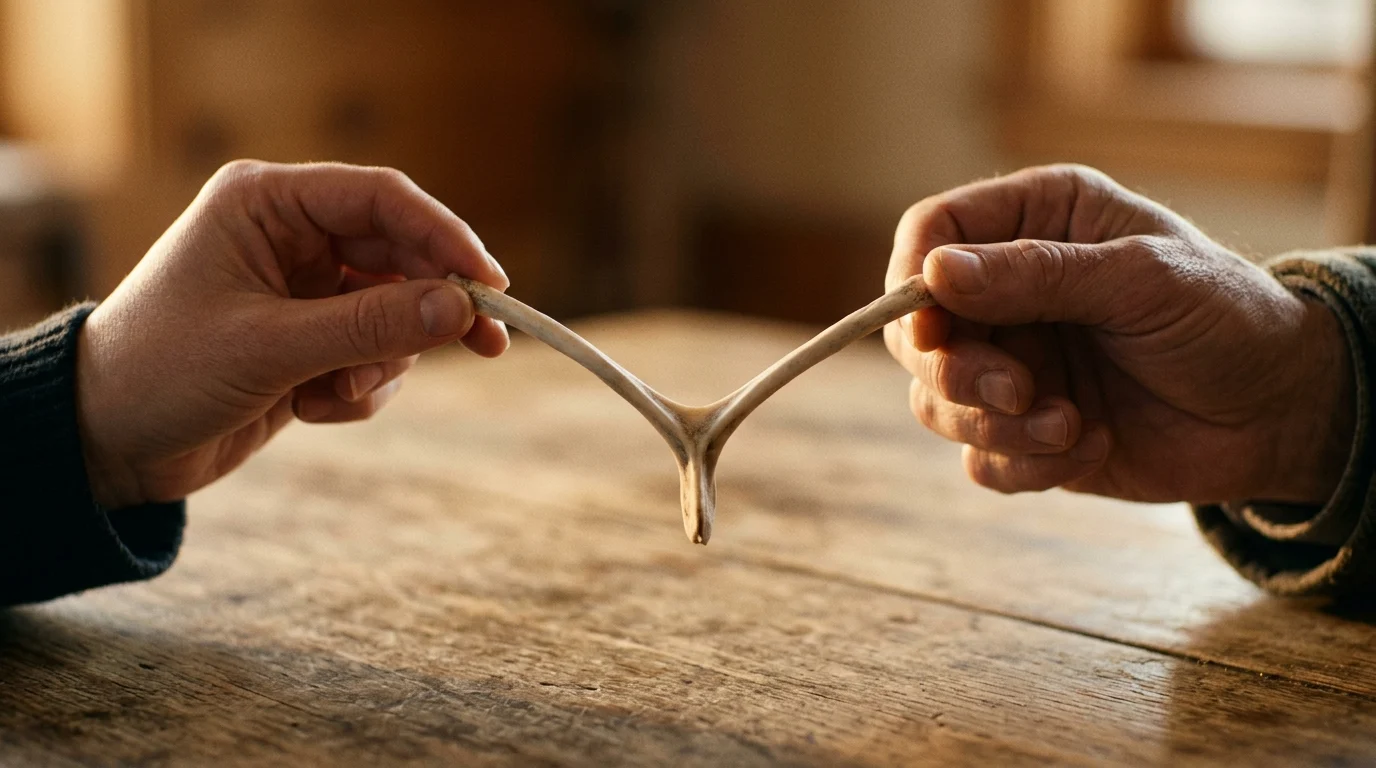
Wishbone symbolism is closely associated with luck, hope, good fortune, and the belief that a wish can come true. This small, fork-shaped bone has become a familiar symbol of optimism, especially during family celebrations and Thanksgiving traditions. When two people pull a wishbone apart, the person holding the larger piece is traditionally believed to receive good luck or have their wish granted.
Beyond this playful custom, the wishbone carries deeper meanings connected to faith, possibility, personal desires, and the courage to hope for something better. It reminds us that even a simple object can inspire happiness and bring people together through shared traditions.
Wishbone Symbolism Meaning (Clear Definition)
Wishbone symbolism represents luck, hope, wishes, good fortune, and the possibility of a positive future. Traditionally, people associate the wishbone with making a wish and believing that something wonderful may happen.
A wishbone is the V-shaped bone, technically called the furcula, found in birds such as chickens and turkeys. Although it serves a biological purpose by supporting the bird’s flight-related skeletal structure, people have given it cultural and symbolic meanings over centuries.
The most recognizable tradition involves two people holding opposite ends of a dried wishbone and pulling until it breaks. The person who receives the larger piece is believed to have their wish fulfilled.
The main meanings of wishbone symbolism include:
- Good luck: A hopeful sign of favorable opportunities.
- Hope: Belief that positive changes are possible.
- Wish fulfillment: The desire to see a dream become reality.
- Optimism: Maintaining a positive outlook despite uncertainty.
- Connection: Sharing traditions and meaningful moments with loved ones.
- New possibilities: Looking forward to opportunities that have not yet appeared.
While people often treat the wishbone as a lucky charm, its meaning depends on personal beliefs, cultural traditions, and individual experiences.
What Does Wishbone Symbolism Represent?
Wishbone symbolism represents several ideas that connect human desires with hope and possibility. Its meaning often becomes more personal when someone uses it during a celebration or keeps it as a reminder of a special wish.
1. Luck and Good Fortune
One of the most familiar meanings of the wishbone is good luck. People traditionally break the bone while making wishes, hoping the outcome will bring favorable circumstances.
A wishbone charm may also serve as a reminder to welcome opportunities and approach life with confidence. However, its association with luck comes from folklore rather than scientific evidence.
2. Hope and Optimism
The wishbone encourages people to believe that their future can hold something better. It represents the hope that personal goals, relationships, and dreams may develop in positive ways.
For someone facing uncertainty, this symbol can offer a simple reminder to remain optimistic while taking practical steps toward change.
3. Wishes and Dreams
The wishbone is especially connected to personal desires. These wishes might involve love, success, happiness, family, health, or new beginnings.
Its symbolism suggests that dreams deserve attention, even when their outcomes remain uncertain.
4. Prosperity and Abundance
Some people associate wishbone symbolism with prosperity, success, and abundance. In this interpretation, the wishbone represents the possibility of receiving something valuable or experiencing a fortunate change.
Rather than guaranteeing wealth, it can symbolize an open attitude toward growth and opportunity.
5. Family and Togetherness
The traditional wishbone game often brings people together around a shared meal. Two people participate in the same ritual, each hoping for a favorable result.
For this reason, the wishbone can symbolize family bonds, friendly competition, laughter, and cherished memories.
6. Choice and Possibility
The wishbone’s forked shape can also inspire interpretations about choices and different paths in life. Although this is a modern symbolic reading rather than a universal traditional meaning, it can represent the many directions a person’s future might take.
Spiritual Meaning of Wishbone Symbolism
Spiritually, wishbone symbolism can represent faith, intention, gratitude, and openness to new possibilities. Some people view it as a gentle reminder to trust the journey of life while remaining aware of the opportunities around them.
Its spiritual meaning is not fixed. Different people interpret it according to their personal beliefs and experiences.
Trusting in the Future
A wishbone may remind you that the future is not always predictable. You may not know exactly how a situation will unfold, but you can continue moving forward with patience and hope.
Spiritually, this interpretation encourages trust without requiring certainty about the outcome.
Setting Clear Intentions
Making a wish can encourage reflection on what truly matters. It gives you a moment to consider your priorities, values, and deepest desires.
In this sense, a wishbone can symbolize intention-setting. It invites you to turn vague hopes into meaningful goals and take small steps toward achieving them.
Recognizing Blessings
Wishbone symbolism can also encourage gratitude. Instead of focusing entirely on what you want to receive, the symbol may remind you to appreciate the relationships, experiences, and opportunities already present in your life.
Gratitude and hope can exist together: you can value your current life while still working toward a better future.
Embracing New Opportunities
The wishbone’s distinctive shape can inspire the idea of two possible directions. Spiritually, some people interpret this form as a reminder that life offers choices and that personal growth often begins when you become willing to explore something new.
This is a personal interpretation rather than an established spiritual rule.
Biblical / Religious Meaning of Wishbone Symbolism
The wishbone does not have a specific, established symbolic meaning in the Bible, and Scripture does not identify it as a sacred object or a guaranteed source of good luck.
However, some of its popular associations can be considered alongside broader religious themes.
Hope and Faith
In Christianity, hope and faith are important spiritual concepts. A person may use a wishbone as a personal reminder to remain hopeful and place trust in God.
This interpretation comes from the individual’s faith, not from a biblical teaching about wishbones themselves.
Gratitude and Blessings
The wishbone’s connection with family meals can remind people of gratitude, fellowship, and appreciation for daily blessings.
These themes appear in many religious traditions, although the wishbone itself does not have a universal religious status.
Wishes Versus Prayer
Making a wish during a traditional game is different from prayer in a religious context. Prayer may involve worship, thanksgiving, confession, or seeking guidance, depending on the faith tradition.
For religious readers, the wishbone can be a playful cultural symbol rather than an object that determines spiritual outcomes.
Wishbone Symbolism in History and Culture
The wishbone tradition has historical roots that extend beyond its modern association with Thanksgiving. Ancient beliefs about birds, fortune, and divination helped shape the broader cultural background of the custom.
Ancient Etruscan Traditions
The Etruscans of ancient Italy practiced forms of divination involving natural signs, including the behavior and features of birds. Historical accounts connect the broader history of wishbone customs with beliefs that bird-related objects could carry special significance.
Over time, traditions involving birds and good fortune became part of the cultural background from which later wishbone customs developed.
Roman Customs and Good Fortune
The Romans also practiced divination and attached meaning to signs associated with birds. Historical explanations of the wishbone tradition often describe how beliefs about sacred birds and fortune evolved across different cultures.
However, the exact path from ancient practices to the modern wishbone game is not fully established in every detail.
The British Wishbone Tradition
In Britain, the wishbone custom became associated with poultry meals and the practice of pulling the bone apart to determine whose wish might come true. The custom is often connected with the older English term merrythought, another name for the wishbone.
As families passed the practice from one generation to another, it became a familiar tradition involving luck, wishes, and celebration.
Thanksgiving in American Culture
In the United States, the wishbone is strongly associated with Thanksgiving, when families often save the turkey’s wishbone after the meal and allow it to dry before breaking it.
The tradition offers a playful way to end a family gathering. It also helps preserve a custom that connects generations through shared memories.
Today, the wishbone appears in jewelry, decorative objects, greeting cards, and seasonal designs.
Wishbone Symbolism in Literature and Art
In literature and art, the wishbone can represent hope, desire, luck, and the uncertainty of getting what one wants.
Writers and artists can use the object to communicate these ideas without lengthy explanations.
A Symbol of Hope
A character holding a wishbone might be waiting for an important opportunity or hoping for a life-changing event. The object can represent the emotional power of believing that something good remains possible.
A Symbol of Uncertainty
The wishbone tradition has an element of chance because neither participant can know in advance who will receive the larger piece.
In a story, this uncertainty can reflect the unpredictability of life. People can hope for a particular outcome, but they cannot control every circumstance.
A Symbol of Desire and Ambition
An illustrated wishbone may represent a character’s private dream, such as finding love, achieving success, or reconnecting with family.
Artists may also use the wishbone as a small visual symbol of optimism, especially in greeting cards, tattoos, and decorative designs.
A Symbol of Shared Experience
When two characters pull a wishbone together, the scene can communicate friendship, family connection, or a shared hope for the future.
The object becomes meaningful not only because of the wish itself but also because of the relationship between the people making it.
Dream Meaning of Wishbone Symbolism
Dreaming about a wishbone may reflect your hopes, expectations, personal ambitions, or desire for a positive change. Dream meanings are subjective, so the details of the dream and your personal circumstances matter more than any fixed interpretation.
Dreaming of Holding a Wishbone
Holding a wishbone may symbolize a hope you are keeping close to your heart. It could encourage you to reflect on what you want and whether you are taking steps toward that goal.
Dreaming of Breaking a Wishbone
Breaking a wishbone in a dream may represent anticipation, decision-making, or uncertainty about an outcome.
If the experience feels joyful, it might reflect optimism. If it feels stressful, it may reflect pressure surrounding an important decision.
Dreaming of Winning a Wishbone
Winning the larger piece could symbolize confidence, a desire for recognition, or the hope that your efforts will pay off.
It does not predict that you will receive good fortune in real life.
Dreaming of a Broken or Damaged Wishbone
A damaged wishbone might reflect disappointment, fading expectations, or concern that a goal is becoming difficult to achieve.
Alternatively, it may invite you to reconsider a plan and discover another way forward.
Dreaming of Giving Someone a Wishbone
Giving someone a wishbone may represent generosity, affection, or a desire to encourage another person.
It could reflect your wish to see someone you care about succeed or find happiness.
Modern Meaning of Wishbone Symbolism
In modern life, wishbone symbolism remains popular because it combines a simple shape with an uplifting message. People use it to express personal values, celebrate relationships, and remind themselves to remain hopeful.
Wishbone Jewelry
Wishbone necklaces, bracelets, and rings are often worn as symbols of luck, hope, and personal aspirations. Some people choose this jewelry to mark a new chapter, while others appreciate its simple design.
Its meaning may be entirely personal, shaped by the wearer’s memories or goals.
Wishbone Tattoos
A wishbone tattoo can represent optimism, resilience, or the determination to keep believing in a dream.
For some people, it marks a meaningful turning point. For others, it serves as a lasting reminder to approach the future with an open mind.
Wishbone Decorations and Gifts
Wishbone ornaments and gifts can communicate encouragement, affection, and good wishes. They are particularly fitting for celebrations, graduations, birthdays, and other occasions associated with new opportunities.
Wishbone as a Personal Reminder
You do not need to believe in luck or supernatural signs to appreciate a wishbone. It can simply remind you to identify your goals, value your relationships, and take action toward the future you want.
Its modern appeal comes from this balance between tradition and personal meaning.
Symbolic Meanings of a Wishbone at a Glance
| Symbolic meaning | Interpretation |
|---|---|
| Luck | Hope for a favorable outcome |
| Hope | Belief in a brighter future |
| Wishes | Personal dreams and aspirations |
| Prosperity | Possibility of growth and success |
| Family | Shared traditions and togetherness |
| Faith | Trust and spiritual reflection |
| New beginnings | Openness to change and opportunity |
| Choice | Different paths and possibilities |
Frequently Asked Questions About Wishbone Symbolism
1. What does a wishbone symbolize?
A wishbone primarily symbolizes luck, hope, wishes, and good fortune. It can also represent family traditions, optimism, and the possibility of a positive future.
2. Is a wishbone a symbol of good luck?
Yes, many cultural traditions associate the wishbone with good luck. However, this belief comes from folklore, and there is no scientific evidence that a wishbone can guarantee a fortunate outcome.
3. What does a wishbone mean spiritually?
Spiritually, a wishbone may represent faith, hope, gratitude, and setting intentions. Its meaning depends on personal beliefs rather than a universal spiritual rule.
4. Why do people make wishes on a wishbone?
People make wishes on a wishbone because of a longstanding folk tradition in which two people pull its ends apart. The person holding the larger piece is traditionally believed to have their wish granted.
5. What does a wishbone necklace symbolize?
A wishbone necklace commonly symbolizes good luck, hope, and personal dreams. Some people wear it as a meaningful reminder to stay optimistic and pursue their goals.
Conclusion
Wishbone symbolism brings together the timeless ideas of luck, hope, wishes, and connection. From traditional family games to modern jewelry and personal keepsakes, the wishbone reminds people to stay open to possibilities and cherish meaningful relationships. Although it cannot guarantee good fortune, it can inspire a valuable message: keep your hopes alive, appreciate what you have, and take thoughtful steps toward the future you desire.

I am Jasmine Marie, an administrator at SymbolBuz. I love exploring symbols and sharing their meanings to help readers understand their deeper stories, messages, and significance.