Time symbolism explores how people understand the passage of time, the value of each moment, and the connection between change, memory, and human life. From ancient sundials to modern clocks, time has represented much more than hours and minutes. It often reminds us of life’s temporary nature, the importance of patience, and the opportunities that come with every new beginning.
The meaning of time symbolism depends on cultural beliefs, personal experiences, and the situation in which time appears. It can represent growth, destiny, mortality, hope, or the feeling that an important opportunity is slipping away. Understanding these meanings can help us appreciate the present while making thoughtful choices about the future.
Time Symbolism Meaning (Clear Definition)
Time symbolism refers to the use of time, clocks, calendars, seasons, and the passage of moments to represent deeper ideas beyond ordinary measurement. It commonly symbolizes change, mortality, opportunity, patience, and the relationship between past, present, and future.
Time moves forward regardless of our plans, making it a powerful symbol of life’s journey. A sunrise may represent a fresh start, while a sunset can suggest completion, reflection, or the closing of a chapter.
In literature, religion, art, and everyday life, time often encourages people to consider how they use their lives and what truly matters to them.
For example, an hourglass can symbolize the limited time available to us, while a calendar may represent important milestones, commitments, and the anticipation of future events.
What Does Time Symbolism Represent?
Time symbolism carries several interconnected meanings. Its interpretation often depends on the object, setting, or experience associated with it.
| Symbolic Meaning | Interpretation |
|---|---|
| Mortality | Life is temporary, and every person has a limited amount of time. |
| Change | People, relationships, and circumstances continually evolve. |
| Opportunity | Certain moments offer chances that may not return. |
| Patience | Meaningful results often require time and consistent effort. |
| Renewal | A new day, season, or year can represent a fresh beginning. |
| Memory | The past influences identity, emotions, and present decisions. |
| Destiny | Time can represent the unfolding of events beyond our control. |
| Wisdom | Experience and reflection can deepen understanding over time. |
Time as a Symbol of Life and Mortality
Time frequently reminds us that life does not last forever. The image of a ticking clock, for instance, can create awareness of passing opportunities and the importance of making meaningful choices.
This symbolism does not have to inspire fear. Instead, it can encourage people to spend more time with loved ones, pursue worthwhile goals, and appreciate ordinary moments.
Time as a Symbol of Change
Nothing remains exactly the same forever. Time represents the gradual transformation of people, relationships, communities, and the natural world.
A growing child, an aging tree, or an old photograph can all illustrate how time changes our understanding of ourselves and our surroundings.
Time as a Symbol of Opportunity
Time also represents the possibility of taking action. The phrase “the right time” suggests that circumstances can create opportunities for progress, healing, or personal growth.
Although we cannot control every event, we can often choose how to respond to the opportunities available to us.
Spiritual Meaning of Time Symbolism
Spiritually, time symbolism often relates to personal growth, divine timing, patience, and the relationship between everyday life and a greater sense of purpose.
Many spiritual traditions encourage people to look beyond constant worries about the past and future. They emphasize awareness of the present moment and the value of living with intention.
Divine Timing and Trust
Some spiritual beliefs describe events as unfolding according to divine timing or a larger universal order. From this perspective, waiting may provide opportunities for reflection, preparation, and growth.
However, divine timing is a matter of spiritual belief rather than a scientifically established explanation for why events happen.
Time and Personal Transformation
Time can symbolize the gradual development of wisdom, compassion, and inner strength. Personal transformation rarely happens all at once; it often grows through experience, reflection, and repeated effort.
A difficult period may eventually become a source of understanding. In this sense, time represents the possibility of learning from challenges rather than remaining defined by them.
The Power of the Present Moment
Many spiritual practices encourage mindfulness, which involves paying attention to present experiences without becoming completely absorbed in worries about the past or future.
The present moment symbolizes an opportunity to act, connect with others, and experience life as it unfolds.
Time symbolism therefore invites a useful question: Are we fully participating in our lives, or are we constantly waiting for a better moment to begin?
Biblical / Religious Meaning of Time Symbolism
Time holds an important place in the Bible and many other religious traditions. It can represent creation, human limitations, divine purpose, spiritual preparation, and the changing seasons of life.
Time in the Bible
Ecclesiastes 3:1 teaches that there is a season for every activity and a time for every purpose under heaven. This passage presents life as a series of different seasons, each with its own circumstances and meaning.
The passage is often understood as a reminder that life includes joy and sorrow, beginnings and endings, waiting and action. It encourages reflection on the changing nature of human experience.
Psalm 90:12 asks God to teach people to number their days so that they may gain a heart of wisdom. This verse connects awareness of limited time with thoughtful and meaningful living.
Time and God’s Purpose
In Christian interpretations, time may represent the relationship between human plans and God’s purposes. Believers may find comfort in the idea that periods of waiting can become opportunities for faith, preparation, and perseverance.
These interpretations vary among Christian communities, and the Bible contains different teachings about seasons, judgment, eternity, and the timing of events.
Time in Other Religious Traditions
Different religions approach time in distinct ways. Some emphasize cycles of birth, death, and rebirth, while others focus on spiritual liberation, moral responsibility, or the relationship between temporal life and eternity.
In Hindu traditions, for example, time is often understood through vast cosmic cycles of creation, preservation, and dissolution. In Buddhism, impermanence emphasizes that experiences and conditions continually change.
Although these traditions differ, many encourage people to reflect on change, attachment, responsibility, and the deeper significance of life.
Time Symbolism in History and Culture
Throughout history, people have developed tools and traditions to measure time, organize communities, and understand the changing world. These practices have also given time a rich symbolic meaning.
Ancient Timekeeping
Ancient civilizations used devices such as sundials, water clocks, and calendars to track the movement of the sun, the passage of hours, and seasonal changes.
These inventions helped communities coordinate agricultural activities, religious ceremonies, and public events. Over time, clocks and calendars also became symbols of order, discipline, and human efforts to understand the natural world.
The Hourglass and the Passage of Time
The hourglass is one of the clearest symbols of time’s limited nature. As sand falls from the upper chamber to the lower one, it creates a visual reminder that each measured interval eventually ends.
In historical art, the hourglass has often appeared alongside symbols of death and mortality. It can also represent patience, life’s changing stages, and the importance of using time wisely.
Seasons and the Cycle of Life
Spring, summer, autumn, and winter provide powerful examples of time symbolism in nature.
- Spring: Renewal, hope, growth, and new beginnings.
- Summer: Vitality, abundance, maturity, and activity.
- Autumn: Harvest, reflection, transition, and letting go.
- Winter: Rest, stillness, endurance, and preparation for renewal.
These associations vary across cultures and climates, but seasonal changes frequently provide a language for describing human experiences.
Time and Cultural Traditions
Calendars help societies organize festivals, anniversaries, religious observances, and important milestones. New Year celebrations, for instance, often symbolize renewal and the possibility of change.
Birthdays may represent personal growth, while anniversaries can symbolize shared memories, commitment, and the endurance of relationships.
Such traditions demonstrate that time is not only something people measure. It is also something communities use to create meaning and preserve collective memory.
Time Symbolism in Literature and Art
Writers and artists frequently use time to explore identity, regret, love, aging, ambition, and the inevitability of change. Time can function as a setting, a central theme, or a symbolic force that shapes a character’s decisions.
Time in Literature
In literature, the passage of time often reveals how characters change and how their choices affect the future.
A story that follows a character from childhood to old age may explore maturity, memory, and the meaning of a life. By contrast, a countdown may create suspense and highlight the urgency of a decision.
Writers may also contrast the past with the present to show how memories influence behavior. A character who continually revisits an earlier mistake, for example, may struggle to embrace new possibilities.
Time in Poetry
Poets often use images of fading flowers, changing seasons, sunsets, and aging faces to explore the temporary nature of beauty and life.
These images can express sadness about passing years, gratitude for meaningful experiences, or hope that something valuable will survive beyond a single moment.
Time in poetry is therefore both an abstract idea and an emotional experience.
Time in Visual Art
Artists use clocks, hourglasses, shadows, ruins, and aging objects to communicate the passage of time.
A painting featuring an hourglass may emphasize mortality, while a series of images showing the same landscape across different seasons may explore transformation and continuity.
Some artworks also challenge ordinary ideas about time by placing past and present together or presenting events outside a straightforward chronological order.
Dream Meaning of Time Symbolism
Dreams involving time may reflect personal concerns, memories, deadlines, expectations, or changes in everyday life. Their meanings are not universal, and a dream does not reliably predict future events.
The emotions and circumstances surrounding the dream often provide more useful clues than the symbol alone.
Dreaming of a Clock
A clock in a dream may reflect awareness of deadlines, responsibilities, or an important decision. If the clock creates anxiety, it may mirror pressure you already feel in waking life.
Dreaming of Running Out of Time
This dream may relate to concerns about missed opportunities, unfinished tasks, or expectations that feel difficult to meet.
It can be an invitation to examine your priorities and identify which responsibilities genuinely need your attention.
Dreaming of Time Moving Backward
Time moving backward may symbolize nostalgia, regret, or a wish to revisit an earlier experience. It might also reflect a desire to understand a past decision from a different perspective.
Dreaming of Stopped Time
A clock that has stopped may represent uncertainty, emotional hesitation, or the feeling that progress has slowed down. However, the dream may simply draw on recent experiences or ordinary worries.
Rather than treating any interpretation as a fixed answer, consider what was happening in your life and how you felt during the dream.
Modern Meaning of Time Symbolism
In modern life, time symbolism is closely connected to productivity, technology, personal freedom, and the search for balance.
Digital clocks, phone notifications, work schedules, and countdown timers make time visible throughout the day. These tools help people organize their responsibilities, yet they can also create a feeling of constant urgency.
Time and Productivity
Many people associate time with achievement. A full schedule can appear to represent success, while an empty calendar may be viewed as a lack of progress.
However, a meaningful life does not depend entirely on how many tasks someone completes. Time spent resting, learning, caring for others, or enjoying a quiet moment can be equally valuable.
Time and Relationships
Time is also a symbol of love and commitment. Spending time with someone can demonstrate care more clearly than words alone.
Shared meals, conversations, family traditions, and small acts of attention become memories that people carry forward. In this context, time represents emotional connection and the value of being present with others.
Time and Personal Growth
Modern interpretations often connect time with patience and long-term development. Learning a skill, building trust, recovering from disappointment, or pursuing a meaningful goal usually requires sustained effort.
Instead of expecting immediate results, people can use time as a reminder that progress often develops gradually.
Time and the Digital Age
Technology allows people to communicate instantly and access information around the clock. As a result, the boundary between work and personal life can become less clear.
Time symbolism can encourage a healthier relationship with technology by reminding people that constant availability is not the same as a meaningful use of life.
Choosing when to work, rest, disconnect, and spend time with loved ones can help restore a sense of balance.
Frequently Asked Questions About Time Symbolism
What is the main meaning of time symbolism?
Time symbolism mainly represents change, mortality, opportunity, patience, and the passage of life. Its precise meaning depends on the cultural context and the situation in which it appears.
What does time symbolize spiritually?
Spiritually, time can represent divine timing, personal transformation, mindfulness, and the importance of living with purpose. These meanings depend on individual beliefs and spiritual traditions.
What does a clock symbolize?
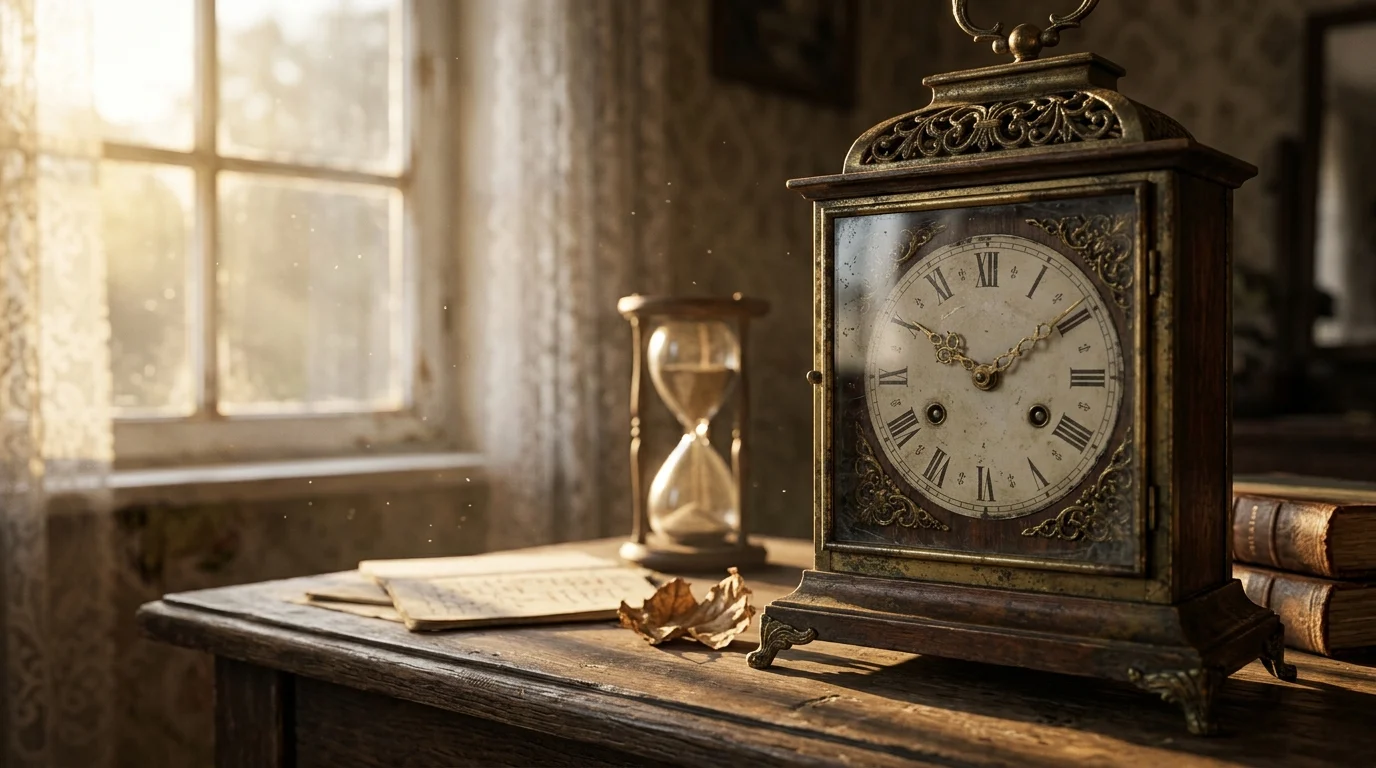
A clock commonly symbolizes structure, deadlines, responsibility, and the passage of time. It may also remind people to prioritize what matters before an opportunity passes.
What does an hourglass symbolize?
An hourglass often symbolizes mortality, limited time, patience, and life’s temporary nature. It can also encourage reflection on how people use the time available to them.
Is time a symbol of change and new beginnings?
Yes, time frequently symbolizes change because people and circumstances evolve as moments pass. A new day, season, or year can represent renewal and the opportunity to begin again.
Conclusion
Time symbolism reminds us that life is constantly changing and that every moment carries possibilities as well as limitations. From spiritual teachings and ancient hourglasses to modern schedules and personal memories, time represents growth, patience, opportunity, and the temporary nature of human experience.
We cannot control every moment or prevent change, but we can choose how we respond to the time we have. By appreciating the present, learning from the past, and approaching the future with intention, we can give our time greater m

I explore the meanings and stories behind symbols, helping readers understand their cultural, spiritual, and everyday significance through clear, engaging, and meaningful insights.