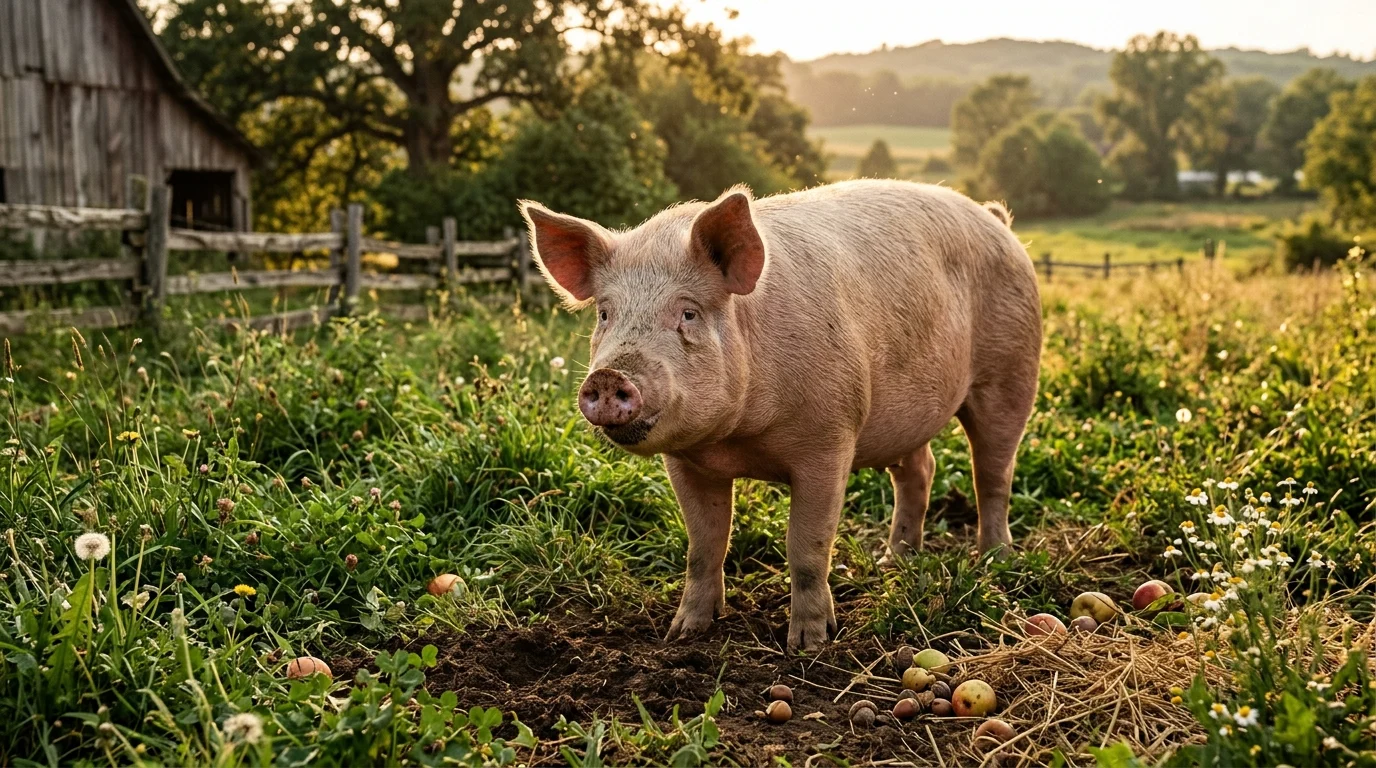
Pig symbolism represents prosperity, abundance, fertility, intelligence, resourcefulness, and the enjoyment of life’s comforts. Across different cultures, pigs can symbolize wealth and good fortune, while in other traditions, they represent greed, excess, or a need for greater self-control.
Understanding pig symbolism helps reveal how this familiar animal carries different meanings in spiritual beliefs, religious traditions, folklore, dreams, and modern life. Whether you encounter a pig in a dream, artwork, or a meaningful personal experience, its symbolism often depends on the cultural context and your own interpretation.
Pig Symbolism Meaning (Clear Definition)
Pig symbolism refers to the meanings people associate with pigs, including prosperity, nourishment, fertility, determination, and material comfort. These associations developed through the animal’s historical role in farming, food production, and cultural traditions.
Pigs have long provided valuable resources for human communities. Their ability to find food, reproduce, and thrive in different environments has helped connect them with abundance and survival.
However, pigs do not carry one universal symbolic meaning. Some traditions celebrate them as signs of good fortune, while others use them to represent greed, impurity, or excessive behavior.
The most common meanings of pig symbolism include:
- Prosperity: Financial success, wealth, and material security.
- Abundance: Having enough food, resources, and opportunities.
- Fertility: Growth, reproduction, and new beginnings.
- Resourcefulness: Making the most of available opportunities.
- Intelligence: Adaptability, learning, and problem-solving.
- Comfort: Enjoying life’s pleasures and appreciating security.
- Excess: Overindulgence, greed, or a lack of moderation.
The meaning becomes clearer when you consider the setting in which the pig appears and the traditions associated with it.
What Does Pig Symbolism Represent?
Pig symbolism represents several important aspects of human life. Although prosperity is one of its best-known associations, the animal can also encourage reflection on habits, priorities, and personal growth.
1. Wealth and Prosperity
Pigs have traditionally represented wealth because livestock could provide food, income, and financial security. In farming communities, owning healthy animals meant having valuable resources that supported a household.
Consequently, a pig may symbolize financial stability, professional opportunities, or the hope of a more comfortable future.
2. Abundance and Nourishment
A pig can represent an abundance of food and the resources needed to sustain life. This meaning connects the animal with gratitude, generosity, and the importance of sharing what you have.
Its symbolism can encourage you to recognize the good things already present in your life rather than focusing only on what remains out of reach.
3. Fertility and New Beginnings
Pigs are associated with fertility because they reproduce relatively quickly and can raise large litters. Some cultures have therefore connected them with family growth, agricultural success, and the continuation of life.
Symbolically, this association can extend to creative projects, new opportunities, and ideas that gradually develop into something meaningful.
4. Intelligence and Resourcefulness
Pigs demonstrate learning abilities and can solve certain problems. Their behavior has contributed to modern associations with intelligence and adaptability.
As a symbol, a pig may remind you to use your abilities wisely, remain flexible when circumstances change, and look for practical solutions.
5. Pleasure and Comfort
Pigs can also represent the enjoyment of food, rest, security, and physical comfort. This interpretation highlights the value of meeting basic needs and appreciating life’s simple pleasures.
At the same time, the symbol can invite you to consider whether pleasure supports your well-being or begins to control your choices.
6. Greed and Excess
In some cultural expressions, a pig represents greed, selfishness, or overindulgence. This negative association often appears in stories, sayings, and moral lessons.
Rather than treating this interpretation as a judgment about the animal itself, you can understand it as a reflection of human behavior.
Spiritual Meaning of Pig Symbolism
The spiritual meaning of pig symbolism often centers on abundance, gratitude, grounding, and the balance between material needs and inner well-being.
Different spiritual traditions interpret pigs in different ways, so no single explanation applies to everyone.
A Symbol of Abundance
A pig may represent the arrival of opportunities, the satisfaction of basic needs, or appreciation for the resources available to you.
From a spiritual perspective, abundance does not have to mean becoming wealthy. It can also involve supportive relationships, meaningful work, good experiences, and a sense of belonging.
A Reminder to Stay Grounded
Pigs are closely connected with the earth because they forage, root in soil, and depend on their physical surroundings. These natural behaviors can inspire symbolic associations with grounding and practical living.
A pig may therefore serve as a reminder to focus on what is real, take care of your daily responsibilities, and build a stable foundation for the future.
Balance Between Desire and Gratitude
Because pigs can symbolize both prosperity and excess, they offer an interesting lesson about desire.
Wanting a better life is natural. However, the symbolism may encourage you to pursue your goals without allowing possessions, status, or constant consumption to determine your happiness.
Resourcefulness During Difficult Times
Pigs are adaptable foragers, which makes resourcefulness another useful symbolic interpretation.
If the animal holds personal meaning for you, consider whether you need to approach a challenge differently, use your existing skills, or recognize opportunities you previously overlooked.
These interpretations are reflective rather than predictions of future events.
Biblical / Religious Meaning of Pig Symbolism
Pig symbolism has a particularly complex meaning in religious traditions. Its interpretation depends on the specific scripture, historical setting, and cultural context.
Pig Symbolism in the Bible
In the Hebrew Bible, pigs are classified as unclean animals under Jewish dietary laws. Leviticus 11:7–8 and Deuteronomy 14:8 describe restrictions concerning pigs and their consumption.
These passages help explain why pigs became associated with ritual impurity in certain biblical contexts. This classification belongs to a religious system and should not be confused with a scientific judgment about the animal.
In the New Testament, pigs also appear in several important passages.
The Parable of the Prodigal Son: In Luke 15:11–32, the younger son reaches a desperate situation and feeds pigs. The scene emphasizes his hardship and the depth of his decline before he returns home.
The Pearls Before Swine: In Matthew 7:6, Jesus uses the image of pearls and pigs in a teaching about discernment. The passage is commonly understood as a warning to recognize when something precious may not be appreciated in a particular setting.
Jesus and the Herd of Pigs: In Matthew 8:28–34, Mark 5:1–20, and Luke 8:26–39, a herd of pigs appears in accounts of Jesus healing a man. The episode has different interpretive dimensions across Christian traditions.
These examples show that biblical pig symbolism frequently involves purity, discernment, hardship, and the circumstances surrounding particular stories.
Pig Symbolism in Islam
In Islam, pork is prohibited for consumption, as stated in passages including the Quran 2:173, 5:3, and 6:145.
This prohibition gives pigs a specific religious significance within Islamic dietary practice. However, it is important to distinguish religious dietary rules from broad claims about what pigs symbolize in every Muslim culture or personal experience.
Pig Symbolism in Other Religious and Cultural Traditions
Pigs have also held positive meanings in other religious and cultural settings. In some East Asian traditions, for example, pigs have associations with wealth, prosperity, family life, and good fortune.
These differences demonstrate why religious symbolism should always be understood within its particular tradition rather than treated as a universal set of meanings.
Pig Symbolism in History and Culture
Throughout history, pigs have played an important role in agriculture, food systems, folklore, and celebrations. Their practical value helped shape the symbolic meanings that different societies attached to them.
Ancient European Traditions
In various ancient European societies, pigs represented food security, fertility, and prosperity. Their ability to provide meat and produce offspring made them valuable livestock.
In some ancient Celtic contexts, pigs were associated with abundance and feasting. Their meaning varied according to the specific story, deity, or community involved.
Chinese Culture and the Zodiac
In Chinese culture, the pig is one of the twelve animals of the Chinese zodiac. People born in Pig years are traditionally associated in popular zodiac interpretations with generosity, sincerity, and a love of comfort.
The Pig also carries associations with prosperity and good fortune, partly because of its relationship with wealth and material well-being.
These zodiac characteristics belong to a traditional system of interpretation. They do not establish a person’s actual personality or predict their future.
Pigs in Folklore and Proverbs
Pigs appear in folktales and everyday expressions around the world. Some stories present them as clever or resourceful, while others portray them as foolish, greedy, or messy.
These contrasting images reveal how the same animal can represent positive and negative human qualities.
Agricultural Symbolism
In farming communities, pigs have represented productivity, household resources, and the ability to survive difficult seasons.
Their symbolism often reflects a straightforward principle: resources that support a community’s survival can also become symbols of security, success, and hope.
Pig Symbolism in Literature and Art
Pigs appear in literature and art as complex symbols that can communicate ideas about society, morality, power, and human behavior.
Pigs as Symbols of Greed and Corruption
Writers sometimes use pigs to criticize selfishness, excessive consumption, or the misuse of power. Their familiar association with eating and abundance makes them useful symbols when a story explores what happens when desire becomes uncontrolled.
George Orwell’s Animal Farm offers a notable example. The pigs initially lead a rebellion against human oppression, but some eventually become corrupt and reproduce the inequality they once opposed.
In this context, pigs symbolize political manipulation, privilege, and the corruption of revolutionary ideals.
Pigs as Symbols of Innocence and Vulnerability
In other stories, pigs appear as innocent animals that require care and protection. Children’s literature often uses them to explore friendship, courage, family, and the value of ordinary life.
These portrayals challenge the assumption that pigs must represent negative qualities.
Pigs in Visual Art
Artists may portray pigs in farm scenes, rural landscapes, decorative objects, and satirical illustrations.
Depending on the composition, a pig can represent prosperity, everyday life, humor, greed, or social criticism. The surrounding objects, setting, and artistic style often determine the intended meaning.
Dream Meaning of Pig Symbolism
Dreaming about a pig can have several possible interpretations, depending on the dream’s details and the feelings it creates.
There is no scientifically established universal dictionary of dream symbols. The following meanings are reflective possibilities, not reliable predictions of future events.
Dreaming of a Healthy Pig
A healthy pig may bring to mind prosperity, security, nourishment, or a desire for a more stable life.
Consider whether you have recently been thinking about financial goals, family well-being, or personal growth.
Dreaming of a Piglet
A piglet may symbolize vulnerability, new beginnings, or something in your life that needs attention.
It could prompt you to reflect on a new project, a developing relationship, or a responsibility that requires patience.
Dreaming of a Dirty Pig
A dirty pig may bring up feelings about disorder, embarrassment, neglected responsibilities, or other people’s judgments.
However, mud is also part of a pig’s natural behavior. Your personal associations with cleanliness and the dream’s emotional tone matter more than a fixed interpretation.
Dreaming of Many Pigs
A group of pigs may suggest abundance, family life, social activity, or a feeling of being surrounded by responsibilities.
If the dream feels positive, consider whether you are experiencing support or opportunity. If it feels overwhelming, think about whether you have taken on too much.
Dreaming of a Pig Chasing You
A pig chasing you might reflect stress, an uncomfortable situation, or a concern you have been avoiding.
Rather than assuming the dream predicts trouble, ask yourself whether something in waking life needs your attention.
Dreaming of Feeding a Pig
Feeding a pig may symbolize nurturing an opportunity, investing time in a goal, or taking responsibility for something that could grow over time.
The dream may encourage you to consider which areas of your life deserve more consistent care.
Modern Meaning of Pig Symbolism
Today, pig symbolism continues to appear in business, popular culture, personal expression, and conversations about social behavior.
Wealth and Financial Success
Piggy banks are a familiar modern example of positive pig symbolism. They connect the animal with saving money, financial responsibility, and preparing for future needs.
This association turns an ordinary household object into a reminder that small contributions can gradually build financial security.
Intelligence and Adaptability
Modern awareness of pig cognition has also helped broaden the animal’s image. Research recognizes that pigs can learn, remember information, and solve certain tasks.
These abilities support symbolic interpretations involving adaptability and practical intelligence, although individual animals differ in their behavior and capabilities.
Greed and Consumer Culture
The phrase “greedy as a pig” reflects the negative side of pig symbolism. In modern media, pig imagery may criticize excessive consumption, selfishness, or people who accumulate wealth without considering others.
Such portrayals reflect human cultural judgments rather than the full nature of pigs.
Self-Acceptance and Authenticity
Pigs can also encourage people to question superficial standards of beauty, status, and social acceptance.
Their symbolism may remind us that an animal’s worth does not depend on whether it matches human expectations. In a broader sense, this can inspire self-acceptance and greater respect for living creatures.
Positive and Negative Meanings of Pig Symbolism
Pig symbolism includes both encouraging and cautionary interpretations. The following table summarizes the most common associations.
| Symbolic meaning | Possible interpretation |
|---|---|
| Prosperity | Wealth, financial security, success |
| Abundance | Plenty of resources and opportunities |
| Fertility | Growth, creativity, family expansion |
| Intelligence | Learning, adaptability, problem-solving |
| Resourcefulness | Using available resources wisely |
| Comfort | Rest, nourishment, material well-being |
| Greed | Excessive desire or selfishness |
| Impurity | A religious or cultural association in certain traditions |
| Transformation | Personal reflection and changing habits |
| Community | Shared resources, family, and cooperation |
The positive or negative meaning depends on the cultural setting and how the pig appears in a particular story, image, dream, or personal experience.
FAQS:
1. What does a pig symbolize spiritually?
A pig can symbolize abundance, prosperity, grounding, resourcefulness, and gratitude. In some interpretations, it also serves as a reminder to avoid greed and excessive indulgence.
2. Is pig symbolism a sign of good luck?
In some cultures, particularly in traditional Chinese symbolism, pigs are associated with wealth and good fortune. However, this is a cultural belief rather than a guarantee that good luck or financial success will follow.
3. What does a pig symbolize in the Bible?
In biblical contexts, pigs are associated with dietary impurity in Jewish law and appear in stories involving hardship, discernment, and healing. Their meaning depends on the specific passage.
4. What does it mean to dream about a pig?
A pig dream may prompt reflection on prosperity, comfort, responsibility, or excess. Its possible meaning depends on the dream’s details, your emotions, and your personal experiences.
5. What does a pig symbolize in Chinese culture?
The pig is the twelfth animal in the Chinese zodiac and is traditionally associated with prosperity, generosity, sincerity, and comfort. Specific interpretations vary within Chinese cultural traditions.
Conclusion
Pig symbolism reveals how one animal can represent both abundance and excess, prosperity and caution, comfort and responsibility. Across cultures, pigs have symbolized valuable resources, fertility, intelligence, and good fortune, while certain religious traditions and stories associate them with impurity or greed.
The deeper lesson is to appreciate what sustains you, use your resources wisely, and pursue abundance without losing sight of gratitude and balance. By understanding the cultural context behind pig symbolism, you can explore its meaning with greater insight and respect.
SEO Title: Pig Symbolism: Meaning, Spirituality, and Good Fortune

I explore symbols, special characters, emojis, and their meanings, sharing simple, useful insights to help readers discover, understand, and creatively use symbols in everyday digital communication.