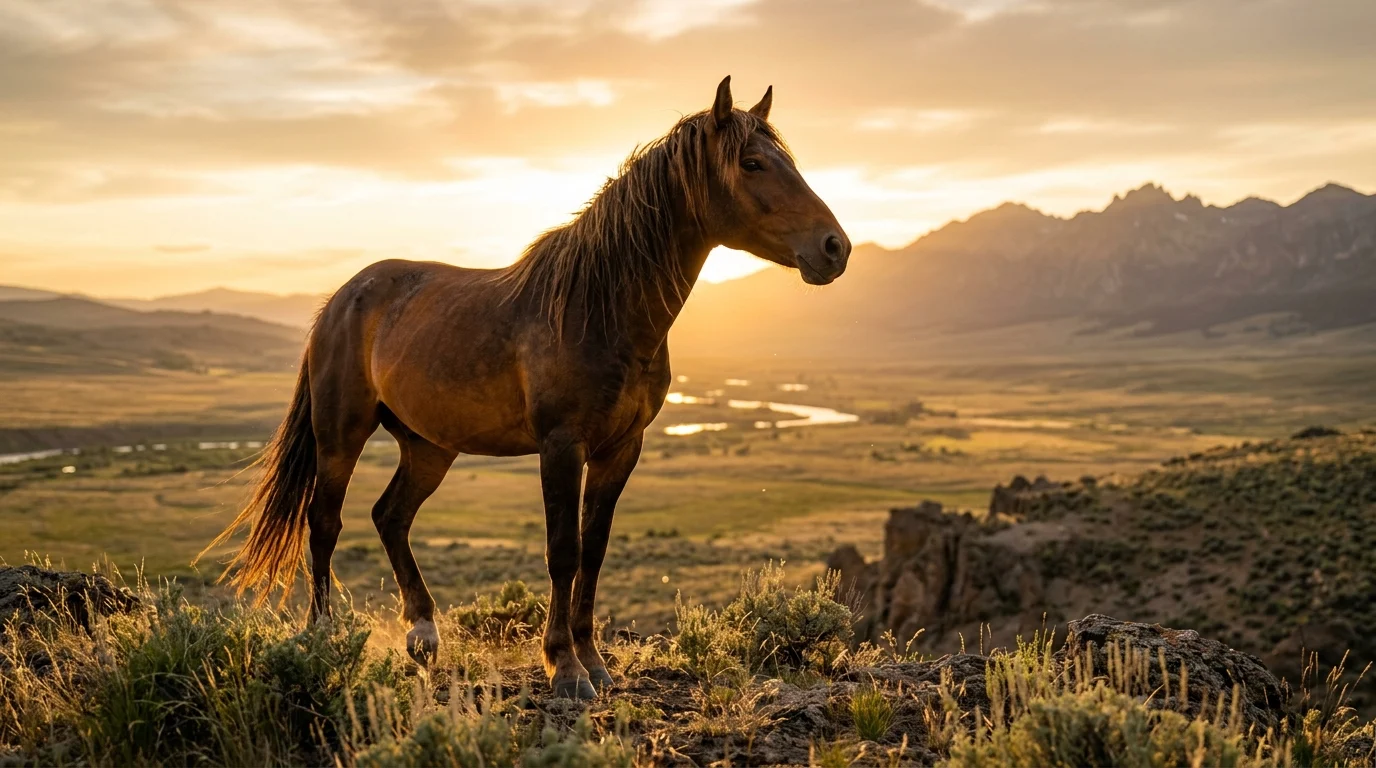
Horse symbolism has fascinated people for centuries because horses represent powerful qualities such as freedom, strength, movement, courage, and independence. Across different cultures, the horse can symbolize both physical power and a deeper journey of personal transformation.
From ancient myths and religious traditions to dreams and modern life, the horse often appears as a meaningful symbol of energy, determination, and the desire to move forward.
Horse Symbolism Meaning (Clear Definition)
Horse symbolism refers to the meanings and ideas people associate with horses. The most common symbolic meanings include freedom, strength, courage, independence, speed, passion, loyalty, and personal power.
Because horses can travel great distances and carry people through challenging environments, they have often been connected with progress and exploration.
In symbolic interpretation, the horse may represent the ability to overcome obstacles while remaining connected to one’s instincts and inner strength.
Common Horse Symbolism Meanings
| Symbolic Meaning | What It Represents |
|---|---|
| Freedom | Independence and the desire for open possibilities |
| Strength | Physical power, resilience, and endurance |
| Courage | Facing challenges with confidence |
| Speed | Progress, action, and rapid change |
| Loyalty | Trust, companionship, and devotion |
| Independence | Self-reliance and personal choice |
| Passion | Strong emotions, motivation, and vitality |
| Transformation | Moving from one stage of life to another |
What Does Horse Symbolism Represent?
Horse symbolism can represent several qualities depending on the situation and cultural context.
Freedom is one of the strongest associations. A running horse can evoke the feeling of breaking away from restrictions and following one’s own path.
Strength and endurance are also central to horse symbolism. Horses have historically carried people, transported goods, worked on farms, and traveled through difficult landscapes.
Courage is another important meaning. A horse can symbolize the confidence required to face uncertainty and continue moving forward.
Other common associations include:
- Freedom and independence
- Strength and endurance
- Courage and confidence
- Movement and progress
- Passion and vitality
- Loyalty and companionship
- Adventure and exploration
- Personal power and determination
Spiritual Meaning of Horse Symbolism
Spiritually, horse symbolism is often connected with inner freedom, life energy, personal growth, and spiritual movement.
A horse may symbolize the journey of discovering who you are and learning to trust your instincts. Its movement can represent progress, while its strength may reflect the inner resources needed during difficult periods.
In some spiritual traditions, horses are viewed as powerful companions or guides. These interpretations vary considerably between cultures, so they are best understood as symbolic beliefs rather than universal facts.
A calm horse may suggest balance and emotional stability, while a wild or running horse may symbolize a strong desire for freedom and change.
Biblical / Religious Meaning of Horse Symbolism
Horses appear frequently in the Bible, where their symbolism can vary according to the passage and context.
In Revelation, horses and their riders are associated with major prophetic events. The famous four horsemen are traditionally linked with conquest, warfare, famine, and death.
Elsewhere in biblical literature, horses can be connected with warfare, royal power, military strength, and human reliance on force.
The biblical meaning of a horse therefore depends strongly on the specific passage. It should not be reduced to a single universal interpretation such as freedom or strength.
Horse Symbolism in History and Culture
Horses have played an enormous role in human history. They helped people travel, farm, hunt, communicate, and fight wars. Their practical importance naturally influenced their symbolic meaning.
In many ancient societies, horses were associated with warriors, kings, travelers, and heroes. Owning horses could also represent wealth and social status.
Different cultures developed their own interpretations.
- Ancient Greek traditions: Horses appear in myths involving gods, heroes, and supernatural creatures such as Pegasus.
- Roman culture: Horses were strongly connected with military power, transportation, and public spectacle.
- Celtic traditions: Horses could carry associations with sovereignty, fertility, travel, and supernatural forces.
- Central Asian cultures: Horses were essential to mobility, warfare, herding, and everyday life, giving them deep cultural importance.
- Native American cultures: Interpretations differ greatly among individual nations and traditions, but horses became important symbols of travel, strength, freedom, and partnership after their introduction to the Americas.
These examples show why horse symbolism cannot be separated from historical and cultural context.
Horse Symbolism in Literature and Art
Horses have been powerful subjects in literature and visual art for thousands of years.
Artists often use horses to communicate movement, power, nobility, freedom, or conflict. A charging horse can create a sense of energy and urgency, while a calm horse can suggest peace and trust.
In literature, horses frequently accompany heroes on journeys. They can function as companions, transportation, symbols of status, or representations of the character’s own emotional state.
The mythical Pegasus, for example, is commonly associated with flight, imagination, inspiration, and transcendence.
Because horses combine beauty with physical power, they remain especially effective symbols in paintings, sculpture, poetry, film, and storytelling.
Dream Meaning of Horse Symbolism
Dreams about horses are often interpreted according to the horse’s behavior, appearance, and the dreamer’s emotions.
A running horse may symbolize freedom, ambition, or a strong desire to move forward.
A calm horse can represent confidence, stability, companionship, or emotional balance.
A wild horse may suggest independence, untamed emotions, or a desire to escape restrictions.
A white horse is often associated symbolically with purity, victory, hope, or spiritual themes, although interpretations differ.
A black horse can represent mystery, power, the unknown, or transformation depending on the dream’s context.
Dream interpretation is subjective, so personal experiences and emotions usually matter more than any fixed symbolic dictionary.
Modern Meaning of Horse Symbolism
Today, horse symbolism continues to appear in branding, fashion, literature, films, tattoos, personal artwork, and spiritual communities.
Modern interpretations often focus on freedom, resilience, confidence, independence, and personal growth.
For some people, the horse represents the courage to leave a limiting situation. For others, it symbolizes discipline and the ability to keep moving toward a goal.
The horse can also represent the relationship between freedom and responsibility. A powerful animal still needs trust, care, training, and partnership with humans.
This makes horse symbolism especially relevant today: true strength does not always mean controlling others. Sometimes it means learning how to guide your own energy wisely.
What Does a White Horse Symbolize?
A white horse commonly symbolizes purity, victory, hope, peace, or spiritual power. Its meaning changes depending on the religious, cultural, or artistic context.
What Does a Black Horse Symbolize?
A black horse can symbolize mystery, strength, independence, transformation, or the unknown. In some traditions, it can also have darker associations.
What Does a Running Horse Symbolize?
A running horse often represents freedom, movement, ambition, energy, and progress. It may suggest a desire to overcome limitations and move toward new opportunities.
What Does a Horse Symbolize Spiritually?
Spiritually, a horse can symbolize inner freedom, personal strength, life energy, courage, and movement through a transformative journey.
Is Horse Symbolism Always Positive?
No. Horse symbolism can have positive or challenging meanings depending on the context. While horses often represent freedom and strength, they can also symbolize uncontrolled emotions, conflict, warfare, danger, or forces that feel difficult to control.
Conclusion
Horse symbolism brings together powerful ideas of freedom, strength, courage, movement, loyalty, and personal transformation. From ancient cultures and religious traditions to dreams and modern life, horses continue to represent humanity’s desire to move forward while maintaining independence.
Whether viewed as a historical companion, a spiritual symbol, or an artistic image, the horse remains a timeless representation of power guided by purpose.

I am Jasmine Marie, an administrator at SymbolBuz. I love exploring symbols and sharing their meanings to help readers understand their deeper stories, messages, and significance.