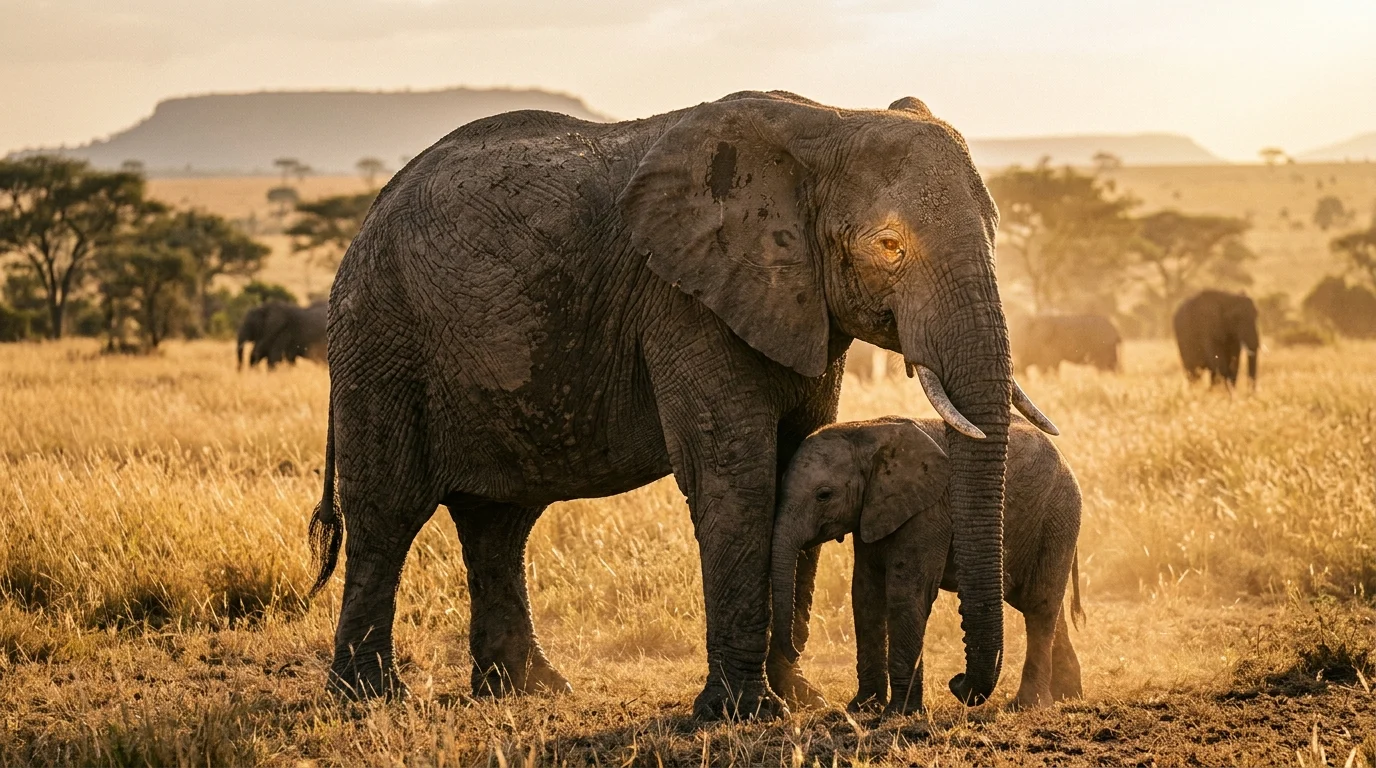
Elephant symbolism is often associated with strength, wisdom, patience, loyalty, protection, and good fortune. Across different cultures, elephants have represented powerful qualities that connect physical strength with emotional intelligence and deep social bonds.
These magnificent animals are known for their remarkable memory, close family relationships, intelligence, and calm presence. Because of these traits, the elephant has become a meaningful symbol in spiritual traditions, art, dreams, religion, and modern life.
Elephant Symbolism Meaning (Clear Definition)
Elephant symbolism represents strength, wisdom, patience, stability, loyalty, protection, and enduring relationships.
The elephant’s enormous size suggests physical power, while its gentle behavior can represent controlled strength and emotional balance. Its strong family bonds also make it a symbol of loyalty, community, and responsibility.
Common elephant symbolic meanings include:
- Strength – inner and physical power
- Wisdom – intelligence, experience, and thoughtful decisions
- Patience – remaining calm during difficult situations
- Protection – safety, guardianship, and security
- Loyalty – strong family and social connections
- Good fortune – prosperity and positive opportunities
- Stability – grounding, endurance, and resilience
- Memory – connection with the past and accumulated experience
In this sense, elephant symbolism often encourages people to use strength wisely rather than aggressively.
What Does Elephant Symbolism Represent?
Elephants can represent several powerful qualities depending on the cultural or personal context.
Strength and Power
An elephant’s immense physical strength makes it a natural symbol of power. Symbolically, this strength can also represent the ability to overcome obstacles without losing compassion.
Wisdom and Intelligence
Elephants are widely admired for their intelligence and complex social behavior. As a symbol, they can represent thoughtful judgment, learning, experience, and mature decision-making.
Patience and Calmness
Although elephants possess great power, they often appear calm and deliberate. Their symbolism can therefore remind us that true strength does not always need to be loud or forceful.
Family and Loyalty
Elephants are strongly associated with close social groups and family bonds. Their symbolism can represent loyalty, cooperation, caregiving, and commitment to loved ones.
Protection and Security
Because of their size and strength, elephants have long been viewed as protective figures. Elephant symbolism may therefore suggest guardianship, safety, and the courage to defend what matters.
Spiritual Meaning of Elephant Symbolism
Spiritually, elephant symbolism is often connected with inner strength, wisdom, grounding, protection, and perseverance.
An elephant can represent the journey of becoming stronger through experience. Instead of rushing forward, its symbolism encourages patience and steady progress.
For some spiritual traditions, the elephant also represents a connection between earthly strength and deeper wisdom. Its grounded nature can remind people to remain stable when life becomes uncertain.
The spiritual interpretation varies between traditions, so these meanings are best understood as cultural or symbolic beliefs rather than universal facts.
Biblical / Religious Meaning of Elephant Symbolism
Elephants are not major symbolic figures in the Bible in the same way that animals such as lambs, lions, doves, or serpents are. Therefore, claims about a specific biblical meaning of elephants should be treated carefully.
In broader religious and cultural traditions, elephants have sometimes been associated with strength, authority, wisdom, protection, and prosperity.
In Hindu traditions, the elephant-headed deity Ganesha is especially important and is commonly associated with wisdom, learning, prosperity, and the removal of obstacles. This is a specific religious tradition and should not be presented as a universal meaning of elephants.
Elephant Symbolism in History and Culture
Elephants have held important places in human history for thousands of years.
In parts of Asia, elephants have been connected with royalty, warfare, ceremonial traditions, religious practices, and political power. Their size and strength made them symbols of authority as well as practical working animals.
In South Asian cultures, elephants can carry strong associations with prosperity, wisdom, dignity, and spiritual significance.
African cultures have also developed diverse relationships with elephants, reflecting their importance within local ecosystems, traditions, stories, and communities. There is no single universal African interpretation of elephant symbolism because meanings differ across peoples and regions.
Historically, elephants have also represented military power. Rulers used war elephants in some ancient armies, making the animal a symbol of authority and formidable strength.
Elephant Symbolism in Literature and Art
Elephants frequently appear in literature, paintings, sculpture, decorative art, stories, and contemporary visual culture.
Artists may use elephants to communicate ideas such as:
- Wisdom and maturity
- Family and belonging
- Strength with gentleness
- Memory and the past
- Endurance through hardship
- Protection and leadership
In storytelling, an elephant can serve as a wise elder, powerful protector, loyal companion, or memorable connection to heritage.
Their distinctive appearance also makes elephants visually powerful symbols. A simple elephant image can communicate dignity and strength without needing many additional elements.
Dream Meaning of Elephant Symbolism
Dreams about elephants can have different interpretations depending on the dreamer’s emotions, experiences, and circumstances.
An elephant may symbolize strength, responsibility, memory, family, or an important challenge in a personal dream.
Some common symbolic interpretations include:
- Seeing a peaceful elephant: calmness, stability, or wisdom
- An angry elephant: overwhelming emotions or unresolved pressure
- A baby elephant: growth, innocence, family, or a new responsibility
- A herd of elephants: family, community, belonging, or support
- Being chased by an elephant: feeling overwhelmed by a powerful situation
- Riding an elephant: confidence, authority, or progress
Dream symbolism is subjective. A dream does not have one scientifically established meaning, so personal feelings and life circumstances matter greatly.
Modern Meaning of Elephant Symbolism
Today, elephant symbolism appears in home décor, jewelry, tattoos, logos, artwork, fashion, and personal gifts.
Many people choose elephant imagery to represent family, resilience, wisdom, protection, and lasting strength.
Elephants have also become powerful symbols in conversations about wildlife conservation. Their endangered populations and ecological importance can give modern elephant imagery another meaning: respect for nature and responsibility toward the natural world.
For some people, an elephant tattoo may symbolize overcoming hardship. For others, it may represent family, remembrance, cultural heritage, or a desire to remain strong and grounded.
Common Elephant Symbolism Meanings
| Symbolic Meaning | What It Represents |
|---|---|
| Strength | Power, resilience, and courage |
| Wisdom | Experience, intelligence, and thoughtful choices |
| Patience | Calmness and steady progress |
| Loyalty | Family bonds and lasting relationships |
| Protection | Security, guardianship, and courage |
| Good Fortune | Prosperity and positive possibilities |
| Stability | Grounding and emotional balance |
| Memory | Connection with experiences and the past |
Frequently Asked Questions About Elephant Symbolism
What is the main meaning of elephant symbolism?
Elephant symbolism commonly represents strength, wisdom, patience, loyalty, protection, and stability. The exact meaning can change depending on cultural and personal context.
What does an elephant symbolize spiritually?
Spiritually, elephants are often associated with inner strength, grounding, wisdom, patience, protection, and perseverance. These interpretations vary among spiritual traditions.
Is an elephant a symbol of good luck?
In some cultural traditions, elephant imagery is associated with good fortune, prosperity, protection, and success. However, this is a cultural belief rather than a scientifically established effect.
What does an elephant symbolize in dreams?
An elephant in a dream may symbolize strength, family, responsibility, memory, or an emotionally significant situation. The interpretation depends strongly on what happens in the dream and how the dreamer feels.
What does an elephant tattoo symbolize?
An elephant tattoo can represent strength, wisdom, family, loyalty, resilience, protection, or remembrance. Its personal meaning usually depends on the design and the experience of the person wearing it.
Conclusion
Elephant symbolism brings together strength and gentleness, wisdom and patience, power and compassion. Whether viewed through cultural traditions, spirituality, art, dreams, or modern life, the elephant remains a powerful reminder that lasting strength can be calm, loyal, and deeply grounded.

I explore the meanings and stories behind symbols, helping readers understand their cultural, spiritual, and everyday significance through clear, engaging, and meaningful insights.