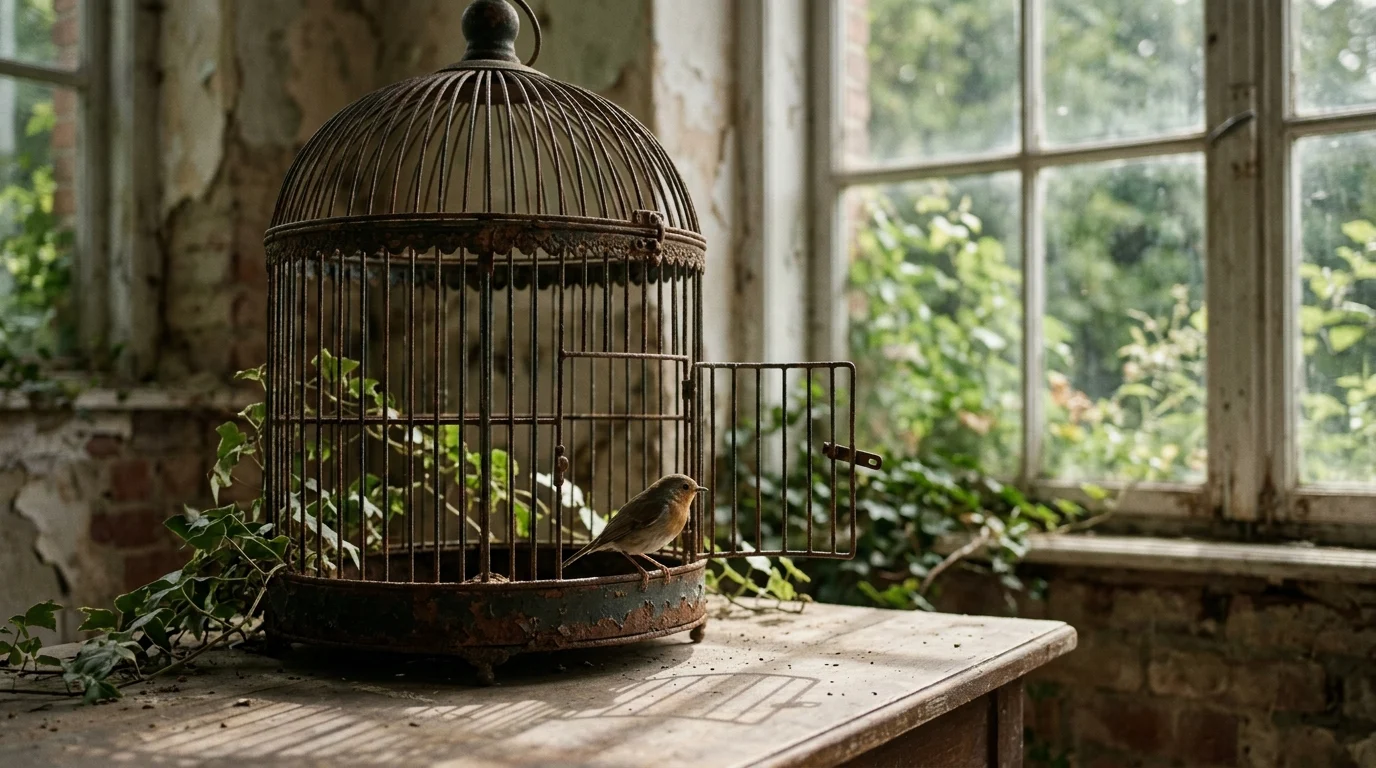
Cage symbolism often represents restriction, captivity, protection, isolation, and the desire for freedom. A cage can hold something safe, but it can also prevent something from living freely. Its meaning depends on what the cage contains, whether its door is open or closed, and how a person feels when looking at it.
In everyday life, a cage may symbolize emotional barriers, limiting beliefs, difficult relationships, or situations that make someone feel trapped. At the same time, it can represent safety, discipline, and boundaries that protect what matters most.
Understanding cage symbolism helps us explore the balance between security and independence. It reminds us that protection can be valuable, but freedom is equally important for personal growth.
Cage Symbolism Meaning (Clear Definition)
Cage symbolism refers to the use of a cage as a representation of confinement, restricted freedom, protection, emotional imprisonment, or the struggle for independence.
A cage has two contrasting meanings. It can provide shelter and security, yet it can also limit movement and choice. This contrast makes it a powerful symbol in spiritual traditions, literature, art, and everyday experiences.
For example, a bird inside a cage may represent a person whose talents or dreams remain restricted. An empty cage, on the other hand, may symbolize release, new opportunities, or the end of a difficult situation.
The most common meanings of cage symbolism include:
- Restriction: Feeling unable to make your own choices.
- Freedom: The desire to escape limitations and live independently.
- Protection: A barrier that keeps danger away.
- Isolation: Separation from people, experiences, or the outside world.
- Emotional imprisonment: Feeling trapped by fear, guilt, or painful memories.
- Security: Finding comfort in familiar surroundings.
- Transformation: Recognizing limitations and beginning a journey toward change.
Ultimately, a cage represents the relationship between the boundaries that protect us and the restrictions that hold us back.
What Does Cage Symbolism Represent?
Cage symbolism represents several ideas that may seem opposite but often exist together. A cage can be a source of comfort or a reminder of lost freedom.
1. Restriction and Limitations
A closed cage commonly symbolizes restrictions that prevent someone from reaching their full potential. These limitations may come from family expectations, social pressure, financial difficulties, or personal fears.
For instance, someone who avoids pursuing a dream because they fear failure may feel as though they are living inside an invisible cage.
2. Freedom and Independence
A cage can also represent the desire to break free. An open cage door suggests that an opportunity for change exists, even if stepping outside requires courage.
This interpretation encourages people to recognize their choices and move beyond unnecessary limitations.
3. Protection and Safety
Not every cage carries a negative meaning. Animal cages, protective enclosures, and secure spaces can symbolize care, responsibility, and safety.
However, the meaning depends on the circumstances. Protection becomes restrictive when it prevents healthy growth or independence.
4. Emotional and Mental Barriers
A cage may represent the thoughts and emotions that keep someone stuck. Fear of rejection, low confidence, guilt, and unresolved experiences can create invisible barriers.
Recognizing these barriers is often the first step toward emotional freedom.
5. Isolation and Loneliness
A cage separates what is inside from the world outside. It can therefore symbolize loneliness, disconnection, or the feeling that nobody understands your experiences.
This meaning appears particularly strongly when a cage contains a person or a solitary bird.
6. Control and Power
Cages can symbolize control when one person or institution decides where another person may go or what they may do.
In this context, the cage represents unequal power, dependence, and the loss of personal choice.
Symbolic meanings of different cages
| Cage image | Common symbolic meaning |
|---|---|
| Closed cage | Restriction, captivity, or helplessness |
| Open cage | Freedom, release, or opportunity |
| Empty cage | Independence, absence, or a fresh start |
| Golden cage | Comfort without genuine freedom |
| Bird inside a cage | Restricted potential or suppressed dreams |
| Broken cage | Liberation and overcoming obstacles |
| Rusty cage | Old fears, neglected feelings, or outdated limitations |
These meanings are interpretations rather than universal rules. The surrounding situation and personal associations can change what a particular cage represents.
Spiritual Meaning of Cage Symbolism
Spiritually, cage symbolism can represent the difference between living according to fear and living according to your deeper values. It may encourage reflection on the habits, beliefs, and attachments that limit personal growth.
A cage in a spiritual context does not automatically indicate negative energy or a supernatural warning. Instead, it can serve as a metaphor for an inner struggle or an opportunity to become more self-aware.
Feeling Trapped on Your Spiritual Journey
A cage may symbolize feeling disconnected from your purpose or unable to express your authentic self.
You might feel restricted by other people’s expectations or by beliefs that no longer reflect who you are. The image encourages you to examine whether these boundaries still serve you.
Breaking Free From Negative Patterns
A broken cage can represent releasing habits that no longer support your well-being. These patterns might include constant self-doubt, resentment, unhealthy attachments, or the need for approval.
The spiritual lesson is that meaningful change often begins with awareness before it becomes visible in everyday life.
The Open Cage as a Sign of Opportunity
An open cage may symbolize readiness for a new chapter. It can suggest that a path toward change is available, although taking that path may require courage and responsibility.
The image reminds us that freedom involves more than leaving a restrictive situation. It also involves learning how to make thoughtful choices afterward.
The Golden Cage and Material Comfort
A golden cage represents a situation that looks attractive but limits independence. It may symbolize wealth, status, convenience, or a comfortable lifestyle that comes at the cost of personal fulfillment.
Its message is not that comfort is wrong. Rather, it invites you to consider whether external success supports your inner values.
A Spiritual Lesson About Boundaries
Cages can also encourage reflection on healthy boundaries. Some limits protect your peace, while others prevent you from experiencing life fully.
Spiritual growth involves learning to distinguish between boundaries that support you and restrictions that keep you from moving forward.
Biblical / Religious Meaning of Cage Symbolism
Cage symbolism does not have one fixed meaning across all religious traditions. Its interpretation depends on the scripture, teaching, cultural background, and context in which the image appears.
Cage Imagery in the Bible
The Bible sometimes uses images of captivity, imprisonment, and confinement to communicate spiritual or moral ideas.
For example, Jeremiah 5:27 describes a cage filled with birds in a passage criticizing deceit and wrongdoing. In this context, the cage forms part of a broader image associated with people who have accumulated wealth through dishonest actions.
This passage should not be interpreted as establishing a universal biblical meaning for every cage. Its significance comes from the surrounding message.
Captivity and Spiritual Bondage
Biblical themes of captivity can represent oppression, suffering, and the consequences of destructive choices. In some Christian interpretations, these themes also serve as metaphors for spiritual struggles and the hope of deliverance.
A cage may therefore remind readers of the difference between bondage and liberation, although the specific meaning depends on the passage being considered.
Freedom and Deliverance
Freedom is an important theme throughout the Bible. Stories of deliverance often emphasize hope, faith, and the possibility of moving beyond oppressive circumstances.
When viewed symbolically, an open cage may serve as a modern metaphor for this theme. It is an interpretation of the image, not a claim that the open cage has a specific, universally established biblical meaning.
Cage Symbolism in Other Religious Contexts
Other religious and philosophical traditions may use confinement as a metaphor for attachment, ignorance, suffering, or separation from a higher purpose.
These ideas should be understood within their own traditions rather than treated as identical teachings. Across different perspectives, however, the contrast between limitation and liberation can provide a meaningful starting point for reflection.
Cage Symbolism in History and Culture
Throughout history, cages have served practical purposes, including keeping animals secure, protecting valuable objects, and confining people. Their cultural symbolism often develops from these real-world functions.
Cages as Symbols of Power
In historical settings, imprisonment and confinement have frequently represented authority and punishment. A cage can symbolize the power of one person or institution to control another.
In political and social commentary, cage imagery may also express oppression, injustice, or the denial of basic freedoms.
Birdcages in Decorative Traditions
Birdcages have appeared in decorative objects, paintings, gardens, and household interiors. Their meaning can vary depending on the setting.
An ornate birdcage might communicate elegance, wealth, or refinement. Yet when a living bird appears inside it, the same object may raise questions about captivity and the cost of keeping something beautiful.
The Golden Cage in Culture
The phrase golden cage describes a situation that provides material comfort while restricting independence.
It can apply to a prestigious job, a wealthy lifestyle, or a relationship that appears desirable from the outside but feels limiting to the person experiencing it.
The expression remains relevant because financial security and personal fulfillment do not always align.
Cages as Symbols of Social Restriction
Writers, artists, and social commentators often use cages to explore restrictions placed on individuals by social expectations.
A cage may represent the pressure to follow a particular role, hide one’s identity, or sacrifice personal ambitions to satisfy others.
These interpretations make cage symbolism useful for examining how cultural norms can shape individual freedom.
Cage Symbolism in Literature and Art
In literature and art, cages provide a powerful visual and emotional way to explore the human desire for freedom. Their simple structure can communicate complex feelings without requiring lengthy explanations.
Cages as Metaphors for the Human Mind
Writers often use a cage to represent a character’s inner world. The bars may symbolize fear, shame, grief, or beliefs that prevent the character from moving forward.
Unlike a physical cage, a mental cage may remain invisible to other people. This makes the symbol particularly effective when exploring internal conflict.
The Caged Bird as a Symbol of Oppression
A caged bird is one of the most recognizable images of restricted freedom. Birds are commonly associated with flight, movement, and the open sky, so their confinement creates a striking contrast.
In literature, this image may represent suppressed creativity, social injustice, or a person’s inability to express their true identity.
The interpretation depends on the work. A caged bird can also symbolize vulnerability, dependence, or the tension between safety and independence.
The Open Cage in Visual Art
An open cage can suggest that release is possible. If a bird has already flown away, the image may emphasize liberation, absence, or the beginning of a new journey.
Artists can alter this meaning through lighting, color, composition, and the objects surrounding the cage.
For example, a cage standing in a bright garden may suggest hope, while the same cage in a dark, empty room may evoke loneliness.
The Golden Cage as a Literary Theme
A golden cage can represent a character who possesses wealth or social status but lacks genuine choice.
This theme creates an important conflict: the character may appear successful to others while feeling dissatisfied internally.
Through this contrast, writers explore the difference between outward achievement and personal freedom.
Dream Meaning of Cage Symbolism
Dreams about cages can reflect personal concerns, emotions, or experiences. There is no scientifically established universal meaning for a cage dream, so its interpretation is best approached as a personal reflection rather than a prediction.
The most useful clues are what the cage contains, whether it is open or closed, and how you feel during the dream.
Dreaming of Being Trapped in a Cage
Being trapped in a cage may reflect feelings of helplessness, pressure, or limited choice in waking life.
Consider whether a relationship, responsibility, fear, or difficult decision has recently made you feel restricted.
Dreaming of an Open Cage
An open cage may bring to mind new possibilities, a desire for independence, or readiness for change.
If you feel relieved in the dream, that emotion may help you understand what kind of freedom matters most to you.
Dreaming of a Bird in a Cage
A bird inside a cage may symbolize a dream, talent, or part of your personality that you feel unable to express.
Think about whether you have been holding yourself back or avoiding an opportunity because of uncertainty.
Dreaming of Breaking a Cage
Breaking a cage may reflect a wish to overcome obstacles or regain control over your choices.
It can be a useful prompt to identify one practical step you can take toward a more independent or fulfilling life.
Dreaming of an Empty Cage
An empty cage may bring up feelings of relief, loss, loneliness, or transition.
Your emotional response matters. If the cage feels peaceful, it may remind you of release; if it feels sad, it may reflect something or someone you miss.
Modern Meaning of Cage Symbolism
In modern life, cage symbolism often describes situations in which people feel restricted despite having some degree of choice. These restrictions may be physical, emotional, social, or economic.
The symbol remains relevant because freedom involves more than physical movement. People also want the ability to express themselves, make decisions, and pursue meaningful goals.
Social Media and the Invisible Cage
Social media can sometimes create an invisible cage through comparison, constant approval-seeking, and pressure to maintain a particular image.
People may feel compelled to present a perfect life even when their actual experiences differ. In this context, the cage symbolizes the loss of authenticity caused by external expectations.
Relationships and Emotional Captivity
A cage may symbolize a relationship in which someone feels unable to express opinions, maintain independence, or make personal choices.
However, healthy relationships also require boundaries and mutual responsibility. The key distinction is whether those boundaries support both people or unfairly restrict one person’s freedom.
Work, Money, and the Golden Cage
A high-paying job may provide financial security while leaving little time for personal interests, relationships, or rest.
This situation is sometimes described as a golden cage because the benefits make change difficult, even when the person feels dissatisfied.
The symbolism encourages a balanced assessment of financial stability, personal values, and long-term fulfillment.
Mental Health and Personal Growth
The image of a cage can help people describe feelings of being stuck, overwhelmed, or limited by self-doubt. It is a metaphor, not a mental health diagnosis.
Recognizing these feelings may encourage someone to seek support, develop healthier habits, or make manageable changes.
Choosing Freedom Without Rejecting Safety
Modern cage symbolism also highlights an important distinction: not every boundary is harmful.
Rules, routines, and personal limits can create stability. Problems arise when restrictions become excessive, unfair, or inconsistent with a person’s well-being.
True independence involves finding a balance between feeling secure and having enough room to grow.
Frequently Asked Questions About Cage Symbolism
1. What does a cage symbolize spiritually?
A cage may symbolize emotional restriction, attachment, fear, or a desire for spiritual growth. An open cage can represent the possibility of release and a new direction.
2. Is cage symbolism positive or negative?
Cage symbolism can be positive or negative depending on the context. It may represent protection and security, or it may suggest captivity, isolation, and restricted freedom.
3. What does an open cage symbolize?
An open cage commonly represents freedom, opportunity, independence, and the possibility of change. Its meaning may also depend on whether anything remains inside or has already escaped.
4. What does a bird in a cage symbolize?
A bird in a cage often symbolizes suppressed potential, restricted independence, or the desire to express oneself freely. In some situations, it may also represent protection or dependence.
5. What does a golden cage symbolize?
A golden cage represents a comfortable or attractive situation that limits personal freedom. It often highlights the tension between material security and emotional fulfillment.
Conclusion
Cage symbolism reminds us that freedom and security can exist in tension with one another. A cage may protect something valuable, yet it can also prevent growth when its boundaries become too restrictive.
Whether it appears in spiritual reflection, literature, art, or dreams, the cage invites us to examine what holds us back and what helps us feel safe. Its deepest lesson is to recognize the difference between boundaries that support our lives and limitations that keep us from becoming who we want to be.

I explore symbols, special characters, emojis, and their meanings, sharing simple, useful insights to help readers discover, understand, and creatively use symbols in everyday digital communication.