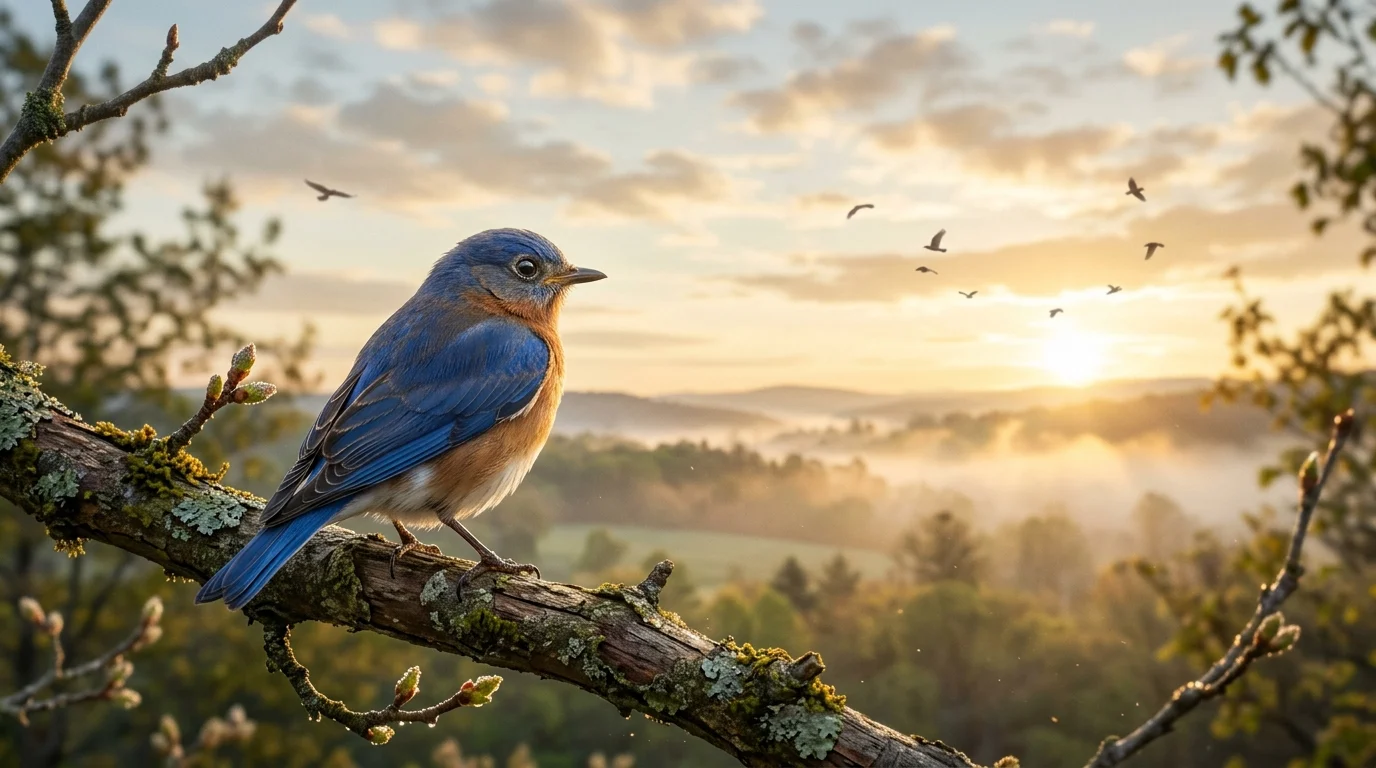
Bird symbolism connects the natural world with powerful ideas such as freedom, hope, transformation, peace, and spiritual growth. Across different cultures and traditions, birds have represented the human desire to rise above challenges, explore new possibilities, and discover a deeper meaning in life. Their ability to fly across vast distances makes them enduring symbols of independence and limitless potential.
The meaning of a bird often depends on its species, color, behavior, and cultural context. A dove may symbolize peace, while an eagle can represent strength and courage. Similarly, a songbird may suggest joy, and a raven may symbolize mystery or transformation.
Understanding bird symbolism helps us appreciate how these creatures inspire human imagination, religious beliefs, literature, and everyday life.
Bird Symbolism Meaning (Clear Definition)
Bird symbolism refers to the use of birds to represent abstract ideas, emotions, spiritual beliefs, and important life experiences. People have associated birds with freedom, wisdom, love, hope, renewal, and the connection between the earthly and spiritual worlds.
Birds often symbolize freedom because they can fly beyond the physical boundaries that limit many other creatures. Their migration patterns also represent change, new beginnings, and the natural cycles of life.
However, not every bird carries the same meaning. The interpretation depends on the bird itself and the tradition in which it appears.
For example, an owl commonly represents wisdom, while a phoenix symbolizes rebirth and rising from difficult circumstances. These associations come from different cultural stories, religious traditions, and artistic interpretations.
In simple terms, bird symbolism represents the ideas and emotions people associate with birds, especially freedom, hope, wisdom, spirituality, and transformation.
What Does Bird Symbolism Represent?
Birds can represent many aspects of human experience. Their movements, calls, colors, and behaviors have inspired symbolic meanings for centuries.
Here are some of the most common interpretations.
| Bird or feature | Common symbolic meaning |
|---|---|
| Dove | Peace, love, and harmony |
| Eagle | Strength, courage, and leadership |
| Owl | Wisdom, knowledge, and mystery |
| Raven | Mystery, intelligence, and transformation |
| Sparrow | Humility, resilience, and everyday blessings |
| Swan | Grace, beauty, and devotion |
| Phoenix | Rebirth, renewal, and overcoming adversity |
| Bird in flight | Freedom, ambition, and independence |
| Birdsong | Joy, hope, and new beginnings |
| Nest | Home, family, safety, and nurturing |
These meanings are not universal rules. Different societies may interpret the same bird in different ways.
Freedom and Independence
Flight is one of the strongest associations in bird symbolism. Birds soaring above mountains, forests, and oceans often represent the desire to escape limitations and discover new opportunities.
This symbolism can reflect personal independence, emotional growth, or the courage to follow a different path. A bird taking flight may remind someone to trust their abilities and move toward a more fulfilling future.
Hope and New Beginnings
Birds often appear in springtime imagery, morning scenes, and stories of renewal. Their songs can signal the arrival of a new day, while migrating birds demonstrate the possibility of returning after a long journey.
Consequently, birds frequently symbolize hope during periods of uncertainty. They can serve as reminders that difficult seasons may eventually give way to better opportunities.
Wisdom and Intelligence
Some birds have strong associations with wisdom and knowledge. Owls, for instance, appear in various traditions as symbols of learning, observation, and insight.
Other birds, including crows and ravens, are known for their intelligence and problem-solving abilities. Their symbolic meanings often reflect the value of paying attention, thinking carefully, and understanding situations before acting.
Love and Connection
Birds can also represent love, loyalty, and companionship. Doves commonly appear in wedding imagery, while paired birds may symbolize devotion and emotional connection.
Nests add another layer of meaning by representing family, protection, and the care required to help others grow.
Spiritual Meaning of Bird Symbolism
The spiritual meaning of bird symbolism often centers on freedom of the soul, inner growth, hope, and a connection with something greater than oneself.
In many spiritual traditions, the sky represents a higher realm, while the earth represents everyday human experience. Because birds move between these spaces, people have sometimes viewed them as symbols of communication between the physical and spiritual worlds.
These interpretations reflect spiritual beliefs rather than scientifically established messages.
Birds as Symbols of Spiritual Freedom
A bird flying high above the ground can represent the desire to move beyond fear, resentment, or limiting beliefs.
This interpretation encourages people to look at their lives from a wider perspective. Instead of focusing only on immediate difficulties, they can consider their long-term values, goals, and possibilities.
Birds as Symbols of Transformation
Some birds are associated with major life changes. The phoenix, a mythical bird found in various forms of traditional storytelling, is especially well known for rising again after destruction.
Its symbolism speaks to resilience, renewal, and the ability to begin again after loss or hardship.
Ordinary birds can carry similar personal meanings. Watching a young bird leave its nest, for example, may remind someone of growing independence or an important transition.
Birds and Intuition
Birds sometimes symbolize intuition because their movements and sudden appearances can feel meaningful to observers.
In spiritual interpretations, seeing a particular bird may encourage reflection on a decision, relationship, or personal challenge. However, the sighting itself does not prove that the universe is sending a specific message.
A balanced approach is to consider what the bird means to you while remaining open to ordinary explanations for its behavior.
What Does It Mean When a Bird Crosses Your Path?
Some people interpret a bird crossing their path as a symbol of opportunity, change, or a reminder to remain aware of their surroundings.
The meaning depends on personal beliefs and cultural background. Rather than treating the encounter as a guaranteed prediction, you can use it as an opportunity to reflect on what is happening in your life.
Biblical / Religious Meaning of Bird Symbolism
Bird symbolism appears in several religious traditions, including Christianity, Judaism, Hinduism, and various Indigenous spiritual traditions. Its meaning changes according to the specific text, story, or cultural practice.
Birds in the Bible
Birds appear throughout the Bible in stories, poetry, and teachings about faith, protection, and divine care.
In the Gospel of Matthew 6:26, Jesus points to the birds of the air when teaching about God’s provision. This passage encourages trust and reminds readers of the value of life beyond material worries.
Doves also have an important place in biblical imagery. In the story of Noah, a dove returns with an olive leaf, signaling that the floodwaters have receded and offering a sign of renewed hope (Genesis 8:11).
In the account of Jesus’ baptism, the Holy Spirit descends like a dove (Matthew 3:16). This image has made the dove a widely recognized Christian symbol of the Holy Spirit and peace.
Birds in Hindu Traditions
Birds appear in Hindu mythology and religious art with varied meanings. Garuda, a powerful divine bird-like figure, is associated with Vishnu and often represents strength, protection, and the victory over harmful forces.
The peacock also carries religious significance, particularly through its association with Kartikeya, also known as Murugan in several traditions. Its vivid feathers can evoke beauty, majesty, and divine power.
Birds in Other Religious and Spiritual Traditions
In some traditions, birds serve as messengers, guides, or symbols of the relationship between human beings and the sacred world.
However, interpretations differ widely. Some cultures associate particular birds with protection or good fortune, while others connect them with death, warning, or mystery.
It is important to understand these beliefs within their original cultural contexts rather than assuming that all religions interpret birds in the same way.
Bird Symbolism in History and Culture
Humans have observed birds for thousands of years, using their appearance and behavior to develop stories, religious imagery, and cultural symbols.
Because birds inhabit many environments and migrate across large distances, they have inspired ideas about freedom, survival, communication, and the changing seasons.
Ancient Egyptian Bird Symbolism
Bird imagery played an important role in ancient Egyptian religion and art. The falcon was closely associated with Horus, a deity linked with kingship and protection.
The ba, an aspect of a person’s individuality in ancient Egyptian belief, was often depicted as a bird with a human head. This imagery expressed ideas about identity and existence beyond ordinary physical life.
Such examples show how birds became part of complex religious systems rather than simply representing one universal idea.
Greek and Roman Traditions
Birds were associated with various gods and forms of divine communication in ancient Greek and Roman traditions.
The owl was linked with Athena, the Greek goddess of wisdom, while the eagle was associated with Zeus and later with Roman imperial power.
Birds were also used in ancient practices of divination, in which observers interpreted their flight or behavior as signs. These practices reveal how people sought meaning in the natural world, although their predictions were matters of belief rather than scientific certainty.
Birds in Indigenous Cultures
Birds have distinct meanings within many Indigenous cultures around the world. Depending on the community and tradition, particular birds may be connected with ancestors, creation stories, ceremonial practices, or relationships with the natural environment.
There is no single Indigenous interpretation of bird symbolism. Each community has its own history, teachings, and cultural responsibilities surrounding sacred stories and animals.
Birds as Symbols of National Identity
Birds also represent nations, communities, and collective values. The bald eagle, for example, serves as the national bird of the United States and is commonly associated with independence, strength, and national identity.
In other places, native birds may represent local beauty, environmental heritage, or a shared sense of belonging.
These examples demonstrate how bird symbolism can express both personal feelings and wider cultural ideals.
Bird Symbolism in Literature and Art
Birds have long inspired poets, painters, storytellers, and musicians. Artists use them to communicate emotions and ideas that may be difficult to express directly.
Birds as Symbols of Freedom in Literature
Writers frequently use birds to explore the tension between freedom and confinement.
A bird flying across an open sky may represent independence, while a bird trapped in a cage can symbolize oppression, loneliness, or restricted opportunities.
Maya Angelou’s poem Caged Bird uses the contrast between a free bird and a confined bird to explore freedom, inequality, and the desire to be heard.
The image is powerful because it transforms the physical experience of confinement into a wider reflection on human dignity and liberation.
Birds as Symbols of Love and Beauty in Poetry
Birds often appear in poetry as expressions of tenderness, longing, and the passing of time.
Songbirds can represent joy and the beauty of the present moment. Swans frequently appear in artistic traditions as symbols of grace, romantic devotion, and elegance.
Their meanings depend on how the writer or artist presents them. A bird may suggest happiness in one poem and loneliness in another.
Birds in Visual Art
Painters and sculptors use bird imagery to create movement, balance, and emotional depth.
Doves may appear in works about peace or spirituality. Eagles can convey power, while ravens often contribute to mysterious or unsettling scenes.
Artists may also use feathers, wings, nests, and eggs as symbolic objects. A feather might represent lightness or remembrance, while an egg can suggest potential, fertility, or a new beginning.
Dream Meaning of Bird Symbolism
Dreams involving birds can feel vivid and emotionally significant. In popular dream interpretation, birds often symbolize freedom, ambition, personal growth, communication, or changing circumstances.
However, dreams do not have one universally accepted meaning. Their interpretation may depend on personal memories, emotions, experiences, and cultural beliefs.
Here are some common interpretations of bird dreams.
- Dreaming of a flying bird: May reflect freedom, ambition, or a desire to move beyond limitations.
- Dreaming of a bird in a cage: May symbolize feeling restricted, overlooked, or unable to express yourself.
- Dreaming of a singing bird: May represent happiness, communication, hope, or a renewed sense of optimism.
- Dreaming of a wounded bird: May reflect vulnerability, emotional concerns, or a desire to protect someone.
- Dreaming of a nest or baby birds: May relate to family, nurturing, responsibility, or a new project.
- Dreaming of a dead bird: May symbolize an ending, disappointment, or a transition, depending on your feelings during the dream.
- Dreaming of many birds flying together: May suggest community, shared goals, cooperation, or a desire to belong.
To explore a bird dream, consider what happened, which bird appeared, and how you felt during the experience. Personal context is often more useful than relying on a fixed dream dictionary.
Modern Meaning of Bird Symbolism
Today, bird symbolism remains relevant in personal expression, environmental awareness, popular culture, and everyday conversation.
Although traditional meanings continue to influence modern interpretations, people also create new associations based on their experiences and values.
Birds as Symbols of Personal Growth
A bird taking flight is often used to represent independence, confidence, and the courage to pursue a new direction.
For someone leaving home, changing careers, or starting a new chapter, this image can serve as a reminder that growth often requires stepping beyond familiar surroundings.
Birds and Emotional Healing
Birds can provide comfort during difficult periods. Watching them move freely, build nests, or return season after season may encourage patience and appreciation for life’s natural rhythms.
Some people also associate a bird with a loved one who has passed away. Such encounters can become meaningful personal reminders of love and remembrance, although they do not establish communication with the deceased.
Birds and Environmental Awareness
Birds are increasingly important symbols in discussions about conservation and biodiversity.
Their presence can reflect the health of particular habitats, and changes in bird populations can help researchers identify environmental pressures. In this context, birds represent the interconnectedness of living things and the responsibility humans have to protect nature.
Bird Tattoos and Personal Expression
Bird tattoos often express an individual’s values, experiences, or aspirations.
Common designs include:
- Flying bird tattoo: Freedom, independence, and ambition.
- Dove tattoo: Peace, love, and harmony.
- Eagle tattoo: Courage, strength, and determination.
- Owl tattoo: Wisdom, knowledge, and intuition.
- Phoenix tattoo: Rebirth, resilience, and transformation.
- Feather tattoo: Lightness, remembrance, or a personal connection with nature.
The meaning of a tattoo remains personal. A design may reflect a cultural tradition, an important memory, or an experience that has shaped someone’s identity.
FAQs:
What Is the Main Meaning of Bird Symbolism?
Bird symbolism most commonly represents freedom, hope, wisdom, spiritual growth, and transformation. The exact meaning depends on the species, cultural tradition, and situation.
What Does Seeing a Bird Symbolize Spiritually?
Some spiritual traditions interpret seeing a bird as a reminder of hope, change, protection, or a connection with the sacred. These meanings are matters of belief and personal interpretation, not guaranteed messages or predictions.
Which Bird Symbolizes Freedom?
Birds in flight commonly symbolize freedom and independence. Eagles, swallows, and other flying birds may express these ideas, depending on the cultural or personal context.
Which Bird Symbolizes Peace and Love?
The dove is widely recognized as a symbol of peace, love, and harmony. Its associations appear in religious traditions, ceremonies, art, and modern cultural imagery.
What Does a Bird Symbolize in a Dream?
A bird in a dream may represent freedom, ambition, communication, or personal change. Its possible meaning depends on the dream’s details and the emotions or experiences of the dreamer.
Conclusion
Bird symbolism reminds us of the many ways nature can reflect human hopes, fears, relationships, and aspirations. From the dove’s association with peace to the eagle’s representation of strength, different birds offer rich ways to explore life’s deeper themes.
Whether birds appear in religious stories, dreams, literature, or everyday encounters, their meanings depend on culture and personal experience. By appreciating both their natural behavior and their symbolic significance, we can find inspiration in their freedom, resilience, and remarkable place in the world.

I explore symbols, special characters, emojis, and their meanings, sharing simple, useful insights to help readers discover, understand, and creatively use symbols in everyday digital communication.