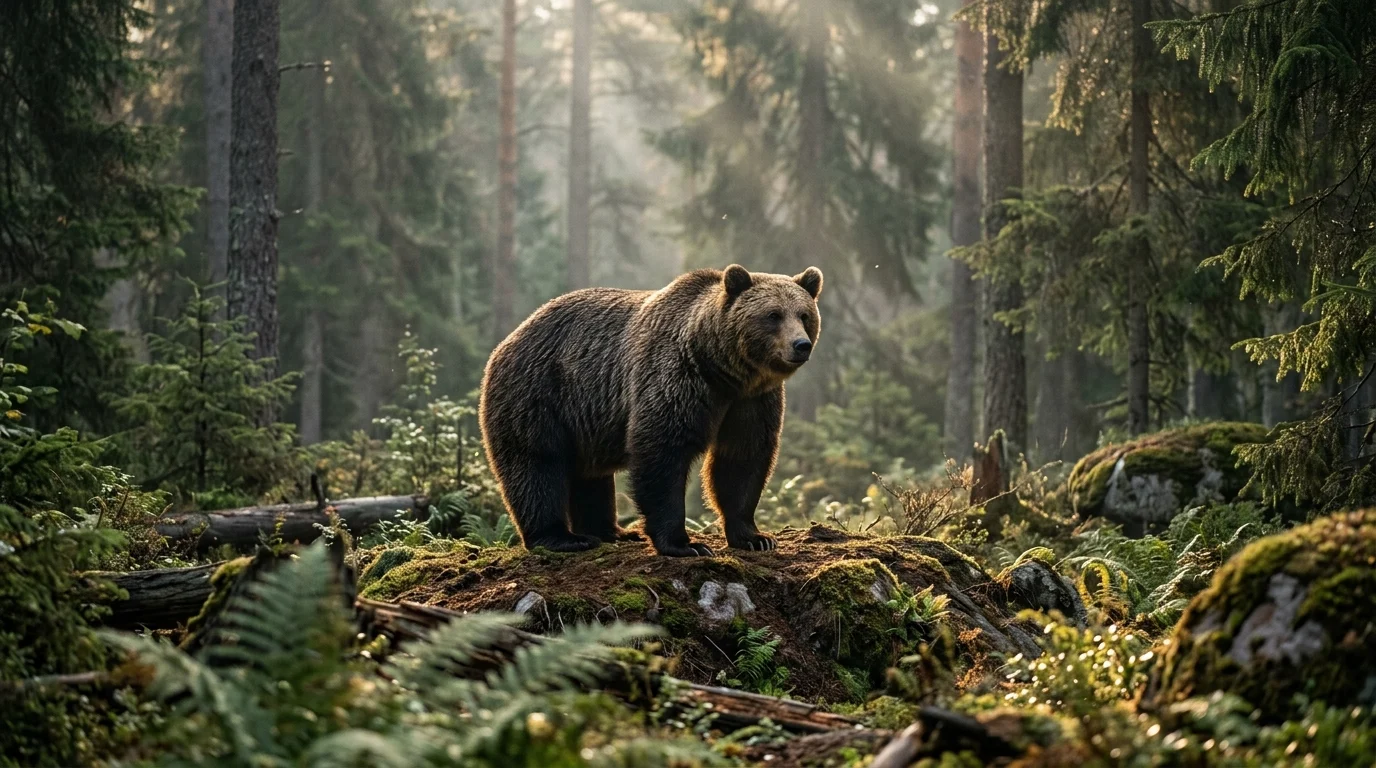
Bear symbolism represents strength, courage, protection, independence, and inner wisdom. Across different cultures, the bear has inspired stories about survival, leadership, motherhood, and the powerful connection between humans and nature. Its impressive size and ability to survive challenging environments make it a lasting symbol of resilience and determination.
The meaning of a bear can change depending on the culture, situation, and personal experience. Some people associate bears with confidence and authority, while others see them as symbols of healing, solitude, and spiritual awakening.
Understanding bear symbolism can help you explore what this remarkable animal represents in mythology, religion, dreams, literature, and everyday life.
Bear Symbolism Meaning (Clear Definition)
Bear symbolism refers to the meanings and ideas people associate with bears, including physical strength, courage, protection, independence, and resilience. The bear often represents the ability to face difficulties, defend loved ones, and trust personal instincts.
Because bears live in different environments and display a variety of behaviors, their symbolism is not limited to one interpretation. A mother bear may represent nurturing and protection, while a bear standing alone in the wilderness may suggest independence and self-reliance.
In many traditions, the bear also represents a balance between power and patience. It can be fierce when threatened yet spend long periods resting, reminding people that strength includes knowing when to act and when to recover.
The central meanings of bear symbolism include:
- Strength: Physical power, confidence, and the ability to overcome obstacles.
- Courage: Facing challenges without giving up.
- Protection: Defending family, home, and personal boundaries.
- Independence: Trusting yourself and following your own path.
- Wisdom: Learning from experience and observing before acting.
- Healing and renewal: Rest, recovery, and preparation for a new beginning.
- Motherhood: Nurturing, loyalty, and unconditional care.
These meanings provide a useful starting point, although individual interpretations depend on cultural background and personal circumstances.
What Does Bear Symbolism Represent?
Bear symbolism represents several qualities connected to survival, emotional strength, and the natural world. Its meaning often depends on the bear’s behavior and the context in which it appears.
Strength and Personal Power
Bears are powerful animals capable of navigating demanding environments. As a symbol, the bear encourages confidence, determination, and the willingness to stand firm when life becomes difficult.
Seeing a bear as a personal symbol may remind you to recognize your abilities rather than underestimate yourself.
Courage and Resilience
A bear’s ability to survive harsh weather, find food, and adapt to changing conditions makes it a symbol of resilience.
This meaning encourages people to remain steady during difficult periods. It does not suggest that challenges are easy; instead, it highlights the importance of patience, preparation, and persistence.
Protection and Family
Mother bears are especially associated with protecting their cubs. Their behavior has helped establish the bear as a symbol of parental devotion, loyalty, and family responsibility.
In everyday life, this interpretation may represent protecting the people you love while maintaining healthy personal boundaries.
Independence and Solitude
Many bears spend considerable time alone. This behavior contributes to their association with independence, self-reliance, and quiet reflection.
Bear symbolism can therefore encourage you to spend time alone when necessary, understand your needs, and make decisions without depending entirely on outside approval.
Patience and Rest
Some bear species enter a period of reduced activity during winter, with the details varying by species and environment. This seasonal behavior has inspired associations with rest, conservation of energy, and renewal.
The symbolic lesson is simple: rest is not always a sign of weakness. Sometimes, stepping back helps you regain the strength needed for future challenges.
Spiritual Meaning of Bear Symbolism
The spiritual meaning of bear symbolism often centers on inner strength, grounding, protection, and personal transformation. In contemporary spiritual interpretations, the bear may encourage people to reconnect with their instincts and approach life with greater confidence.
These interpretations reflect spiritual beliefs rather than scientifically established messages from animals.
The Bear as a Symbol of Inner Strength
A bear may represent the strength that develops through difficult experiences. Its symbolism encourages you to recognize the resilience you already possess, even when you feel uncertain.
This meaning can be especially relevant when you are facing a major decision, adjusting to change, or learning to trust yourself.
The Bear as a Symbol of Grounding
Bears are closely connected with forests, mountains, rivers, and other natural environments. Consequently, people sometimes interpret them as symbols of grounding and connection with the Earth.
This perspective encourages a slower, more thoughtful approach to life. Spending time outdoors, reflecting quietly, and focusing on what matters most can help you feel more balanced.
Bear Spirit Animal Meaning
In some modern spiritual communities, the bear is described as a spirit animal associated with courage, leadership, protection, and independence.
People who identify with this symbolism may see the bear as a reminder to establish boundaries, stand up for their values, and protect their emotional well-being.
However, Indigenous traditions have distinct teachings and practices concerning animal relationships. The term spirit animal should not be treated as a universal belief shared by every culture.
Bear Totem Meaning
In certain Indigenous traditions, animal figures have specific relationships with community identity, ancestry, ceremonial life, and inherited teachings. These meanings differ among nations and communities.
In modern popular spirituality, a bear totem is sometimes interpreted more generally as a symbol of strength, guardianship, and resilience. It is important to distinguish these modern interpretations from the specific traditions of Indigenous peoples.
Bear Symbolism and Transformation
The bear’s seasonal rhythms have inspired associations with retreat, recovery, and renewal. Spiritually, this symbolism may suggest that periods of quiet preparation can support personal growth.
If you are going through a transition, the bear can serve as a reminder to conserve your energy, reflect on your experiences, and move forward when you feel ready.
Biblical / Religious Meaning of Bear Symbolism
The bear appears in the Bible as a powerful animal associated with danger, strength, judgment, and protection in different passages. Its meaning depends on the surrounding story rather than following one universal religious interpretation.
Bears in the Old Testament
In 2 Kings 2:23–24, bears appear in a troubling account involving the prophet Elisha. The passage presents them in the context of divine judgment, making the episode one of the Bible’s most striking examples of the bear as a dangerous and formidable animal.
In 1 Samuel 17:34–37, David describes protecting his father’s sheep from a lion and a bear. This account connects the bear with physical danger while highlighting David’s courage and experience as a protector.
The Bear in Proverbs
Proverbs 17:12 uses the image of a bear deprived of her cubs to communicate the danger of confronting intense anger. Here, the protective instincts of a mother bear emphasize the seriousness of uncontrolled aggression.
This image reflects the bear’s reputation for fierce protection and powerful emotional responses.
The Bear in Daniel’s Vision
In Daniel 7:5, Daniel describes a vision of a bear-like beast. The image forms part of a larger prophetic vision involving symbolic beasts and kingdoms.
The passage is interpreted differently across religious traditions, so it is best understood within the broader context of biblical prophecy rather than as a simple statement about bears.
Religious Lessons from Bear Symbolism
Biblical references to bears can illustrate several themes:
- Courage: Facing dangerous situations with determination.
- Protection: Defending those entrusted to your care.
- Danger: Recognizing the consequences of powerful forces and emotions.
- Judgment: Understanding the context of difficult biblical narratives.
The Bible does not assign bears a single positive spiritual meaning. Their symbolism changes according to the passage and its theological message.
Bear Symbolism in History and Culture
Bear symbolism has a long history in human societies. People have encountered bears as powerful animals, included them in mythology, and used their images to represent authority, courage, guardianship, and the wilderness.
Nevertheless, cultural meanings vary significantly, and no single interpretation applies to every society.
Native American Bear Symbolism
Bears hold important roles in the stories, ceremonies, and traditions of some Indigenous peoples of North America. Depending on the specific nation and tradition, bears may be connected with healing, strength, guardianship, leadership, or relationships with the natural world.
These meanings are not identical across Indigenous cultures. Understanding a particular interpretation requires attention to the community and tradition in which it appears.
Celtic Bear Symbolism
In discussions of Celtic symbolism, bears are often associated with strength, sovereignty, courage, and the untamed natural world. The bear’s impressive presence makes it a fitting figure for exploring power and leadership.
However, specific claims about ancient Celtic bear worship or uniform beliefs should be approached carefully because historical evidence varies.
Norse Bear Symbolism
In Norse traditions, bears were associated with formidable strength and warriors. The Old Norse term berserkr is famously connected with warriors described in medieval sources as fighting with extraordinary ferocity; its exact historical interpretation remains debated.
The bear’s reputation for power made it a compelling image of fearlessness and combat in accounts of the Viking Age.
Asian Bear Symbolism
Across Asia, bears appear in different folklore traditions and local belief systems. In some Japanese Ainu traditions, the brown bear has held a significant ceremonial and spiritual role.
Other Asian cultures have their own stories and interpretations. It is therefore more accurate to explore individual traditions than to assume that all Asian societies share the same bear symbolism.
Bear Symbolism in Heraldry
Bears appear in coats of arms, emblems, flags, and civic symbols. In heraldry, the animal can communicate strength, courage, determination, and a connection with a particular region.
For example, bear imagery appears in the heraldic traditions of several European communities. Its meaning often reflects local history, identity, or the qualities a community wishes to express.
Bear Symbolism in Literature and Art
Writers and artists use bears to explore the relationship between power, vulnerability, nature, and human behavior. Depending on the work, a bear may appear as a threatening predator, a wise companion, a protective parent, or a playful character.
The Bear as a Literary Character
In traditional tales, bears can represent both danger and wisdom. Their behavior may teach lessons about courage, humility, patience, or respect for nature.
In children’s literature, bears frequently become friendly characters who express curiosity, kindness, and emotional warmth. These portrayals contrast with the animal’s reputation for physical power.
The Bear in Children’s Stories
Characters such as Winnie-the-Pooh and Paddington have helped establish the bear as a familiar literary symbol of friendship, comfort, and kindness.
These characters show how an animal associated with strength and wilderness can also represent gentleness, belonging, and emotional connection.
Bears in Painting and Sculpture
Artists portray bears in wildlife paintings, sculptures, illustrations, and decorative objects. A realistic bear in a rugged landscape may emphasize freedom and the power of nature, while a stylized bear may communicate friendliness or community identity.
The artist’s choices—including posture, setting, expression, and color—shape the meaning of the image.
The Bear as a Symbol of Human Nature
In some stories, bears reflect aspects of human behavior. A solitary bear may suggest independence, while an aggressive bear can represent anger or uncontrolled power.
A gentle bear, on the other hand, may encourage viewers to look beyond appearances and recognize the possibility of kindness beneath a strong exterior.
Dream Meaning of Bear Symbolism
Dreams about bears can have different meanings depending on the dreamer’s emotions, experiences, and circumstances. Although some spiritual traditions interpret animal dreams symbolically, there is no scientifically established universal meaning for dreaming about a bear.
The details of the dream can help you explore what it might mean to you personally.
Dreaming of a Friendly Bear
A friendly bear may symbolize comfort, confidence, protection, or a desire for emotional security.
Consider whether you currently feel supported by someone in your life or are learning to trust your own abilities.
Dreaming of an Angry Bear
An angry bear may reflect feelings of pressure, conflict, fear, or frustration. It could also prompt you to think about situations in which you feel threatened or need to establish stronger boundaries.
The dream does not predict that something bad will happen.
Dreaming of Being Chased by a Bear
Being chased by a bear may reflect a situation you are avoiding or an emotion you find difficult to confront.
Think about whether a responsibility, disagreement, or personal fear has been demanding your attention recently.
Dreaming of a Bear Protecting You
A protective bear may represent your need for security or your desire to defend someone you love. It might also reflect a growing sense of confidence during a challenging period.
Your feelings during the dream can help you decide which interpretation fits best.
Dreaming of a Bear Cub
A bear cub may symbolize vulnerability, new responsibilities, affection, or the early stages of personal growth.
If the cub appears safe, the dream might connect with feelings of hope and care. If it appears threatened, you may be reflecting on something in your life that needs attention.
Modern Meaning of Bear Symbolism
In modern life, bear symbolism appears in branding, sports, fashion, popular culture, and personal expression. Its meaning often combines traditional associations with contemporary ideas about identity and resilience.
Bears as Symbols of Strength and Leadership
Businesses, sports teams, and organizations sometimes use bears in their logos to communicate power, confidence, determination, and toughness.
The animal’s imposing appearance makes it an effective visual representation of strength and competitive spirit.
The Bear as a Personal Symbol
Some people connect with bears because they value independence, loyalty, courage, or family protection. A bear image, pendant, tattoo, or decorative object can serve as a personal reminder of these qualities.
The meaning does not have to come from an ancient tradition. It can reflect an individual’s experiences, ambitions, and values.
Bear Tattoo Symbolism
A bear tattoo can represent several ideas, depending on the design and the wearer’s intention.
Common interpretations include:
- Bear head: Confidence, authority, and personal power.
- Roaring bear: Courage, assertiveness, and standing up for yourself.
- Mother bear with cubs: Family love, devotion, and protection.
- Bear in a forest: Independence, freedom, and connection with nature.
- Sleeping bear: Rest, patience, and renewal.
- Bear paw: A connection with wildlife, exploration, or a personal journey.
These are common contemporary interpretations rather than fixed meanings shared by everyone.
Bear Symbolism in Popular Culture
Modern media frequently portrays bears as either formidable creatures or lovable companions. This contrast gives the animal a wide symbolic range, from bravery and authority to warmth and humor.
As a result, the bear can appeal to people who value both strength and compassion.
The Bear as a Reminder of Balance
One of the most useful modern interpretations of bear symbolism is the balance between action and rest. The bear can represent standing firm when necessary while also recognizing the importance of recovery.
This perspective encourages a sustainable approach to ambition, relationships, and personal development.
Frequently Asked Questions About Bear Symbolism
What Does a Bear Symbolize Spiritually?
A bear commonly symbolizes inner strength, protection, grounding, courage, and independence in modern spiritual interpretations. Its meaning varies across personal beliefs and cultural traditions.
Is a Bear a Symbol of Good Luck?
Some people view bears as positive symbols of strength, resilience, and protection, but bears do not have a universal association with good luck. The meaning depends on the cultural context and the person’s beliefs.
What Does a Bear Symbolize in Dreams?
A bear in a dream may reflect strength, fear, protection, independence, or unresolved tension. The dreamer’s emotions and life circumstances are more useful for interpretation than any fixed symbolic rule.
What Does a Bear Tattoo Mean?
A bear tattoo often represents courage, loyalty, family protection, independence, or resilience. The specific design and the wearer’s personal reasons shape its meaning.
What Does a Mother Bear Symbolize?
A mother bear commonly symbolizes nurturing, fierce protection, loyalty, and devotion to family. It can also represent the determination to defend people or responsibilities that matter deeply to you.
Conclusion
Bear symbolism reminds us that true strength involves more than physical power. It can mean protecting loved ones, facing challenges with courage, trusting your instincts, and allowing yourself time to rest and recover. From ancient cultural traditions to modern art and personal expression, the bear continues to represent resilience, independence, and the balance between power and gentleness.
Its deepest meaning depends on the context, but the central message remains inspiring: stand firm when life demands courage, protect what matters, and recognize the strength that grows through patience and experience.
SEO Title: Bear Symbolism: Meaning, Spirituality, and Strength

I explore symbols, special characters, emojis, and their meanings, sharing simple, useful insights to help readers discover, understand, and creatively use symbols in everyday digital communication.