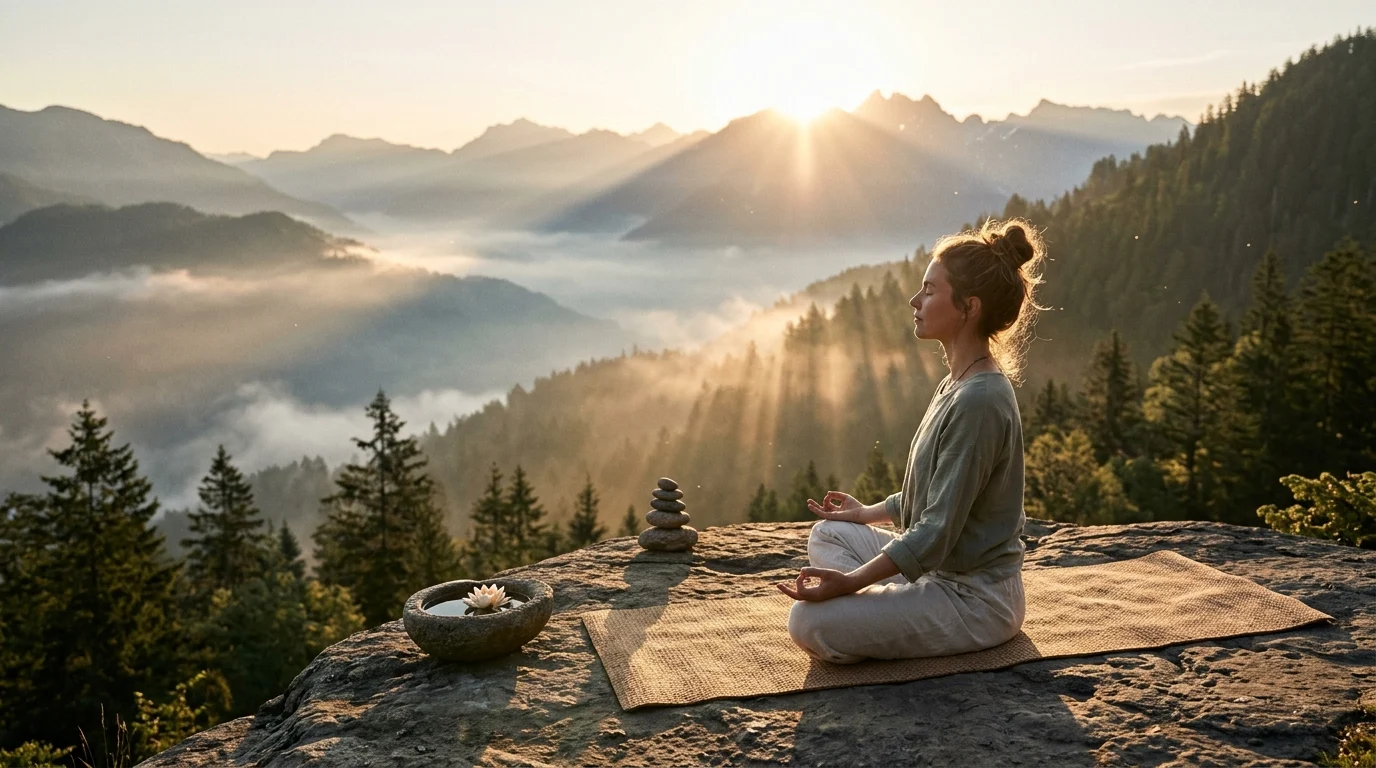
Yoga symbolism represents the connection between the mind, body, and spirit. It reflects balance, inner peace, self-awareness, discipline, and spiritual growth. Beyond physical postures and breathing exercises, yoga carries deep philosophical and cultural meanings that have developed over thousands of years.
From the peaceful image of someone meditating to the symbolic meaning of the lotus position, yoga encourages people to look beyond physical movement and explore their inner world. Its symbols often represent harmony, personal transformation, mindfulness, and the journey toward a more meaningful life.
Understanding yoga symbolism helps reveal why this ancient practice continues to inspire people across different cultures and generations.
Yoga Symbolism Meaning (Clear Definition)
Yoga symbolism refers to the deeper meanings associated with yoga practices, postures, objects, and spiritual traditions. These symbols communicate ideas about unity, consciousness, balance, discipline, and the relationship between the individual and the universe.
The word yoga comes from the Sanskrit root yuj, commonly translated as “to unite” or “to join.” This meaning reflects one of yoga’s central philosophical ideas: bringing different aspects of human existence into harmony.
In simple terms, yoga symbolizes:
- Unity: Connecting the mind, body, and spirit.
- Balance: Finding harmony between physical and emotional experiences.
- Inner peace: Developing calmness through awareness and meditation.
- Discipline: Building consistency and self-control.
- Transformation: Moving toward personal and spiritual growth.
- Awareness: Understanding thoughts, emotions, and actions.
Yoga is therefore more than a collection of physical exercises. Its symbolism reflects a journey of self-discovery and personal development.
What Does Yoga Symbolism Represent?
Yoga symbolism represents several important values that influence how people understand themselves and their relationship with the world.
Different yoga symbols communicate different ideas, but many share a common theme of harmony and spiritual awareness.
1. Unity and Connection
One of the strongest meanings of yoga is unity. It symbolizes the connection between the body, mind, and spirit.
This connection encourages people to develop awareness of their physical sensations, thoughts, and emotions rather than treating them as separate experiences.
2. Balance and Harmony
Yoga represents balance in everyday life. Its movements and breathing practices encourage people to develop physical stability and emotional control.
The symbolism of balance also reminds us that a meaningful life requires attention to different responsibilities, relationships, and personal needs.
3. Inner Peace and Calmness
Meditation and controlled breathing are important parts of many yoga traditions.
These practices symbolize the ability to find stillness even when life becomes stressful or uncertain.
4. Strength and Flexibility
Yoga symbolizes both physical and mental strength. Its postures encourage flexibility, patience, and endurance.
However, strength in yoga is not simply about holding difficult positions. It also represents the ability to remain patient and focused during challenges.
5. Personal Transformation
Yoga can symbolize a journey from confusion toward greater awareness.
Through consistent practice, individuals may develop healthier habits, stronger self-understanding, and a deeper appreciation of the present moment.
Common Yoga Symbols and Their Meanings
| Yoga Symbol | Symbolic Meaning |
|---|---|
| Om (Aum) | Universal consciousness and sacred sound |
| Lotus Flower | Purity, spiritual growth, and transformation |
| Yoga Mat | Personal practice and self-discipline |
| Namaste Gesture | Respect, gratitude, and connection |
| Meditation | Inner peace and self-awareness |
| Mandala | Unity, balance, and wholeness |
| Tree Pose | Stability, strength, and grounding |
These symbols help communicate the philosophical and spiritual ideas associated with yoga.
Spiritual Meaning of Yoga Symbolism
The spiritual meaning of yoga symbolism centers on self-discovery, awareness, and the search for a deeper connection with existence.
In several traditional Indian philosophical systems, yoga provides a path for understanding the nature of the self and developing greater spiritual awareness.
Connection Between the Individual and the Universe
Yoga often symbolizes the relationship between individual consciousness and universal existence.
Different spiritual traditions explain this connection in different ways. In some Hindu philosophical traditions, yoga practices support the realization of the relationship between the individual self and ultimate reality.
The Journey Toward Enlightenment
Yoga also represents the journey toward spiritual liberation.
In classical yoga philosophy, particularly the Yoga Sutras of Patanjali, the practice involves controlling mental fluctuations and developing a clearer understanding of consciousness.
This journey requires patience, ethical living, concentration, and self-discipline.
Awakening Inner Awareness
Yoga symbolism frequently connects with the idea of awakening.
Meditation, breathing exercises, and mindful movement encourage individuals to observe their thoughts without immediately reacting to them.
For many practitioners, this process creates a stronger sense of purpose and inner clarity.
The Symbolism of the Lotus Position
Gentle Flow Yoga: Benefits for Every Body
The lotus position, known as Padmasana, is one of the most recognizable images associated with yoga.
The lotus flower grows in muddy water yet produces a beautiful blossom. Because of this, it often symbolizes purity, resilience, spiritual development, and the ability to rise above difficulties.
Likewise, the lotus position represents stillness, concentration, and the search for inner peace.
Biblical / Religious Meaning of Yoga Symbolism
Yoga does not have a direct biblical meaning because it originated in ancient Indian religious and philosophical traditions rather than biblical teachings.
However, different religions and spiritual communities interpret yoga according to their own beliefs.
Yoga in Hinduism
Yoga has deep historical and philosophical connections with Hindu traditions.
In Hindu philosophy, yoga can represent spiritual discipline, devotion, self-knowledge, and liberation. Different paths include Karma Yoga (selfless action), Bhakti Yoga (devotion), Jnana Yoga (knowledge), and Raja Yoga (meditative discipline).
Yoga in Buddhism
Yoga-related meditation and contemplative practices also have connections with Buddhist traditions.
In Buddhist contexts, meditation, mindfulness, and concentration support awareness, compassion, and freedom from suffering. However, Buddhist meditation traditions and classical Hindu yoga philosophy are not identical.
Yoga and Christianity
Christian perspectives on yoga vary.
Some Christians appreciate breathing exercises, stretching, and relaxation while maintaining their own religious beliefs. Others have concerns about spiritual practices associated with particular non-Christian traditions.
Yoga itself does not have one universal religious interpretation, so its meaning depends partly on the tradition and intentions of the practitioner.
Yoga Symbolism in History and Culture
Yoga has a long history rooted in ancient India. Its development involved philosophical teachings, spiritual practices, meditation, and physical disciplines.
Over time, yoga became an important part of several Indian religious and philosophical traditions.
Ancient Indian Origins
Early references to yogic ideas appear in ancient Indian religious and philosophical literature.
The Upanishads explore meditation, consciousness, and the nature of the self. Later, Patanjali’s Yoga Sutras organized important ideas about yoga into a systematic philosophical framework.
These traditions helped establish yoga as a path of discipline and spiritual understanding.
Yoga in Hindu Culture
In Hindu culture, yoga is associated with spiritual development, devotion, self-control, and liberation.
Different forms of yoga emphasize different approaches. Some focus on knowledge, while others emphasize devotion, meditation, or selfless action.
Yoga’s Global Development
During the nineteenth and twentieth centuries, yoga gradually attracted international attention.
Teachers from India introduced different yoga philosophies and practices to audiences around the world. Over time, modern yoga developed into a broad collection of physical, breathing, and meditation practices.
Today, people practice yoga for various reasons, including fitness, relaxation, flexibility, mindfulness, and spiritual exploration.
Although its modern forms vary, yoga continues to carry symbolic connections with balance, awareness, and personal growth.
Yoga Symbolism in Literature and Art
Difference Between Vedas, Upanishads and Puranas Explained Simply and – Krafteria
Yoga symbolism has influenced literature, sculpture, painting, architecture, and spiritual storytelling.
Artists and writers often use yoga-related images to communicate ideas that go beyond physical movement.
The Lotus as a Symbol of Spiritual Growth
The lotus flower frequently appears in Indian religious art and literature.
Its ability to bloom in muddy water makes it a powerful image of purity, resilience, and spiritual development.
In yoga-related artwork, lotus imagery often represents the possibility of achieving inner clarity despite external difficulties.
Meditation as a Symbol of Wisdom
Paintings and sculptures of meditating figures often communicate silence, patience, and spiritual understanding.
A seated yogi may represent the search for truth, freedom from distractions, and the importance of self-awareness.
Mandalas and Sacred Geometry
Mandalas are intricate geometric designs used in several Indian religious and spiritual traditions.
They often symbolize wholeness, unity, and the relationship between different parts of existence.
In meditation and spiritual artwork, mandalas can serve as visual tools for concentration and contemplation.
The Om Symbol in Art
Wat zijn de beste mantra’s? Uitleg, voorbeelden & wetenschappelijk bewijs
The Om symbol is one of the most recognizable symbols associated with Indian spiritual traditions.
It represents a sacred sound used in various Hindu practices and meditation traditions. It is also associated with universal consciousness and the deeper nature of existence.
In yoga spaces, the symbol often communicates spirituality, mindfulness, and connection.
Dream Meaning of Yoga Symbolism
Dreaming about yoga may symbolize your desire for balance, peace, self-understanding, or personal growth.
However, dream meanings are subjective. Your personal experiences, emotions, and cultural background influence how you interpret them.
Here are some possible interpretations:
- Practicing yoga: May represent your desire to improve yourself or find balance.
- Meditating in a dream: May reflect a need for peace, clarity, or quiet reflection.
- Seeing a lotus position: May symbolize spiritual development and emotional stability.
- Struggling with yoga poses: May represent challenges involving patience, confidence, or flexibility.
- Practicing yoga in nature: May suggest a desire to reconnect with yourself and your surroundings.
- Seeing an Om symbol: May reflect an interest in spirituality, meaning, or inner awareness.
Rather than treating these interpretations as predictions, consider how the dream relates to your current feelings and experiences.
Modern Meaning of Yoga Symbolism
Mind-Body Balance: Achieve Wellness
In modern society, yoga symbolism represents wellness, mindfulness, self-care, and a balanced lifestyle.
People from different backgrounds practice yoga for physical, emotional, and personal reasons. Its meaning has expanded beyond traditional spiritual settings while maintaining connections with its historical roots.
Yoga as a Symbol of Self-Care
Modern yoga often represents the importance of making time for personal well-being.
Regular practice can encourage people to pay attention to their bodies, manage everyday stress, and develop healthier routines.
Yoga as a Symbol of Mental Strength
Yoga also symbolizes patience, focus, and emotional resilience.
Learning new postures and maintaining a consistent routine can encourage discipline and confidence.
Yoga as a Symbol of Mindfulness
Mindfulness is an important part of many modern yoga practices.
By focusing on breathing and movement, practitioners learn to pay closer attention to the present moment instead of constantly worrying about the past or future.
Yoga as a Symbol of Personal Growth
For many people, yoga represents continuous improvement.
It reminds practitioners that personal growth does not happen overnight. Instead, meaningful change develops through small, consistent efforts.
FAQS:
1. What Does Yoga Symbolize Spiritually?
Yoga spiritually symbolizes unity, self-awareness, inner peace, and the connection between individual consciousness and universal existence. It represents a journey toward deeper understanding and spiritual growth.
2. What Does the Lotus Symbolize in Yoga?
The lotus symbolizes purity, resilience, spiritual awakening, and transformation. Its growth from muddy water into a beautiful flower represents the ability to rise above difficulties.
3. What Does the Om Symbol Mean in Yoga?
Om represents a sacred sound associated with universal consciousness and spiritual awareness in Indian traditions. It is commonly used in meditation and certain yoga practices.
4. Why Is Yoga Considered a Symbol of Balance?
Yoga encourages harmony between physical movement, breathing, thoughts, and emotions. Its practices symbolize the importance of maintaining balance in different areas of life.
5. What Does Practicing Yoga Symbolize in Everyday Life?
Practicing yoga can symbolize self-care, discipline, patience, and personal development. It also represents a commitment to becoming more aware of your body and mind.
Conclusion
Yoga symbolism represents unity, balance, spiritual awareness, and personal transformation. From the lotus flower and Om symbol to meditation and traditional yoga postures, each element communicates a deeper message about understanding ourselves and finding harmony in life.
Whether practiced for fitness, mindfulness, or spiritual growth, yoga reminds us that true progress begins with patience, awareness, and a willingness to grow. Its lasting symbolism continues to inspire people to create a healthier relationship with themselves and the world around them.

I explore the meanings, history, and cultural significance behind symbols, helping readers understand how symbols connect with ideas, emotions, traditions, and everyday life.