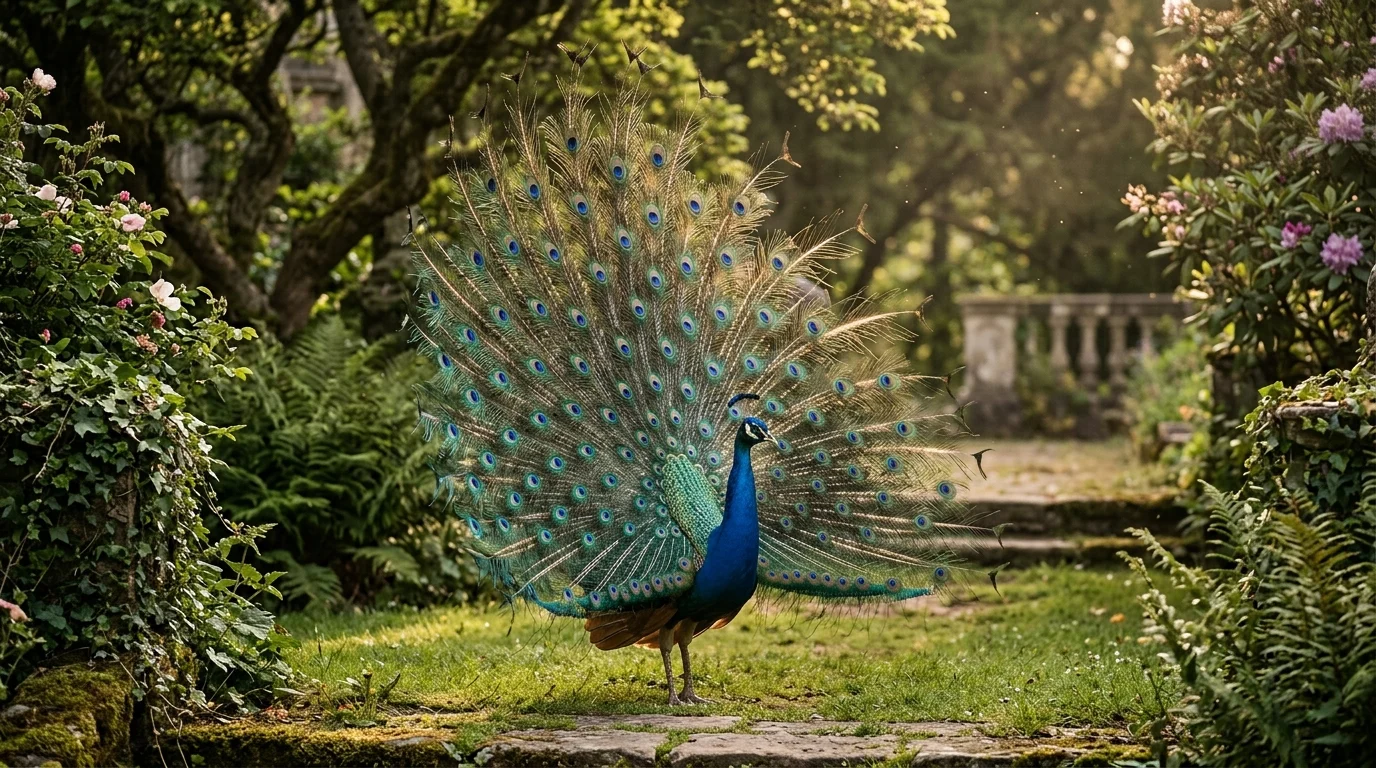
Peacock symbolism has fascinated people for centuries because the bird combines striking beauty, vibrant colors, and an unmistakable display of its magnificent tail. Across different cultures, the peacock can represent beauty, pride, confidence, renewal, spirituality, protection, and immortality.
Its meaning can change depending on the cultural or personal context. In one tradition, the peacock may symbolize divine beauty and spiritual awakening, while in another, its proud display may represent vanity or excessive self-confidence.
Peacock Symbolism Meaning (Clear Definition)
Peacock symbolism refers to the meanings and ideas people associate with the peacock, especially its colorful feathers, graceful appearance, and dramatic courtship display.
The most common symbolic meanings include:
- Beauty and elegance
- Confidence and self-expression
- Pride and dignity
- Renewal and transformation
- Spiritual awareness
- Protection and watchfulness
- Immortality and renewal
- Prosperity and abundance
The peacock’s ability to display its spectacular tail makes it a powerful symbol of being seen, expressing individuality, and appreciating one’s natural qualities.
At the same time, the bird offers a reminder to balance confidence with humility. Its beauty can inspire admiration, but excessive pride can change the meaning from healthy confidence to vanity.
What Does Peacock Symbolism Represent?
Peacock symbolism represents several qualities connected with beauty, visibility, confidence, and transformation.
Beauty: The peacock’s colorful feathers make it a natural symbol of visual beauty and elegance.
Confidence: Its dramatic display can represent self-assurance and the courage to show your true personality.
Pride: Because the bird carries itself with an impressive appearance, it can symbolize dignity as well as excessive pride.
Renewal: Peacocks periodically shed and regrow their feathers, which has contributed to associations with renewal and transformation.
Protection: The eye-like patterns on peacock feathers have inspired symbolic interpretations involving awareness, watchfulness, and protection.
Spirituality: In various traditions, the bird has been connected with sacred ideas, divine beauty, and spiritual development.
These interpretations explain why peacock feather symbolism appears frequently in spiritual practices, decorative art, jewelry, fashion, and cultural traditions.
Spiritual Meaning of Peacock Symbolism
Spiritually, peacock symbolism is often associated with awakening, transformation, inner beauty, and higher awareness.
The bird’s colorful appearance can represent the idea that personal growth brings different aspects of life together. Instead of hiding individual qualities, the peacock encourages people to recognize and express them with confidence.
The peacock feather also has an important spiritual association. Its distinctive “eyes” are sometimes interpreted as symbols of awareness and observation. Some spiritual traditions view them as reminders to look beyond appearances and become more conscious of one’s inner world.
Peacock as a Symbol of Transformation
The renewal of the peacock’s feathers provides a natural image of change. Symbolically, this can represent leaving an old stage of life behind and entering a new one.
For someone experiencing a major transition, the peacock may therefore represent rebirth, resilience, and personal renewal.
Biblical / Religious Meaning of Peacock Symbolism
The peacock is not a major symbolic figure in the Bible, and many popular interpretations of its meaning come from later religious art and traditions rather than direct biblical teachings.
In Christian art, the peacock became associated in some periods with immortality and resurrection. Historical Christian artwork sometimes used the bird to express ideas about eternal life and spiritual renewal.
Outside Christianity, peacocks have also held important religious and cultural meanings. In Hindu traditions, the peacock is associated with deities including Kartikeya and Krishna, and its beauty can carry associations with divine presence, grace, and protection.
These meanings should be understood within their specific religious and cultural contexts rather than treated as one universal interpretation.
Peacock Symbolism in History and Culture
Peacocks have attracted human attention for thousands of years. Their brilliant feathers and distinctive displays made them valuable symbols in royal courts, religious settings, architecture, textiles, and decorative arts.
In ancient cultures, the bird could represent wealth, status, beauty, and sacred qualities. Its impressive appearance naturally connected it with royalty and grandeur.
In South Asian culture, the peacock remains an especially recognizable symbol. The bird appears in traditional art, clothing, architecture, festivals, jewelry, and national imagery.
The peacock is also the national bird of India, reflecting its deep cultural significance.
In Persian and Islamic art traditions, peacock imagery has appeared in decorative designs, manuscripts, textiles, gardens, and architecture. Its meaning has varied according to period and artistic context.
Common Cultural Associations
| Symbolic Meaning | What It Can Represent |
|---|---|
| Beauty | Grace, attractiveness, and visual harmony |
| Pride | Dignity, confidence, or vanity |
| Renewal | Personal change and fresh beginnings |
| Spirituality | Awareness and sacred beauty |
| Protection | Watchfulness and awareness |
| Prosperity | Abundance, luxury, and status |
| Immortality | Continuity and eternal life |
Peacock Symbolism in Literature and Art
Artists and writers have long used the peacock because its appearance communicates meaning without requiring words.
In paintings, the bird can symbolize luxury, beauty, royalty, or spiritual themes. Peacock feathers can also create visual contrasts between natural beauty and human vanity.
In literature, the peacock may represent a character who seeks attention or takes great pride in appearance. In other contexts, it can symbolize confidence, individuality, transformation, or hidden spiritual meaning.
The contrast is particularly interesting: the same peacock can symbolize admirable confidence or destructive vanity depending on the story.
This dual meaning gives the bird lasting value as a literary and artistic symbol.
Dream Meaning of Peacock Symbolism
Dreaming about a peacock may symbolize confidence, recognition, beauty, self-expression, or a desire to be noticed. The exact interpretation depends heavily on the dreamer’s emotions and circumstances.
A colorful or proudly displaying peacock may suggest confidence or personal expression.
A peacock hiding its feathers could symbolize insecurity or reluctance to reveal one’s abilities.
A peacock appearing peacefully may represent beauty, self-acceptance, or a positive transition.
A threatening or aggressive peacock might reflect concerns about pride, competition, attention, or someone’s strong personality.
Dream symbolism is personal rather than scientifically fixed, so the emotions and events surrounding the dream often provide more useful clues than a universal dream dictionary.
Modern Meaning of Peacock Symbolism
Today, peacock symbolism often centers on individuality, confidence, creativity, luxury, and self-expression.
The peacock’s willingness to display its unique appearance resonates strongly with modern ideas about personal identity. It can encourage people to embrace qualities that make them different instead of hiding them.
However, modern interpretations also preserve the traditional warning about vanity. Confidence becomes meaningful when it is balanced with self-awareness and respect for others.
Peacock imagery is now common in fashion, interior design, tattoos, jewelry, branding, photography, and decorative art. Its colorful appearance allows it to communicate both elegance and bold individuality.
Frequently Asked Questions About Peacock Symbolism
What is the main meaning of peacock symbolism?
The main meanings of peacock symbolism include beauty, confidence, pride, renewal, spirituality, and self-expression.
What does a peacock feather symbolize?
A peacock feather can symbolize beauty, awareness, protection, spiritual insight, and renewal. Its meaning varies across cultures and traditions.
Is a peacock a symbol of good luck?
In some cultural and spiritual traditions, peacocks are viewed positively and associated with prosperity, protection, beauty, or good fortune. The interpretation depends on the cultural context.
What does a peacock symbolize spiritually?
Spiritually, a peacock can represent transformation, awakening, inner beauty, confidence, and awareness. Its changing feathers often inspire ideas of renewal.
What does seeing a peacock symbolize?
Seeing a peacock may be interpreted symbolically as a reminder to embrace confidence, appreciate personal beauty, or express individuality. Personal circumstances can influence what the encounter means to someone.
Conclusion
Peacock symbolism brings together beauty, confidence, transformation, spirituality, and pride. Its magnificent feathers can inspire people to appreciate their individuality while remembering that true confidence does not require excessive vanity. Across history and cultures, the peacock continues to represent the powerful idea of showing your beauty while staying grounded in self-awareness.

I explore the meanings and stories behind symbols, helping readers understand their cultural, spiritual, and everyday significance through clear, engaging, and meaningful insights.