The mind is one of the most powerful symbols of human existence. It represents thoughts, intelligence, imagination, awareness, and the ability to understand the world. Throughout history, mind symbolism has reflected humanity’s search for knowledge, wisdom, truth, and self-discovery.
Beyond its connection to thinking, the mind also symbolizes creativity, personal identity, emotional understanding, and inner strength. In spiritual traditions, it often represents consciousness and the connection between thoughts and personal growth.
Understanding mind symbolism helps reveal how different cultures, religions, and artistic traditions interpret the invisible world of human thoughts and awareness.
Mind Symbolism Meaning (Clear Definition)
Mind symbolism refers to the symbolic representation of thoughts, intelligence, consciousness, memory, imagination, and human awareness. It represents the inner world that influences how people understand experiences, make decisions, and develop their identities.
The mind is often associated with wisdom because it allows people to learn from experience and recognize deeper meanings. It also represents creativity, as imagination helps transform ideas into new possibilities.
At its deepest level, the mind symbolizes the connection between knowledge, perception, and personal identity.
The most common symbolic meanings of the mind include:
- Intelligence: The ability to think, reason, and understand.
- Wisdom: Knowledge gained through learning and experience.
- Consciousness: Awareness of oneself and the surrounding world.
- Creativity: The power to imagine and develop original ideas.
- Memory: The ability to preserve experiences and lessons.
- Self-discovery: Understanding personal beliefs, emotions, and identity.
- Mental strength: The ability to remain focused and overcome challenges.
What Does Mind Symbolism Represent?
The mind represents several important aspects of human life. Its symbolic meaning often depends on the situation, culture, and context in which it appears.
Here are some of its most recognized interpretations.
1. Intelligence and Knowledge
The mind is a universal symbol of intelligence and learning. It represents the ability to understand information, solve problems, and make thoughtful decisions.
In everyday life, people often associate a strong mind with curiosity, education, and intellectual achievement.
2. Wisdom and Understanding
Knowledge and wisdom are closely connected, but they have different meanings. Knowledge involves collecting information, while wisdom involves using that information thoughtfully.
Symbolically, the mind represents the ability to look beyond appearances and understand deeper truths.
3. Creativity and Imagination
The mind is also a powerful symbol of imagination. Artists, inventors, writers, and musicians use their minds to develop ideas that can transform the world.
It reminds us that many important achievements begin as thoughts or dreams.
4. Memory and Experience
Human memories shape personal identity. The mind symbolizes the storage of experiences, lessons, and meaningful moments.
It represents how the past influences present decisions and future possibilities.
5. Awareness and Consciousness
The mind represents awareness of personal thoughts, emotions, and surroundings.
This symbolism encourages people to understand themselves rather than simply react to everything happening around them.
Spiritual Meaning of Mind Symbolism
Spiritually, the mind often represents consciousness, inner awareness, reflection, and the search for truth.
Many spiritual traditions emphasize the importance of understanding thoughts because they influence attitudes, actions, and personal experiences.
Inner Awareness and Self-Discovery
The mind symbolizes the journey toward understanding one’s inner self. Through reflection and mindfulness, people can recognize their beliefs, habits, and emotional patterns.
This interpretation encourages individuals to become more conscious of their choices.
Mental Clarity and Peace
A peaceful mind is commonly associated with balance, patience, and emotional stability.
In spiritual interpretations, mental clarity represents freedom from unnecessary distractions and greater awareness of the present moment.
Connection Between Thoughts and Actions
Many spiritual teachings emphasize that thoughts can influence behavior. Positive thinking, compassion, and thoughtful intentions are often viewed as important parts of personal development.
However, thoughts alone do not determine every life outcome. Actions, circumstances, and relationships also play important roles.
Enlightenment and Higher Consciousness
In some spiritual traditions, the mind represents a pathway toward deeper awareness or enlightenment.
This symbolism suggests that self-understanding can help people explore life’s bigger questions and develop a stronger sense of purpose.
Biblical / Religious Meaning of Mind Symbolism
In biblical and religious traditions, the mind often represents understanding, intention, wisdom, and the inner direction of a person.
The Bible frequently connects the mind with spiritual responsibility and the importance of developing good thoughts.
Renewal of the Mind
Romans 12:2 encourages believers to experience transformation through the renewal of their minds.
This teaching is commonly interpreted as an invitation to change harmful thinking patterns and develop a life guided by spiritual values.
Loving God With the Mind
Matthew 22:37 describes loving God with all one’s heart, soul, and mind.
This passage highlights the importance of understanding, conscious devotion, and sincere commitment.
Wisdom and Discernment
Proverbs frequently emphasizes the value of wisdom and understanding.
In this context, the mind symbolizes the ability to recognize what is right, make responsible decisions, and seek guidance.
Mind in Other Religious Traditions
Other religions also give the mind an important role.
- Buddhism: The mind is central to awareness, meditation, attachment, and the development of wisdom.
- Hinduism: The mind is discussed in relation to thoughts, desires, self-discipline, and spiritual development.
- Islam: Islamic teachings emphasize reflection, understanding, remembrance of Allah, and thoughtful consideration.
Although these traditions have different teachings, they share an interest in the relationship between thought, awareness, and spiritual life.
Mind Symbolism in History and Culture
Throughout history, the mind has appeared in philosophy, religion, medicine, and cultural traditions as a symbol of human understanding.
Ancient civilizations explored the relationship between thinking, consciousness, and the soul.
Ancient Greek Philosophy
Ancient Greek philosophers examined the nature of reason, knowledge, and human understanding.
Thinkers such as Plato and Aristotle explored how people acquire knowledge and understand reality. Their ideas helped establish lasting connections between the mind, wisdom, and intellectual development.
Ancient Egyptian Beliefs
Ancient Egyptian traditions placed great importance on the heart in matters of thought, character, and judgment.
During the afterlife judgment, the heart was symbolically weighed against the feather of Ma’at, representing truth and justice. This illustrates how ancient cultures connected inner character with spiritual responsibility.
Eastern Philosophical Traditions
Eastern philosophies often explore the mind through meditation, self-discipline, and awareness.
Buddhist teachings, for example, examine how thoughts and desires influence suffering and how mindfulness can support greater understanding.
Modern Cultural Interpretations
Today, the mind commonly represents intelligence, innovation, education, and personal development.
Images of brains, thought bubbles, and abstract mental patterns appear in educational materials, technology, psychology, and popular culture.
Mind Symbolism in Literature and Art
The mind has inspired writers and artists because it represents an invisible world filled with thoughts, memories, emotions, and imagination.
Literature and visual art often use mental imagery to explore the complexity of human experience.
The Mind as a Symbol of Knowledge
In literature, intelligent characters often represent curiosity, learning, and the search for truth.
Their thoughts and decisions reveal the importance of knowledge and critical thinking.
The Mind as an Inner World
Writers frequently explore the mind through dreams, memories, internal conversations, and personal reflections.
These techniques help readers understand a character’s fears, hopes, and motivations.
The Mind in Surrealist Art
How Philosophy Shapes Our Lives: An Essential Guide | by Sandy Y. Greenleaf | AI Sensei | Medium
simulation all the way down – by v⠀ – predbrain
12
Surrealist artists often use unusual images to represent the unconscious mind, imagination, and dreams.
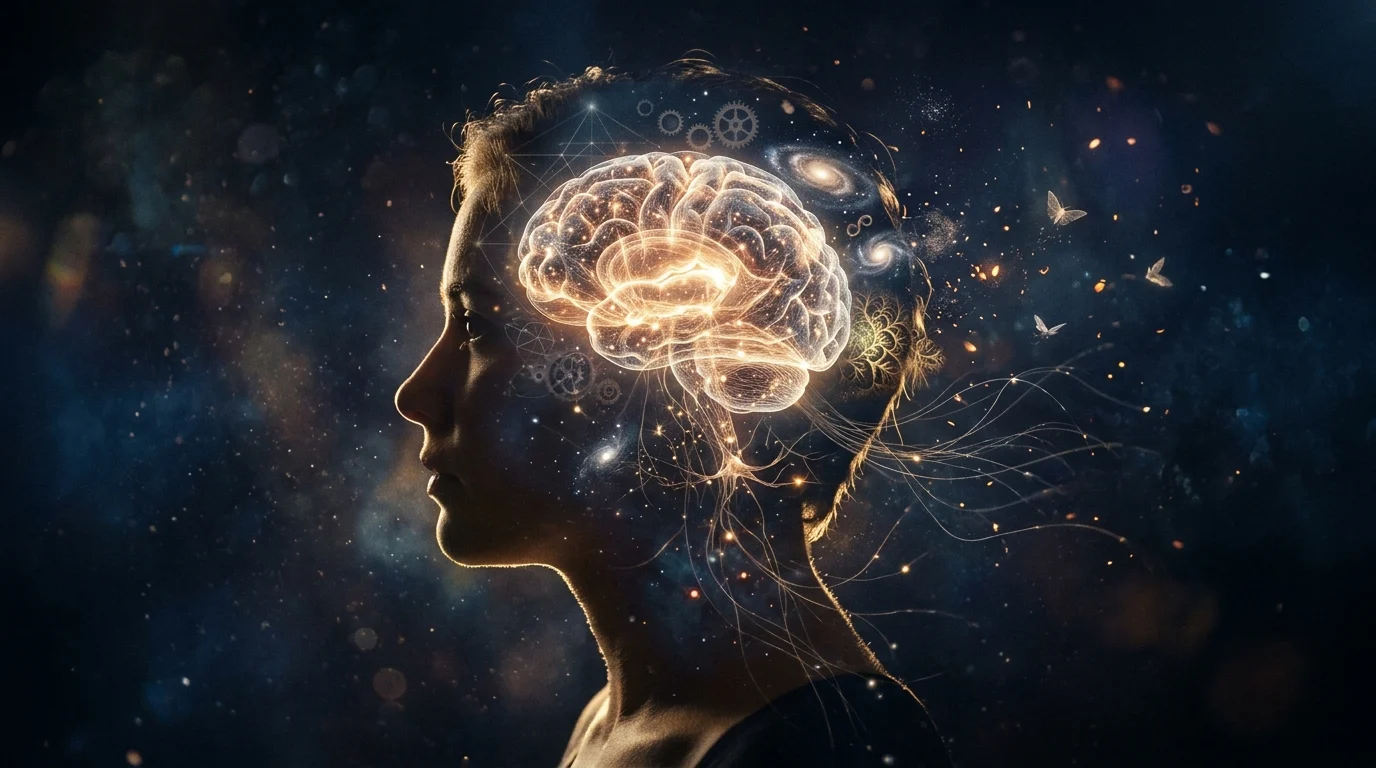
A human head containing landscapes, stars, or unexpected objects can symbolize the limitless nature of human creativity.
Common Artistic Symbols of the Mind
- Brain: Intelligence, reasoning, and mental activity.
- Light bulb: Ideas, discovery, and inspiration.
- Open book: Knowledge, education, and understanding.
- Maze: Complex thoughts and difficult decisions.
- Mirror: Self-awareness and personal reflection.
- Stars: Imagination, possibility, and higher understanding.
Dream Meaning of Mind Symbolism
Dreams involving the mind, thoughts, or mental activity can have different personal interpretations.
Rather than predicting the future, these dreams may reflect everyday concerns, memories, emotions, or unresolved questions.
Here are some possible symbolic meanings.
Dreaming About Your Mind
This dream may represent self-reflection or a desire to understand your thoughts and feelings.
It can also suggest that you are thinking deeply about an important personal decision.
Dreaming About a Confused Mind
A confused mind in a dream may symbolize uncertainty, stress, or difficulty choosing between different possibilities.
It could encourage you to slow down and consider your priorities.
Dreaming About Mental Clarity
Experiencing a clear and peaceful mind may represent confidence, understanding, or a growing sense of direction.
It can reflect a desire for balance in your everyday life.
Dreaming About Controlling Your Thoughts
This experience may symbolize self-discipline, personal responsibility, or the desire to manage challenging emotions.
The meaning depends on your feelings and circumstances during the dream.
Modern Meaning of Mind Symbolism
In modern society, the mind represents much more than intelligence. It has become a symbol of mental well-being, creativity, innovation, and personal growth.
As conversations about mental health and emotional awareness become more common, the symbolic meaning of the mind continues to evolve.
Mental Health and Emotional Awareness
The mind is increasingly associated with psychological well-being and self-care.
Modern interpretations highlight the importance of recognizing emotions, managing stress, and developing healthy thinking habits.
Education and Innovation
In schools, workplaces, and scientific environments, the mind represents learning and problem-solving.
It symbolizes the human ability to explore new ideas, question existing knowledge, and create meaningful solutions.
Personal Growth and Mindfulness
Mindfulness practices encourage people to observe their thoughts without automatically reacting to them.
This modern interpretation connects mind symbolism with patience, self-awareness, and a balanced approach to everyday challenges.
Technology and Artificial Intelligence
In contemporary culture, the mind also appears in discussions about artificial intelligence, neuroscience, and human intelligence.
It represents ongoing questions about consciousness, learning, creativity, and what makes human thinking unique.
FAQS:
1. What Does the Mind Symbolize?
The mind symbolizes intelligence, wisdom, consciousness, imagination, memory, and self-awareness. It represents the inner world that shapes human understanding and decisions.
2. What Is the Spiritual Meaning of the Mind?
Spiritually, the mind represents inner awareness, mental clarity, reflection, and the search for deeper truth. It is often associated with personal transformation and spiritual growth.
3. What Does the Mind Represent in the Bible?
In the Bible, the mind is associated with wisdom, understanding, devotion, and spiritual renewal. It highlights the importance of developing thoughts that reflect faith and good values.
4. What Does a Mind Symbolize in Dreams?
A mind appearing in a dream may represent personal reflection, confusion, decision-making, or a desire for greater understanding. Its interpretation depends on the dream’s details and personal circumstances.
5. What Is the Difference Between Mind and Brain Symbolism?
Brain symbolism generally represents biological intelligence, reasoning, and mental function. Mind symbolism has a broader meaning that includes consciousness, imagination, memory, awareness, and personal identity.
Conclusion
Mind symbolism represents the remarkable power of human thought, intelligence, awareness, and imagination. Across spiritual traditions, history, literature, and modern culture, the mind remains a meaningful symbol of knowledge and self-discovery. Ultimately, it reminds us that understanding ourselves is an important part of understanding the world around us.

I explore the meanings and stories behind symbols, helping readers understand their cultural, spiritual, and everyday significance through clear, engaging, and meaningful insights.