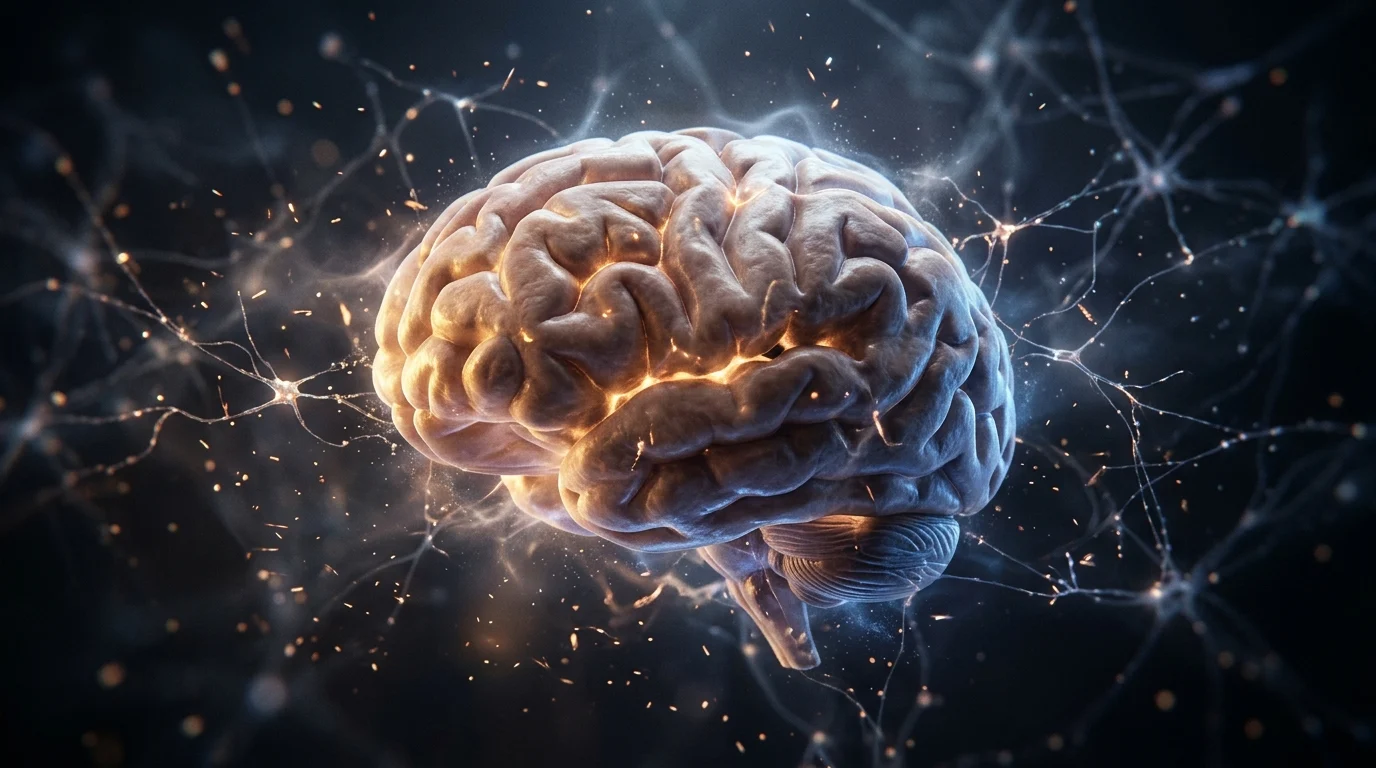
Brain symbolism represents intelligence, wisdom, knowledge, consciousness, memory, and the power of human thought. Throughout history, the brain has symbolized the ability to understand the world, make decisions, solve problems, and shape personal identity. It reminds us that our thoughts influence our actions and that knowledge can transform the way we experience life.
Beyond its biological function, the brain carries deeper meanings in spirituality, philosophy, religion, psychology, and art. It often represents mental strength, creativity, awareness, and the connection between reason and emotion. Understanding brain symbolism helps reveal why this powerful organ has become an important symbol of human potential and intellectual growth.
Brain Symbolism Meaning (Clear Definition)
Brain symbolism refers to the deeper meanings associated with the human brain, including intelligence, wisdom, consciousness, memory, reasoning, and creativity.
As the center of the nervous system, the brain controls many essential functions and supports our ability to think, feel, learn, and communicate. Symbolically, it represents the inner world of thoughts and the mental abilities that help people understand themselves and their surroundings.
The brain commonly symbolizes:
- Intelligence: The ability to think, learn, and understand information.
- Wisdom: Using knowledge and experience to make thoughtful decisions.
- Consciousness: Awareness of yourself and the world around you.
- Memory: Preserving experiences, lessons, and personal history.
- Creativity: Developing original ideas and imagining new possibilities.
- Reason: Evaluating situations through logic and careful thinking.
- Mental strength: Staying focused and overcoming intellectual challenges.
At its deepest level, the brain symbolizes the remarkable potential of the human mind.
What Does Brain Symbolism Represent?
The brain represents several important qualities connected to human intelligence and personal development. Its symbolic meaning can change depending on cultural beliefs, personal experiences, and the context in which it appears.
1. Intelligence and Knowledge
One of the strongest meanings of brain symbolism is intelligence. The brain represents the ability to absorb information, recognize patterns, understand difficult ideas, and develop new skills.
It also reminds us that learning is a lifelong process. Knowledge grows through curiosity, observation, practice, and experience.
2. Wisdom and Good Judgment
The brain symbolizes wisdom because it helps people evaluate information and make decisions. While intelligence involves understanding, wisdom involves applying that understanding thoughtfully.
A brain symbol can therefore represent maturity, patience, and the ability to learn from past mistakes.
3. Consciousness and Awareness
The brain is closely associated with consciousness and self-awareness. Symbolically, it represents the ability to recognize personal thoughts, understand emotions, and reflect on individual experiences.
It can also suggest a desire for greater understanding of life and human existence.
4. Memory and Experience
Memory gives meaning to personal experiences. The brain symbolizes the lessons, relationships, and important moments that contribute to individual identity.
It reminds us that our past experiences can influence present decisions and future possibilities.
5. Creativity and Imagination
The brain also represents imagination and creative thinking. Artists, inventors, writers, and problem-solvers use mental processes to develop ideas and explore possibilities.
In this sense, brain symbolism celebrates innovation and the freedom to think beyond familiar boundaries.
Spiritual Meaning of Brain Symbolism
Spiritually, brain symbolism often represents awareness, inner understanding, mental clarity, and the search for deeper knowledge.
In many spiritual traditions, the mind plays an important role in personal growth. People explore their thoughts, beliefs, and emotions to develop a stronger understanding of themselves.
Mental Clarity and Inner Peace
A healthy relationship with your thoughts can support emotional balance and a peaceful outlook. Symbolically, the brain represents the ability to recognize distracting thoughts and approach difficult situations with greater clarity.
It encourages mindfulness and thoughtful responses rather than impulsive reactions.
Higher Awareness and Consciousness
Some spiritual interpretations associate the brain with higher awareness and expanded consciousness.
This meaning reflects the desire to understand existence beyond everyday experiences. It may symbolize self-discovery, reflection, and a deeper appreciation of life.
The Connection Between Mind and Spirit
Brain symbolism can also represent the relationship between intellectual understanding and spiritual beliefs.
While the brain supports thinking and perception, spiritual traditions often explore questions that go beyond scientific explanations. The symbol can encourage people to balance rational thinking with compassion, intuition, and personal reflection.
Personal Transformation
The brain represents the possibility of changing how we think and approach life.
New experiences, education, reflection, and mindful habits can influence our perspectives. Spiritually, this may symbolize awakening, personal development, and the willingness to leave limiting beliefs behind.
Biblical / Religious Meaning of Brain Symbolism
The Bible does not specifically establish the brain as a universal spiritual symbol. However, it frequently discusses the mind, heart, wisdom, understanding, and thoughts.
These concepts provide useful connections to the symbolic meaning of the brain.
The Mind and Spiritual Understanding
Biblical teachings often encourage believers to develop a renewed mind and think in ways that reflect faith and goodness.
Romans 12:2 speaks about the renewing of the mind. This passage is commonly understood as an invitation to transform one’s thinking and develop a deeper relationship with God.
Symbolically, the brain can represent this process of mental renewal and spiritual understanding.
Wisdom and Discernment
Wisdom is an important theme throughout the Bible. Proverbs frequently emphasizes understanding, knowledge, and good judgment.
In this context, brain symbolism can represent the pursuit of wisdom and the ability to distinguish between right and wrong.
Thoughts and Inner Character
Religious teachings often highlight the importance of thoughts because they can influence words and actions.
The brain may therefore symbolize personal responsibility, reflection, and the importance of developing positive intentions.
In other religious and philosophical traditions, the mind also holds an important place in discussions about awareness, knowledge, meditation, and human behavior.
Brain Symbolism in History and Culture
The brain has fascinated human civilizations for thousands of years. Different cultures have understood its importance in different ways, creating a rich history of symbolic interpretations.
A BRIEF HISTORY OF NEUROSCIENCE: From Ancient Egypt to Brain Mapping
Dissertation Spotlight | Jessica Wright — ANCIENT JEW REVIEW
File:Leonardo da Vinci – RCIN 919127, The brain c.1508-9.jpg – Wikimedia Commons
6
Ancient Egyptian Beliefs
Ancient Egyptians had complex beliefs about the body and the afterlife. During mummification, they generally preserved the heart because they considered it central to identity and judgment.
The brain, by contrast, was often removed during the mummification process. This reflects a historical understanding of the body that differed significantly from modern neuroscience.
Ancient Greek Philosophy
Ancient Greek thinkers explored the relationship between the brain, intelligence, and human behavior.
Hippocrates associated mental processes with the brain, while Aristotle placed greater importance on the heart. These differing ideas contributed to centuries of philosophical discussion about human thought.
Renaissance Discoveries
During the Renaissance, advances in anatomy and scientific observation changed how people understood the human body.
Artists and anatomists produced detailed illustrations of the brain, helping connect its physical structure with the study of human intelligence and perception.
Modern Cultural Interpretations
Today, the brain is widely recognized as a symbol of education, innovation, science, and intellectual ability.
Brain imagery appears in classrooms, medical institutions, technology companies, research organizations, and popular culture. It often communicates intelligence, problem-solving, and scientific discovery.
Brain Symbolism in Literature and Art
The brain has become a powerful image in literature, visual art, film, and popular culture. Artists and writers use it to explore the complexity of human thought and identity.
Surrealisme / 1900 tot 1950 / Stromingen / Schilderkunst | De Kunstwereld
Rewiring the Brain: How Practice Really Makes Perfect
Section du cerveau humain avec hémisphères cérébraux et cervelet
8
The Brain as a Symbol of Intelligence
In literature, the brain often represents intellectual ability and logical reasoning.
Characters described as having exceptional minds may symbolize knowledge, strategic thinking, or scientific brilliance.
The Brain as a Symbol of Identity
Writers sometimes use the brain to explore what makes someone an individual.
Memory, perception, thoughts, and personal experiences all contribute to a person’s understanding of identity. As a result, brain imagery can represent the complexity of human personality.
The Brain in Surrealist Art
Surrealist artists often use unusual brain imagery to explore dreams, imagination, subconscious thoughts, and hidden emotions.
A floating brain, for example, might represent the separation between thoughts and physical reality. A colorful brain may symbolize creativity and unlimited imagination.
The Brain in Movies and Popular Culture
Films and television frequently use brain imagery to communicate intelligence, scientific discovery, psychological struggles, and futuristic technology.
These representations encourage audiences to think about the relationship between the mind, emotions, memories, and human potential.
Dream Meaning of Brain Symbolism
Dreaming about a brain can symbolize thinking, decision-making, mental activity, knowledge, and self-awareness. Its interpretation depends on the dream’s details and the emotions you experience.
Dreams do not have scientifically established universal meanings, so personal circumstances are important when exploring their symbolism.
Here are some common interpretations:
1. Seeing a Human Brain
Seeing a human brain in a dream may represent curiosity, intellectual growth, or a desire to understand something more deeply.
It can also reflect a situation that requires careful thinking.
2. Holding a Brain
Holding a brain may symbolize taking responsibility for your decisions or examining your own thoughts.
It could suggest that you want greater control over an important situation.
3. A Healthy and Active Brain
A healthy-looking brain may represent mental confidence, creativity, learning, and personal development.
It can reflect enthusiasm about discovering new ideas.
4. An Injured or Damaged Brain
An injured brain may symbolize confusion, vulnerability, or concerns about losing control of a situation.
It does not predict an actual medical condition or future event.
5. A Brain Outside the Body
This unusual dream image may represent overthinking or feeling disconnected from your emotions.
It might encourage you to consider whether you are relying too heavily on logic while overlooking your personal feelings.
6. A Brain with Bright Colors
A colorful brain may represent imagination, creativity, fresh perspectives, and intellectual inspiration.
It can also reflect an interest in exploring new opportunities.
Modern Meaning of Brain Symbolism
In modern society, brain symbolism has become closely connected to neuroscience, technology, education, mental performance, and artificial intelligence.
The brain represents one of the most complex and fascinating aspects of human existence.
Science and Medical Research
In medicine, the brain symbolizes neurological research, human development, and the importance of understanding the nervous system.
It is also associated with learning about memory, perception, sleep, and brain health.
Education and Intellectual Growth
Educational institutions often use brain imagery to represent learning, academic achievement, and intellectual development.
The symbol encourages curiosity and reminds people that knowledge develops through continuous effort.
Technology and Artificial Intelligence
In technology, the brain can represent innovation, computing, machine learning, and intelligent systems.
Although artificial intelligence can perform certain tasks associated with human thinking, it is not biologically equivalent to the human brain.
This distinction makes brain symbolism especially relevant in modern discussions about intelligence and technology.
Mental Strength and Personal Development
The brain also represents focus, discipline, adaptability, and the ability to overcome challenges.
Modern self-development culture frequently uses brain imagery to encourage learning new skills, building healthy habits, and developing a growth mindset.
Symbolic Meanings of the Brain at a Glance
| Symbolic meaning | What it represents |
|---|---|
| Intelligence | Learning and understanding |
| Wisdom | Good judgment and experience |
| Consciousness | Awareness and perception |
| Memory | Personal experiences and identity |
| Creativity | Imagination and original ideas |
| Logic | Reasoning and problem-solving |
| Mental strength | Focus and determination |
| Spiritual awareness | Inner reflection and understanding |
| Innovation | Discovery and new possibilities |
FAQS:
1. What Does a Brain Symbolize Spiritually?
Spiritually, the brain often symbolizes awareness, mental clarity, wisdom, and personal growth. It can represent the desire to understand yourself and explore deeper questions about existence.
2. What Does the Brain Symbolize in Different Cultures?
The brain can represent intelligence, knowledge, and human potential in many modern cultures. Historical civilizations, however, held different beliefs about the relationship between the brain, heart, and human consciousness.
3. What Does It Mean to Dream About a Brain?
Dreaming about a brain may symbolize intellectual growth, overthinking, decision-making, or self-awareness. The meaning depends on the dream’s circumstances and your personal feelings.
4. Is the Brain a Symbol of Intelligence and Wisdom?
Yes. The brain is one of the most widely recognized symbols of intelligence, reasoning, and knowledge. It can also represent wisdom when associated with thoughtful decisions and learning from experience.
5. What Does a Brain Tattoo Symbolize?
A brain tattoo commonly represents intelligence, curiosity, creativity, mental strength, and a passion for knowledge. Some people also choose it to express an interest in science, psychology, or human consciousness.
Conclusion
Brain symbolism represents the extraordinary power of intelligence, wisdom, consciousness, memory, and creativity. It reminds us that our thoughts shape our understanding of the world and influence the decisions we make every day. Whether viewed through spirituality, history, religion, or modern science, the brain remains a meaningful symbol of human potential, continuous learning, and personal growth.

I explore the meanings and stories behind symbols, helping readers understand their cultural, spiritual, and everyday significance through clear, engaging, and meaningful insights.