An island is more than a piece of land surrounded by water. Throughout history, island symbolism has been connected with independence, isolation, peace, mystery, protection, and personal transformation. Because an island stands apart from the mainland, it can represent both freedom and separation. Its meaning often depends on the surrounding sea, the island’s condition, and the emotions it creates.
Island Symbolism Meaning (Clear Definition)
Island symbolism represents independence, solitude, self-discovery, protection, escape, and emotional distance. An island can symbolize a place where a person separates from outside influences and discovers something important about themselves.
The basic symbolic meanings of an island include:
| Symbolic Meaning | Interpretation |
|---|---|
| Independence | Standing confidently on your own |
| Isolation | Feeling separated from others |
| Peace | Finding quiet away from everyday pressures |
| Protection | Having a safe or private space |
| Freedom | Escaping restrictions and expectations |
| Self-discovery | Exploring your inner thoughts and identity |
| Mystery | Representing the unknown or unexplored |
| Transformation | Entering a new stage of life |
The surrounding water is also important. While the island may represent stability, the ocean can symbolize emotions, uncertainty, or the unknown.
What Does Island Symbolism Represent?
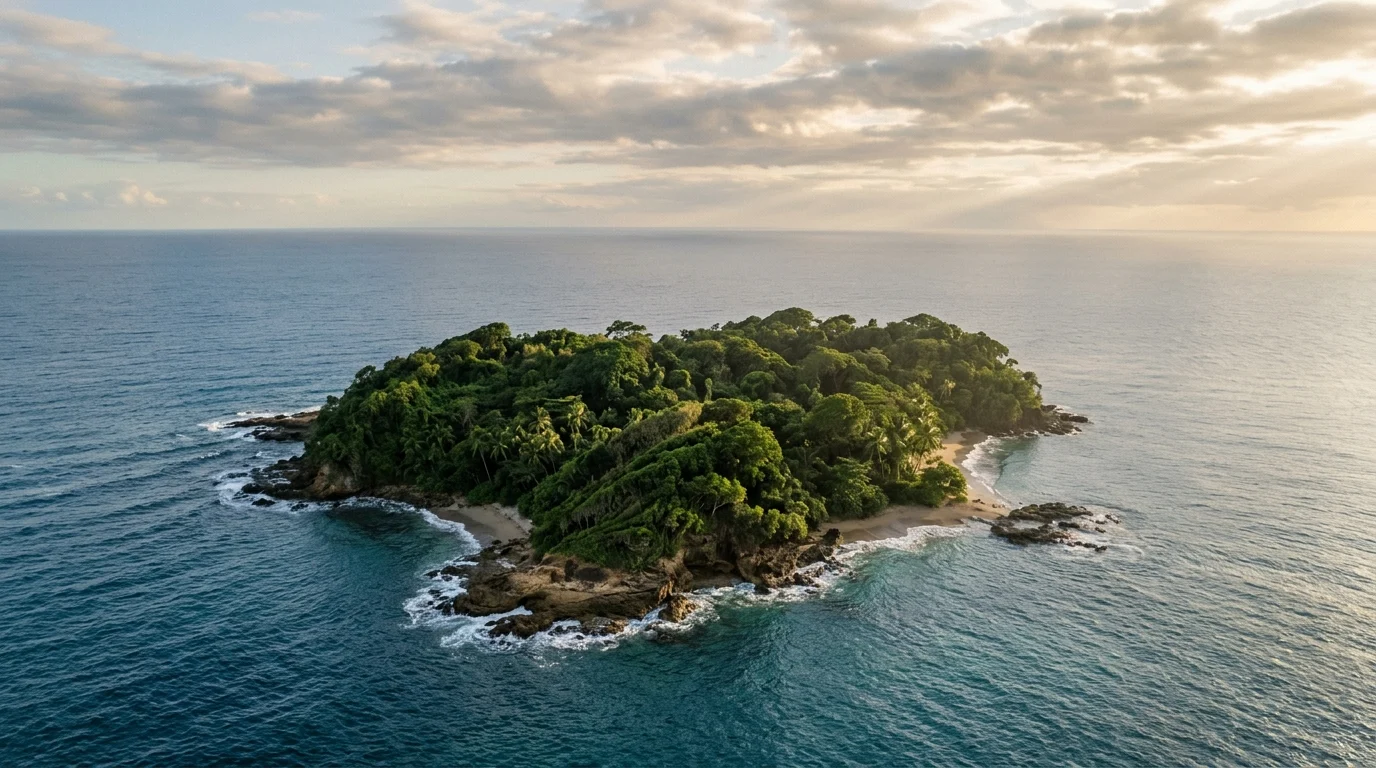
An island can represent different ideas depending on its appearance and context. A peaceful tropical island may suggest relaxation and freedom, while a lonely, rocky island can represent emotional isolation.
Common island symbolism includes:
- Solitude: A desire for personal space or time alone.
- Independence: The ability to survive and grow without constant support.
- Escape: A temporary retreat from stress, responsibilities, or conflict.
- Safety: A stable place surrounded by uncertain circumstances.
- Adventure: A distant destination waiting to be explored.
- Self-discovery: A symbolic journey into one’s own thoughts and feelings.
- Separation: Distance from relationships, society, or familiar surroundings.
In this sense, an island can carry both positive and challenging meanings. Being alone may provide peace, but too much separation can create loneliness.
Spiritual Meaning of Island Symbolism
Spiritually, an island can represent inner peace, personal growth, reflection, and a journey toward self-understanding.
Its separation from the mainland may symbolize stepping away from distractions. A person may need solitude to reflect on their values, choices, relationships, or spiritual direction.
The ocean surrounding the island can add another layer of meaning. Water often carries associations with emotions, renewal, mystery, and change. An island rising from that water can therefore symbolize remaining grounded while moving through emotional or spiritual uncertainty.
An island may also represent a spiritual sanctuary—a place within yourself where you can reconnect with what matters most.
Biblical / Religious Meaning of Island Symbolism
Islands and distant lands appear in biblical and religious traditions, often in connection with nations, journeys, separation, and God’s relationship with humanity.
In the Bible, islands can sometimes refer to distant lands or peoples across the sea. The imagery can therefore suggest geographical distance while also emphasizing the wide reach of divine attention.
However, the Bible does not establish one universal symbolic meaning for every island. Interpretations depend on the specific passage, translation, and religious tradition.
More broadly, an island can be interpreted religiously as a reminder that physical separation does not necessarily mean spiritual separation.
Island Symbolism in History and Culture
Islands have played powerful roles in human history. Their natural separation from larger landmasses made them places of settlement, refuge, trade, exile, exploration, and cultural development.
Across different cultures, islands have been associated with sacred places, legendary kingdoms, paradise, hidden worlds, and mysterious destinations. Some traditions imagined special islands as homes of gods, spirits, heroes, or the blessed.
At the same time, real islands have also served as places of imprisonment, quarantine, military defense, and exile. This gives island symbolism an important dual nature: an island can represent paradise or confinement.
The cultural meaning often depends on whether the island is viewed as a destination to reach or a place from which someone cannot leave.
Island Symbolism in Literature and Art
Islands are powerful settings in literature because they naturally create separation from ordinary society.
Writers often use islands to explore themes such as:
- Isolation and loneliness
- Freedom from social rules
- Survival and resilience
- Adventure and exploration
- Hidden identity
- Human nature
- Transformation
- The conflict between civilization and wilderness
In visual art, an island surrounded by an enormous sea can create a strong sense of solitude. A small island beneath a vast sky may emphasize human vulnerability, while a bright tropical island can suggest paradise and escape.
Because islands naturally separate characters from familiar surroundings, they also provide symbolic spaces where people can change.
Dream Meaning of Island Symbolism
Dreaming about an island can reflect feelings of independence, isolation, emotional distance, or the need for personal space.
The details of the dream matter.
Dreaming of a peaceful island may suggest a desire for rest, emotional balance, or escape from stress.
Being stranded on an island may reflect loneliness, helplessness, or feeling disconnected from people around you.
Discovering a new island can symbolize exploration, opportunity, or discovering an unfamiliar part of yourself.
Leaving an island may represent moving beyond an isolated period and reconnecting with people or everyday life.
Dream interpretation is personal rather than scientifically fixed, so your emotions and circumstances are more important than any single symbolic definition.
Modern Meaning of Island Symbolism
Today, island symbolism often appears in conversations about self-care, independence, digital escape, travel, and personal boundaries.
The idea of escaping to an island can represent a desire to disconnect from constant notifications, work pressure, and social expectations. In this context, the island becomes a symbol of mental space.
An island can also represent healthy independence. Having your own space does not necessarily mean rejecting others; sometimes it means creating enough distance to understand yourself better.
At the same time, modern culture recognizes the difference between chosen solitude and unwanted isolation. One can be restorative, while the other may become emotionally difficult.
Island Symbolism and Personal Growth
An island can be viewed as a metaphor for the self.
The solid land represents what keeps you grounded, while the surrounding ocean represents everything uncertain, emotional, and changing around you. Reaching the island may symbolize finding stability, while leaving it can represent growth and connection.
This makes island symbolism especially meaningful during major life transitions. Moving to a new place, ending a relationship, beginning a career, or spending time alone can all create an emotional experience similar to standing on an island.
The deeper lesson is that solitude does not always mean loneliness. Sometimes distance gives us the perspective needed to understand where we truly belong.
FAQS:
What is the main meaning of island symbolism?
Island symbolism commonly represents independence, solitude, freedom, protection, self-discovery, and emotional separation. Its meaning changes according to the context.
What does an island symbolize spiritually?
Spiritually, an island can symbolize inner peace, reflection, personal growth, and a private space for reconnecting with yourself.
What does an island represent in dreams?
An island in a dream may represent independence, isolation, escape, or self-discovery. The dreamer’s emotions and the condition of the island can significantly change the interpretation.
Does an island symbolize loneliness?
An island can symbolize loneliness when it appears isolated, empty, or difficult to reach. However, it can also represent peaceful solitude and healthy independence.
What does a tropical island symbolize?
A tropical island commonly symbolizes paradise, relaxation, freedom, escape, and emotional renewal. In some contexts, it can also represent an idealized desire to leave everyday pressures behind.
Conclusion
Island symbolism carries a fascinating balance between freedom and isolation, protection and separation, peace and uncertainty. An island can represent a safe place to pause, a lonely place to endure, or a mysterious destination waiting to be discovered. Ultimately, its meaning depends on the journey, emotions, and circumstances surrounding it.

I explore the meanings, history, and cultural significance behind symbols, helping readers understand how symbols connect with ideas, emotions, traditions, and everyday life.