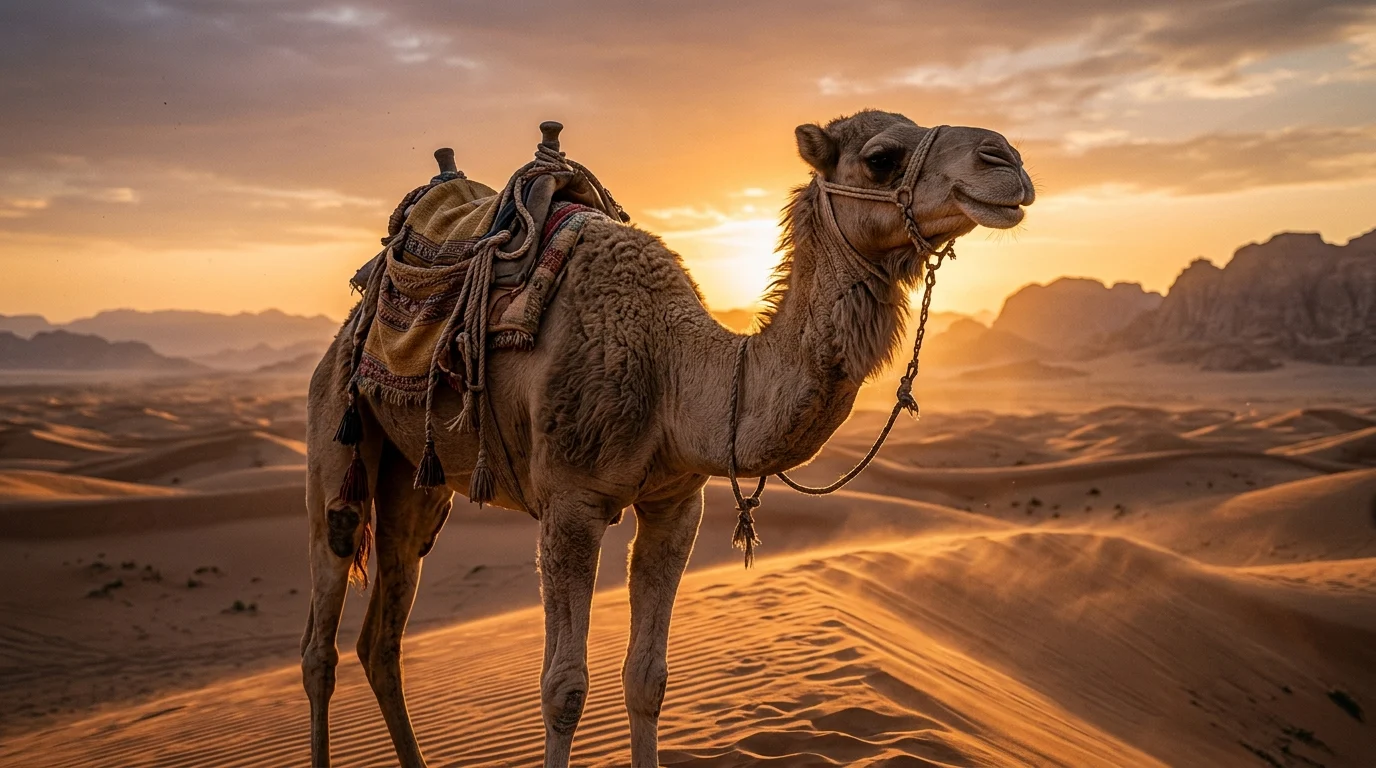
Camel symbolism is often connected with endurance, patience, resilience, survival, and strength through difficult circumstances. For centuries, camels have helped people cross deserts, transport goods, and survive in harsh environments. Because of this remarkable ability, the camel has become a powerful symbol of perseverance and resourcefulness.
When a camel appears in stories, dreams, religious traditions, or symbolic artwork, its meaning can vary according to the situation. It may represent a long journey, emotional strength, patience, or the ability to carry heavy responsibilities without giving up.
Camel Symbolism Meaning (Clear Definition)
The simplest definition of camel symbolism is endurance through hardship and the strength to continue a long journey.
Camels are naturally associated with environments where water, food, and shelter can be limited. Their ability to travel long distances has made them enduring symbols of survival and preparation.
Common camel symbolism meanings include:
- Endurance: Continuing despite physical or emotional challenges.
- Patience: Accepting that meaningful progress can take time.
- Resilience: Recovering and continuing after difficulties.
- Strength: Carrying responsibilities and burdens.
- Survival: Adapting to demanding circumstances.
- Resourcefulness: Making careful use of limited resources.
- Journey: Moving steadily toward an important destination.
The camel does not usually symbolize hurried success. Instead, it represents steady progress, preparation, and the wisdom to conserve energy for the road ahead.
What Does Camel Symbolism Represent?
Camel symbolism represents the ability to remain strong when circumstances become difficult.
Unlike symbols associated with speed or sudden transformation, the camel suggests slow but dependable progress. It reminds us that reaching a destination may require patience and careful preparation.
The camel can also symbolize carrying burdens. In everyday life, this may relate to family responsibilities, work pressure, personal commitments, or emotional challenges.
Its symbolism often encourages people to ask an important question: How can I continue moving forward without wasting my strength?
In this sense, the camel represents practical wisdom as much as physical endurance.
Spiritual Meaning of Camel Symbolism
Spiritually, camel symbolism can represent a long journey of personal growth. The journey may not always be easy, but difficulties can develop patience, discipline, and inner strength.
A camel can symbolize faith during uncertain periods. Its association with deserts and difficult landscapes makes it especially meaningful when someone feels that the path ahead is unclear or challenging.
Spiritually, the camel may represent:
- Patience during periods of waiting
- Trust during uncertain journeys
- Inner strength during hardship
- Wise use of personal energy
- Persistence toward a meaningful goal
- Preparation before major challenges
The camel’s symbolism can serve as a reminder that progress does not have to be fast to be valuable.
Biblical / Religious Meaning of Camel Symbolism
Camels appear several times in the Bible and other religious contexts, particularly in stories connected with travel, trade, wealth, and desert environments.
In biblical narratives, camels were valuable working animals used for transportation and carrying goods. They therefore had practical importance as well as cultural significance.
One of the best-known biblical references is the teaching about a camel passing through the eye of a needle. This image has traditionally been understood as emphasizing the difficulty of placing wealth above spiritual priorities.
Camels also appear in stories involving Abraham’s household, Rebekah, and long-distance travel. In these contexts, they can be associated with journeys, hospitality, provision, and social status.
Religious symbolism should be understood within its historical and textual context rather than assuming that every appearance of a camel carries the same spiritual message.
Camel Symbolism in History and Culture
Camels have played an important role in the history of North Africa, the Middle East, Central Asia, and other regions with arid environments.
Their ability to travel across challenging terrain made them important for transportation and trade. Camel caravans helped move goods across long-distance routes, connecting communities separated by deserts and difficult landscapes.
Because of this history, camel symbolism can represent:
- Long-distance travel
- Trade and prosperity
- Exploration
- Survival in harsh environments
- Cultural exchange
- Patience and endurance
- Dependable transportation
In desert cultures, the camel has often been regarded as a highly useful and dependable animal. Its cultural importance goes beyond symbolism because it has directly supported human communities for centuries.
Camel Symbolism in Literature and Art
In literature, camels often appear when writers want to emphasize journeys, deserts, isolation, hardship, or persistence.
A camel crossing a vast desert can become a metaphor for a person’s difficult journey through life. The landscape may represent uncertainty, while the camel represents the strength needed to continue.
Artists may also use camels to communicate ideas of:
- Adventure
- Ancient trade routes
- Desert life
- Patience
- Exploration
- Cultural heritage
- Spiritual journeys
Because the camel is strongly associated with desert landscapes, it can create an atmosphere of mystery, distance, and perseverance.
Dream Meaning of Camel Symbolism
Dreaming about a camel is often interpreted symbolically as a reflection of patience, responsibility, endurance, or a long personal journey.
The meaning can change depending on what happens in the dream.
Riding a camel: May represent progress toward a distant goal or taking control of a long journey.
Seeing a camel: Can symbolize patience, resilience, or the need to remain calm during difficult circumstances.
A camel carrying heavy loads: May reflect responsibilities or emotional burdens that you are currently carrying.
A camel walking through a desert: Can represent persistence during an uncertain or challenging period.
A calm camel: May suggest emotional stability and controlled progress.
Dream interpretation is subjective. Personal experiences, emotions, and cultural beliefs can strongly influence what a camel means in a particular dream.
Modern Meaning of Camel Symbolism
Today, camel symbolism can be applied to many areas of modern life.
A camel can represent someone who keeps working toward a goal even when immediate results are not visible. It can also symbolize the importance of managing resources carefully rather than exhausting yourself too quickly.
In a fast-moving world, the camel offers a different lesson: steady progress can be more sustainable than constant speed.
This symbolism can be especially meaningful for people working toward long-term goals, recovering from setbacks, building careers, or managing major responsibilities.
The camel reminds us that resilience is not simply about carrying more. It is also about knowing how to conserve energy and continue wisely.
Key Camel Symbolism Meanings at a Glance
| Symbolic Meaning | What It Represents |
|---|---|
| Endurance | Continuing through difficult circumstances |
| Patience | Allowing progress to take the necessary time |
| Resilience | Recovering and moving forward after hardship |
| Strength | Handling responsibilities and challenges |
| Survival | Adapting to demanding environments |
| Resourcefulness | Using limited resources wisely |
| Journey | Making steady progress toward a destination |
FAQS:
What does a camel symbolize spiritually?
A camel can spiritually symbolize endurance, patience, resilience, and faith during a long or difficult journey. It often represents continuing forward despite uncertainty.
What does a camel symbolize in dreams?
A camel in a dream may symbolize responsibility, patience, perseverance, or a long journey. The exact interpretation depends on the dream’s details and the dreamer’s personal circumstances.
What does a camel represent in the Bible?
Camels appear in several biblical stories and are associated with transportation, travel, wealth, and desert life. Their symbolism can also contribute to teachings about wealth and spiritual priorities.
Why is the camel a symbol of endurance?
Camels are strongly associated with long-distance travel through arid environments. Their historical ability to support human journeys across difficult terrain has made them enduring symbols of patience and survival.
What does camel symbolism mean in modern life?
Modern camel symbolism often represents steady progress, resilience, careful preparation, and the ability to manage responsibilities without giving up.
Conclusion
Camel symbolism carries a powerful message of patience, endurance, resilience, and steady progress. From ancient desert journeys to modern personal challenges, the camel reminds us that difficult roads can be completed through preparation, persistence, and wise use of our strength.
Sometimes, success is not about moving quickly. It is about having the endurance to keep moving when the journey becomes difficult.

I explore the meanings, history, and cultural significance behind symbols, helping readers understand how symbols connect with ideas, emotions, traditions, and everyday life.