Prayer symbolism represents faith, hope, humility, gratitude, and the human desire to connect with a higher power. Across different religions and cultures, prayer serves as a meaningful expression of devotion, trust, and spiritual reflection. Whether someone prays with folded hands, kneels quietly, raises their arms, or speaks silently, these actions carry powerful symbolic meanings.
Understanding prayer symbolism helps us explore why prayer holds such an important place in human life. It represents more than religious practice. It can also symbolize inner peace, forgiveness, guidance, emotional strength, and the search for purpose.
From ancient spiritual traditions to modern personal beliefs, prayer continues to remind people of the importance of hope, connection, and reflection.
Prayer Symbolism Meaning (Clear Definition)
Prayer symbolism refers to the deeper meanings associated with prayer, including faith, devotion, gratitude, surrender, and communication with the divine.
Prayer is commonly understood as an expression of the human desire to connect with God, a higher power, or a spiritual presence. Its symbolic meaning can change depending on religious beliefs, cultural traditions, and personal experiences.
At its heart, prayer represents the connection between the human spirit and something greater than oneself.
Some of its most common symbolic meanings include:
- Faith: Trust in God or a higher spiritual power.
- Hope: Belief that difficult situations can improve.
- Gratitude: Appreciation for life’s blessings.
- Humility: Recognizing personal limitations and seeking guidance.
- Forgiveness: Releasing guilt and asking for spiritual renewal.
- Peace: Finding calmness through reflection and devotion.
- Surrender: Accepting that not everything can be controlled.
These meanings explain why prayer remains an important part of spiritual and personal life.
What Does Prayer Symbolism Represent?
Prayer symbolism represents several important human values and spiritual experiences. Although different traditions understand prayer in different ways, many share similar themes.
Here are the most recognizable symbolic representations of prayer.
1. Faith and Trust
Prayer often symbolizes confidence in a higher power. People turn to prayer when they need reassurance, strength, or direction.
It reflects the belief that they are not alone, even during uncertain moments.
2. Hope and New Beginnings
Prayer can represent hope when life becomes challenging. It encourages people to look beyond present difficulties and believe in the possibility of positive change.
For many, praying symbolizes a fresh beginning and renewed confidence.
3. Gratitude and Appreciation
Prayer is also a symbol of thankfulness. People use it to recognize blessings, appreciate relationships, and express gratitude for everyday experiences.
This meaning reminds us to value what we already have.
4. Humility and Surrender
Bowing the head or kneeling during prayer often symbolizes humility. These gestures can represent respect, submission, and acknowledgment of human limitations.
They remind people that wisdom and strength do not always come from personal control.
5. Forgiveness and Spiritual Healing
Prayer can symbolize the desire to make peace with past mistakes. It offers a meaningful opportunity for reflection, repentance, and personal growth.
For many believers, it represents a step toward forgiveness and spiritual renewal.
Symbolic Meanings of Prayer at a Glance
| Symbolic Element | Meaning |
|---|---|
| Folded hands | Devotion and unity |
| Kneeling | Humility and surrender |
| Closed eyes | Inner reflection and concentration |
| Raised hands | Praise, hope, and surrender |
| Prayer beads | Focus and spiritual discipline |
| Prayer mat | Sacred space and devotion |
| Candle during prayer | Hope, faith, and spiritual light |
| Silent prayer | Inner connection and reflection |
These symbols show how physical gestures and spiritual objects can communicate meanings that words sometimes cannot express.
Spiritual Meaning of Prayer Symbolism
The spiritual meaning of prayer is closely connected to inner awareness, divine communication, and personal transformation.
In many spiritual traditions, prayer represents an opportunity to move beyond everyday distractions and focus on deeper questions about life, purpose, and existence.
Connection With a Higher Power
Prayer often symbolizes a spiritual connection with God or a higher power. Through words, thoughts, or silence, people express their beliefs and seek guidance.
This connection can provide comfort and a sense of belonging.
Inner Peace and Calmness
Many people associate prayer with emotional stillness. Taking time to pray can create an opportunity to pause, reflect, and step away from daily pressures.
For believers, this experience may also represent spiritual comfort.
Guidance and Wisdom
Prayer can symbolize the search for wisdom when facing difficult decisions. People often pray for clarity, patience, and understanding.
It represents the desire to choose a meaningful direction in life.
Spiritual Growth and Transformation
Prayer can encourage self-examination and positive personal changes. It may inspire people to become more patient, compassionate, forgiving, and responsible.
In this sense, prayer symbolizes an ongoing journey toward spiritual maturity.
Surrender and Acceptance
Another important spiritual meaning of prayer is surrender. It represents accepting that some situations remain beyond human control.
Rather than giving up, this symbolism encourages trust, patience, and emotional resilience.
Biblical / Religious Meaning of Prayer Symbolism
Prayer holds a central position in Christianity and many other religious traditions. Although each religion has its own teachings and practices, prayer commonly expresses devotion, gratitude, repentance, and communication with the divine.
Prayer Symbolism in Christianity
In Christianity, prayer represents communication with God. Christians pray to express gratitude, request guidance, seek forgiveness, and strengthen their relationship with Him.
The Bible presents prayer as an important part of spiritual life.
Jesus taught His followers to pray through the Lord’s Prayer, which includes praise, forgiveness, daily needs, and a desire to follow God’s will.
Several important Christian prayer symbols include:
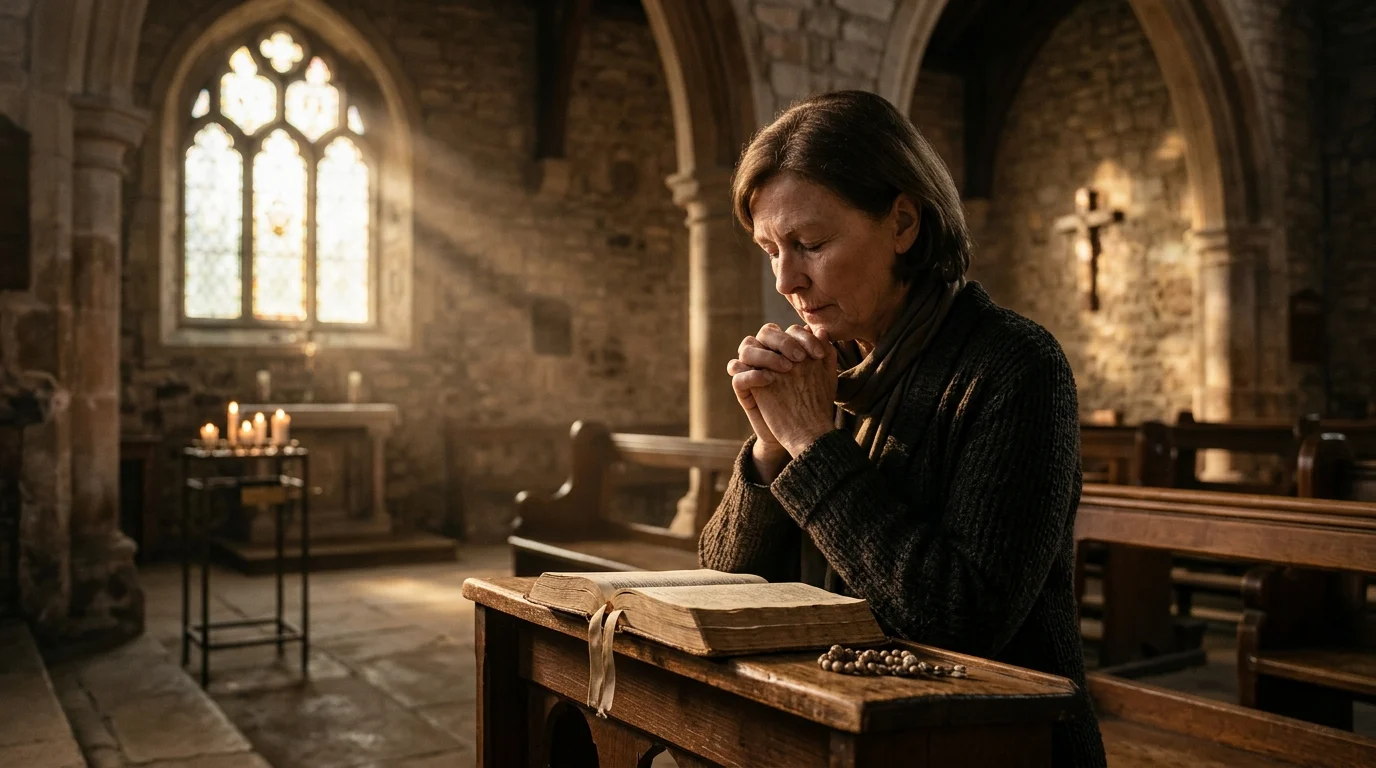
- Folded hands: Devotion, humility, and reverence.
- Kneeling: Submission and respect before God.
- The cross: Faith, sacrifice, and salvation.
- Prayer candles: Hope, remembrance, and devotion in certain Christian traditions.
- The Bible: Spiritual guidance and religious teachings.
Prayer Symbolism in Islam
In Islam, prayer is known as Salah (Salat), one of the Five Pillars of Islam. It represents submission to Allah, obedience, remembrance, and spiritual discipline.
Muslims perform five obligatory daily prayers while facing the Kaaba in Makkah.
Important symbolic elements include:
- Sujood (prostration): Complete humility and submission to Allah.
- Qibla: The direction toward the Kaaba, representing unity in worship.
- Prayer mat: A clean space for performing Salah.
- Tasbih: Beads commonly used to count expressions of remembrance.
- Wudu: Ritual purification before prayer.
These practices demonstrate how prayer combines spiritual devotion with physical discipline.
Prayer Symbolism in Hinduism
In Hindu traditions, prayer may involve mantras, meditation, offerings, and devotional worship known as puja.
It often represents devotion, gratitude, spiritual purification, and the search for harmony with the divine.
Flowers, incense, lamps, and sacred sounds can carry symbolic meanings during worship.
Prayer Symbolism in Buddhism
In Buddhism, prayer and devotional practices vary across traditions. They may include chanting, meditation, offerings, and expressions of compassion.
These practices can symbolize mindfulness, wisdom, respect, and the aspiration to overcome suffering.
Although religious interpretations differ, prayer and related practices often encourage people to develop a deeper understanding of themselves and their spiritual responsibilities.
Prayer Symbolism in History and Culture
Prayer has been part of human civilization for thousands of years. Ancient communities used prayers, rituals, and offerings to express gratitude, seek protection, and understand the mysteries of life.
In early societies, people often connected prayer with nature, seasonal changes, fertility, health, and survival.
Ancient Civilizations
Ancient Egyptians practiced prayers and religious rituals dedicated to their gods. These activities were connected to protection, the afterlife, and maintaining harmony.
In ancient Greece and Rome, people offered prayers to different deities for wisdom, victory, health, and prosperity.
Similarly, ancient civilizations in Mesopotamia developed religious practices that included prayers, hymns, and temple rituals.
Prayer in Traditional Communities
In many traditional cultures, prayer has served as a way to bring communities together.
People gather for collective worship during important celebrations, difficult events, and moments of remembrance.
These shared practices symbolize unity, cultural identity, and mutual support.
Prayer and Cultural Identity
Prayer can also preserve cultural traditions across generations. Religious songs, traditional gestures, sacred objects, and specific prayer times help communities maintain their spiritual heritage.
Even when prayer practices differ, their role in creating belonging and shared meaning remains important.
Prayer Symbolism in Literature and Art
Prayer has inspired artists, writers, poets, and musicians throughout history. Its symbolic meanings provide powerful ways to explore human emotions, spiritual beliefs, and the search for hope.
Prayer in Paintings
Artists frequently portray prayer through images of people kneeling, folding their hands, or looking toward the sky.
These visual elements communicate devotion, vulnerability, humility, and spiritual longing.
Paintings of religious figures praying often use light and shadows to create a sense of mystery and sacredness.
Prayer in Literature
In literature, prayer can symbolize hope during difficult circumstances. Characters may pray when facing loss, uncertainty, fear, or moral conflict.
Writers also use prayer to explore themes of forgiveness, faith, personal transformation, and human weakness.
Prayer in Poetry
Poets often present prayer as a conversation between the human soul and the divine.
It may represent a desire for peace, an expression of gratitude, or a search for answers that ordinary language cannot fully explain.
Prayer in Music
Religious hymns, devotional songs, and spiritual chants express prayer through melody and rhythm.
These musical forms can create feelings of comfort, unity, inspiration, and devotion.
Through literature and art, prayer becomes a universal symbol of the human search for meaning.
Dream Meaning of Prayer Symbolism
Dreaming about prayer can symbolize hope, emotional reflection, a desire for guidance, or the need for comfort during a challenging period.
However, dream meanings are subjective. They often depend on personal experiences, emotions, cultural background, and religious beliefs.
Here are some common interpretations of prayer-related dreams.
Dreaming of Praying
Praying in a dream may represent a desire for reassurance, direction, or emotional support.
It can also reflect your personal beliefs or the need to spend more time examining your feelings.
Dreaming of Praying With Folded Hands
This dream may symbolize humility, gratitude, and the desire to find peace.
It can suggest that you are looking for stability or reassurance in your waking life.
Dreaming of Praying in a Mosque or Church
A dream involving a place of worship may represent belonging, spiritual reflection, or a connection with religious traditions.
It may also reflect memories and experiences associated with faith.
Dreaming of Someone Praying for You
This dream may symbolize emotional support, care, and protection.
It could reflect your appreciation for someone who offers encouragement during difficult times.
Dreaming of Praying While Crying
Crying during prayer in a dream may represent emotional release, sadness, regret, or a desire for comfort.
The dream may encourage you to acknowledge feelings that you have been keeping inside.
Remember that dreams do not provide guaranteed predictions about future events.
Modern Meaning of Prayer Symbolism
In modern life, prayer continues to represent faith, reflection, gratitude, and emotional connection. However, people increasingly understand and practice prayer in different ways.
For religious individuals, prayer remains an important expression of devotion and obedience to God.
Others may approach prayer as a personal practice that helps them reflect on their values, express gratitude, or find emotional clarity.
Prayer as a Form of Personal Reflection
Modern prayer can provide a quiet moment to think about personal decisions, relationships, and responsibilities.
Some people use this time to examine their actions and consider how they can improve.
Prayer and Emotional Strength
During periods of uncertainty, prayer may offer comfort and hope. It can help people feel supported by their beliefs and connected to something greater than themselves.
Its emotional importance can vary from person to person.
Prayer and Gratitude
Many people include gratitude in their daily prayers. They express appreciation for family, friendships, opportunities, and ordinary moments.
This practice encourages a more thoughtful approach to everyday life.
Prayer and Community Connection
Group prayer continues to bring people together in homes, religious institutions, and community gatherings.
It represents shared values, compassion, support, and collective devotion.
Ultimately, modern prayer symbolism reminds us that spirituality can remain meaningful even as lifestyles, cultures, and personal beliefs change.
FAQS:
1. What Does Prayer Symbolize Spiritually?
Prayer spiritually symbolizes faith, devotion, humility, gratitude, and communication with a higher power. It can also represent inner peace, guidance, and personal transformation.
2. What Do Folded Hands Symbolize in Prayer?
Folded hands commonly symbolize devotion, respect, humility, and concentration. Their specific meaning can vary across religious and cultural traditions.
3. What Does Kneeling During Prayer Represent?
Kneeling during prayer often represents humility, reverence, surrender, and submission before God. It expresses respect through a physical gesture.
4. What Does It Mean to Dream About Praying?
Dreaming about praying may reflect a desire for comfort, hope, guidance, or emotional reassurance. Its interpretation depends on the dreamer’s personal experiences and beliefs.
5. Why Is Prayer Important in Different Religions?
Prayer allows people to express faith, gratitude, repentance, and devotion. Different religions practice prayer in unique ways, but it commonly strengthens spiritual commitment and community connection.
Conclusion
Prayer symbolism represents one of humanity’s deepest expressions of faith, hope, humility, and spiritual connection. From folded hands and kneeling gestures to silent reflection and collective worship, prayer carries meanings that extend across religions and cultures.
Whether practiced as a religious duty or a personal expression of belief, prayer reminds us to remain grateful, seek wisdom, embrace forgiveness, and find strength during difficult moments. Its lasting symbolism reflects the timeless human desire for peace, purpose, and connection with something greater.

I explore the meanings and stories behind symbols, helping readers understand their cultural, spiritual, and everyday significance through clear, engaging, and meaningful insights.