Ice symbolism often represents stillness, emotional distance, purity, transformation, and hidden strength. Because ice forms when water changes under cold conditions, it can symbolize emotions or situations that have become frozen, restrained, or temporarily suspended. At the same time, ice can suggest clarity, patience, resilience, and the possibility of change when warmth returns.
Ice Symbolism Meaning (Clear Definition)
The basic meaning of ice symbolism centers on stillness, emotional restraint, purity, isolation, and transformation.
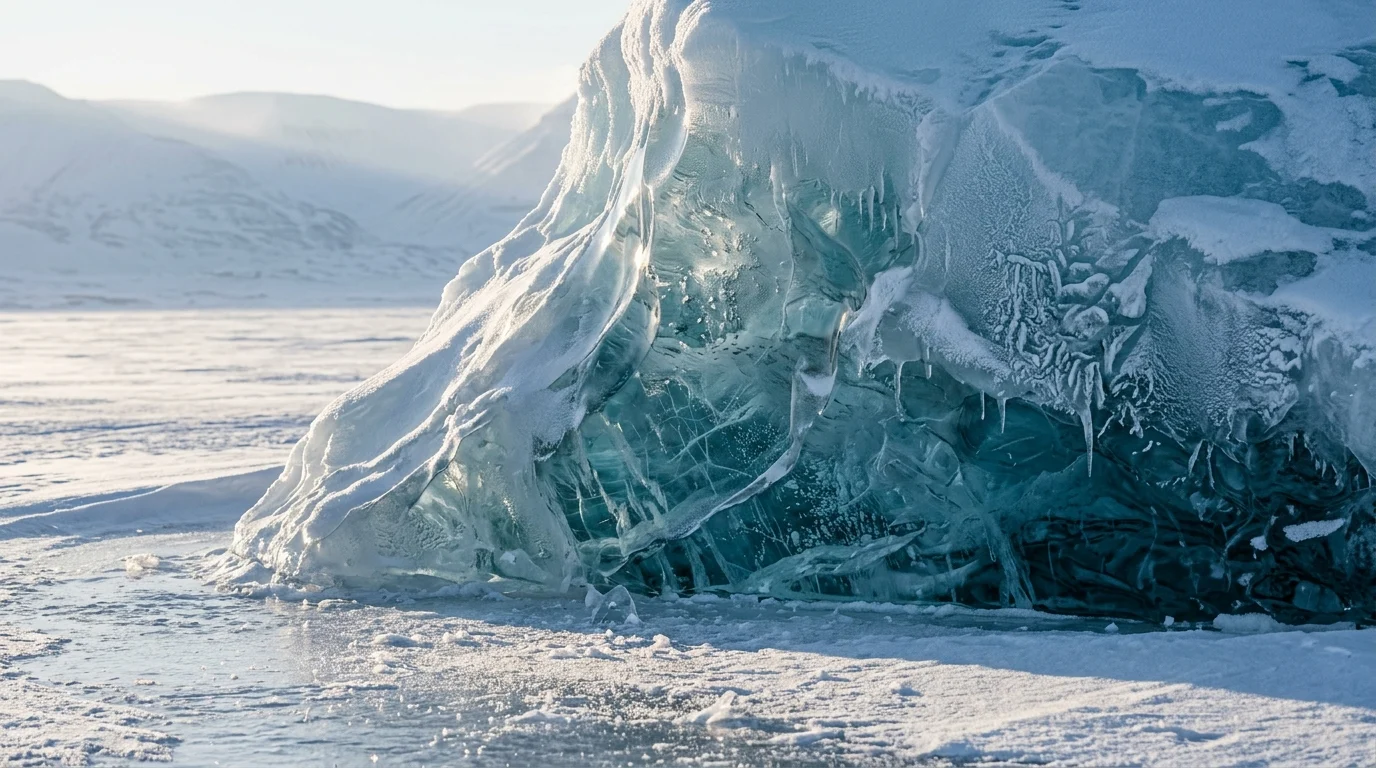
Ice can appear solid and unchanging, yet it remains water in another form. This makes it a powerful symbol of situations that look permanent but may actually be temporary.
In symbolic interpretation, ice can represent:
- Emotional coldness or distance
- Stillness and silence
- Purity and clarity
- Patience and endurance
- Isolation or loneliness
- Hidden emotions
- Fragility beneath strength
- Transformation and change
- Preservation of memories or experiences
- A period of emotional or spiritual pause
The exact meaning depends heavily on context. Clear, beautiful ice may suggest purity and clarity, while cracked or melting ice can symbolize vulnerability, emotional release, or major change.
What Does Ice Symbolism Represent?
Ice symbolism can represent both positive and challenging qualities. Its meaning often depends on how the ice appears and how a person interacts with it.
| Ice Symbol | Possible Meaning |
|---|---|
| Clear ice | Clarity, purity, truth |
| Melting ice | Emotional release, change, renewal |
| Cracked ice | Vulnerability, instability, breaking barriers |
| Frozen lake | Stillness, hidden emotions, reflection |
| Snow-covered ice | Silence, peace, isolation |
| Walking on ice | Risk, uncertainty, careful decisions |
| Ice storm | Emotional turmoil, disruption |
| Ancient ice | Preservation, memory, endurance |
Ice can therefore symbolize a pause before transformation. What appears frozen may simply be waiting for the right conditions to move again.
Spiritual Meaning of Ice Symbolism
Spiritually, ice can symbolize a period of stillness in which a person is encouraged to slow down and look inward.
Cold and frozen environments often create silence. Symbolically, this silence can represent meditation, self-reflection, or separation from distractions.
Ice may also represent emotional protection. Someone who has experienced disappointment may metaphorically build an icy surface around their feelings. The surface protects what lies underneath, but it can also prevent connection.
Melting ice carries a different spiritual message. It may symbolize emotional healing, forgiveness, renewal, or the release of something that has been held inside for too long.
In this sense, ice symbolism can remind us that stillness does not necessarily mean stagnation. Sometimes a quiet period prepares the way for meaningful transformation.
Biblical / Religious Meaning of Ice Symbolism
Ice does not have one universal biblical meaning, and interpretations should not be presented as fixed religious doctrine.
In biblical imagery, cold, frost, snow, and ice can appear in descriptions of God’s creation and the power of nature. Such imagery can evoke ideas of divine power, purity, awe, and the overwhelming scale of creation.
Snow in particular is sometimes associated symbolically with cleansing and whiteness. However, ice itself does not consistently carry a single symbolic meaning throughout Christian scripture.
In broader religious traditions, frozen landscapes may also encourage reflection on impermanence, endurance, silence, and the relationship between human beings and the natural world.
Ice Symbolism in History and Culture
Throughout history, ice has had practical and symbolic importance. Before modern refrigeration, natural ice was carefully harvested and stored to preserve food and medicines. This practical role gave ice an association with preservation and endurance.
In cultures living in extremely cold environments, ice and snow are closely connected with survival, adaptation, navigation, and environmental knowledge.
Ice also became culturally associated with winter, silence, beauty, danger, and isolation. A frozen river might provide a path in one context while becoming a serious hazard in another.
This dual nature is central to ice symbolism: ice can protect and preserve, but it can also conceal danger.
Ice Symbolism in Literature and Art
Writers and artists frequently use ice to express emotional states that are difficult to describe directly.
A character described as having an “icy” personality may be perceived as distant, unemotional, or difficult to approach. Similarly, a frozen landscape can create a mood of loneliness, suspense, silence, or emotional emptiness.
Melting ice often works as a metaphor for emotional change. When ice melts, something hidden begins to move again. This can represent love returning, grief being released, trust being rebuilt, or a person becoming emotionally open.
Artists may also use ice for its visual qualities. Its transparency, reflections, sharp edges, and fragile surfaces can suggest beauty that is both captivating and temporary.
Dream Meaning of Ice Symbolism
Dreaming about ice may symbolize emotional restraint, uncertainty, isolation, or a situation that feels temporarily frozen.
The details of the dream matter greatly.
- Walking on ice: You may feel that you are dealing with a risky or uncertain situation.
- Falling through ice: This may reflect fear of losing control or discovering hidden emotional problems.
- Melting ice: It can symbolize emotional release, healing, or changing circumstances.
- Beautiful clear ice: It may represent clarity, calmness, or emotional awareness.
- Broken ice: It can suggest instability, vulnerability, or a major transition.
- Frozen water: It may represent feelings or decisions that have been temporarily held back.
Dream symbolism is subjective rather than scientifically fixed, so personal experiences and emotions are important when interpreting such dreams.
Modern Meaning of Ice Symbolism
In modern culture, ice symbolism appears in everyday language, relationships, entertainment, fashion, branding, and social expression.
Calling someone “cold” or “icy” commonly suggests emotional distance or a lack of warmth. In contrast, ice can also symbolize sophistication, freshness, sharpness, and calm confidence.
The phrase “breaking the ice” gives the symbol another important meaning. Here, ice represents social tension or unfamiliarity, while breaking it means creating comfort and connection.
Ice can therefore represent opposite ideas at once: distance and connection, strength and fragility, stillness and transformation.
Positive Meanings of Ice Symbolism
Ice is not always a negative symbol. Its positive meanings can include:
- Clarity
- Purity
- Patience
- Inner strength
- Preservation
- Calmness
- Resilience
- Self-control
- Reflection
- Transformation
Its coldness can symbolize composure rather than emotional emptiness. A person may need moments of stillness before making an important decision.
Negative Meanings of Ice Symbolism
In certain contexts, ice can represent more difficult experiences, including:
- Loneliness
- Emotional detachment
- Fear of vulnerability
- Isolation
- Suppressed feelings
- Uncertainty
- Emotional numbness
- Hidden danger
- Fragility
- Stagnation
These interpretations become especially relevant when ice appears cracked, dark, unstable, or dangerous.
FAQS:
What is the main meaning of ice symbolism?
Ice symbolism commonly represents stillness, emotional distance, purity, restraint, preservation, and transformation. Its meaning changes according to the context in which ice appears.
What does ice symbolize spiritually?
Spiritually, ice can represent inner reflection, emotional protection, patience, and a temporary period of stillness. Melting ice may symbolize healing, release, or renewal.
What does melting ice symbolize?
Melting ice often symbolizes emotional change, vulnerability, release, and transformation. It can suggest that something previously frozen or suppressed is beginning to move again.
What does walking on ice symbolize?
Walking on ice can symbolize risk, uncertainty, and the need for careful decisions. It may reflect a situation where one feels that a small mistake could have significant consequences.
What does ice symbolize in dreams?
Ice in dreams may represent emotional distance, suppressed feelings, uncertainty, or a situation that feels frozen. The meaning depends on the dreamer’s emotions and the specific condition of the ice.
Conclusion
Ice symbolism captures the complicated relationship between stillness and change. It can represent emotional distance, purity, protection, resilience, and hidden feelings, while melting ice reminds us that even the hardest surface can change.
Whether it appears in dreams, art, culture, or everyday life, ice can be a meaningful reminder that periods of stillness are not always permanent. Sometimes, beneath a frozen surface, change is already beginning.

I explore the meanings and stories behind symbols, helping readers understand their cultural, spiritual, and everyday significance through clear, engaging, and meaningful insights.