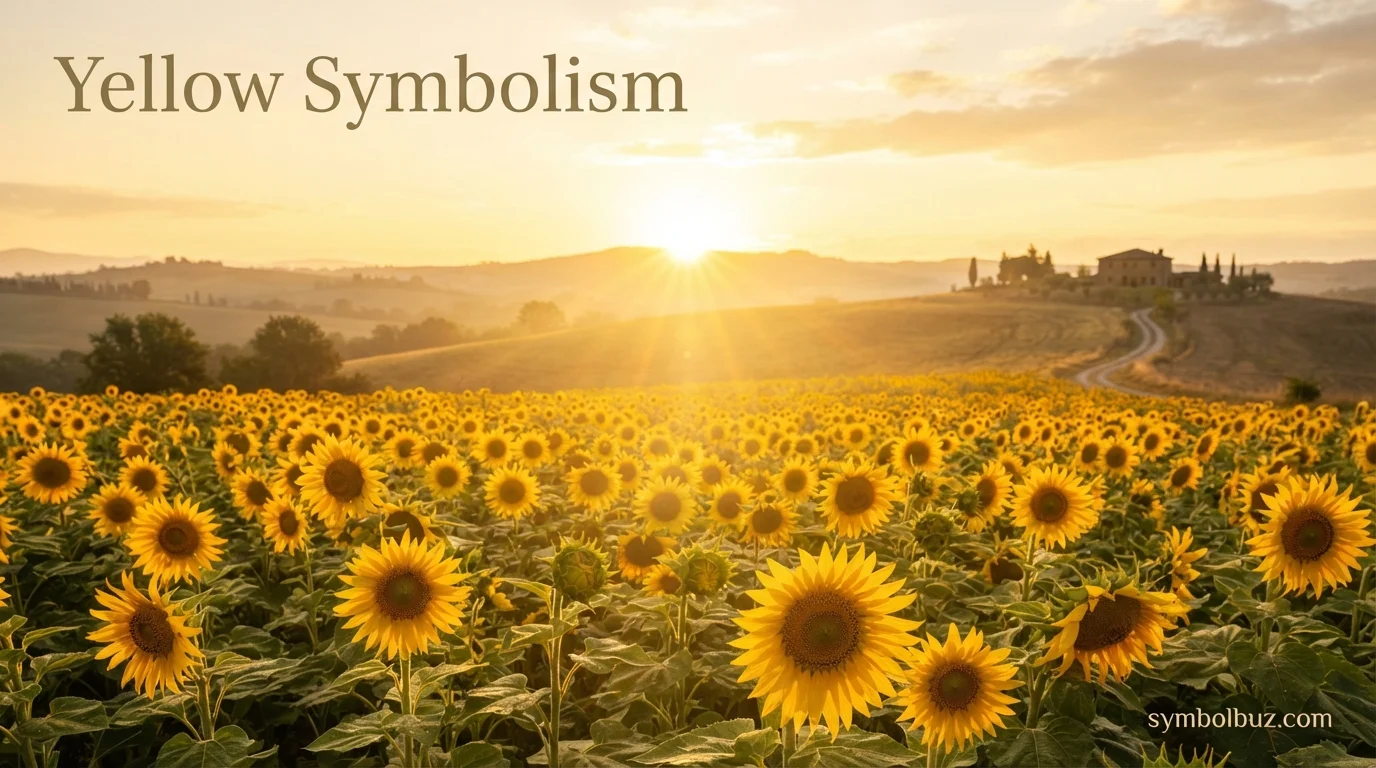
Yellow is one of the most noticeable colors in nature and everyday life. It can remind us of sunshine, warmth, happiness, and fresh beginnings, but its meaning can also change depending on context. Yellow symbolism is often connected with joy, optimism, energy, creativity, confidence, and hope.
At the same time, yellow can represent caution, jealousy, uncertainty, or betrayal in certain cultures and situations. Understanding its symbolism requires looking at the emotional setting, cultural background, and personal experience surrounding the color.
Yellow Symbolism Meaning (Clear Definition)
Yellow symbolism refers to the ideas, emotions, and qualities commonly associated with the color yellow, including happiness, optimism, warmth, creativity, energy, and caution.
Yellow is naturally associated with sunlight and brightness, which helps explain why it often carries positive meanings. It can symbolize the feeling of stepping into the light after a difficult period.
However, yellow is not always purely positive. Its meaning may shift toward warning, fear, jealousy, or dishonesty when it appears in specific cultural or emotional contexts.
Some of the most common yellow meanings include:
- Happiness and joy
- Optimism and hope
- Sunshine and warmth
- Creativity and imagination
- Energy and enthusiasm
- Confidence and attention
- Caution and awareness
- Jealousy or insecurity
- Change and new beginnings
The shade also matters. Soft yellow may feel gentle and comforting, while bright yellow can feel energetic, bold, and attention-grabbing.
What Does Yellow Symbolism Represent?
Yellow symbolism can represent several different qualities depending on where and how the color appears.
| Symbolic Meaning | What Yellow Can Represent |
|---|---|
| Happiness | Joy, pleasure, and positive emotions |
| Sunshine | Warmth, life, and vitality |
| Optimism | Hope and a positive outlook |
| Creativity | Imagination, curiosity, and new ideas |
| Energy | Motivation, enthusiasm, and activity |
| Confidence | Visibility, boldness, and self-expression |
| Caution | Awareness, warning, and careful attention |
| Jealousy | Insecurity, envy, or possessiveness |
| New Beginnings | Renewal, growth, and fresh opportunities |
Yellow as a Symbol of Happiness
Yellow is strongly associated with cheerful emotions. Its connection with sunlight can create feelings of warmth and positivity.
For this reason, yellow clothing, flowers, decorations, and artwork are often used to create a lively atmosphere.
Yellow as a Symbol of Optimism
Yellow can represent the belief that better things are ahead. It is often connected with hope, encouragement, and a positive attitude toward the future.
Yellow as a Symbol of Creativity
Because yellow is visually stimulating, it is frequently associated with curiosity, imagination, and intellectual energy. It can symbolize a mind that is open to discovering something new.
Yellow as a Symbol of Caution
Yellow also has an important warning function. Traffic signs, warning labels, and safety markings often use yellow because it attracts attention quickly.
In this context, yellow symbolizes awareness rather than fear.
Spiritual Meaning of Yellow Symbolism
Spiritually, yellow is often associated with light, inner strength, personal power, clarity, and spiritual awakening.
Its connection with sunlight makes it a natural symbol of illumination. In a symbolic sense, yellow can represent gaining a clearer understanding of yourself or your path.
Yellow may also symbolize:
- Inner confidence
- Personal growth
- Mental clarity
- Positive energy
- Spiritual awareness
- Hope after hardship
- Freedom of thought
- Emotional renewal
In some spiritual traditions and modern chakra practices, yellow is associated with the solar plexus chakra, which is commonly linked with confidence, willpower, identity, and personal strength.
From a spiritual perspective, seeing yellow may therefore be interpreted as an invitation to become more confident, optimistic, and aware of your own abilities.
Biblical / Religious Meaning of Yellow Symbolism
Yellow does not have one universal biblical meaning. Its interpretation depends heavily on the biblical passage, translation, historical context, and the particular shade or material being described.
Gold, which is closely related visually to yellow, has a much stronger symbolic presence in the Bible. Gold is frequently associated with value, glory, wealth, purity, and sacred objects.
Yellow itself can sometimes carry a less positive association in biblical imagery when connected with sickness, decay, or altered appearance. Therefore, it is important not to assume that every appearance of yellow has the same religious meaning.
In Christian symbolism more broadly, golden or yellow tones may be used artistically to suggest:
- Divine glory
- Light
- Holiness
- Spiritual richness
- Eternal value
The meaning should always be considered within its specific religious context rather than treated as a fixed rule.
Yellow Symbolism in History and Culture
Yellow has carried very different meanings across civilizations.
In some historical traditions, yellow or golden colors represented wealth, power, royalty, or sacred importance. Gold-like yellow was especially valuable because it suggested something precious and enduring.
In East Asian cultures, yellow has historically had strong associations with imperial authority and status. In other cultural settings, yellow has been connected with celebration, sunlight, fertility, or abundance.
Yet yellow has also developed negative meanings in various societies. It can symbolize cowardice, jealousy, deception, or betrayal depending on cultural tradition and historical usage.
This contrast makes yellow particularly interesting: the same color can represent both confidence and caution, happiness and jealousy, or sacred value and warning.
Common Cultural Associations of Yellow
- Sunlight: Life, warmth, and energy
- Gold: Wealth, prestige, and value
- Autumn leaves: Change and transition
- Warning signs: Caution and awareness
- Yellow flowers: Friendship, happiness, and affection
- Pale or sickly yellow: Weakness, illness, or decay in certain contexts
Cultural meaning should always be considered before interpreting yellow imagery too literally.
Yellow Symbolism in Literature and Art
Artists and writers often use yellow to communicate emotional states without directly explaining them.
In paintings, yellow can create an impression of sunlight, warmth, optimism, intensity, or movement. A bright yellow object can immediately draw the viewer’s attention and become the emotional focus of a scene.
In literature, yellow may symbolize happiness and hope, but it can also suggest jealousy, corruption, fear, or instability.
For example, a character surrounded by golden light might be presented as hopeful or spiritually renewed. In contrast, a disturbing yellow atmosphere might create feelings of sickness, unease, or emotional tension.
The symbolism depends on contrast, context, shade, and the author’s or artist’s intention.
Dream Meaning of Yellow Symbolism
Dreams involving yellow can have different meanings depending on what the color represents to the dreamer.
A bright and pleasant yellow object may suggest happiness, optimism, confidence, or a new opportunity. A dull or unpleasant yellow may instead reflect worry, jealousy, exhaustion, or uncertainty.
Here are some possible interpretations:
- Yellow flowers: Happiness, friendship, affection, or emotional growth
- Yellow clothing: Confidence, visibility, or a desire for attention
- Yellow light: Awareness, guidance, or caution
- Yellow house: Warmth, family energy, or emotional comfort
- Yellow sky: Change, excitement, uncertainty, or unusual emotions
- Bright yellow objects: Inspiration, joy, or renewed energy
- Dirty or dull yellow: Anxiety, insecurity, jealousy, or emotional discomfort
Dream symbolism is personal rather than scientifically fixed. Your emotions during the dream and your experiences in waking life are usually more meaningful than a universal dream dictionary.
Modern Meaning of Yellow Symbolism
Today, yellow remains one of the strongest colors for attracting attention and communicating positive energy.
It is widely used in branding, fashion, interior design, advertising, digital interfaces, and visual communication. Its brightness can make something feel energetic, youthful, friendly, or noticeable.
In modern psychology-inspired color discussions, yellow is often associated with:
- Optimism
- Mental stimulation
- Creativity
- Communication
- Confidence
- Playfulness
- Energy
- Attention
However, too much intense yellow can sometimes feel overwhelming or restless. This is why designers often balance strong yellow with neutral or darker colors.
Yellow clothing may communicate confidence and individuality, while yellow interiors can create a cheerful and welcoming atmosphere.
Yellow Symbolism in Nature
Nature provides some of the strongest examples of yellow symbolism.
The sun represents light and life, while yellow flowers can evoke happiness, friendship, affection, and renewal. Yellow autumn leaves may symbolize the beauty of change and the temporary nature of life.
Animals also use yellow for different purposes. Bright yellow markings can attract attention, communicate danger, or help with recognition.
Because of these natural examples, yellow often carries a powerful connection to life, visibility, transformation, and energy.
Yellow Symbolism and Personality
People who are naturally attracted to yellow may associate the color with qualities they value, such as freedom, creativity, optimism, or confidence.
Yellow can symbolically reflect someone who enjoys:
- Exploring new ideas
- Expressing creativity
- Social interaction
- Positive experiences
- Learning and curiosity
- Personal independence
However, color preference should not be treated as a scientific personality test. Someone can love yellow for simple aesthetic reasons without having any particular personality trait.
Different Shades of Yellow and Their Meanings
Not every yellow creates the same emotional impression.
Bright yellow often represents excitement, confidence, happiness, and strong energy.
Pale yellow can suggest gentleness, freshness, innocence, and calm optimism.
Golden yellow is commonly connected with success, wealth, achievement, warmth, and value.
Mustard yellow can feel mature, traditional, earthy, and sophisticated.
Neon yellow strongly represents visibility, energy, warning, and modern boldness.
The shade can therefore change the emotional message considerably.
FAQs:
What is the main meaning of yellow symbolism?
Yellow commonly symbolizes happiness, optimism, warmth, creativity, energy, and hope. In certain contexts, it can also represent caution, jealousy, or insecurity.
What does yellow symbolize spiritually?
Spiritually, yellow can symbolize light, personal power, confidence, clarity, optimism, and growth. It is also associated with the solar plexus chakra in some modern spiritual practices.
Is yellow a positive or negative symbol?
Yellow can be either positive or negative depending on context. It commonly represents happiness and hope, but can also symbolize jealousy, caution, cowardice, or uncertainty.
What does yellow symbolize in dreams?
Yellow in dreams may represent happiness, confidence, creativity, awareness, or new beginnings. A dull or unpleasant yellow may instead reflect worry, jealousy, or emotional discomfort.
What does yellow symbolize in relationships?
Yellow can symbolize friendship, happiness, warmth, communication, and positive emotional energy. In some contexts, however, it may represent jealousy or insecurity.
Conclusion
Yellow symbolism is rich because it carries both brightness and complexity. It can represent the warmth of sunlight, the excitement of new ideas, the confidence to stand out, and the hope that comes with a fresh beginning.
At the same time, yellow can remind us to pay attention, slow down, and recognize emotions such as jealousy or uncertainty. Ultimately, its meaning depends on context, culture, shade, and personal experience. Like sunlight itself, yellow can symbolize the light that helps us see things more clearly.

I explore the meanings and stories behind symbols, helping readers understand their cultural, spiritual, and everyday significance through clear, engaging, and meaningful insights.