Purple symbolism is often connected with royalty, spirituality, mystery, wisdom, creativity, and transformation. It is a color that can feel both luxurious and peaceful, making it meaningful in religion, art, dreams, fashion, and everyday life.
Throughout history, purple has carried an unusual sense of importance. Its rarity and rich appearance once made it a color associated with rulers and wealth. Over time, its meaning expanded to include imagination, inner wisdom, emotional depth, and spiritual awareness.
Whether you see purple in nature, clothing, artwork, dreams, or personal experiences, its symbolism can change depending on the context. Understanding these different meanings can help you appreciate why purple continues to hold such a powerful place in human culture.
Purple Symbolism Meaning (Clear Definition)
The simplest definition of purple symbolism is the use of the color purple to represent qualities such as royalty, spirituality, wisdom, mystery, creativity, dignity, and transformation.
Purple sits between red and blue on the color spectrum. Red is often associated with passion and energy, while blue commonly represents calmness and stability. Purple can therefore symbolize a balance between emotional energy and thoughtful reflection.
Common meanings of purple symbolism include:
- Royalty and luxury – Purple has historically been associated with kings, queens, and high social status.
- Spirituality – It can represent spiritual awareness, meditation, and a connection with the unseen.
- Wisdom – Purple is frequently linked with knowledge, intuition, and deeper understanding.
- Mystery – Its unusual appearance can suggest secrets, the unknown, and hidden truths.
- Creativity – Purple often represents imagination, artistic expression, and originality.
- Transformation – It can symbolize personal growth, change, and the beginning of a new chapter.
- Dignity – Purple can communicate respect, honor, independence, and confidence.
The meaning is not always universal. Culture, personal experience, religion, and the situation in which purple appears can all influence its interpretation.
What Does Purple Symbolism Represent?
Purple symbolism represents a combination of power and sensitivity, imagination and wisdom, mystery and spiritual awareness.
Unlike colors with a single dominant emotional association, purple has several layers of meaning.
1. Royalty and Power
One of the oldest associations with purple is royalty. Because certain purple dyes were historically difficult and expensive to produce, purple garments became symbols of wealth, authority, and social importance.
This historical connection still influences how purple is perceived today. Deep purple can make something appear elegant, prestigious, and powerful.
2. Spirituality and Higher Awareness
Purple is often connected with spiritual life. It may symbolize meditation, intuition, contemplation, and a desire to understand something beyond the physical world.
In spiritual practices, purple can represent inner exploration and a search for deeper meaning.
3. Wisdom and Intuition
Purple can symbolize wisdom gained through experience rather than simply through education.
It is sometimes associated with intuition—the ability to sense or understand something without relying entirely on logical reasoning.
4. Mystery and the Unknown
Purple has a mysterious quality. Dark shades can create an atmosphere of secrecy, magic, imagination, and the unknown.
This is one reason purple frequently appears in stories, fantasy imagery, and symbolic artwork.
5. Creativity and Imagination
Purple is also strongly connected with creative expression. Artists, designers, writers, and other creative people may use purple to communicate originality and unconventional thinking.
Its unusual character makes it particularly effective when something needs to feel imaginative or distinctive.
6. Transformation and Personal Growth
Purple can symbolize a transition from one stage of life to another.
It may represent letting go of an old identity, gaining wisdom from experience, and becoming more aware of one’s values and purpose.
Spiritual Meaning of Purple Symbolism
The spiritual meaning of purple symbolism is often associated with higher consciousness, intuition, inner wisdom, meditation, and spiritual transformation.
Purple can encourage a person to look beyond surface appearances and reflect on deeper questions.
It may symbolize the journey inward—the process of understanding your emotions, values, beliefs, and sense of purpose.
Purple and Spiritual Awareness
In spiritual symbolism, purple is sometimes connected with awareness and enlightenment. It can represent the desire to understand experiences that cannot always be explained through ordinary observation.
Seeing purple during a reflective moment may therefore feel meaningful to someone who associates the color with spiritual growth.
Purple and Intuition
Purple can also symbolize intuitive understanding. When used symbolically, it may encourage people to pay attention to their inner voice while still balancing intuition with thoughtful judgment.
Purple and Transformation
Spiritual growth is rarely immediate. It often involves change, uncertainty, reflection, and renewed understanding.
For this reason, purple can represent a transitional period in which someone is becoming more aware of who they are and what they truly value.
Purple and Meditation
Soft purple shades can create a calm and contemplative atmosphere. In meditation spaces, purple may be used to encourage reflection, stillness, and a sense of connection.
Its spiritual meaning is ultimately personal, so the significance of purple can differ from one individual to another.
Biblical / Religious Meaning of Purple Symbolism
Purple has important religious associations, particularly within Christian history and symbolism. In biblical contexts, purple can be connected with wealth, royalty, honor, dignity, and status.
Purple clothing appears in biblical narratives as a sign of luxury or high social standing. One well-known example is Lydia, a woman described in the New Testament as a seller of purple cloth.
Purple also became important in Christian traditions because of its association with solemnity, reflection, repentance, and preparation.
Purple in Christianity
In many Christian traditions, purple is associated with seasons such as Advent and Lent. Its use can communicate reflection, preparation, repentance, and spiritual seriousness.
Purple may also be associated with Christ’s kingship and dignity.
Purple in Other Religious Traditions
Color symbolism differs significantly between religions and cultures. Purple can appear in ceremonial clothing, sacred artwork, meditation traditions, and spiritual practices, although its exact meaning varies.
It is therefore better to understand religious color symbolism within its specific tradition rather than assuming one universal interpretation.
Purple Symbolism in History and Culture
The historical meaning of purple is strongly connected with wealth, authority, and social status.
Ancient Purple Dye
One of the most famous historical examples is Tyrian purple, a dye associated with the ancient Mediterranean world. Producing this dye required significant effort and resources, which contributed to purple’s association with wealth and power.
Because purple fabric could be extremely expensive, it became associated with rulers and elites.
Purple and Royalty
For centuries, purple garments appeared in royal and ceremonial settings. Crowns, robes, portraits, and official decorations often used purple to communicate dignity and authority.
This association remains visible today in luxury branding, formal clothing, and ceremonial design.
Purple in Different Cultures
Purple does not mean exactly the same thing everywhere.
In some cultures, it can represent mourning or grief. In others, it may symbolize wealth, spirituality, nobility, celebration, or prestige.
This cultural variation is important because symbolism depends heavily on context.
Purple Symbolism in Literature and Art
Purple has long been useful in literature and art because it can communicate several emotions simultaneously.
Artists may use purple to create a feeling of mystery, luxury, fantasy, melancholy, spirituality, or imagination.
Purple in Visual Art
A deep purple background can make a scene feel dramatic or mysterious. A softer lavender tone may create a more peaceful and delicate atmosphere.
Artists can also use purple to separate ordinary scenes from dreamlike or supernatural environments.
Purple in Literature
Writers may use purple imagery to suggest emotional complexity, beauty, mystery, or unusual circumstances.
A purple flower, purple sky, or purple garment can become symbolic depending on how it is used within a story.
Purple as a Symbol of Imagination
Because purple is less common in many natural environments than colors such as green or blue, it can make imagery feel unusual.
This quality has made purple especially useful in fantasy, poetry, mythology, and imaginative storytelling.
Dream Meaning of Purple Symbolism
The dream meaning of purple symbolism can vary depending on the dream’s setting, emotions, and personal associations.
Generally, purple in dreams may symbolize spiritual growth, intuition, creativity, mystery, ambition, or personal transformation.
Common Purple Dream Interpretations
- Seeing a purple object: May represent something mysterious, valuable, or emotionally significant.
- Wearing purple: Can symbolize confidence, individuality, dignity, or a desire for recognition.
- Purple flowers: May represent beauty, affection, spirituality, or emotional growth.
- A purple sky: Can suggest imagination, change, mystery, or a transition in life.
- Dark purple: May symbolize deep emotions, secrecy, seriousness, or introspection.
- Light purple or lavender: Can represent calmness, sensitivity, healing, or gentle spiritual awareness.
Dream interpretation is subjective. A color’s meaning can be strongly influenced by what purple means to you personally and how you felt during the dream.
Modern Meaning of Purple Symbolism
Today, purple symbolism has expanded beyond traditional associations with royalty.
Purple is now commonly connected with individuality, creativity, imagination, luxury, technology, spirituality, and self-expression.
Purple in Fashion
Purple clothing can communicate confidence and individuality. Darker shades often appear sophisticated, while lighter shades such as lavender can feel softer and more relaxed.
People may choose purple simply because they enjoy the color, but its cultural associations can still influence how others perceive it.
Purple in Branding and Design
Purple is frequently used to make products and visual identities feel creative, premium, imaginative, or distinctive.
The exact impression depends on the shade. Deep violet may feel luxurious and dramatic, while lavender can appear gentle and modern.
Purple and Individuality
Purple has become a popular symbol of standing apart from the crowd.
Because it is visually distinctive, it can represent originality, independence, and a willingness to express yourself differently.
Purple in Nature
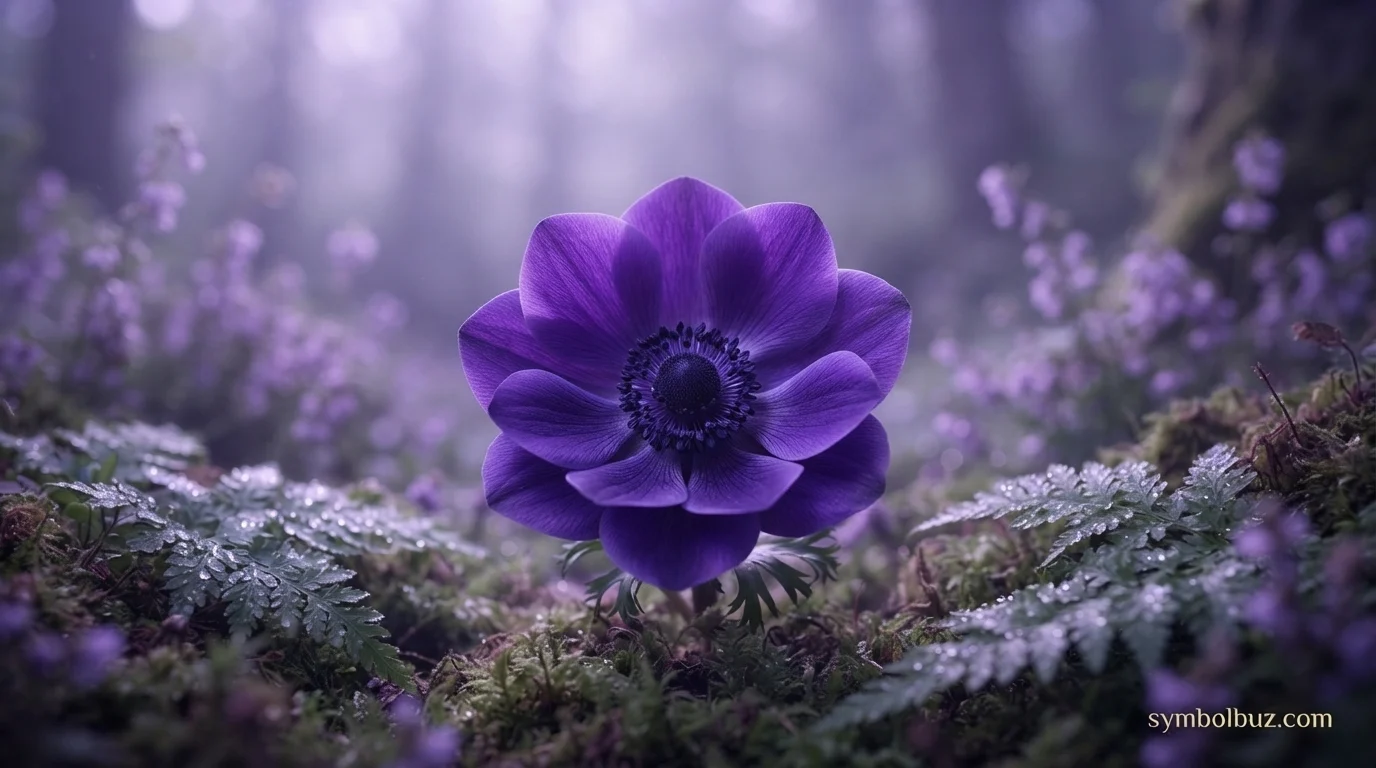
Purple flowers such as lavender, violets, irises, and certain orchids have contributed to the color’s associations with beauty, delicacy, spirituality, and mystery.
Natural purple shades can feel both rare and peaceful, giving the color a special emotional quality.
Purple Shades and Their Symbolic Meanings
Different shades of purple can communicate very different feelings.
| Purple ShadeCommon Symbolic Meaning | |
|---|---|
| Deep Purple | Power, royalty, mystery, ambition |
| Violet | Spirituality, imagination, wisdom |
| Lavender | Calmness, sensitivity, grace, peace |
| Lilac | Youthfulness, tenderness, renewal |
| Plum | Luxury, richness, sophistication |
| Mauve | Nostalgia, elegance, emotional subtlety |
| Bright Purple | Creativity, confidence, individuality |
These meanings are general associations rather than strict rules. The surrounding colors and context can completely change the emotional effect.
Purple Symbolism in Everyday Life
Purple can appear in ordinary situations while carrying subtle symbolic messages.
A purple flower might communicate admiration or spiritual beauty. A purple room may be designed to feel creative and peaceful. A purple outfit may express individuality or confidence.
Even when people do not consciously think about color symbolism, colors can influence the mood and atmosphere of an environment.
When Purple Feels Positive
Purple often feels positive when it is associated with:
- Creativity
- Wisdom
- Spiritual awareness
- Luxury
- Confidence
- Imagination
- Personal growth
- Individuality
When Purple Can Feel Negative
In some contexts, purple may be associated with:
- Excessive pride
- Mystery or secrecy
- Emotional distance
- Grief
- Mourning
- Overindulgence
The emotional meaning depends greatly on the shade, setting, and culture.
Purple Symbolism and Personal Growth
One of the most meaningful interpretations of purple is transformation.
Personal growth often requires a person to move beyond familiar habits and become comfortable with change. Purple can symbolize this process because it combines the energy of red with the calm qualities traditionally associated with blue.
It can serve as a reminder that growth is not always about becoming someone completely different. Sometimes it means bringing different parts of yourself together in a more balanced way.
Purple therefore represents a journey toward greater self-awareness, confidence, and authenticity.
FAQs:
What is the main meaning of purple symbolism?
Purple symbolism commonly represents royalty, spirituality, wisdom, creativity, mystery, luxury, and transformation.
What does purple symbolize spiritually?
Spiritually, purple can symbolize intuition, higher awareness, meditation, inner wisdom, and personal transformation.
What does purple symbolize in the Bible?
In biblical and Christian contexts, purple can be associated with wealth, royalty, honor, dignity, and later with spiritual reflection and solemn religious seasons.
What does purple mean in dreams?
Purple in dreams may represent creativity, spiritual awareness, mystery, intuition, ambition, or personal change. The dreamer’s emotions and circumstances are important when interpreting it.
Is purple a symbol of royalty?
Yes. Purple has a long historical association with royalty and high social status, partly because some ancient purple dyes were rare and expensive to produce.
Conclusion
Purple symbolism carries a rich combination of royalty, wisdom, spirituality, creativity, mystery, and transformation. From ancient royal garments to modern art and fashion, purple continues to represent qualities that feel both powerful and deeply personal.
If purple appears in a dream, flower, painting, outfit, or spiritual setting, its meaning depends on context. At its heart, purple reminds us of the value of imagination, inner wisdom, individuality, and meaningful change.

I explore the meanings, history, and cultural significance behind symbols, helping readers understand how symbols connect with ideas, emotions, traditions, and everyday life.