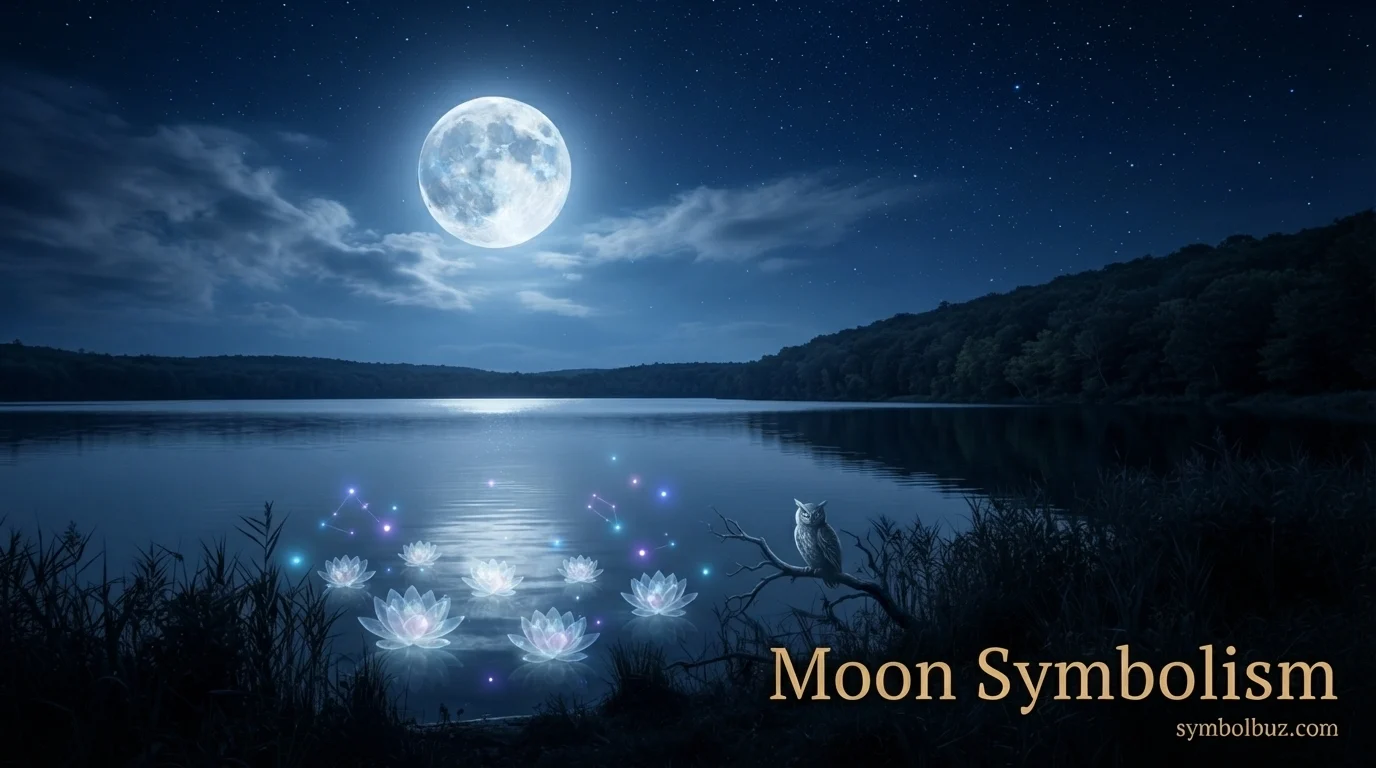
The moon has fascinated humanity for thousands of years. Its changing shape, gentle light, and connection with the night have made it a powerful symbol of mystery, intuition, transformation, and emotional depth. Moon symbolism often represents cycles, renewal, feminine energy, inner wisdom, and the natural rhythm of life.
From ancient mythology to modern art, the moon continues to inspire people who see it as a reminder that change is natural and that even darkness can contain beauty.
Moon Symbolism Meaning (Clear Definition)
Moon symbolism refers to the symbolic meanings people have traditionally associated with the moon and its phases. At its core, the moon commonly represents change, intuition, emotions, mystery, renewal, and cycles.
Unlike the constant light of the sun, the moon appears to change throughout the month. This makes it a natural symbol of life’s changing seasons and the idea that nothing remains exactly the same forever.
Common moon meanings include:
| Moon Symbol | Common Meaning |
|---|---|
| 🌙 Crescent moon | Growth, new beginnings, potential |
| 🌕 Full moon | Completion, clarity, abundance |
| 🌑 New moon | Renewal, reflection, fresh starts |
| 🌗 Half moon | Balance, transition, decision-making |
| Moonlight | Guidance, hope, inner wisdom |
| Changing phases | Transformation and life’s cycles |
The moon can therefore symbolize both ending and beginning. One phase may disappear, but another always follows.
What Does Moon Symbolism Represent?
Moon symbolism can have different meanings depending on the culture, situation, and individual interpretation. Some of its most common associations include:
- Transformation: The changing lunar phases reflect personal growth and life transitions.
- Intuition: The moon is often connected with inner feelings, instincts, and hidden knowledge.
- Emotional depth: Its connection with night and tides has made it a symbol of emotions and the subconscious.
- Mystery: Moonlight reveals some things while leaving others hidden.
- Renewal: The lunar cycle can represent starting again after an ending.
- Feminine energy: Many traditions associate the moon with motherhood, fertility, and feminine power.
- Balance: The moon’s relationship with the sun represents the meeting of light and darkness.
For many people, the moon is ultimately a symbol of accepting change while staying connected to one’s inner self.
Spiritual Meaning of Moon Symbolism
Spiritually, the moon is often viewed as a guide through periods of uncertainty. Its light is softer than sunlight, yet it can still illuminate a dark path.
The spiritual meaning of the moon is commonly associated with intuition, reflection, emotional awareness, spiritual growth, and inner transformation.
The lunar cycle can also encourage people to look inward. A new moon may symbolize setting intentions, while a full moon can represent clarity, completion, or releasing something that no longer serves you.
In spiritual traditions, moon symbolism may encourage you to:
- Trust your intuition.
- Accept natural changes in life.
- Spend time in reflection.
- Release emotional burdens.
- Begin again when necessary.
- Recognize growth that happens quietly.
The moon does not force its light into the darkness. It simply shines within it, which can make it a meaningful symbol of quiet strength.
Biblical / Religious Meaning of Moon Symbolism
The moon has an important place in several religious traditions, although its exact symbolic meaning varies.
In the Bible, the moon appears in descriptions of creation, seasons, signs, and sacred calendars. Genesis describes the greater and lesser lights governing day and night, while other biblical passages refer to the moon in relation to appointed times and religious observances.
In Christianity, the moon can sometimes be interpreted symbolically in relation to God’s creation, time, seasons, and heavenly signs. It should not, however, be assumed that every modern spiritual interpretation of the moon represents a biblical teaching.
In Islam, the lunar calendar has major religious importance. Islamic months are determined by the moon’s cycle, making lunar observation closely connected with religious timekeeping and important occasions.
Across religions, the moon can therefore represent the order of creation, the passage of time, and recurring cycles.
Moon Symbolism in History and Culture
Moon symbolism reaches back to some of the earliest civilizations.
Ancient cultures observed the moon carefully because its phases provided a reliable way to track time. Lunar calendars influenced agriculture, religious ceremonies, festivals, and social traditions.
In ancient Greek and Roman traditions, lunar deities were associated with aspects of femininity, nature, hunting, fertility, and night. In other cultures, the moon was represented as a god, goddess, ancestor, guardian, or celestial guide.
East Asian traditions also developed rich moon symbolism. The moon is frequently associated with reunion, beauty, longing, family, and seasonal celebrations.
In many cultures, the full moon became particularly significant because its brightness transformed the nighttime landscape. It could represent abundance, completion, celebration, or supernatural mystery.
This wide range of traditions shows why the moon remains one of the world’s most recognizable symbolic objects.
Moon Symbolism in Literature and Art
The moon has inspired poets, painters, musicians, filmmakers, and storytellers for centuries.
In literature, the moon often creates an atmosphere of romance, loneliness, mystery, longing, or reflection. Writers may use moonlight to reveal a character’s private emotions or create a contrast between what is visible and what remains hidden.
Artists often use the moon to represent:
- Solitude
- Romantic longing
- Mystery
- Dreams
- Beauty
- Spiritual reflection
- The unknown
A moon appearing over an empty landscape can create a feeling of isolation, while a full moon above two people may suggest romance or emotional connection.
Because the moon changes without disappearing completely, it also works as a powerful artistic metaphor for identity and personal transformation.
Dream Meaning of Moon Symbolism
Dreams involving the moon can have many possible interpretations. Their meaning depends heavily on the dreamer’s emotions, circumstances, and the moon’s appearance.
A full moon in a dream may symbolize clarity, completion, emotional intensity, or reaching an important stage in life.
A crescent moon can represent new beginnings, hope, developing potential, or something that is still taking shape.
A dark or hidden moon might suggest uncertainty, introspection, or emotions that have not yet been fully understood.
Seeing a bright moon may symbolize guidance, inspiration, or a growing awareness of something important.
Dream symbolism is personal rather than universally fixed. The strongest interpretation usually comes from considering what the moon made you feel during the dream.
Modern Meaning of Moon Symbolism
Today, moon symbolism remains highly popular in jewelry, tattoos, fashion, home decoration, social media imagery, and personal artwork.
A moon tattoo, for example, may represent personal transformation, emotional strength, femininity, mystery, or a significant life chapter.
People also use different lunar phases to express personal experiences:
- New moon: Starting over
- Crescent moon: Growth and possibility
- Half moon: Balance and progress
- Full moon: Confidence and completion
- Waning moon: Release and reflection
Modern moon symbolism often combines ancient traditions with personal meaning. Someone may choose the moon simply because it reminds them that difficult periods eventually change.
Moon Phases and Their Symbolic Meanings
The moon’s phases provide a simple framework for understanding its symbolism.
New Moon
The new moon is traditionally associated with beginnings, intention, rest, and inward reflection.
Waxing Moon
As the moon grows brighter, it can symbolize progress, development, motivation, and increasing confidence.
Full Moon
The full moon represents visibility, completion, abundance, emotional intensity, and fulfillment.
Waning Moon
As the moon becomes less visible, it can symbolize release, rest, forgiveness, and letting go.
Together, these phases create a powerful metaphor for the human experience: begin, grow, reach fullness, release, and begin again.
Moon Symbolism and Personal Growth
The moon can be especially meaningful when thinking about personal development.
Growth is not always obvious. Like the moon, a person can go through periods when progress seems invisible. That does not necessarily mean nothing is happening.
Moon symbolism reminds us that:
You can change without losing who you are.
A difficult period may represent a temporary phase rather than a permanent condition. Similarly, moments of confidence and success are also part of a larger cycle.
This perspective can make the moon a comforting symbol for anyone experiencing change, uncertainty, or a new chapter in life.
FAQs:
What is the main meaning of moon symbolism?
The main meanings of the moon include change, intuition, mystery, emotional depth, renewal, and life’s natural cycles.
What does the moon symbolize spiritually?
Spiritually, the moon often symbolizes intuition, inner wisdom, reflection, transformation, and guidance through periods of uncertainty.
What does a full moon symbolize?
A full moon commonly represents completion, clarity, abundance, emotional intensity, and the realization of something that has been developing.
What does a crescent moon symbolize?
A crescent moon often represents new beginnings, growth, potential, hope, and the early stages of transformation.
What does the moon symbolize in dreams?
In dreams, the moon may symbolize emotions, intuition, change, hidden thoughts, or personal transformation. Its meaning depends on the dream’s context and the feelings it creates.
Conclusion
Moon symbolism is ultimately a reminder that life moves in cycles. The moon grows, becomes full, fades, and begins again, offering a powerful image of change, renewal, intuition, and hope.
If viewed through spirituality, religion, culture, art, or personal experience, the moon continues to remind us that darkness is not always an ending it can be part of the journey toward new light.

I explore the meanings and stories behind symbols, helping readers understand their cultural, spiritual, and everyday significance through clear, engaging, and meaningful insights.